Asset inventory management gives a business a clear record of what it owns, where each item is kept, what it costs, and how much value it holds over time. When asset tracking and accounting systems work apart, a company may have the right equipment on site but wrong figures in its books. This gap can affect budgets, tax reports, insurance claims, and plans to buy new assets.
For example, a firm may buy 20 laptops but record only 18 in its asset list. If two laptops move to another office without a record, the finance team may spend hours checking invoices, staff records, and bank entries to find the gap. A link between the tracking tool and the accounting system can reduce such errors and keep both records in line.
Asset inventory management links asset costs, location, use, repairs, and book value with accounting records through suitable software, clear rules, and regular checks. Businesses can also use outsourced asset management services to manage asset data, review records, and handle routine accounting tasks when internal resources are limited.
What You Will Learn From This Blog
- How asset inventory management works and why it matters to finance teams.
- Which asset details must pass between tracking tools and accounting systems.
- How to plan and set up an asset data link in clear steps.
- Which software features to check before you choose an integration tool.
- How to track errors, costs, and record quality after setup.
- How Meru Accounting can assist with asset records and related accounting work.
What is Asset Inventory Management and How does it Work?
Meaning of Asset Inventory Management
Asset inventory management is the process of listing, tracking, and checking the items a business owns or uses. These may include computers, tools, office furniture, plant, vehicles, and other items that last for more than one work cycle.
How Asset Tracking Works
Each asset gets a unique ID, such as a barcode, QR code, or serial number. Staff scan the code or update a record when an item is bought, moved, repaired, assigned to a team, or taken out of use.
How Accounting Records Fit In
The accounting system stores the cost of an asset, the date it was bought, its useful life, depreciation, and its current book value. Asset inventory management links these finance details with the physical item so both teams can trace the same asset.
The Role of Asset Tags and IDs
Asset tags make it easier to match an item with its records. For example, a laptop tag can link the device to its invoice, purchase date, assigned staff member, warranty, and finance entry without relying on its name alone.
A Simple Example
A firm buys a printer for ₹60,000 and records its purchase in the accounting system. The tracking tool stores its tag ID, office location, and assigned team, while the finance record tracks its cost and depreciation. A shared ID links both sets of data.
optional anymore
on running the business
Why Businesses Need to Connect Asset Tracking With Accounting Systems
To Keep Records in Line
Separate records can show different asset counts, costs, or locations. A shared data flow and outsourced asset management services help finance and operations teams maintain consistent records and reduce duplicate entries.
To Track Asset Costs
Asset inventory management links each item to its purchase cost and related finance data. Managers can review what they spent on equipment and compare that cost with current needs before placing new orders.
To Record Depreciation Correctly
Depreciation spreads the cost of a fixed asset over its useful life under the chosen accounting policy. When the asset list contains the right purchase date, cost, and class, the finance team can review depreciation entries with fewer gaps.
To Reduce Loss and Misuse
A current asset list shows who uses an item and where it should be kept. If a laptop, tool, or vehicle goes missing, staff can check its last known location and assigned owner rather than search through old emails.
To Make Audits Easier
Auditors may need proof that an asset exists and that its recorded value is sound. Outsourced asset management services make it easier to match physical items with invoices, payment records, and fixed asset entries.
Key Data to Integrate Between Asset Tracking and Accounting Systems
Asset ID and Description
Use one unique ID in both systems, along with the item name, type, serial number, and tag number. This is the main link that stops one asset from being mistaken for another.
Purchase and Cost Details
Transfer the purchase date, invoice number, supplier, original cost, and any costs that qualify for inclusion in the asset’s recorded value. The finance team should review which costs form part of the asset cost under its accounting rules.
Location and Asset Owner
Store the site, room, team, and person responsible for each item. Effective asset inventory management depends on updating these records whenever an asset changes location, ownership, or business use
Depreciation and Book Value
Keep the asset class, useful life, depreciation method, start date, accumulated depreciation, and net book value in the finance record. The accounting system should remain the main source for approved depreciation figures.
Status and Disposal Details
Record whether an asset is active, under repair, idle, sold, lost, or retired. Complete disposal records are an important part of asset inventory management because they help businesses keep asset registers and accounting records aligned after a sale or retirement.
How to Connect Asset Inventory Management With Accounting Systems
Review Current Asset Records
Start by listing the assets in use and comparing them with the fixed asset register, purchase invoices, and general ledger. Check for missing tags, duplicate entries, wrong costs, and items that no longer exist.
Set One Data Standard
Agree on a shared asset ID, asset names, asset classes, location codes, and status terms. A clear data standard makes outsourced asset management services more effective by matching records across systems with different field names.
Choose the Right Integration Method
Check whether the tools offer a built-in link, an API, or a secure file transfer. A direct link may suit firms with many asset changes, while a controlled file import may be enough for a small business with few updates.
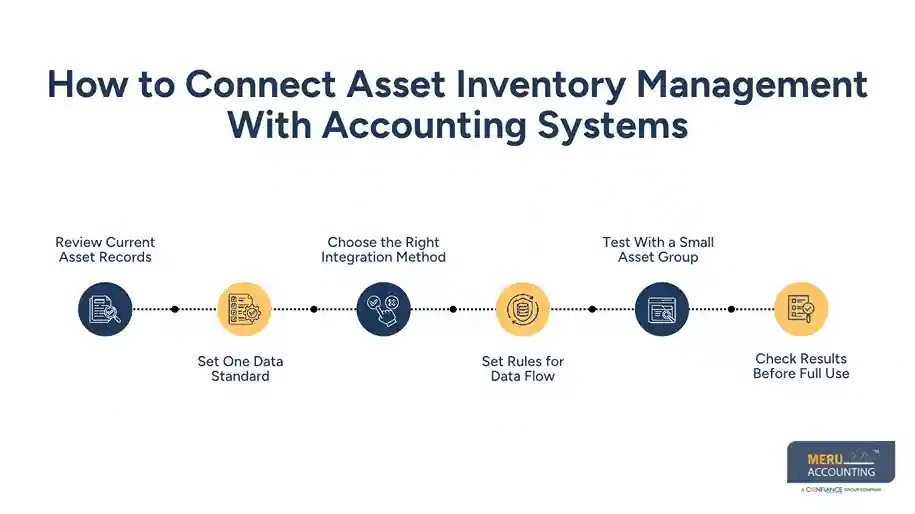
Set Rules for Data Flow
Decide which system owns each field and which events trigger an update. For example, the tracking tool may own location and assigned user details, while the accounting system owns asset cost, depreciation, and book value.
Test With a Small Asset Group
Begin with a limited group, such as office laptops or vehicles. Check whether new purchases, location changes, repairs, and disposals appear in the right system, and confirm that the link does not create duplicate finance entries.
Check Results Before Full Use
To verify asset inventory management accuracy, compare linked records with invoices, the asset register, and the general ledger. Fix any mismatch before extending the process to all assets, then set a schedule for routine checks and error review.
Asset Inventory Management Software and Accounting Integration Features to Evaluate
Built-in Accounting Links
Choose asset inventory management software that works with your accounting platform or offers a clear way to connect them. Confirm which fields pass between systems and whether the link can handle new purchases, transfers, and disposals.
Barcode and QR Code Scanning
Scanning features let staff find an asset and update its details with less manual entry. They are useful for stocktakes across offices, shops, warehouses, and production sites where many items need to be checked.
Role-Based Access
The system should let each user view or change only the fields needed for their role. For example, a site manager may update an asset’s location, while only approved finance staff can change its cost or depreciation settings.
Audit Trails and Alerts
Look for a log that records who changed a field, when the change took place, and what the old and new values were. Alerts for failed transfers, missing fields, or duplicate IDs make data issues easier to spot.
Reports and Data Exports
Reports should show asset counts, cost, book value, depreciation, location, and status. Export options also make it easier to compare records with the general ledger or share a report with an auditor.
Growth and Security Needs
Check user limits, data backup, access controls, support terms, and outsourced asset management services costs as your business adds more assets or sites. The tool should fit current needs without making future growth too costly or hard to manage.
How to Measure the Performance of Integrated Asset Inventory Management
Asset Record Accuracy
Compare a sample of physical assets with the digital register through internal checks or outsourced asset management services. Track the share of items whose ID, location, owner, and status match the actual item, and review the reasons for each mismatch.
Finance Record Accuracy
Effective asset inventory management also requires finance teams to compare asset costs and book values with approved invoices, the fixed asset register, and the general ledger. The aim is to find gaps early and keep any changes backed by valid records.
Time Needed for Stocktakes
Record how long each asset check takes before and after integration. A shorter count time can show that staff spend less time searching across separate files and systems.
Error and Duplicate Rates
Track failed data transfers, duplicate asset IDs, missing fields, and manual corrections each month. A steady fall in these errors shows that the integration rules and data checks are working as planned.
Time to Close Asset Changes
Measure how quickly integrated asset inventory management updates both systems after a purchase, transfer, or disposal. Long delays can leave finance and operations teams working with different records.
Best Practices for Maintaining Accurate Asset and Accounting Records
Set Clear Ownership
Assign a person or team to each asset inventory management task, such as tagging new items, approving disposals, checking finance entries, and reviewing failed transfers. Clear ownership stops important updates from being left undone.
Check Records on a Fixed Schedule
Use outsourced asset management services for regular spot checks and planned stocktakes based on asset value, risk, and location. High-value or portable items may need more frequent checks than low-cost office furniture.
Keep Proof for Every Change
Store invoices, approval notes, transfer forms, repair records, and disposal proof with the right asset ID. Good records give the finance team a clear reason for each change and make later reviews easier.
Review Access and Data Security
Remove access when staff leave or change roles, and check user rights at set times. Use approved backups and secure transfer methods to reduce the risk of lost or exposed asset data.
Train Staff on Daily Updates
Show staff how to scan tags, report missing items, and record transfers. Simple rules are more likely to be followed when each person knows which details to enter and when to do it.
Review Integration Errors
Check error logs and failed updates to keep asset inventory management records accurate. Assign each issue to an owner, fix the cause, and keep a record of the correction so the same error is less likely to return.
Connecting Asset Tracking With Accounting: Meru Accounting’s Approach
Meru Accounting provides accounting and bookkeeping services that connect asset-related financial records with purchase documents, fixed asset schedules, and ledger balances. We review these records to identify gaps that may affect asset values, depreciation, and financial reports.
When the Asset Register Does Not Match the Books
Differences between asset tracking records and accounting books can result from missing purchases, duplicate entries, or unrecorded disposals. Our team reviews asset schedules and ledger balances to identify mismatches that need further checks.
When Asset Purchases Affect Financial Reports
Incorrect purchase entries can affect asset values, reported expenses, and financial statements. At Meru Accounting, we review invoices and accounting entries to flag costs that may need different treatment under the business’s accounting policy.
When Depreciation Records Fall Behind
Missing purchase dates, incorrect asset values, or outdated schedules can lead to depreciation errors. We review fixed asset schedules against approved accounting policies and flag differences for correction.
When Finance Teams Need Extra Support
Frequent asset purchases, transfers, and disposals can leave in-house teams with little time for asset inventory management and related accounting record checks. Our accounting services address financial record needs, while outsourced asset management services may cover additional data updates and reconciliation tasks under an agreed scope.
When Accounting Software Holds Incomplete Asset Data
Businesses using QuickBooks, Xero, Zoho Books, NetSuite, or Odoo may still have gaps between asset records and financial entries. Meru Accounting reviews available invoices, asset schedules, and ledger data to identify missing or inconsistent information.
Turning Asset Records Into Useful Finance Data
Asset records become more useful when purchase costs, depreciation, and book values match the supporting financial data. We keep these records ready for financial review, budgeting, and asset replacement planning through our accounting and bookkeeping services.
Our Expert Perspective
Effective asset inventory management starts with clean data, unique asset IDs, and clear rules for updating records across tracking and accounting systems.
Businesses should keep location and usage details up to date, verify purchase costs and depreciation, review failed data transfers, and record asset sales or disposals correctly.
Regular checks against the general ledger can catch errors before they affect financial reports. The right process, combined with suitable software and outsourced asset management services when needed, keeps asset records accurate and makes financial reviews easier.
Key Takeaways
- Asset inventory management links physical items with their cost, location, status, and finance records.
- A shared asset ID is vital for matching tracking data with accounting entries.
- The accounting system should control approved cost, depreciation, and book value figures.
- Regular checks can catch missing assets, duplicate entries, and failed updates.
- Staff need clear rules for purchases, transfers, repairs, and disposals.
- Meru Accounting provides accounting and bookkeeping services for asset-related records and finance reviews.
FAQs
Asset inventory management connects with accounting systems by linking each asset’s ID, purchase cost, location, and status to its financial records.
Asset tracking and accounting software should share asset IDs, purchase dates, costs, invoice details, asset status, depreciation data, and disposal records.
Businesses can integrate asset tracking with accounting software through built-in links, APIs, or secure data imports after cleaning and matching their asset records.
Integrating asset management software with accounting systems reduces duplicate data entry, improves record accuracy, tracks asset costs, and makes audits easier.
Outsourced asset management services can assist with asset data checks, record matching, reconciliation, and reporting to keep tracking records aligned with accounting data.
optional anymore
on running the business