A manufacturer may know how many units leave the factory each day, how much raw material is on hand, and how much revenue comes in each month. But can the business tell which product lines are worth keeping, where production costs are getting out of hand, or whether its current prices leave enough room for profit? These are the kinds of questions a manufacturing CPA helps answer through sound cost accounting and financial analysis.
For small and mid-sized manufacturers, the right financial insight can shape decisions about pricing, equipment purchases, inventory, and business growth. This guide explains what a manufacturing CPA does, the issues they help address, and when specialized accounting support makes sense for your business.
What You Will Learn From This Blog
- What a manufacturing CPA does and how one differs from a general accountant.
- How CPAs help track stock, labor, overhead, and product costs.
- Why manufacturing firms need expert cost and tax support.
- Common accounting issues a CPA can help fix.
- When to hire a CPA and what to look for in one.
What Is a Manufacturing CPA?
A manufacturing CPA is a Certified Public Accountant who works with firms that make goods. This CPA has skills in cost accounting, stock valuation, tax rules, payroll, and financial reports. They know how to track costs from the time raw goods enter the plant until the final product is sold.
Unlike a general accountant, a manufacturing CPA must know how the production cycle affects a firm’s books. For example, the cost of a product is not just the price of raw goods. It may also include the wages of workers who make it and a fair share of factory costs, such as power, rent, and machine upkeep.
A CPA can help set up the right way to track these costs. They can also review reports, spot errors, and help owners see which goods bring in the most profit.
What Does a Manufacturing CPA Do for Manufacturing Businesses?
A manufacturing CPA handles a range of tasks that help firms track costs, meet tax rules, and keep their books in order. Here are some of the key areas where they can help.
1. Cost Accounting and Product Cost Analysis
Cost accounting helps you find out how much it costs to make each product. It covers three main areas:
- Direct materials: Raw goods and parts used to make a product.
- Direct labor: Wages paid to staff who work on the product.
- Factory overhead: Costs such as rent, power, repairs, and machine use.
A CPA can help set up a cost system that tracks each of these items. They can also review how overhead is split across goods to make sure product costs are fair and clear.
This data helps owners set prices, check profit margins, and find areas where costs are too high.
2. Inventory Valuation and Control
Stock is a major part of a manufacturing firm’s assets. It may include raw goods, work in progress (WIP), and finished goods. Each type needs to be tracked and valued with care.
A CPA can help your team:
- Set up a sound method to value stock.
- Track goods at each stage of the production cycle.
- Review stock counts and find gaps in the books.
- Account for damaged, old, or slow-moving stock.
- Match stock records with the general ledger.
Accurate stock records help you avoid errors in the cost of goods sold (COGS) and net income. They also give you a clear view of the cash tied up in goods that have not yet been sold.
3. Financial Statements and Reporting
Financial reports show how well your firm is doing. But these reports are only useful when the data behind them is right.
A manufacturing CPA can prepare or review key reports, such as:
- Profit and loss statement: Shows sales, costs, and net profit.
- Balance sheet: Lists assets, debts, and owner equity.
- Cash flow statement: Tracks cash from day-to-day work, asset buys, and funding.
They can also review key figures, such as gross profit, stock turnover, and operating costs. These reports help owners see trends, spot risks, and make sound plans.
4. Tax Planning and Compliance
Tax rules can be hard to manage, more so when a firm has stock, plant, tools, and a large payroll. A CPA can help you plan for tax bills and meet key filing dates.
Their work may include:
- Preparing and filing tax returns.
- Reviewing tax costs and records.
- Checking if your firm can claim tax breaks for assets and other costs.
- Helping with tax rules for stock and COGS.
- Planning for state and federal tax needs.
For example, the IRS has rules on how firms must value stock and report the cost of goods sold. A CPA can help you apply the right rules to your business. Tax benefits and write-offs depend on your facts and current tax law.
5. Budgeting and Cash Flow Planning
A firm can show a profit on paper and still face a cash shortfall. This can happen when too much cash is tied up in stock, clients pay late, or large costs fall due at the same time.
A CPA can help build budgets based on past sales, planned output, and expected costs. They can also track cash flow and flag gaps before they turn into bigger issues.
For example, if you plan to buy new machines, a CPA can review the cost, the likely rise in output, and the impact on cash. This helps you judge if the buy makes sense.
6. Payroll and Labor Cost Review
Labor is a key cost for most manufacturers. A CPA can help review payroll records, wage costs, overtime, and tax withholdings.
They can also help split labor costs between direct work on goods and other plant tasks. This gives you a clearer view of the true cost of each product.
optional anymore
on running the business
Why Do Manufacturing Companies Need a Specialized CPA?
Manufacturing firms face costs and risks that may not apply to firms in other fields. They need more than basic bookkeeping to keep their books right and make sound plans.
Here is why expert support matters:
Complex Production Costs
The cost of making goods can change due to raw material prices, labor rates, waste, and machine use. A CPA can help track these changes and show how they affect profit.
Multi-Stage Inventory
Goods may pass through many steps before they are ready to sell. A CPA can help track costs at each stage and make sure WIP and finished goods are valued right.
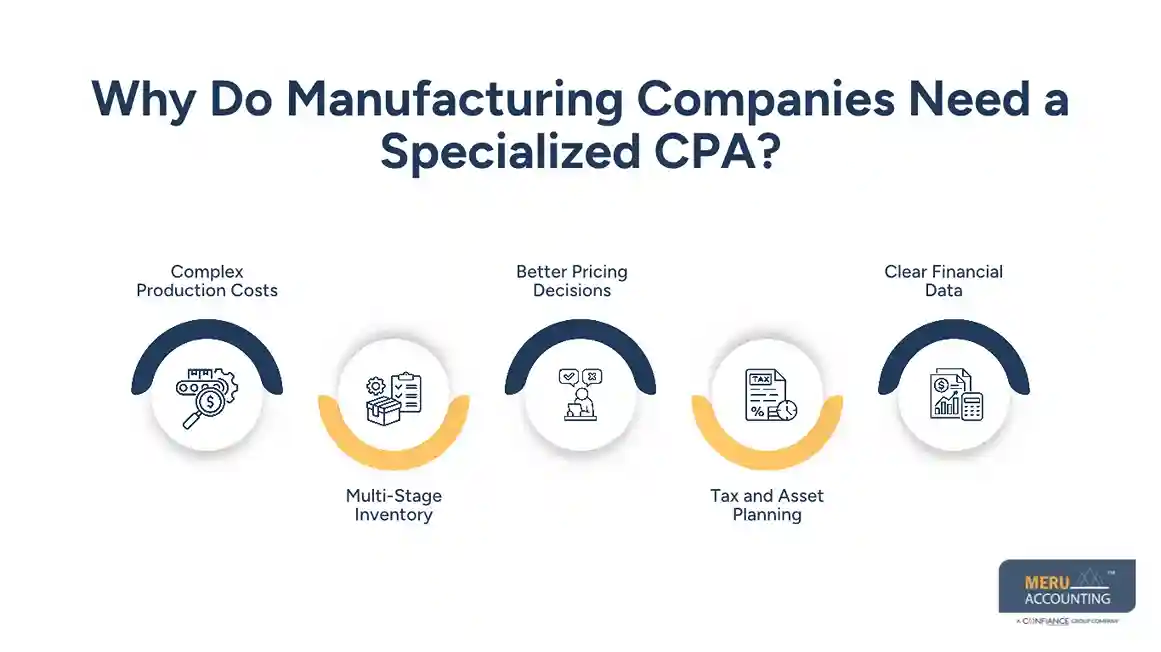
Better Pricing Decisions
If you do not know the true cost of a product, you may set a price that is too low. A CPA can review costs and help you see if your prices leave enough room for profit.
Tax and Asset Planning
Manufacturers often invest in costly plant, tools, and machines. A CPA can help review the tax impact of these buys and plan for future asset costs.
Clear Financial Data
With sound reports, owners can make better choices on hiring, stock buys, new product lines, and growth. This is one key reason firms seek a CPA for manufacturing companies rather than relying only on general accounting support.
What Accounting Challenges Can a Manufacturing CPA Help Solve?
Even firms with an in-house bookkeeper can face gaps in their books. Some of the most common issues include:
Accounting challenge | How a CPA can help |
Wrong product costs | Review raw goods, labor, and overhead costs. |
Stock count errors | Match stock counts with book records and find gaps. |
High factory overhead | Review plant costs and how they are split. |
Poor cash flow | Build cash plans and review late client payments. |
Low profit margins | Check product costs, prices, and sales trends. |
Tax filing errors | Review tax records and check filing needs. |
Weak financial reports | Set up sound reports for clear business review. |
For example, a firm may think a product is making a good profit because it only counts raw goods and labor. But once power, rent, machine use, and other plant costs are added, the true margin may be much lower. A CPA can help find such gaps and give owners a more sound view of each product line.
When Should a Small or Mid-Sized Manufacturer Hire a CPA?
You may not need a full-time CPA from the start. But as your firm grows, its books and tax needs can become harder to manage. Here are some signs that it may be time to hire one:
- Your stock records do not match: You see gaps between stock counts and the books.
- You cannot track product costs: You are unsure how much it costs to make each item.
- Your profit margins keep falling: Sales are up, but net profit is not.
- Tax work takes too much time: Your team finds it hard to keep up with tax rules and filing dates.
- You plan to grow: You want to add new machines, hire staff, or open a new plant.
- You need better reports: You want clear data to guide key business choices.
A small firm may need help with tax work and book reviews once or twice a year. A mid-sized firm with a larger team, more stock, and more complex costs may need monthly support.
Manufacturing CPA Services by Meru Accounting
A production report may show how many units your factory has made, but your financial records need to show what those units actually cost. Raw material purchases, labor charges, vendor bills, machine-related expenses, and finished goods all affect your numbers. Meru Accounting helps small and mid-sized manufacturers bring these records together through dedicated outsourced accounting support.
Our services cover the key financial tasks involved in manufacturing operations:
- Production Cost and Inventory Accounting: Track raw materials, work in progress (WIP), finished goods, inventory adjustments, and cost of goods sold (COGS).
- Manufacturing Bookkeeping and Financial Reporting: Record daily transactions, reconcile accounts, and prepare monthly financial statements and cost reports.
- Accounts Payable and Receivable: Manage supplier invoices, payment records, customer balances, and outstanding receivables.
- Payroll and Labor Cost Accounting: Maintain payroll records, reconcile wage entries, and track labor costs for financial reporting.
- Tax Preparation and Accounting Support: Organize tax records, review expense entries, and support tax preparation and compliance work.
- Bookkeeping Cleanup and Catch-Up: Correct old entries, resolve account mismatches, and bring incomplete financial records up to date.
You get a dedicated accounting team without the cost of building a full in-house department. Whether you need help with inventory records, production costs, monthly reporting, or day-to-day accounting, Meru Accounting can provide support that fits your manufacturing operations.
Our Expert Insight
One area manufacturers should review regularly is the difference between applied and actual manufacturing overhead. For example, if a factory runs below its normal production level, fixed costs such as rent, equipment depreciation, and insurance may be spread across fewer units. This can raise the cost per unit and affect reported profit margins.
We recommend reviewing overhead rates against actual production levels and expenses throughout the year. This helps identify outdated cost estimates, unexpected expenses, and changes in plant efficiency before they affect pricing and financial reports.
Key Takeaways
- A manufacturing CPA helps firms track costs, stock, taxes, and cash flow.
- Cost accounting helps owners see the true cost of each product.
- Sound stock records help keep COGS and profit reports right.
- Expert CPA support can help solve cost, tax, and cash flow issues.
- Small and mid-sized firms should seek help when their books become hard to manage.
- Regular review of costs and reports helps firms make better plans.
FAQs
Look for an active CPA license, experience with manufacturing businesses, and knowledge of inventory accounting, cost allocation, tax planning, and financial reporting. Familiarity with your production model is also valuable.
Yes. A CPA can review product-level costs, gross margins, material usage, and production expenses. This helps identify products that may be priced too low or cost more to produce than expected.
A CPA can review physical inventory counts, reconcile stock records, assess obsolete or damaged goods, and check inventory valuation. This helps ensure that year-end financial statements reflect accurate inventory values.
Not every small manufacturer needs a full-time CPA. If your business has straightforward accounting needs, outsourced or part-time support may be enough. A full-time CPA may make sense as transaction volume, staff size, tax needs, and reporting demands grow.
Yes. Manufacturers can outsource bookkeeping, inventory accounting, accounts payable, payroll accounting, financial reporting, and tax support. This gives them access to trained accounting professionals without building a full in-house accounting department.
optional anymore
on running the business