A healthcare CPA can explain why a busy medical practice may face a cash shortage despite serving many patients and billing several insurance companies. The problem often starts when payments arrive later than expected, while payroll, rent, medical supplies, and tax bills still need to be paid on time. For clinics working with multiple insurance payers, even a short delay can affect daily operations.
A healthcare accounting professional reviews claim records, payment patterns, operating costs, and cash reserves to show where money may get stuck. With outsourced healthcare tax services included in financial planning, practice owners can also prepare for tax bills without putting daily cash needs at risk.
What You Will Learn From This Blog
- Why different insurance payers create gaps between billed revenue and cash received.
- How a healthcare CPA tracks claim payments, unpaid balances, and expected cash receipts.
- Which forecasting methods can flag a cash shortage before bills fall due.
- How outsourced healthcare tax services fit into tax dates and cash reserve planning.
- Which financial metrics show whether a healthcare practice can meet its short-term costs.
Why Healthcare Cash Flow Depends on Insurance Payer Timelines
Different Payers Have Different Payment Rules
Each insurer may follow its own claim format, filing limit, review process, and payment schedule. A healthcare CPA tracks these differences so owners can estimate when money may arrive instead of treating all claims as one source of cash.
Claim Approval Does not Mean Cash Receipt
An approved claim may still need final processing before funds reach the bank. A healthcare accounting professional records approval and actual payment as separate events, while outsourced healthcare tax services can bring upcoming tax duties into the same cash calendar.
Claim Denials Delay Expected Receipts
Missing records, coding errors, and coverage issues can lead to rejected or denied claims. The billing team must fix the issue and send the claim again, so a healthcare CPA tracks the amount at risk and the next action needed.
Patient Payments Follow a Separate Cycle
Patients may owe deductibles, copays, and coinsurance after an insurer settles its share. A healthcare accounting professional separates these balances from payer receivables because the practice cannot treat unpaid patient bills as cash already available.
Operating Costs Continue During Delays
Payroll, rent, utilities, and supplier bills often have fixed due dates. Healthcare tax planning services can add tax payment dates to the same forecast, giving owners a wider view of cash needs during periods of slow reimbursement.
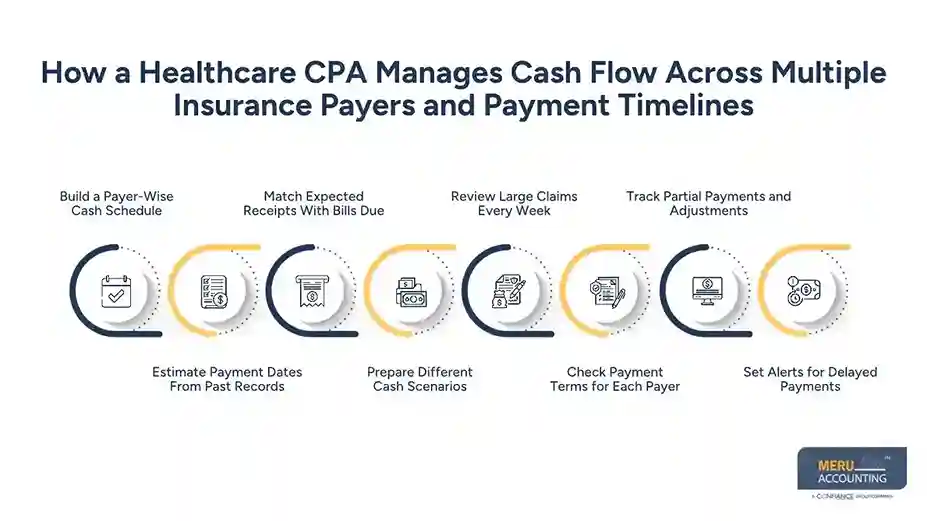
How a Healthcare CPA Manages Cash Flow Across Multiple Insurance Payers and Payment Timelines
Build a Payer-Wise Cash Schedule
A healthcare CPA sorts claims by payer, service date, amount billed, claim status, and expected payment date. This view shows which insurers account for the largest unpaid balances and where a delay could affect the next payroll or vendor payment.
Estimate Payment Dates From Past Records
Past claim records can show how long each payer takes to settle clean claims. A healthcare financial advisor uses these patterns to set reasonable payment estimates and flags claims that need a manual review rather than assuming every insurer will pay on time.
Match Expected Receipts With Bills Due
List expected insurance payments beside payroll, rent, loan instalments, supplier bills, and tax dues. Outsourced healthcare tax services can add estimated tax payments to this schedule, so owners can spot weeks when planned costs may exceed likely receipts.
Prepare Different Cash Scenarios
A healthcare CPA can prepare a normal forecast, a delayed-payment forecast, and a stronger-collection forecast. For example, a clinic expecting $100,000 in receipts may test whether it can cover $75,000 in planned costs if $25,000 of expected payments arrives late.
Review Large Claims Every Week
Set a weekly review for high-value claims, repeated denials, and balances without recent updates. A healthcare accountant can use this review to flag overdue items, while the billing team contacts payers and records the next action.
Check Payment Terms for Each Payer
Review payer contracts to identify payment terms, filing limits, and reimbursement rules. These details give the practice a clearer basis for estimating cash receipts and spotting payments that fall behind agreed timelines.
Track Partial Payments and Adjustments
A healthcare CPA compares each payment with the approved claim amount and records any shortfall or adjustment. This review allows the billing team to identify underpayments, check contract terms, and follow up on unpaid balances.
Set Alerts for Delayed Payments
Set review alerts for claims that remain unpaid beyond their expected payment dates. These alerts allow the finance team to contact insurers, check claim status, and update cash forecasts before delays affect daily expenses.
Common Cash Flow Challenges in Multi-Payer Healthcare Practices
Long Claim Review Times
Some insurers request medical records, referral details, or proof of prior approval before paying. A healthcare CPA tracks the age and value of these claims so owners can see how much expected cash remains tied up in review.
Repeat Billing Errors
Wrong codes, missing fields, or incorrect policy details can cause repeat denials. A medical accounting specialist reviews denial trends with billing staff to identify common errors, while outsourced healthcare tax services can use updated books to keep tax estimates in line with current results.
Short Payments and Contract Adjustments
An insurer may pay less than the amount billed because of contract rates or claim adjustments. Staff should compare remittance advice with the contract and claim record before writing off a balance, and a healthcare financial professional can review unusual differences.
Poor Accounts Receivable Records
A single total for unpaid claims does not show which balances are likely to arrive soon. Healthcare accounting services rely on accurate books, while a medical practice accountant uses payer-level reports to identify old claims and gaps in follow-up.
Unexpected Costs
Equipment repairs, staff changes, and rising supply costs can reduce available cash without warning. A healthcare CPA adds known cost changes to the forecast and checks whether current reserves can cover essential bills if payer receipts fall behind.
Cash Flow Forecasting Strategies for Healthcare Organizations
Use a Rolling 13-Week Forecast
A 13-week cash forecast shows expected receipts, planned payments, and the likely bank balance for each week. A healthcare CPA updates the figures as claims settle and bills change, giving owners a current view of cash needs.
Separate Received Cash From Expected Cash
Money in the bank is different from an approved claim or a claim still under review. Outsourced healthcare tax services can use this distinction when planning tax payments, while the cash forecast should mark uncertain receipts clearly.
Set a Minimum Cash Reserve
Calculate the cost of essential bills over a chosen period and set a reserve goal based on the practice’s risks. A healthcare accountant can test whether that reserve is enough to cover payroll, rent, supplies, and tax dues during a payment delay.
Test Delayed-Payment Scenarios
Estimate the effect of a major insurer delaying payments by two or three weeks. A healthcare financial consultant can then identify possible spending cuts, review vendor terms, or discuss suitable credit options before the bank balance reaches a critical level.
Review Seasonal Changes
Holidays, changes in patient visits, and annual insurance plan updates may affect billing and receipts. Healthcare financial planning can account for known tax dates, while the main forecast should reflect actual payer trends and current service levels.
optional anymore
on running the business
How a Healthcare CPA Improves Accounts Receivable and Reimbursement Tracking
Group Receivables by Age
Separate unpaid claims into 0–30, 31–60, 61–90, and over 90 days. A healthcare CPA uses these age bands to find claims that need urgent action and assign clear follow-up tasks to the billing team.
Match Payments With Claim Records
Compare insurer remittance reports with claim records and bank deposits. A medical accounting specialist can identify short payments, missing deposits, duplicate entries, and incorrect adjustments before these errors affect cash reports.
Track Denial Reasons
Record each denial by payer, reason, amount, and date. This gives managers a clear view of recurring issues, while a healthcare finance expert can measure whether changes in billing checks lead to better collection results.
Assign Follow-Up Dates
Every open claim should have an owner, a next action, and a review date. A healthcare CPA can review overdue tasks each week to make sure claims do not remain unpaid simply because no one followed up.
Reconcile Receivables With the Books
Compare billing reports, payment records, and the general ledger at set intervals. Accurate records also give outsourced healthcare tax services a sound base for tax estimates and financial reports.
How Outsourced Healthcare Tax Services Fit Into Healthcare Cash Flow Planning
Set Aside Funds for Tax Payments
Healthcare tax planning can estimate tax dues using current financial records and the rules that apply to the practice. Owners should include these amounts in the cash forecast so routine spending does not consume funds needed for tax payments.
Match Tax Dates With Insurance Receipts
Quarterly estimated taxes and payroll tax deposits may fall due before large insurer payments arrive. Healthcare financial management services can map these dates alongside expected receipts, giving owners time to prepare for a possible cash gap.
Review Payroll Tax Records
Payroll tax errors can lead to interest, penalties, and extra work. Tax compliance services can review payroll records and due dates, while the practice remains responsible for providing correct data and meeting its legal duties.
Plan Major Purchases With Tax Advice
Medical equipment, lease changes, and other large purchases affect cash needs and may receive different tax treatment. Outsourced healthcare tax services can assess the relevant tax rules, while owners weigh the purchase against operating costs and available cash.
Update Tax Estimates as Results Change
Tax estimates based on old or incomplete books may not reflect current income. A healthcare CPA can review current results with the tax team so planned payments reflect actual business activity and known tax duties.
Best Practices for Managing Cash Flow Across Multiple Insurance Payers
Keep Payer Data in One Place
Use a billing or accounting system that records claim dates, status, payment details, and open balances. A healthcare CPA can review the reports to find payment delays and improve the quality of cash forecasts.
Check Patient Eligibility Before Care
Verify coverage, referral rules, and prior approval where required. These checks cannot prevent every denial, but they can reduce avoidable billing errors before claims reach the insurer.
Give Each Task a Clear Owner
Set clear roles for claim entry, denial follow-up, payment posting, bank checks, and cash forecasts. A healthcare CPA can review the results with managers so missed tasks and old balances receive timely attention.
Review Costs Before Cash Runs Low
Rank costs by due date and business need, and speak with vendors or lenders early if a shortfall seems likely. Do not delay payroll, tax payments, or other legal duties without qualified advice.
Protect Financial and Patient Data
Limit access to patient and financial records to staff who need them for their role. Outsourced healthcare tax services should follow the privacy and data security rules that apply when handling sensitive records.
Why Healthcare Practices Choose Meru Accounting for Cash Flow Management
Payer-Level Financial Reporting
Meru Accounting provides clear reports on insurance receivables, cash inflows, and operating costs. Our reports show outstanding payments and upcoming cash needs.
Cash Flow Forecasting
We prepare cash forecasts based on expected insurance payments, operating expenses, and upcoming bills. These forecasts help healthcare practices plan spending and prepare for reimbursement delays.
Accounts Receivable Management
Meru Accounting reviews receivables to identify overdue balances, payment gaps, and unpaid claims. Our findings help practices prioritize collection tasks and track outstanding payments.
Healthcare Tax Planning
Our outsourced healthcare tax services cover tax planning, record reviews, and payment schedules. We include expected tax dues in cash flow plans to help practices prepare for upcoming obligations.
Financial Reporting and Business Planning
We provide financial reports that show income, expenses, cash trends, and upcoming obligations. Healthcare owners can use these reports to assess risks and make informed business decisions.
Our Expert Perspective
A healthcare practice can report strong revenue and still struggle to pay its bills when insurer cash arrives late. The best approach is to track claim status, likely payment dates, and bank receipts as separate facts, then review them together each week. A healthcare CPA should also question forecasts that assume every claim will pay in full and on time.
Outsourced healthcare tax services should form part of the cash plan rather than begin only when a tax deadline is near. Practice owners should review forecasts with a qualified accounting or tax professional before making major spending, borrowing, or tax decisions.
Key Takeaways
- A healthcare CPA tracks cash by payer, claim status, and expected payment date.
- Approved claims do not always result in immediate bank deposits.
- Weekly cash forecasts can flag shortfalls before they affect essential bills.
- Denial reviews and receivable age reports show where collections are stuck.
- Outsourced healthcare tax services bring tax dates into the wider cash plan.
- Key metrics show whether the practice can meet its short-term costs.
- Meru Accounting provides accounting, reporting, cash planning, and tax-related services for healthcare businesses.
FAQs
A healthcare CPA tracks payer-specific payment dates, unpaid claims, denials, and expected receipts to keep cash available for daily expenses.
Healthcare practices can forecast cash needs, follow up on overdue claims, review denials, and maintain reserves for essential costs.
A healthcare CPA reviews aging reports, tracks claim status, checks payment errors, and assigns follow-up tasks to reduce collection delays.
Multiple insurance payers follow different payment schedules, so practices must estimate receipts by payer and match them with upcoming expenses.
Outsourced healthcare tax services include tax estimates and due dates in cash flow forecasts so practices can plan for tax bills alongside delayed insurance payments.
optional anymore
on running the business