Accounting software for healthcare organizations plays a key role in tracking patient income, insurance payments, medical costs, and staff expenses. Hospitals, clinics, diagnostic labs, and care homes deal with many types of financial records each day. A missed insurance payment, duplicate supplier bill, or wrong payroll entry can affect cash flow and monthly reports.
The right healthcare accounting system records these transactions, tracks unpaid amounts, and sets clear approval steps. For example, when an insurer pays less than the billed amount, staff can review the remittance, record valid adjustments, and track the balance that remains due.
Healthcare accounting solutions also give finance teams a clear view of department costs, supplier bills, and future cash needs. However, software alone cannot prevent every error. Staff must check records, follow approval rules, and reconcile accounts on time.
This blog explains seven features of accounting software for healthcare organizations, common setup issues, and practical ways to strengthen financial controls.
What You Will Learn From This Blog
- Why healthcare providers need strong financial controls.
- Seven features of accounting software for healthcare organizations.
- Ways to track insurance claims, patient fees, medical supplies, and staff costs.
- What to check when choosing healthcare accounting solutions.
- Common software issues and ways to prevent errors.
- How Meru Accounting provides accounting and bookkeeping services for healthcare businesses.
Why Healthcare Organizations Need Strong Financial Controls
Track Patient Income
Healthcare providers may collect fees for consultations, lab tests, surgery, and room charges. Accounting software for healthcare organizations records these amounts and tracks unpaid patient balances.
Review Insurance Payments
Insurers may pay less than the amount billed due to contract rates or claim decisions. Healthcare accounting solutions can record payment differences and keep outstanding amounts visible for review.
Control Medical Costs
Medical supplies, drugs, lab materials, and equipment can account for a large share of spending. Healthcare accounting systems let managers review these costs by department and supplier.
Manage Staff Expenses
Hospitals and care centers may pay for overtime, night shifts, and temporary staff. Healthcare accounting software can record payroll costs by department and make unusual changes easier to spot.
Prepare Reliable Reports
Accurate reports show income, expenses, unpaid bills, and cash balances. Accounting software for healthcare organizations gives managers a clear record to review before making budget or spending decisions.
optional anymore
on running the business
7 Essential Features of Accounting Software for Healthcare Organizations
Automated Accounts Payable and Receivable Management
Track Supplier Invoices
Accounting software for healthcare organizations records supplier invoices, due dates, purchase references, and payment status. Staff can compare invoices with purchase orders and delivery records before approving payments for medical supplies.
Review Outstanding Receivables
Healthcare accounting solutions can list unpaid patient bills and insurer claims by age and amount. Finance staff can then review overdue balances, check claim status, and record collection activity.
Set Payment Approval Rules
Financial management platforms can route invoices to authorized managers before payment. Separating invoice entry from payment approval reduces the risk of duplicate payments and unauthorized spending.
Healthcare Revenue and Expense Tracking
Group Revenue by Service
Hospitals may earn income from consultations, imaging, pharmacy sales, lab tests, and inpatient care. Accounting software for healthcare organizations can record these sources separately for clearer financial reports.
Record Claim Adjustments
Accounting systems for healthcare providers should distinguish contractual adjustments, denied claims, patient balances, and unpaid amounts. This keeps financial records clear and prevents staff from treating every payment difference as a loss.
Track Department Costs
Healthcare financial systems can assign medical supplies, staff pay, and equipment costs to separate departments. Managers can compare actual spending with budgets and investigate large changes.
Budgeting and Financial Forecasting
Set Department Budgets
Healthcare accounting solutions can group budgets for wages, supplies, rent, utilities, and equipment. Managers can compare actual costs with planned amounts and review gaps each month.
Forecast Cash Flow
Financial planning tools can use past income and expense records to estimate future cash needs. Staff should adjust these estimates when insurer payments are late or major bills fall due.
Plan Equipment Purchases
A new scanner or lab machine may involve purchase, installation, and service costs. Healthcare financial management software can include these expenses in the budget so managers can assess their effect on available cash.
Payroll and Staff Cost Management
Check Approved Work Hours
Payroll management systems can record staff costs based on approved timesheets, shift rates, and overtime entries. Staff should review unusual hours before payroll is finalized.
Assign Costs by Department
Healthcare accounting solutions can group staff costs by ward, lab, clinic, or other cost center. This gives managers a clearer view of the cost of running each service.
Protect Payroll Records
Accounting software for healthcare organizations should limit access to salary details, bank information, and payroll changes. Separate user accounts and approval rules make it easier to trace changes.
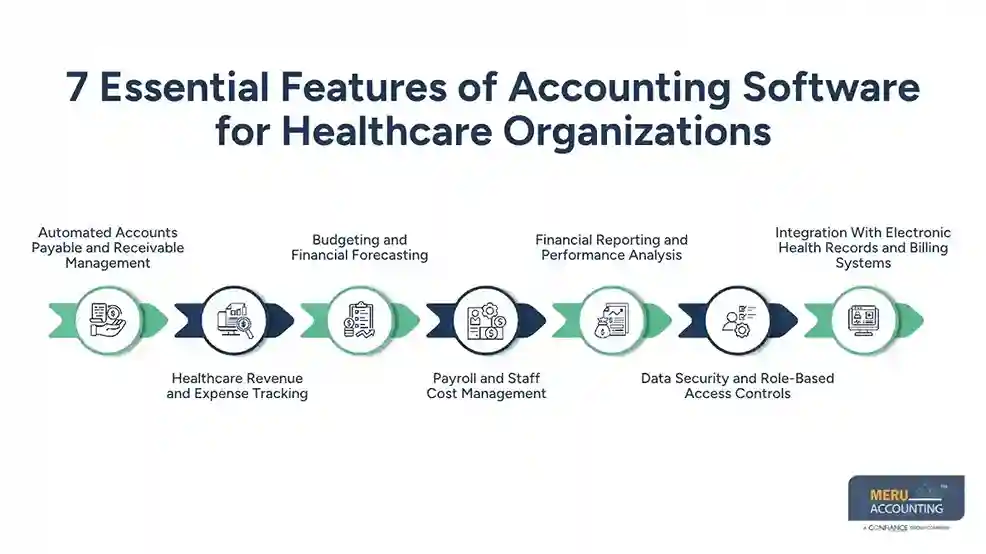
Financial Reporting and Performance Analysis
Prepare Core Financial Reports
Accounting software for medical organizations should provide income statements, balance sheets, cash flow reports, and expense summaries. Managers can use these records to review financial results and plan spending.
Compare Costs Over Time
Healthcare financial reporting tools can show monthly changes in supply costs, payroll, and unpaid claims. Staff should investigate large differences before making changes to budgets or service costs.
Reconcile Accounts Each Month
Medical practice accounting software should form part of a regular review of bank balances, insurer receivables, supplier accounts, and payroll entries. A trained reviewer must check and resolve any differences.
Data Security and Role-Based Access Controls
Set User Permissions
Accounting software for healthcare organizations should give each user access based on their job. Billing staff may need charge records, while payroll staff need access to wage data.
Keep Audit Trails
Healthcare accounting systems should record key changes, such as edited invoices, payment details, and account adjustments. These records make it easier to identify who made a change and when.
Protect Financial Information
Healthcare accounting systems should use secure login methods, multi-factor authentication, regular backups, and access reviews. Healthcare providers must also follow the privacy and security rules that apply to their location and data.
Integration With Electronic Health Records and Billing Systems
Transfer Financial Data
Healthcare accounting solutions can connect accounting records with approved billing systems. The setup should transfer the financial details needed for accounting without copying unnecessary clinical information.
Match Billing Totals
Financial accounting systems for medical providers should allow staff to compare daily billing totals with ledger entries. This can reveal missing charges, duplicate postings, or errors in payment records.
Review Failed Transfers
Financial software for healthcare organizations should provide transfer logs or error reports where available. Staff can review failed links, correct missing entries, and confirm that account totals match before closing the month.
How to Choose the Right Healthcare Accounting Solutions
Match Software to Your Organization
The right financial management system should fit the size and needs of the provider. A small clinic may need basic reports and payment tracking, while a hospital may need several cost centers and approval levels.
Check Insurance Claim Features
Revenue cycle management software should let staff track claim amounts, payments, adjustments, and overdue balances. Test a sample claim from billing through payment posting before choosing a system.
Review Reporting Options
Accounting software for healthcare organizations should provide reports that match your needs for revenue, payroll, department costs, and cash flow. Check whether staff can export reports for review.
Test System Integration
Healthcare accounting solutions must work with the billing, payroll, and record systems already in use. Test data transfers and compare totals before moving live financial records.
Compare Total Costs
Healthcare accounting platforms may involve setup fees, user charges, training, data transfer, and ongoing support. Compare the full cost with the features your team will use.
Common Accounting Software Challenges in Healthcare Organizations
Poor Record Quality
Accurate accounting software records depend on complete invoices and correct account codes. Staff should follow clear data entry rules and review records regularly to maintain reliable financial reports.
Incorrect Claim Records
Financial management systems cannot correct wrong claim details on their own. Staff must check remittance records, post valid adjustments, and review unpaid claims.
Payroll Errors
Wrong shift hours or overtime rates can lead to incorrect wage costs. Payroll accounting software should be part of a review process that matches approved hours with payroll entries.
Failed Data Transfers
Accounting software for healthcare organizations may show incomplete figures if billing data fails to transfer. Staff should compare system totals and resolve transfer errors before month-end.
Weak Access Rules
Healthcare accounting solutions need clear user permissions to reduce the risk of unauthorized changes. Give each user a separate login and review access when job roles change.
Best Practices for Implementing Healthcare Accounting Software
Review Current Processes
Accounting software for healthcare organizations should follow clear rules for patient charges, insurer payments, supplier bills, and payroll. Map the current process and assign responsibility for each key task.
Clean Old Records
A reliable accounting system needs accurate opening balances and account codes. Check supplier records, unpaid claims, patient balances, and outstanding bills before transferring data.
Set Approval Limits
Healthcare financial systems should reflect who can enter, review, and approve transactions. Set clear limits for large payments, account changes, and claim adjustments.
Test Sample Transactions
Healthcare accounting software should be tested with sample patient payments, insurer remittances, supplier invoices, and payroll entries. Compare the results with source records before the full launch.
Review Controls Regularly
Accounting software for healthcare organizations needs regular checks after implementation. Review bank reconciliations, unpaid claims, payroll totals, user access, and system transfer reports each month.
Meru Accounting’s Services for the Healthcare Industry
Healthcare businesses need clear financial records to track income, costs, payments, and cash flow. Meru Accounting provides accounting and bookkeeping services for businesses that need organized records and regular financial reports.
Bookkeeping and Bank Reconciliation
Our bookkeeping services cover transaction entry, account reviews, and bank reconciliation. These services give healthcare businesses a clearer view of recorded income, operating costs, and bank activity.
Accounts Payable and Receivable
At Meru Accounting, we provide accounts payable and receivable services to record supplier bills, track due dates, and review outstanding balances. The agreed scope can include checks of payment records and account balances.
Payroll Accounting
Our payroll-related services can cover payroll records and the posting of wage costs, based on the agreed scope. Healthcare businesses should also check approved shift hours, overtime, and department cost allocations.
Financial Reporting
Meru Accounting prepares financial reports based on the agreed services and records provided. These reports can show income, expenses, account balances, and other key figures for review and planning.
Accounting Software and Records
Meru Accounting works with platforms such as QuickBooks, Xero, and Zoho Books. The right setup depends on the provider’s reporting needs, current billing systems, and required financial controls. Healthcare-specific claim workflows should be checked before selecting a system.
Our Expert Perspective
Accounting software for healthcare organizations is most useful when staff can trace a transaction from the first entry to the final payment. A claim may be billed, adjusted by an insurer, and partly paid, while the remaining amount still needs review.
Healthcare accounting solutions should make each step clear through sound records, approval rules, and regular reconciliation. Managers should compare billing totals with ledger entries, check medical supply costs, and review payroll against approved hours.
Software provides the records, but staff must check what those records mean. A monthly review of bank balances, unpaid claims, supplier bills, and department costs gives healthcare managers a sounder base for financial decisions.
Key Takeaways
- Choose accounting software for healthcare organizations that fits your provider’s size and needs.
- Use Healthcare accounting solutions to track patient income, insurer payments, and unpaid balances.
- Review medical supply costs, staff pay, and department budgets each month.
- Set user permissions and keep records of key financial changes.
- Test links between accounting, billing, and electronic health record systems.
- Reconcile bank accounts, insurer balances, supplier bills, and payroll records.
- Train staff and test sample transactions before the full launch.
- Consider Meru Accounting for bookkeeping, account reconciliation, and financial reporting services within an agreed scope.
FAQs
The best accounting software for healthcare organizations depends on the clinic’s size, budget, billing systems, reporting needs, and financial control requirements.
Accounting software for healthcare organizations records claim amounts, insurer payments, payment adjustments, and outstanding balances for regular reconciliation.
Healthcare accounting software should include payment approvals, role-based access, audit trails, budget tracking, bank reconciliation, and financial reporting.
Yes, accounting software for healthcare organizations can connect with compatible medical billing systems to transfer financial data and match billing totals with ledger entries.
Small clinics should compare healthcare accounting solutions based on cost, ease of use, patient payment tracking, expense management, payroll needs, and reporting features.
optional anymore
on running the business