A payroll report may look correct, yet a single missed overtime entry or duplicate payment can leave a law firm’s accounts out of balance. These errors may go unnoticed until an employee raises a concern, a tax payment fails to match, or the accountant starts the month-end review. That is why law firm payroll needs more than a routine payment process.
Law firms often manage different pay rates, bonuses, partner payments, benefits, and tax duties at the same time. Each item must reach the right person and the right account. By checking payroll data against source records, firms can find errors early, correct old entries, and keep financial reports reliable. Outsourced payroll for law firms can also take on agreed processing tasks, provided the firm retains clear review and approval steps.
What You Will Learn From This Blog
- Common law firm payroll errors and their causes.
- Federal and state payroll rules for law firms.
- Ways to detect wrong payments and tax differences.
- Steps to clean up payroll accounts and old entries.
- The role of outsourced payroll for law firms in accurate reporting.
- Best practices for secure records and regular reviews.
Common Payroll Errors in Law Firms
Incorrect Salary Calculations and Overtime Payments
Wrong pay rates, missed hours, and incorrect overtime can cause payroll disputes. Law firm payroll teams should compare approved time sheets with pay rates before releasing funds. For example, a paralegal who works extra hours may receive less than the amount due if the time system misses a shift.
Missed Payroll Entries and Duplicate Transactions
A missing wage entry can understate staff costs, while a duplicate payment can raise expenses. These errors often occur when staff enter data by hand or upload payroll files twice. Regular law firm payroll checks against bank statements and ledger entries can reveal gaps before month-end reporting.
Employee Classification and Benefits Calculation Errors
Incorrect worker classification can lead to unpaid overtime or wrong tax treatment. Benefit errors may also occur when health plan costs, leave balances, or retirement deductions use old data. Review job duties, pay terms, and current benefit rules to keep law firm payroll records accurate.
Partner Compensation and Bonus Allocation Issues
Partner draws, profit shares, bonuses, and employee wages may require different accounting and tax treatment. Recording every payment as a wage can distort payroll costs and tax reports. Law firms should review partnership terms and seek tax advice when the correct treatment is unclear.
optional anymore
on running the business
Payroll Compliance Requirements for Law Firms
Federal and State Payroll Tax Obligations
Law firms must follow applicable federal, state, and local payroll tax rules. Duties may include income tax withholding, Social Security, Medicare, and unemployment taxes. Law firm payroll staff should check current requirements for each work location and retain proof of required payments.
Employee Classification and Wage-and-Hour Compliance
The Fair Labor Standards Act sets federal minimum wage, overtime, and recordkeeping rules for covered workers. Job titles alone do not determine whether an employee qualifies for an overtime exemption. Review job duties and pay terms, and check state laws that may provide greater protection.
Payroll Tax Withholding, Deposits, and Reporting Deadlines
Employers must calculate tax withholding, deposit the amounts due, and file required returns on time. Late deposits and incorrect filings may lead to penalties and interest. Law firm payroll reviews should include due dates, tax amounts, payment confirmations, and copies of filed returns.
Recordkeeping Requirements and Payroll Documentation
Keep time records, wage details, tax forms, deduction records, and payroll reports for the periods required by law. Clear documents show how each payment was calculated and approved. Proper law firm payroll records also make it easier to answer employee questions and review past transactions.
How to Detect and Investigate Payroll Errors
Reconciling Payroll Registers With Accounting Records
Compare the payroll register with journal entries, bank payments, and general ledger balances. Gross wages, deductions, employer taxes, and net pay should agree with the relevant records. When a difference appears, trace it to the source instead of posting an adjustment without checking the cause.
Reviewing Timekeeping Data and Employee Pay Rates
Check approved hours, overtime, leave, salary changes, and employee start or exit dates. Compare these details with the amounts shown in payroll reports. A regular law firm payroll review can identify missing hours or outdated rates before payments reach employees.
Identifying Unusual Payroll Variances and Duplicate Payments
Compare current payroll costs with prior periods and expected staff levels. Sudden overtime increases, payments to former employees, or repeated amounts may need investigation. Use exception reports to flag unusual items, then verify each one against approved records before changing an entry.
Verifying Payroll Tax Liabilities and Payment Records
Match tax liabilities with payroll reports, filed returns, and bank records. Check that each deposit went to the right agency for the correct period. If balances differ, determine whether the cause is a timing gap, missed payment, or incorrect entry before making a correction.
Accounting Cleanup for Law Firm Payroll
Correcting Payroll Journal Entries and General Ledger Balances
Payroll journals must record wages, benefits, deductions, and employer taxes in the right accounts. If an entry is wrong, record a correction with a clear reason and supporting documents. Then compare the revised law firm payroll totals with the general ledger to confirm that the balances agree.
Resolving Unreconciled Payroll Liabilities
Open payroll liabilities may include unpaid taxes, benefit deductions, or wages that no longer match current records. Review each balance by date, source, and payment status. Do not write off an old amount without evidence, since it may represent a real unpaid duty.
Reviewing Accrued Wages, Bonuses, and Employee Benefits
Month-end accounts may need entries for wages earned but not yet paid, approved bonuses, and benefit costs. Confirm the amount, service period, and approval before recording an accrual. Reverse or settle each entry at the right time to avoid counting the same cost twice.
Correcting Prior-Period Payroll Errors and Maintaining Audit Trails
For each past error, record the affected period, reason, correction, and approval. Some mistakes may require amended tax returns or changes to prior financial reports. Ask a qualified tax professional to review material cases before filing corrections, and retain a clear audit trail.
How Outsourced Payroll for Law Firms Improves Payroll Accuracy
Payroll Processing and Reconciliation Services
Outsourced payroll for law firms may cover wage calculations, deductions, approved time data, and payroll reports. The service agreement should state who checks hours, approves pay, and handles exceptions. Law firms must still review reports and match payroll totals with their accounting records.
Payroll Tax Filing and Compliance Monitoring
A payroll provider may prepare tax returns, schedule deposits, and track filing dates under its agreed scope. The firm should confirm which tasks the provider performs and which remain with the employer. Hiring an external payroll provider does not remove an employer’s legal duties
Error Detection, Exception Reporting, and Financial Reviews
Law firm payroll reports can flag duplicate payments, missing time records, unusual pay changes, and tax differences. Review each alert against source records before approving a change. Outsourced payroll for law firms is more useful when every error has a clear owner, a recorded fix, and a final review.
Coordination Between Payroll Providers and Law Firm Accountants
Payroll providers and accountants should agree on file formats, account codes, cut-off dates, and reporting schedules. This reduces missing entries during the month-end close. Regular communication between payroll providers and accountants keeps law firm payroll costs and tax balances consistent across payroll reports and financial statements.
Best Practices for Maintaining Accurate Law Firm Payroll
Establishing Payroll Approval and Review Procedures
Set a clear process for collecting hours, checking salary changes, approving bonuses, and releasing payments. Keep proof of approval for unusual items. Written steps make law firm payroll easier to review and help staff find the source of an error.
Separating Payroll Preparation, Approval, and Payment Duties
Where possible, assign payroll preparation, approval, and payment release to different people. This reduces the chance of an unnoticed mistake or improper payment. Smaller firms can ask an owner or outside accountant to conduct an independent review when separate staff are not available.
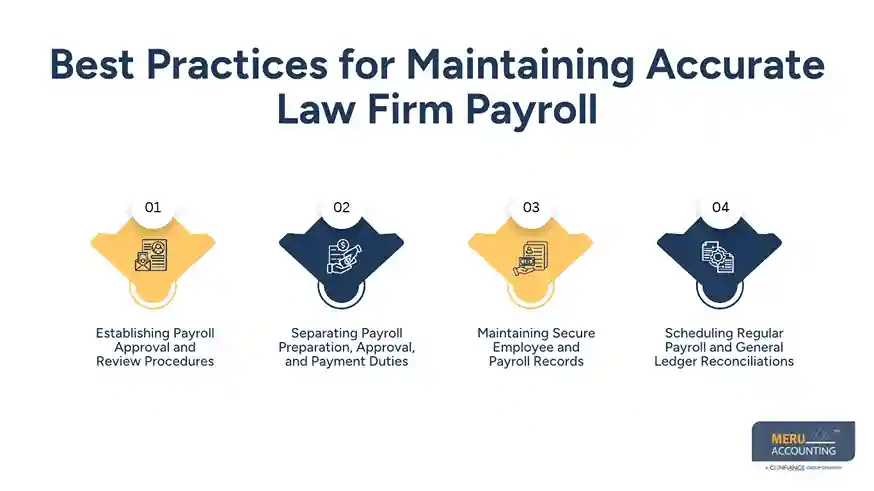
Maintaining Secure Employee and Payroll Records
Payroll records contain private tax, pay, and bank details. Restrict access, use multi-factor authentication, and share files through secure systems. Review access when staff leave and follow a retention policy that meets legal requirements for law firm payroll records.
Scheduling Regular Payroll and General Ledger Reconciliations
Review payroll after each pay run and reconcile wage, tax, and benefit accounts every month. Compare the balances with bank records and provider reports. Assign each difference to a reviewer and keep it open until the cause is clear and the correction is complete.
Payroll and Accounting Services From Meru Accounting
Meru Accounting provides accounting and bookkeeping services that can fit into a law firm’s payroll review and month-end close process. Services may include reviewing payroll journal entries, reconciling general ledger balances, checking payroll liabilities, and tracing differences between reports and payments.
For firms using outsourced payroll for law firms, accurate accounting records remain important. Meru Accounting can provide accounting services that keep wage costs and related ledger entries organized for review. Law firms should define the service scope and confirm which tasks belong to their payroll provider, accountant, or tax adviser.
Our Expert Perspective
Payroll errors are often harder to fix when firms wait until year-end to review their accounts. A better approach is to check law firm payroll after each pay run, reconcile balances every month, and retain proof of each correction. Partner payments, overtime, and tax balances deserve close attention because their treatment may differ. Early checks can prevent small errors from affecting later reports or filings.
Key Takeaways
- Check hours, pay rates, overtime, bonuses, and deductions before payment.
- Compare law firm payroll reports with bank records and ledger balances.
- Follow current federal, state, and local payroll rules.
- Check tax deposits and filing dates to avoid missed duties.
- Correct past errors with clear notes and supporting records.
- Use outsourced payroll for law firms with defined roles and review steps.
- Keep employee records secure and limit access to approved staff.
- Reconcile payroll liabilities and wage costs every month.
FAQs
Law firms can detect payroll errors by comparing pay records, work hours, bank payments, tax reports, and general ledger entries. Correct each error promptly and keep proof of the change.
Law firms must follow applicable federal, state, and local rules for wages, overtime, tax withholding, tax deposits, and employee records. Requirements depend on the firm’s location and workforce.
Payroll reconciliation compares payroll reports with bank records, tax liabilities, and accounting entries to find missing or duplicate transactions. Monthly checks can prevent errors from affecting financial reports.
Law firms may choose outsourced payroll for law firms when payroll errors, tax deadlines, or staff workloads become difficult to manage. Providers can handle agreed payroll tasks while the firm retains its employer duties.
Law firms should trace unmatched balances, verify past payments, and correct entries with clear records and approvals. A qualified accountant or tax professional should review errors that affect tax returns or financial statements.
optional anymore
on running the business