
The outgoing accountant has closed the books, but a client payment is missing from the new ledger. A tax deadline is three days away, and no one knows who has the supporting files. These are the kinds of problems a law firm CPA transition must prevent. Changing accountants involves more than sending spreadsheets to a new provider.
The firm must confirm closing balances, transfer source records, assign unfinished tasks, and protect client fund records. A clear handover lets the incoming law firm CPA take over without leaving partners unsure about cash, unpaid fees, or upcoming reporting duties.
What You Will Learn From This Blog
- Which warning signs justify changing accountants.
- What to check before hiring a new law firm CPA.
- How to transfer records without losing transaction details.
- How to keep financial reports consistent during the change.
- Which trust account checks need special care.
- How Meru Accounting provides accounting services for law firms.
When Should a Law Firm Consider Switching Accountants?
The need for a change often becomes clear when partners spend more time questioning reports than using them. Review recurring problems, missed duties, and the current service agreement before deciding whether a new provider is the right choice.
Signs Your Law Firm Needs a New CPA
If bank balances keep changing after reports are issued, or the same errors appear each month, the firm needs answers. A law firm CPA should trace the cause, explain the correction, and show how the error will be prevented.
Reports That Lack Useful Detail
A firm may collect high fees yet earn less than expected from certain matters. CPA services for law firms should also provide matter-level financial reports that show fee income, case costs, and profitability.
Missed Tax or Payroll Deadlines
A missed filing can create penalties and extra work for staff. When comparing CPA services for law firms, confirm who will handle pending tax returns, payroll filings, and scheduled payments during the transition.
Unclear Fees or Service Terms
If the firm pays for monthly reports but receives them late or without key details, compare the agreed work with the actual service. Ask new law firm CPA candidates to state their fees and deliverables in writing.
Changes in Firm Size
A firm that adds partners or opens another office may need more detailed reports and tighter control over costs. Choose a law firm CPA whose capacity and service scope match the firm’s new structure.
optional anymore
on running the business
How to Choose the Right Law Firm CPA
A reliable law firm CPA should be able to handle the firm’s records, explain financial differences, and meet its reporting schedule, rather than competing on price alone.
Check Legal Industry Experience
Ask candidates how they manage legal fees, matter costs, partner draws, and client funds. An accountant serving law firms should understand why these records need clear tracking and careful review.
Confirm the Services Included
List the tasks the firm needs, such as bookkeeping, bank reconciliation, payroll, tax preparation, and monthly reporting. Compare CPA services for law firms by the work included, not by broad service claims.
Review Reporting Procedures
Ask who checks the reports and what happens when an account does not reconcile. The new accountant should explain how errors, missing documents, and unusual balances will be recorded and resolved.
Check Data Security
Client-related financial records can contain confidential information. Confirm how files will be transferred, who can access them, and when the outgoing provider’s access will end.
Agree on Duties and Deadlines
Set out the fees, reporting dates, tasks, and approval duties in the engagement letter. The firm should know who will handle each tax filing and outstanding item during the change.
How to Switch Accountants Without Disrupting Law Firm Operations
The best time to plan a handover is before the current engagement ends. The outgoing and incoming accountants should agree on what is complete, what remains open, and who owns each next step.
Review the Existing Agreement
Check the notice period, unpaid fees, record access, and unfinished work. Request a written list of pending filings, open reconciliations, and reports that still need approval.
Set a Cutoff Date
Choose a date that separates the old and new accounting periods. The incoming law firm CPA should know which transactions have already been recorded and which still need entry.
Assign Responsibility
Name one person for each task, including payroll, client billing, supplier payments, and bank checks. A shared task list should show the owner, due date, and completion status.
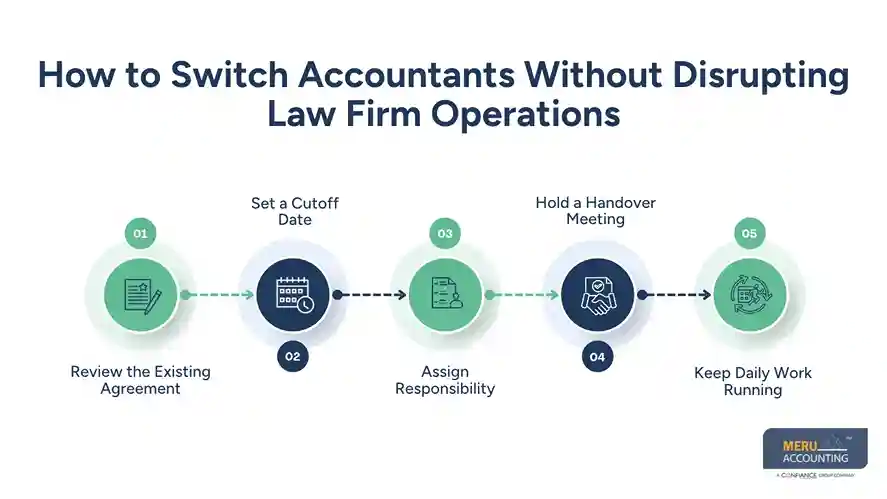
Hold a Handover Meeting
Use the meeting to review open balances, tax dates, system access, and unusual transactions. Record decisions so the new accountant does not have to rebuild the firm’s history from scattered emails.
Keep Daily Work Running
Continue routine billing, payroll, and approved payments throughout the change. CPA services for law firms should have clear duties for these tasks so that the transition does not interrupt daily operations.
Records to Transfer When Changing Your Law Firm CPA
A folder of final reports is not enough. The incoming accountant needs the records behind the figures to check balances and trace transactions.
General Ledger and Financial Statements
Transfer the chart of accounts, trial balance, balance sheet, income statement, adjustments, and reconciliations. When engaging CPA services for law firms, provide these reports in an editable format so the incoming accountant can verify balances and review prior adjustments.
Bank and Credit Card Records
Provide statements, reconciliation reports, outstanding checks, and deposits in transit. If the ledger shows a deposit that the bank has not recorded, the new accountant must establish whether it is pending or incorrectly entered.
Client Invoices and Matter Costs
Transfer unpaid invoices, payment histories, credit notes, write-offs, and matter-level expenses. These details let the law firm CPA distinguish overdue client fees from costs the firm has yet to recover.
Supplier Bills and Payroll
Include unpaid bills, payment schedules, payroll registers, employee tax records, and accrued wages. Mark any pending payment or filing so it does not disappear between reporting periods.
Tax Returns and Supporting Records
Provide prior returns, tax notices, estimated payments, depreciation schedules, and workpapers for CPA services for law firms to review. Complete records allow CPA services for law firms to address unresolved tax matters and prepare for upcoming filing deadlines.
How to Avoid Financial Reporting Gaps During the Transition
CPA services for law firms should connect the closing records to the next reporting period. Five checks can reveal gaps before they affect partner reports or year-end figures.
Establish a Clear Cutoff Date for Transactions
Record the last date managed by the outgoing accountant. Review payments, deposits, and invoices around that date to prevent duplicate entries or missing transactions.
Maintain Monthly Financial Reports
Keep the same reporting periods and account categories where possible. If the new law firm CPA changes the format, document the changes so partners can compare results fairly.
Verify Opening Balances
Compare the new trial balance with the last approved balance. Check cash, receivables, payables, loans, and partner equity before relying on the new reports.
Track Unresolved Items
List each open issue with its amount, owner, due date, and supporting evidence. For example, an unmatched payment should remain under review until the bank entry and ledger record agree.
Compare Reports From Both Accountants
Compare reports for the same period and investigate material differences. CPA services for law firms should document whether a variance comes from a missing entry, changed account code, or approved adjustment.
Law Firm Trust Accounting Considerations When Changing CPAs
Trust funds need separate tracking because they belong to clients, not the firm. The accountant’s change must not leave gaps in client balances or the records used to check them.
Reconcile Trust Bank Accounts
A law firm CPA should compare the bank statement, trust ledger, and client-level balances and investigate unexplained differences before accepting the closing figures.
Transfer Client-Level Ledgers
Provide each client’s opening balance, receipts, payments, and remaining funds. A single bank total cannot show how much money belongs to each client.
Review Pending Transactions
List uncleared checks, deposits, and electronic payments. Confirm their status and reporting period to avoid duplicate entries or missing payments.
Keep Client Funds Separate
Never move client funds into an operating account to simplify the handover. The responsible lawyer must retain oversight of client money and applicable professional duties.
Check Applicable State Rules
Trust accounting rules differ by jurisdiction. The firm should confirm relevant reconciliation, reporting, and record retention duties with its responsible lawyer and law firm CPA.
Common Mistakes to Avoid When Switching Law Firm Accountants
Transferring Only Summary Figures
A trial balance cannot explain every transaction. Transfer invoices, statements, and schedules so the new law firm CPA can verify the figures.
Carrying Old Errors Forward
Do not accept every closing balance without review. Investigate unusual figures, document approved corrections, and retain the records behind each material change.
Leaving Tasks Unassigned
A tax filing or payment can be missed when both accountants assume the other will handle it. Assign one owner and a due date to every open task.
Removing Access Too Early
Retrieve required files and reports before closing the outgoing accountant’s access. Then update permissions in line with the firm’s security policy.
Ignoring Trust Account Differences
Do not treat trust account differences as routine bookkeeping issues. Investigate them promptly and involve the responsible lawyer where client balances remain unclear.
Meru Accounting Services for Law Firm Financial Management
Meru Accounting provides accounting and bookkeeping services under an agreed scope of work. Firms reviewing their accounting arrangements can assess whether these services fit their routine financial needs.
Bookkeeping and General Ledger
Organized income and expense entries give partners a clearer view of the firm’s financial activity and provide a sound basis for monthly reports prepared by a law firm CPA.
Accounts Payable and Receivable
Tracking supplier bills, client invoices, and payments shows which amounts remain due and which receipts the firm can expect.
Financial Reporting and Reconciliation
Regular reconciliations and financial statements give the firm a basis for checking account balances and reviewing income and costs.
Payroll and Tax Records
Organized payroll and tax records make pending duties easier to track. The engagement terms should state who prepares filings and who submits them.
Transition Planning
Before appointing a provider, confirm which records, opening balance checks, and pending tasks fall within the agreed work. A written scope gives the firm a clear basis for reviewing the handover.
Our Expert Perspective
The real test of a law firm CPA change comes when the first new report is ready. Partners should check opening balances, unpaid invoices, unmatched bank entries, and trust records before accepting the figures. Every unresolved issue needs an owner and proof of its final resolution. This makes the handover easier to review and reduces the chance that old errors will carry into future reports.
Key Takeaways
- Review service quality and unfinished work before changing accountants.
- Choose a law firm CPA with relevant legal industry experience.
- Set a cutoff date and assign every open task.
- Transfer source records, tax documents, and client-level balances.
- Check opening balances and investigate material differences.
- Keep client funds separate and follow applicable state rules.
- Confirm responsibility for reporting, payroll, payments, and filings.
FAQs
Review the current agreement, select a new law firm CPA, and set a clear handover date. Transfer financial records, review pending tasks, and confirm responsibility for reports and tax deadlines.
Transfer the general ledger, financial statements, bank reconciliations, invoices, payroll records, tax returns, and trust account ledgers to the new provider of CPA services for law firms. Include supporting documents and a list of unresolved accounting issues.
Set a transaction cutoff date, assign pending tasks, and ask the new law firm CPA to verify opening balances against prior financial statements. Compare reports from both accountants to identify missing entries, duplicate transactions, and unexplained differences.
Review the CPA’s legal industry experience, service fees, reporting process, data security, and scope of work. Confirm that the accountant can manage the required tasks and meet reporting deadlines.
Transfer client-level trust ledgers, bank statements, reconciliation reports, and records of pending payments. Have the responsible lawyer review unexplained differences and confirm compliance with applicable trust accounting rules.
optional anymore
on running the business