A restaurant CFO gives owners a clear view of costs, cash needs, and future growth before they make major business choices. As a restaurant adds new menu items, hires staff, or plans another location, the restaurant CFO reviews the numbers to assess whether the business can afford these changes and earn a fair return.
Restaurant owners often face rising food costs, rent, wages, delivery fees, and seasonal changes in sales. Even a busy restaurant can face cash shortages when bills fall due before customer payments reach the bank. A clear financial plan lets owners spot these risks early and make sound choices.
What You Will Learn From This Blog
- The main duties of a restaurant CFO and how financial planning fits daily restaurant work.
- How to assess the cost, sales goals, and risks of opening a new restaurant.
- How break-even analysis shows the sales needed to cover all costs.
- How cash-flow forecasting helps owners plan for bills, wages, stock, and loan payments.
- Which financial KPIs show whether a restaurant earns enough to meet its goals.
- When Outsourced CFO for Restaurants services may suit a growing food business.
Introduction to Restaurant CFO Services
A restaurant CFO oversees financial planning by aligning sales targets, cost budgets, profit estimates, and cash needs with the owner’s business goals. Regular reviews of food, labor, rent, utilities, and delivery fees reveal where costs exceed the budget and which expenses need attention.
Budget comparisons also show gaps between planned and actual results, allowing owners to adjust their plans as sales and costs change. Clear financial reports present sales, gross profit, labor costs, available cash, debts, and unpaid bills, giving owners a reliable view of business performance beyond daily sales figures.
A restaurant CFO also reviews risks such as food waste, weak sales, theft, late payments, and unexpected repair costs. Regular checks of financial controls and cash reserves allow owners to identify potential problems early, manage spending, and make informed decisions about daily operations and future growth.
optional anymore
on running the business
Key Financial Responsibilities of a Restaurant CFO
Revenue and Sales Analysis
Sales reports by day, meal period, menu item, and sales channel show which areas bring in the most revenue. High delivery sales may still yield low profit after platform fees, packaging costs, discounts, and food expenses.
Food and Labor Cost Control
Food and labor costs often account for a large share of restaurant spending. Tracking these costs against sales helps identify food waste, excess staff hours, and areas where spending needs to match customer demand.
Budget and Forecast Management
A budget sets expected sales, planned costs, and business expenses for a given period. Regular forecasts account for changes such as fewer customer visits, higher supplier prices, or rising staff costs, keeping financial plans aligned with current conditions.
Debt and Investment Decisions
New equipment, kitchen upgrades, and site openings may require loans or owner funds. Comparing borrowing costs, expected returns, and repayment dates gives owners a clearer view of the financial risks before committing funds.
Financial Reporting and Internal Controls
Accurate records of sales, supplier bills, payroll, and bank activity form the base of sound financial decisions. A restaurant CFO reviews these records and checks that key tasks, such as payment approval and bank reconciliation, follow clear rules.
Restaurant Expansion Planning and Financial Feasibility
Estimating the Full Cost of Expansion
Before opening a new site, a restaurant CFO estimates rent deposits, fit-out work, kitchen equipment, permits, hiring, training, stock, and launch costs. The plan should also include cash for early losses and delays before sales reach the expected level.
Forecasting Sales at a New Location
Sales estimates should reflect foot traffic, local demand, menu prices, seating capacity, opening hours, and nearby competition. Preparing low, expected, and high sales estimates gives owners a clearer view of possible outcomes and financial risks.
Assessing Site-Level Profit
Each location needs separate estimates for sales, labor, food, rent, utilities, and other costs. Reviewing expected profit at the new site, along with shared business expenses, shows whether the planned expansion is financially sound.
Reviewing Funding and Cash Needs
Expansion may require savings, bank loans, investor funds, or cash from existing locations. Outsourced CFO for Restaurants services can assess funding gaps, loan payments, and cash reserves before owners commit funds to a new location.
Setting Milestones Before Opening
Owners can set clear targets for fit-out costs, hiring, opening dates, sales, and cash use. A restaurant CFO tracks these targets and flags delays or cost overruns before they place more pressure on the budget.
Break-Even Analysis for Restaurant Profitability
Understanding the Break-Even Point
The break-even point is the level of sales at which total revenue equals total costs, leaving no profit or loss. A restaurant CFO uses this measure to show how much a site must sell before it starts to earn a profit.
Separating Fixed and Variable Costs
Fixed costs include rent, insurance, and some salaries that remain stable over a set period. Variable costs, such as ingredients and some packaging, tend to rise with sales, though actual cost patterns depend on the restaurant’s setup.
Calculating Break-Even Sales
The basic formula is:
Break-even sales = Fixed costs ÷ Contribution margin ratio
The contribution margin ratio is the share of sales left after variable costs. For example, if monthly fixed costs are $30,000 and the contribution margin ratio is 60%, break-even sales are $50,000 per month.
Testing Menu Prices and Cost Changes
A rise in ingredient costs can lower the contribution margin and raise the sales needed to break even. A restaurant CFO tests changes in menu prices, portion sizes, supplier rates, and discounts to see how each choice affects profit.
Using Break-Even Results for Decisions
Break-even analysis can guide choices about opening hours, staffing, pricing, and a new site. The result is an estimate, not a promise, so owners should review it when costs, menu mix, or customer demand changes.
Cash-Flow Forecasting and Working Capital Management
Preparing a Cash-Flow Forecast
A cash-flow forecast lists expected cash receipts and payments by week or month. A restaurant CFO tracks sales receipts, supplier bills, payroll, rent, tax payments, loan installments, and planned purchases to estimate the cash balance over time.
Planning for Seasonal Sales Changes
Restaurant sales may rise during holidays and fall during quiet months, depending on the location and customer base. A restaurant CFO uses past sales records and known events to plan for these changes without assuming that each month will match the last.
Managing Supplier Payments and Stock
Large stock orders can tie up cash before ingredients are sold. Outsourced CFO for Restaurants services can review stock levels, supplier terms, and payment dates to maintain adequate supplies without tying up money in excess inventory.
Protecting Working Capital
Working capital is the difference between current assets and current liabilities. Reviewing upcoming payments and available cash helps owners keep enough funds for wages, rent, repairs, and other short-term business expenses.
Responding to Cash Shortfalls
If a forecast shows a cash gap, the owner can review spending, delay non-essential purchases, discuss supplier terms, or arrange suitable funding. A restaurant CFO tests these choices against their cost and timing before the cash balance falls too low.
Financial KPIs a Restaurant CFO Should Monitor
Prime Cost Percentage
Prime cost combines food and beverage costs with labor costs. Dividing prime cost by sales gives the prime cost percentage, allowing Outsourced CFO for Restaurants services to assess how much revenue goes toward food, beverage, and labor costs before overhead and profit.
Gross Profit Margin
Gross profit margin measures sales left after the direct cost of goods sold. A restaurant CFO tracks this figure over time and by menu group to spot changes in ingredient costs, selling prices, or the mix of items sold.
Labor Cost Percentage
Labor cost percentage compares labor costs with sales. Reviewing this measure by shift and week reveals staffing patterns that do not match customer demand, while keeping service quality and required staffing levels in view.
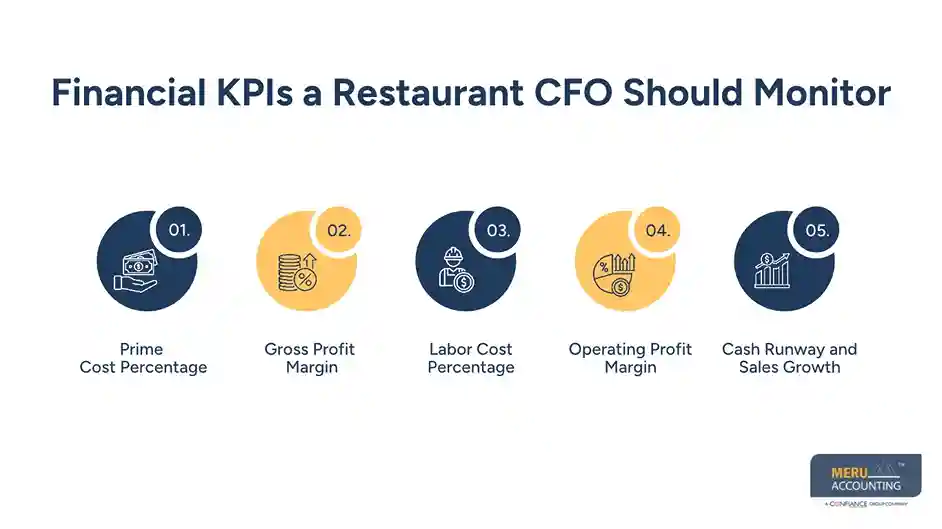
Operating Profit Margin
Operating profit margin shows operating profit as a share of revenue. It gives owners a clearer view of how much sales remain after operating costs, though they should also review interest, tax, and other items when judging the final result.
Cash Runway and Sales Growth
Cash runway estimates how long available cash can cover expected cash outflows under stated assumptions. A restaurant CFO also tracks sales growth against changes in costs, since rising sales alone do not prove that the restaurant earns more profit.
Outsourced CFO for Restaurants: Services and Benefits
Access to Senior Financial Skills
Outsourced CFO for Restaurants services give owners access to senior financial planning without hiring a full-time CFO. The work may include budgeting, forecasts, cost reviews, and reports, based on the agreed scope and the restaurant’s needs.
Flexible Services for Different Business Sizes
A single-site restaurant may need monthly financial reports and cash forecasts, while a growing restaurant group may require location-wise profit analysis and expansion plans. Financial services can be tailored to the business’s size, goals, and current operating needs.
Better Expansion Decisions
A financial expert can review site costs, sales estimates, funding needs, and break-even targets before an owner signs a lease. After opening, actual results can be compared with the original plan to identify cost gaps and assess financial performance.
Regular Financial Review
Monthly financial reviews can reveal changes in food costs, labor expenses, cash balances, and profit margins. A structured review process allows owners to track performance, address budget gaps, and prioritize decisions based on current financial data.
Clear Roles and Reporting
Owners should agree on the reports, review dates, access to financial data, and tasks covered by the service. Outsourced CFO for Restaurants services do not remove the owner’s duty to approve major spending or meet legal and tax obligations.
How Meru Accounting Provides Restaurant Accounting and Financial Planning Services
Restaurant owners need clear records and useful reports to judge costs, cash needs, and plans for growth. Meru Accounting provides accounting and bookkeeping services that cover financial record maintenance, bank reconciliation, accounts payable and receivable, payroll records, and financial reporting.
These services can give owners a more reliable base for budget reviews and cash-flow planning. With clear records of sales, bills, payroll, and bank activity, restaurant management can review financial results and identify areas that need closer attention.
For restaurants planning to expand, financial records can form the starting point for cost estimates, site-level reports, and funding discussions. Owners should confirm the scope of any financial planning engagement, including forecast preparation, break-even analysis, and expansion review, before work begins.
Our Expert Perspective
A restaurant can report strong sales and still face a cash shortage if food costs rise, wages are poorly planned, or large bills fall due at the wrong time. In our view, a restaurant CFO should review profit and cash together, then test growth plans against realistic sales estimates. Owners should also compare forecasts with actual results each month, since regular checks can reveal problems before they place greater pressure on the business.
Key Takeaways
- A restaurant CFO reviews costs, budgets, cash flow, and profit to guide business decisions.
- Expansion plans should include setup costs, early operating losses, funding needs, and more than one sales estimate.
- Break-even analysis shows the sales needed to cover fixed and variable costs.
- Cash-flow forecasts help owners plan for supplier bills, payroll, rent, loan payments, and seasonal changes.
- Prime cost, gross profit margin, labor cost percentage, and operating profit margin show key parts of restaurant performance.
- Outsourced CFO for Restaurants services can provide financial planning and reporting without a full-time CFO role.
- Meru Accounting provides accounting and bookkeeping services that form a base for financial review and planning.
FAQs
A restaurant CFO reviews setup costs, expected sales, staffing, rent, funding needs, and cash reserves before a new location opens. The financial plan also compares low, expected, and high sales estimates to assess the risks of expansion.
The break-even point is calculated by dividing fixed costs by the contribution margin ratio. For example, if monthly fixed costs are $30,000 and the contribution margin ratio is 60%, the restaurant needs $50,000 in monthly sales to break even.
Cash-flow forecasting shows when a restaurant expects to receive and spend money. It helps owners plan for wages, rent, supplier bills, loan payments, seasonal sales changes, and other costs before cash shortages arise.
A restaurant CFO should track prime cost percentage, food cost percentage, labor cost percentage, gross profit margin, operating profit margin, sales growth, and available cash. These measures show how well the restaurant controls costs, earns profit, and meets its financial needs.
Outsourced CFO for Restaurants services provide financial planning, budgeting, cash-flow forecasting, break-even analysis, and expansion planning without the cost of hiring a full-time CFO. These services can suit restaurants that need expert financial review as they grow.
optional anymore
on running the business