A construction cpa plays an important role in tracking job costs, planning cash needs, and protecting project profit. Construction firms often pay for labor, materials, equipment, and subcontractors before clients release payments. Even a profitable contract can create cash problems when payments arrive late, or costs rise beyond the estimate.
For example, a contractor may complete work worth $100,000 but wait several weeks for billing approval. During that time, wages and supplier bills still need payment. A construction cpa reviews these gaps, tracks project spending, and prepares cash forecasts so owners can make sound financial decisions.
What You Will Learn From This Blog
- Learn about the main responsibilities of a construction CPA in managing project costs, financial records, and cash flow.
- Understand why construction companies need job-based accounting to track expenses and measure project profitability.
- Explore practical ways to control project costs and forecast future cash needs.
- Understand how financial reports reveal cost overruns, delayed payments, and billing issues.
- Learn what to consider when choosing a CPA for your construction business.
- Explore how Meru Accounting provides accounting services to manage financial records and reporting needs.
Key Responsibilities of a Construction CPA
Job Cost Tracking
A construction cpa records labor, materials, equipment, and subcontractor costs against each project. This gives owners a clear view of actual spending and expected profit.
Budget Reviews
A CPA for construction companies compares planned costs with actual expenses and the estimated cost to finish. Early reviews reveal overspending while managers can still change purchasing plans or work schedules.
Payment Tracking
A CPA for construction companies reviews client invoices, due dates, unpaid claims, and retainage. These records show which payments are delayed and how those delays may affect available cash.
Cash Forecasting
The CPA estimates upcoming receipts and payments, including wages, supplier bills, loan instalments, and taxes. This forecast gives owners time to plan for shortfalls.
Financial and Tax Records
A construction cpa reviews income, expenses, payroll, and contract records. Tax treatment depends on the firm’s circumstances and applicable laws, so qualified advice is important.
optional anymore
on running the business
Why Construction Companies Need Specialized Financial Management
Different Contract Risks
Fixed-price contracts can expose contractors to rising material and labor costs. A construction cpa reviews contract terms and cost estimates to show where price changes could reduce profit.
Delayed Progress Payments
Completed work does not always lead to immediate payment. A CPA for construction companies can compare site progress with submitted claims and identify work that has not yet been billed.
Retainage and Cash Gaps
Clients may hold back part of a payment until certain milestones or final completion. For example, 5% retainage on a $100,000 approved claim equals $5,000 that may not be available for current bills.
Labor and Equipment Costs
Overtime, idle equipment, repairs, and poor time records can raise project costs. Reviewing payroll, equipment logs, and job reports helps identify the cause of these extra expenses.
Work-in-Progress Reporting
Work-in-progress (WIP) reports compare contract value, costs incurred, billings, and estimated profit. A construction cpa uses these figures to flag jobs with rising costs or gaps between work performed and billing.
How a Construction CPA Helps Control Project Costs
Set Clear Job Budgets
Break each project budget into labor, materials, equipment, subcontractors, and other costs. Comparing actual hours and purchases with these limits can reveal problems before the budget is exhausted.
Record Change Orders
Extra work can reduce profit when costs are incurred before the client approves the price. A CPA for construction companies can also check whether approved changes cover the additional labor, materials, and subcontractor expenses.
Review Material Purchases
Compare purchase orders, supplier invoices, delivery notes, and site usage. These checks can reveal duplicate charges, price differences, excess stock, or waste that raises the final project cost.
Estimate Costs to Finish
Money already spent does not show how much a project will cost in total. A construction cpa reviews remaining labor, materials, and subcontractor work to update the expected final cost.
Compare Profit Across Projects
Review estimated profit for each job rather than relying only on company-wide sales. Past project results can also improve future bids by showing where labor hours, material costs, or delays exceeded estimates.
Cash Flow Management Strategies for Construction Companies
Prepare a Rolling Cash Forecast
List expected receipts and payments for the coming weeks and update the figures regularly. A construction cpa should use realistic payment dates rather than assume every invoice will be paid on time.
Bill Completed Work Promptly
Submit progress claims as soon as contract terms allow. A CPA for construction companies can review these records to identify billing delays and estimate their impact on the company’s cash flow.
Track Retainage Separately
Record withheld payments and the conditions required for their release. Include expected release dates in cash forecasts, but do not count these funds as available cash before receipt.
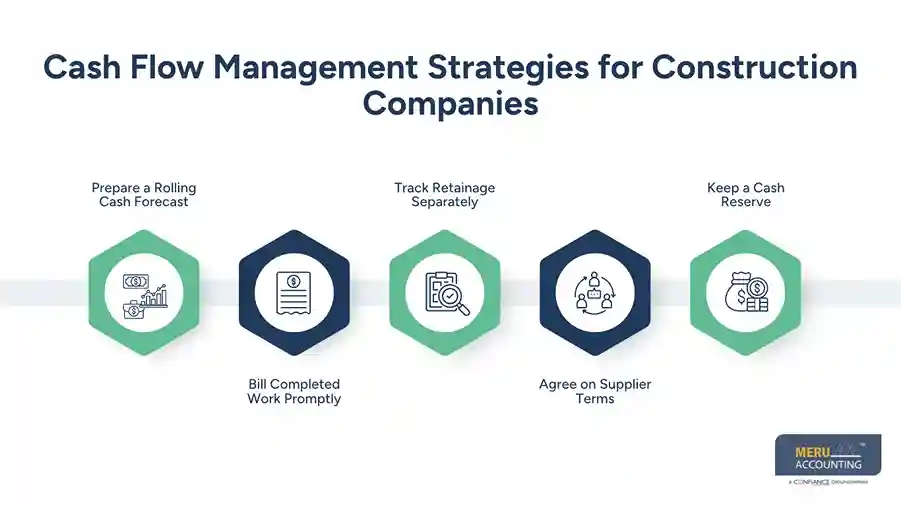
Agree on Supplier Terms
Compare supplier due dates with expected client payments. If a supplier requires payment within 15 days but a client pays in 45 days, the contractor must plan for the 30-day gap.
Keep a Cash Reserve
Weather delays, failed inspections, and late payments can disrupt planned receipts. A construction cpa can model these risks and help estimate a suitable cash reserve based on wages, bills, debt, and project needs.
How a CPA for Construction Companies Improves Financial Reporting
Job-Level Profit Reports
Reports should show contract value, costs incurred, approved changes, expected costs to finish, and estimated profit. This lets owners compare projects and spot jobs that may earn less than planned.
Accurate WIP Schedules
WIP schedules compare project progress, costs, and billings. A construction cpa reviews the figures and assumptions with project managers to identify underbilling, overbilling, or changes in expected results.
Receivables and Payables
Receivables reports show money owed by clients, while payables reports show supplier bills due. Reviewing both helps owners plan payments without relying on sales figures alone.
Clear Cost Variance Reports
Compare actual costs with the original budget and explain major differences. Higher material prices, overtime, rework, and unapproved extra work may all reduce expected profit.
Better Future Estimates
Use completed project records to improve new bids. A CPA for construction companies can review past costs and help owners understand whether their estimates reflect actual labor, material, and equipment needs.
How to Choose the Right Construction CPA for Your Business
Check Industry Experience
Ask whether a CPA for construction companies has worked with contractors of a similar size and type. Experience with job costing, progress billing, retainage, and WIP reports is useful.
Confirm the Service Scope
Check whether the fee covers bookkeeping, cash forecasts, tax work, payroll, or project-level reports. Agree in writing on deliverables, deadlines, and tasks that remain with your team.
Ask About Reporting Methods
Find out how the firm checks invoices, job codes, payroll data, and cost estimates. Reports are only useful when the source records are accurate and current.
Set Communication Rules
Agree on monthly reporting dates, meeting frequency, and who will answer questions. Timely updates matter when owners need to decide whether to bid, hire, or purchase materials.
Review Qualifications and Fees
Confirm the professional’s credentials, relevant experience, and written fee estimate. Tax, audit, and assurance services may require specific qualifications or authorization.
Why Choose Meru Accounting for Construction Accounting Services?
Bookkeeping and Record Management
We provide bookkeeping services to record income, expenses, supplier bills, and payments. Our organized records give construction firms a clearer view of project spending and provide a sound base for financial reporting.
Accounts Payable and Receivable
Meru Accounting provides accounts payable and receivable services to maintain records of supplier obligations and unpaid client balances. These records allow owners to review payment dates, track outstanding amounts, and plan upcoming payments.
Payroll Services
Labor costs can account for a large share of project spending. Our payroll services maintain wage and payment records based on the hours and job details supplied by the client, giving businesses a clearer view of labor expenses.
Financial Reporting
Regular financial reports show income, expenses, and overall business results. We organize financial data that construction firms can use to review project costs, compare budgets, and assess spending against expected results, based on the agreed service scope.
Services Based on Business Needs
Every construction firm has different accounting and reporting needs. At Meru Accounting, we define our service scope around the business’s requirements, which may include bookkeeping, payroll, accounts payable, accounts receivable, and financial reporting.
Our Expert Perspective
A project can lose profit long before the final invoice reveals the problem. Rising labor hours, unpriced changes, and delayed approvals may create financial pressure while the job still appears active and profitable.
Review three figures together: actual costs, estimated costs to finish, and expected cash receipts. A construction cpa can bring these figures into one review, but project managers must provide current site data for the results to be useful.
Key Takeaways
- A construction cpa tracks job costs, budgets, cash needs, and expected profit.
- Construction firms should review contract terms, retainage, and progress billing.
- Cash forecasts should include realistic receipt dates and upcoming bills.
- WIP and job-cost reports can reveal financial issues before project completion.
- Choose a CPA with relevant construction experience and a clear service scope.
- Meru Accounting provides bookkeeping, payroll, accounts payable, accounts receivable, and financial reporting services.
FAQs
A construction CPA tracks labor, material, equipment, and subcontractor costs against the project budget to identify cost overruns and protect expected profit.
A construction CPA forecasts cash receipts and expenses, tracks overdue client payments, and plans for retainage to reduce the risk of cash shortages.
Construction companies should review job-cost reports, work-in-progress schedules, cash flow forecasts, and accounts receivable and payable reports to track costs and payment risks.
A specialized CPA understands job costing, progress billing, retainage, change orders, and contract-based revenue reporting, which are key parts of construction finance.
A construction company should consider hiring a CPA when it manages multiple projects, faces frequent cost overruns, struggles with late client payments, or needs more accurate financial forecasts.
optional anymore
on running the business