A dentist may finish a busy day of patient visits only to find timesheets, bonus records, and payroll questions waiting at the desk. Payroll for dentist practices can become difficult when staff have different hours, pay rates, and work terms. One missed shift or wrong bonus can affect wages and create extra work.
The right provider should fit your clinic’s needs, manage agreed payroll tasks, and keep records clear. Efficient payroll management also gives owners a better view of staff costs without taking time away from patient care.
What You Will Learn From This Blog
- Why dental practices have specific payroll requirements, including staff wages, overtime, bonuses, and tax records.
- What to evaluate when choosing a payroll provider, from industry experience and service fees to software integration and data security.
- How in-house payroll compares with outsourced payroll in terms of cost, accuracy, and administrative workload.
- Which common mistakes to avoid when selecting a payroll provider for a dental practice.
- How accurate payroll records and regular reporting improve financial control and cost tracking in payroll for dentist offices.
Why Payroll for Dentists Requires Specialized Management
Dental clinics may employ dentists, hygienists, assistants, receptionists, and office managers. Their pay terms can differ. An assistant may earn an hourly wage, while an associate dentist receives a salary or production-based pay. Payroll for dentist teams must record these terms correctly.
For example, a hygienist may work extra hours while an associate earns a bonus based on collections. Dental staff payroll management must track approved hours, pay rates, bonuses, and deductions.
Practices must also follow applicable labor and tax rules. In the United States, federal, state, and local requirements may cover overtime, tax deposits, and employee records.
optional anymore
on running the business
What to Look for in a Payroll Provider for Dentists
Experience With Dental Practice Payroll Requirements
Choose a provider that understands dental teams and their pay structures. Ask whether it serves general dentists, specialists, or multi-location dental practices.
When choosing payroll for dentist practices, check whether the provider can handle different pay structures and maintain accurate wage records. Ask for client references and a clear list of services.
Accurate Wage Calculations, Overtime, and Bonus Processing
Dental staff may earn hourly wages, salaries, commissions, or production bonuses. The provider should record each pay type and apply the relevant overtime rules.
Ask how it checks timesheets and corrects errors. A thorough payroll review includes verifying hours, pay rates, and bonuses before payment.
Payroll Tax Filing and Regulatory Compliance
A provider should calculate required taxes, prepare required filings, and track payment dates. Confirm which tasks it handles and which remain your responsibility.
Payroll for dentist practices must follow the rules that apply to the business. Outsourcing does not remove an employer’s legal duties, so review the service agreement carefully.
Integration With Dental Practice Management and Accounting Software
Entering the same figures into several systems wastes time and can cause errors. Check whether the provider can transfer approved payroll data to your accounting software.
Ask about available integrations, setup costs, and report formats. These integrations can simplify payroll for dentist practices and make month-end accounting reviews easier.
Employee Self-Service, Data Security, and Payroll Reporting
Staff should have secure access to pay slips, tax forms, and personal details. Ask how the provider limits access and protects employee information.
Review sample reports showing wages, taxes, overtime, and employer costs. Clear reports make dental staff payroll management easier to review and give owners better insight into labor expenses.
In-House Payroll vs. Outsourced Payroll for Dental Practices
Comparison factor | In-house payroll | Outsourced payroll |
Control and management | Direct control over staff records and pay dates. | External provider manages agreed payroll tasks. |
Administrative workload | Requires internal staff time for payroll tasks. | Reduces routine administrative work. |
Accuracy and compliance | Requires trained staff and regular tax updates. | Uses established processes to manage payroll accurately. |
Implementation and scheduling | Depends on internal staff availability. | Requires a clear setup plan and agreed deadlines. |
Cost structure | Includes staff time, software, and training costs. | Includes service fees and possible additional charges. |
Best suited for | Small practices with simple pay rules. | Practices seeking to delegate payroll tasks. |
Key consideration | Multiple duties may delay payroll processing. | Requires regular report reviews and approvals. |
How to Choose the Right Payroll Provider for Your Dental Practice
Assessing Your Practice Size, Staffing Needs, and Payroll Complexity
List staff roles, pay rates, schedules, bonuses, and overtime needs. Include any extra clinic locations or different pay cycles.
A small clinic may need basic services, while a larger group may need location-based reports. This review sets the right scope for payroll for dentist services.
Comparing Provider Pricing, Service Scope, and Additional Fees
Ask for a written quote listing included services. Check extra charges for tax filings, direct deposits, year-end forms, and corrections.
Compare quotes using the same staff count and service needs. Review the full cost of dental staff payroll management rather than choosing the lowest monthly fee.
Evaluating Customer Service, Implementation, and Ongoing Assistance
Ask who will manage your account, when support is available, and how urgent errors are handled.
Check how staff records will be transferred and verified. A clear setup plan helps ensure payroll for dentist practices runs smoothly from the first pay cycle and reduces delays in staff payments.
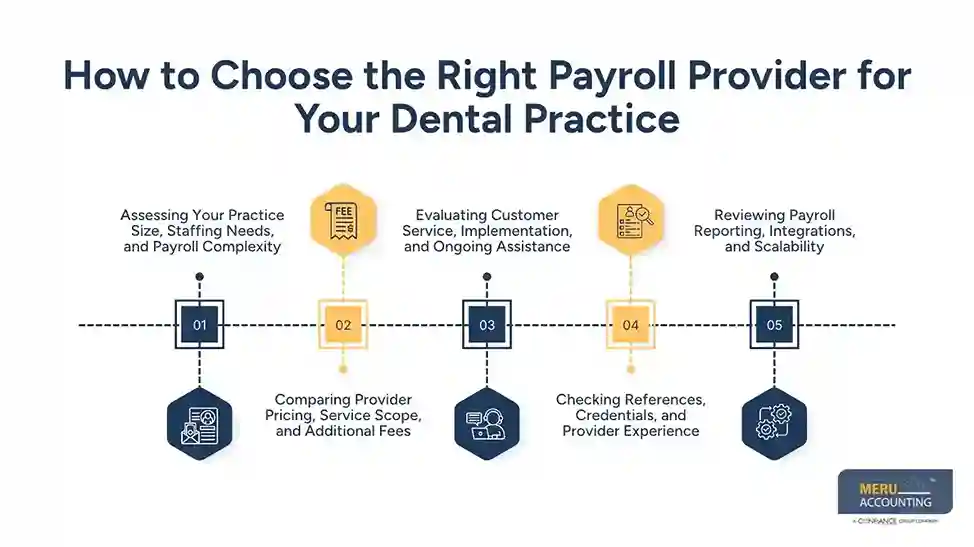
Checking References, Credentials, and Provider Experience
Ask dental practices with similar staffing needs about their experience. Find out whether the provider meets deadlines and corrects errors promptly.
Review relevant credentials, data protection terms, and client feedback. These checks give you a clearer view of the provider’s actual service quality.
Reviewing Payroll Reporting, Integrations, and Scalability
Request sample reports showing wages, taxes, overtime, and employer costs. Confirm that your accountant can use the reports without repeated manual changes.
Choose payroll for dentist services that can handle new staff or locations as your clinic grows. Check future fees before signing.
Common Mistakes to Avoid When Selecting a Dental Payroll Provider
Choosing a Provider Based on Price Alone
A low fee may exclude tax filings, year-end forms, or error correction. Compare the full service scope and extra charges before making a choice.
Payroll for dentist practices should be judged by cost, accuracy, and service quality. A small saving may not justify repeated errors.
Overlooking Tax Compliance and Employee Classification
Do not assume every worker can be treated as an independent contractor. Classification depends on the actual work arrangement and applicable rules.
Ask how the provider records worker status. Seek qualified tax or legal advice when classification is unclear.
Ignoring Software Compatibility and Data Security
A payroll tool that cannot share data with your current systems may create duplicate entries. Test compatibility before committing.
Review access controls, data storage, backups, and security procedures. Dental staff payroll management requires accurate records and suitable protection for employee data.
Failing to Review Payroll Accuracy and Reporting Capabilities
Ask whether you can approve each pay run and review unusual amounts before payment. Check sample reports and correction procedures.
Regular checks can catch wrong hours, missing bonuses, and pay rate errors. Payroll for dentist offices still needs review even when an outside firm handles processing.
How the Right Payroll Provider Improves Dental Practice Operations
The right payroll provider can simplify daily tasks and improve dental staff payroll management, giving practice owners a clearer view of staff costs.
- Less Administrative Work: Reduce the time spent on wage calculations, pay slips, and routine payroll tasks.
- Accurate Staff Payments: Record work hours, pay rates, and bonuses correctly to reduce payment errors and staff disputes when managing payroll for dentist offices.
- Clear Payroll Reports: Review wages, taxes, and employer costs to understand how payroll affects the practice budget.
- Easier Accounting Reviews: Keep payroll figures consistent with accounting entries to simplify month-end reconciliation.
- Better Financial Control: Review payroll reports regularly and use accurate records to plan staff costs and manage expenses.
For payroll for dentist practices, these benefits depend on accurate staff data, clear responsibilities, and regular report reviews. The clinic must provide correct information and approve payroll records on time.
Meru Accounting’s Services for Dental Practice Payroll and Accounting
Meru Accounting provides accounting and bookkeeping services that help dental practices maintain accurate financial records and track operating costs.
- Payroll Expense Recording: Record staff wages, employer taxes, and related expenses to maintain clear financial records for payroll for dentists and other clinic employees.
- Account Reconciliation: Compare financial transactions with account statements to identify errors and keep balances accurate.
- Expense Tracking: Monitor staff costs and other clinic expenses to improve financial visibility and budget planning.
- Financial Reporting: Prepare clear financial reports that show payroll costs and their impact on the practice’s overall expenses.
- Accounting Coordination: Coordinate accounting records with the clinic’s payroll provider to maintain consistent financial data and improve reporting for dental staff payroll management.
By maintaining accurate accounting records, Meru Accounting provides dental practices with a clearer view of staff costs and financial performance. Payroll processing and tax filing responsibilities should be agreed upon separately with the relevant service provider.
Our Expert Perspective
Choose a provider based on your actual pay rules, not just its software or price. Ask how it handles errors and review sample reports before signing.
When reviewing payroll for dentist requirements, check staff hours, bonuses, pay changes, and tax reports before approving each pay run. Review staff costs monthly to spot errors and control spending.
Key Takeaways
- Choose a payroll provider with experience in dental practices and the specific requirements of payroll for dentist services.
- Check the provider’s ability to calculate wages, process bonuses, manage taxes, and prepare accurate payroll reports for payroll for dentist practices.
- Compare the total cost of each service, including additional fees for tax filings and year-end forms.
- Confirm that the payroll software works with your existing systems and protects sensitive employee data.
- Review payroll reports regularly and verify staff hours, pay rates, and bonuses to maintain accurate dental staff payroll management.
FAQs
Dentists should compare dental industry experience, payroll fees, tax filing services, software links, data security, and customer service before choosing a provider.
A dental practice may need wage calculations, overtime tracking, bonus processing, tax filings, pay slips, and payroll reports based on its staff and location.
The cost depends on staff numbers, pay frequency, services included, and extra fees for tax filings or year-end forms. Request written quotes to compare total costs.
Yes, many providers calculate payroll taxes and prepare required filings under their service plans. Dental practice owners should confirm the provider’s duties and their own legal responsibilities.
Dental staff payroll management keeps wages, overtime, bonuses, and tax records accurate. Regular payroll reviews can reduce payment errors and give owners a clearer view of staff costs.
optional anymore
on running the business