

A law firm can finish its work, send every bill on time, and still struggle to collect its fees. A client may question a charge, a payment may go unrecorded, or an overdue invoice may sit untouched for weeks. These small gaps can affect cash flow and leave partners unsure about the money due to the firm. This is why firms must assess their process before they outsource accounts receivable services for law firms.
The choice of provider matters as much as the decision to outsource. Firms need clear answers about legal billing, collection methods, data safety, and reporting. The right legal practice accounting solutions should fit the firm’s daily work, keep records accurate, and make unpaid balances easier to track.
What You Will Learn From This Blog
- What to review before outsourcing receivables.
- Which questions can reveal a provider’s strengths and limits.
- How legal practice accounting solutions fit into billing and payment records.
- What risks and service terms deserve attention.
- Which figures show whether the service delivers results.
What Should Law Firms Know Before Outsourcing Accounts Receivable Services?
Review the Current Billing Process
Start by tracing one invoice from approval to payment. Before firms outsource accounts receivable services for law firms, they should find where delays occur, who handles each step, and which tasks often need correction.
Check Client Billing Methods
A firm may charge hourly rates, fixed fees, retainers, or fees tied to work stages. The provider must understand these terms so legal practice accounting solutions reflect the agreed charges and billing rules.
Set Clear Roles
Decide who approves invoices, records payments, sends reminders, and handles disputes. A written duty list prevents tasks from falling between the firm’s staff and the outside team.
Review Outstanding Balances
Group unpaid invoices by due date and amount. This gives the provider a useful starting point and shows which accounts need attention first when firms outsource accounts receivable services for law firms.
Set Data Access Rules
Not every staff member needs access to every client record. Set limits on who can view, change, store, and share financial data, and include these rules in the service agreement.
Key Questions to Ask Before you Outsource Accounts Receivable Services for Law Firms
What Experience do you Have With Law Firm Accounts Receivable?
Ask about work with hourly bills, retainers, fixed fees, and disputed charges. Firms that outsource accounts receivable services for law firms should seek practical examples of the provider’s process, not broad claims about its experience.
How do you Manage Client Invoices and Outstanding Balances?
Ask how the team checks bills, records payments, and flags overdue amounts. A useful report should show paid, partly paid, and unpaid invoices, giving partners a clear view of the money still due.
How do you Handle Overdue Payments and Collection Follow-Ups?
Ask when reminders go out, how often the team follows up, and when it refers an issue back to the firm. Collection messages should remain polite, while fee disputes and sensitive client matters stay under the firm’s control.
Which Accounting Software and Billing Systems do you use?
Ask whether the provider can use your current legal billing and accounting systems. Test a sample invoice and payment entry before launch to check that legal practice accounting solutions keep records in line across systems.
How do you Protect Confidential Client and Financial Data?
Ask about staff access, multi-factor authentication, encryption, backups, and breach reporting. Before sharing records, firms should review security terms and the confidentiality duties that apply to their practice.
What Reports Will the Law Firm Receive?
Request sample reports that show overdue balances, payments received, disputed bills, and collection trends. Clear reports should explain what is due and flag accounts that need a decision from the firm.
How do you Structure Your Pricing and Service Fees?
Ask whether charges depend on invoice volume, staff hours, or a fixed monthly fee. Check for added costs for setup, old invoices, complex disputes, and extra reports before you sign.
How will you Measure Accounts Receivable Performance?
Set targets for invoice accuracy, collection time, overdue balances, and report delivery. Firms should ask how the provider will explain missed targets and what steps it will take to address them.
How do Outsourced Accounts Receivable Services Fit into Legal Practice Accounting Solutions?
Connect Billing With Financial Records
Invoice totals, payment entries, and accounting reports should agree. Legal practice accounting solutions need consistent records so partners can review income without spending time tracing mismatched figures.
Keep Client Funds Separate
Law firms must follow the trust accounting rules that apply to their location and practice. Client funds must remain distinct from firm income, with approved procedures for any related records handled by the provider.
Match Time Entries With Client Bills
For hourly work, the hours and rates on each bill should match approved time entries. A review before billing can catch missing time, wrong rates, and charges that do not match the fee agreement.
Give Partners a Clear View of Cash Flow
A list of unpaid bills cannot tell the full story on its own. Clear financial reports should show payment trends, overdue amounts, and expected receipts so partners can plan costs with better information.
Define Billing Duties
The provider may prepare invoices, record payments, and send reminders, while the firm approves bills and resolves disputes. Clear roles keep billing tasks organised and ensure the firm’s internal checks remain in place.
What are the Common Risks of Outsourcing Accounts Receivable for Law Firms?
Loss of Control Over Billing
An outside team may miss a task when duties are vague. Keep approval rights within the firm, review sample work, and check the process closely during the first few months.
Errors in Invoices and Payment Records
A wrong rate or payment entry can lead to client questions and poor reports. The provider should check its work and follow a set process to fix errors and prevent repeat issues.
Data Breaches and Unapproved Access
Weak security can expose private client records. Before firms outsource accounts receivable services for law firms, they should review access controls, incident reporting, and rules for returning or deleting data.
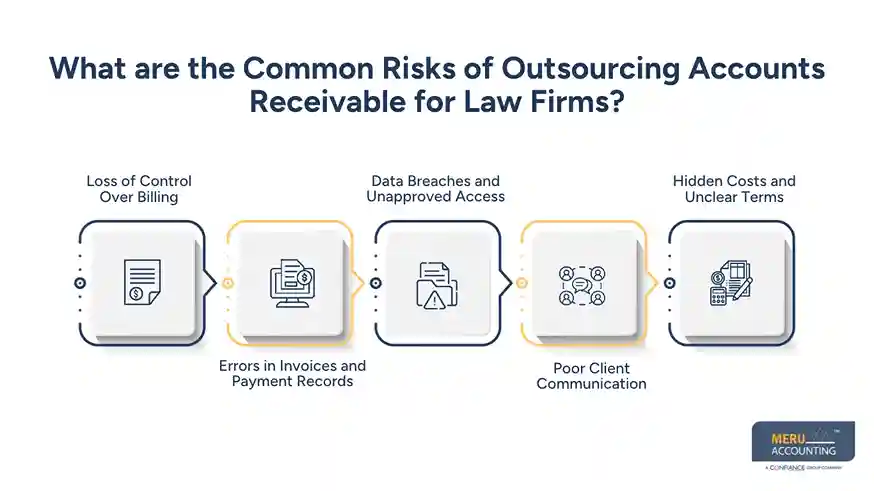
Poor Client Communication
Too many reminders or unclear messages can harm client relations. Agree on the tone, timing, and content of messages, and set rules for disputed bills and sensitive cases.
Hidden Costs and Unclear Terms
A low quote may leave out older invoices, extra reports, or complex cases. Review service limits, added fees, notice periods, and exit terms before signing the contract.
optional anymore
on running the business
How Can Law Firms Measure the Success of Accounts Receivable Outsourcing?
Days Sales Outstanding (DSO)
DSO estimates the average time taken to collect payment. A lower figure may show faster collection, but firms should also consider billing terms, disputed charges, and changes in the client mix.
Invoice Collection Rate
This figure shows how much of the amount due has been collected during a set period. Use the same calculation each month to make fair comparisons and spot changes.
Average Time to Collect Payments
Track the time from invoice issue to payment receipt. Longer delays may point to late billing, weak follow-up, or client disputes that need a closer review.
Accuracy of Billing and Receivables Reports
Compare sample invoices, payment entries, and reports with source records. Legal practice accounting solutions should make errors easier to find, correct, and track over time.
Why Choose Meru Accounting for Accounts Receivable Services?
Invoice and Payment Tracking
Meru Accounting provides accounting and bookkeeping services that can include tracking issued invoices, recording received payments, and maintaining outstanding balance records within the agreed scope. Our approach gives law firms a clearer view of unpaid client fees.
Review of Overdue Receivables
Law firms need to know which invoices remain unpaid and how long each balance has been outstanding. We can maintain receivables records and prepare ageing reports to show balances by due period, subject to the agreed service scope.
Reconciliation of Receivables Records
Differences between invoice totals, payment entries, and accounting records can affect financial reports. Meru Accounting can review these records, identify discrepancies, and document items that require clarification or correction.
Regular Accounts Receivable Reporting
Our reporting can cover outstanding invoices, recorded payments, and ageing balances according to agreed requirements. These reports give law firm management a clearer basis for reviewing collections and cash flow.
Accounting Services Based on Firm Requirements
Every law firm has different billing volumes, software, and reporting needs. We define the scope of our services around agreed requirements, including relevant receivables tasks within our accounting and bookkeeping services.
Clear Responsibilities and Review
When firms outsource accounts receivable services for law firms, they should define who approves invoices, handles disputed fees, and authorises adjustments. Meru Accounting works within agreed procedures while the law firm retains control over client decisions and sensitive matters.
Our Expert Perspective
An overdue invoice may result from a billing error, a client query, or a missed reminder, so firms should identify the cause before taking action. Legal practice accounting solutions should show ageing balances, collection trends, and recurring issues to guide decisions. Firms that outsource accounts receivable services for law firms should also set clear rules for disputed fees, compare results over consistent periods, and retain control over invoice approvals, client decisions, and confidential financial records.
Key Takeaways
- Review the billing process to identify delays, errors, and gaps before outsourcing accounts receivable services for law firms.
- Check the provider’s legal billing experience, software knowledge, invoice management process, and collection methods.
- Review data security measures, service fees, contract terms, and reporting rules before choosing a provider.
- Keep control over invoice approvals, disputed fees, client communication, and sensitive financial decisions.
- Track days sales outstanding (DSO), invoice collection rates, average payment time, and report accuracy to measure performance.
- Review monthly results with the provider, identify missed targets, and agree on clear steps to address recurring issues.
FAQs
Law firms should ask about legal billing experience, invoice tracking, collection follow-ups, data security, and service fees. They should also check reporting methods, software access, and how the provider measures results.
The cost depends on invoice volume, billing complexity, service scope, and reporting needs. US law firms should compare provider quotes and check for setup fees and extra charges.
Providers may track invoices, record payments, monitor overdue balances, and send payment reminders under agreed rules. The law firm retains control over fee approvals, client disputes, and sensitive legal matters.
Law firms should compare legal billing experience, software compatibility, data protection, pricing, and service terms. They should also review sample reports and agree on clear performance targets before signing a contract.
A well-organised accounting process connects billing records, payment tracking, and receivables reports. These records allow law firms to monitor unpaid fees, review collection trends, and make informed cash flow decisions.
optional anymore
on running the business