Amazon sellers can have thousands of dollars tied up in products that haven’t sold yet. But looking at Seller Central sales and payouts won’t tell you how much that stock is worth or what each sale actually costs. That’s why Amazon FBA accounting needs more than a record of money coming in and going out.
From supplier invoices and freight costs to unsold units, returns, and damaged goods, every stock movement affects your financial records. Getting inventory and cost of goods sold (COGS) right helps you see your actual margins, avoid overstating profits, and make better purchasing decisions.
What You Will Learn From This Blog
- How inventory accounting works for Amazon FBA sellers.
- What costs to include in COGS.
- How to work out COGS for each sales period.
- How to track stock, returns, and Amazon fees.
- How to match Amazon stock reports with your books.
- When to seek expert help with Amazon FBA accounting.
Understanding Inventory Accounting for Amazon FBA Sellers
Inventory accounting tracks the goods a business buys, holds, and sells. For Amazon FBA sellers, this means keeping a record of stock sent to Amazon, stock held in its warehouses, and goods sold to buyers.
When you send goods to an Amazon warehouse, they do not become an expense just because they leave your own site. They are still your stock until they are sold, lost, damaged, or written off under the right rules.
In Amazon FBA accounting, stock is first listed as an asset on the balance sheet. Its cost moves to COGS when the goods are sold. This helps show the cost of the items that brought in sales during that period.
How Amazon FBA Inventory Works
Amazon stores, packs, and ships goods for sellers under its Fulfillment by Amazon (FBA) program. Sellers still own the goods while they are held in Amazon warehouses.
Your stock records should show:
- Units bought from each supplier.
- Units sent to Amazon.
- Units held in Amazon warehouses.
- Units sold during the period.
- Units returned by buyers.
- Lost, damaged, or removed units.
Amazon Seller Central reports can help track these changes. But sellers should not rely on one report alone. They should also keep supplier bills, shipping records, and their own stock logs.
Inventory Purchased vs. Inventory Sold
Stock bought from a supplier is not the same as stock sold to a buyer. This is a key point in accounting for Amazon FBA businesses.
For example, if you buy 1,000 units at $8 each, your stock value is $8,000. If you sell 400 units, only the cost of those 400 units moves to COGS, based on your chosen cost method.
The other 600 units stay on the balance sheet as stock, as long as they are still fit for sale and have not lost value under the rules that apply.
How to Track Inventory Across Amazon Warehouses
Amazon may move stock between its own sites to meet buyer demand. These moves do not mean that you have sold the goods or bought new stock.
Use Amazon inventory reports to check stock levels and movement. Keep a record of goods sent, sold, returned, removed, and lost. Compare these reports with your own stock log on a set schedule.
optional anymore
on running the business
What Is Cost of Goods Sold (COGS) for Amazon FBA Businesses?
Cost of goods sold is the direct cost of the items a business sells. For Amazon sellers, it is the cost tied to the products sold during a set time.
COGS plays a key role in Amazon FBA accounting because it helps show gross profit. If COGS is too low, profit may look higher than it is. If it is too high, the business may seem less profitable.
The basic formula is:
COGS = Beginning Inventory + Purchases and Other Capitalized Costs − Ending Inventory
The costs that form part of inventory value may include:
- Product purchase price.
- Freight and shipping to bring goods to their sale point.
- Import duties and customs fees.
- Direct costs needed to get goods ready for sale.
The exact costs to include depend on the facts and the accounting rules that apply. Ask a tax or accounting expert to review any costs that are not clear.
Which Amazon FBA Costs Are Not Part of COGS?
Not every cost linked to an Amazon sale belongs in COGS. Amazon referral fees, FBA pick-and-pack fees, storage fees, ad spend, and other selling costs are often recorded as operating or selling expenses.
The right account depends on the type of fee and your accounting policy. Keep these costs apart from product costs so your gross profit is clear.
How to Calculate COGS for an Amazon FBA Business
To work out COGS, you need clear stock counts and cost records. You also need to use one valid cost method in a steady way.
Here is a simple example:
Item | Amount |
Beginning inventory | $5,000 |
New stock purchases | $12,000 |
Freight and import costs | $1,000 |
Ending inventory | $6,000 |
COGS | $12,000 |
In this case, the seller had $18,000 in stock and costs ready for sale during the period. After taking away the $6,000 in ending stock, COGS comes to $12,000.
Common Inventory Cost Methods
Sellers may use different cost methods based on their stock and accounting needs.
- FIFO (First In, First Out): The cost of the oldest stock is used first. This can suit sellers who buy stock in batches and sell older units first.
- Weighted Average Cost: The cost per unit is based on the average cost of all units held. This can help when goods are alike and are bought at different prices.
- LIFO (Last In, First Out): This method uses the cost of the newest stock first. It is not allowed under US GAAP or US federal tax rules.
For most US sellers, FIFO and weighted average cost are common choices. The right method depends on the business and the rules that apply. Once picked, it should be used in a steady way.
How to Handle Returns, Damaged Goods, and Lost Stock
Returns can change both stock levels and COGS. If a buyer sends back a product in good shape, it may be added back to stock. If it is damaged or cannot be sold, it may need a write-down or write-off.
Lost stock needs a clear record too. Check Amazon’s report, review any claim, and record any refund or payment from Amazon in the right account.
Do not treat every return or stock loss in the same way. The right entry will depend on the state of the item and whether Amazon has paid you back.
How to Manage Inventory and COGS in Amazon FBA Accounting
A clear process helps sellers keep stock and cost records right. It also makes month-end close work easier.
1. Record Inventory Purchases Accurately
Save supplier bills, payment records, freight bills, and customs papers. Record each buy with the right unit cost, date, and stock count.
Do not record the full cost of a bulk order as an expense if the goods are still in stock. Keep the cost as an asset until the items are sold or need to be written off.
2. Track Stock Sent to Amazon
When you send goods to an Amazon warehouse, update your stock log. Record the date, SKU, number of units, and cost.
This helps you see how much stock is held by Amazon and how much is still with your supplier or at your own site.
3. Review Amazon Fees and Adjustments
Check seller reports for FBA fees, storage fees, refunds, reimbursements, and other charges. Record each item in the right account.
This step matters because Amazon payouts are net of fees and other changes. A payout alone cannot show your full sales or costs.
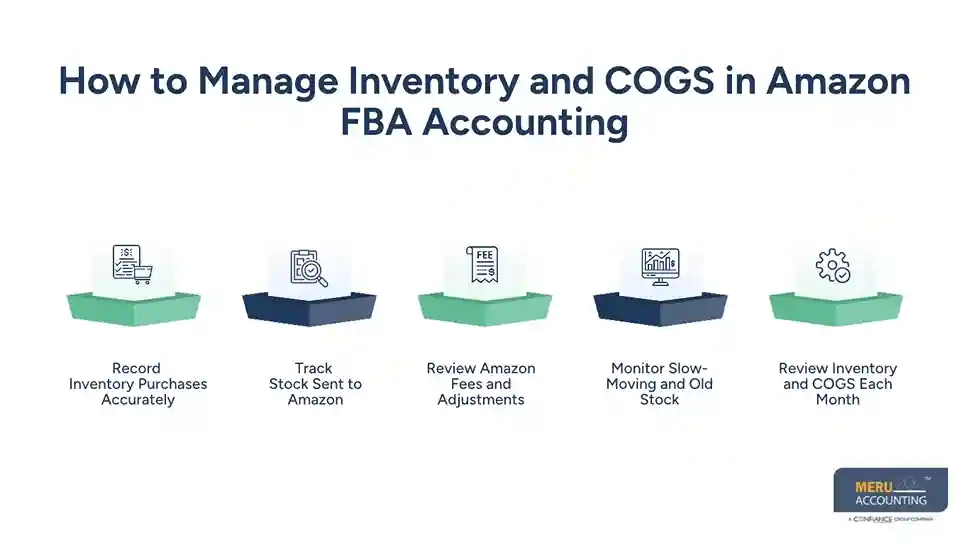
4. Monitor Slow-Moving and Old Stock
Stock that does not sell ties up cash. Review sales and stock levels each month to find goods that have been in storage for too long.
You may need to cut the price, run a sale, or remove the goods from Amazon. If stock has lost value, review whether a write-down is needed.
5. Review Inventory and COGS Each Month
Set a month-end process to check stock, sales, and costs. Compare Amazon reports with your books and fix any gaps before closing the month.
This helps keep Amazon FBA accounting records clean and makes profit reports more useful.
How to Reconcile Amazon FBA Inventory with Financial Statements
Inventory checks help make sure the stock value in your books is close to the value of goods you still own. They can also help find missed costs, stock loss, and wrong entries.
For accounting for Amazon FBA businesses, this check should be part of the month-end close.
Match Amazon Reports with Your Books
Start with Amazon Seller Central reports. Review stock on hand, units sold, returns, removals, and any stock loss. Then compare these details with your stock log and general ledger.
Check that:
- Stock sent to Amazon is recorded.
- Units sold are moved from stock to COGS.
- Returns are added back when fit for sale.
- Lost and damaged stock is reviewed.
- Amazon fees and refunds are in the right accounts.
- Ending stock value matches your cost records.
Find and Fix Stock Gaps
If Amazon’s stock count does not match your books, look for the cause before making an entry. The gap may come from a late report, a return, a stock move, or a lost item.
Keep proof of each change, such as a seller report, supplier bill, or claim result. This makes it easier to review the books later and gives your tax preparer clear records.
Keep Financial Statements Up to Date
Your balance sheet should show the value of stock still held by the business. Your income statement should show COGS for the goods sold in that period.
If stock and COGS are wrong, gross profit will be wrong too. This can affect tax work, price plans, and buy orders.
Amazon FBA Accounting Services by Meru Accounting
A difference between the inventory value in Seller Central and the balance sheet can affect more than a month-end report. It can lead to incorrect COGS, overstated profits, and poor stock decisions. At Meru Accounting, we work with businesses to keep these records aligned and make sure inventory costs are reflected correctly in their financials.
Our Amazon FBA accounting services include:
- Inventory Valuation and Tracking: Record inventory purchases, landed costs, stock transfers, returns, and ending inventory values.
- COGS Calculation: Track product costs using the appropriate inventory costing method and record COGS as goods are sold.
- Amazon Settlement Reconciliation: Match sales, refunds, reimbursements, FBA fees, and other deductions with accounting records.
- Inventory Discrepancy Review: Review lost, damaged, and missing stock, along with Amazon adjustments and reimbursements.
- Financial Reporting: Prepare monthly profit and loss statements, balance sheets, and reports that help sellers assess product-level costs and margins.
- Bookkeeping Cleanup and Catch-Up: Review past inventory entries, correct misclassified costs, and bring financial records up to date.
Whether you need ongoing Amazon bookkeeping or help sorting out inventory and COGS records, Meru Accounting can provide dedicated accounting support that fits your business needs.
Our Expert Insight
A common mistake in inventory accounting is using the purchase price as the full product cost. For Amazon FBA sellers, this can understate inventory value and distort gross profit. Inbound freight, import duties, and other eligible costs may also need to be included in the product’s cost.
We recommend reviewing landed cost at the SKU level, especially when suppliers change prices or shipping costs vary between orders. A product that once had a healthy margin may no longer be profitable at its current selling price.
Our advice: Review product costs whenever you place a new purchase order, not just at year-end. This helps keep COGS accurate and pricing decisions grounded in actual costs.
Key Takeaways
- Track all stock buys, sales, returns, and losses.
- Keep unsold goods as an asset, not an expense.
- Use a valid cost method, such as FIFO or weighted average.
- Keep product costs apart from Amazon selling fees.
- Match Amazon stock reports with your books each month.
- Review old and slow-moving stock to limit cash tied up in goods.
- Use expert Amazon FBA accounting support as your store grows.
FAQs
Add beginning inventory to purchases and other eligible inventory costs, then subtract ending inventory. The result is the cost of goods sold during that period.
No. Unsold inventory is recorded as an asset on the balance sheet. Its cost becomes an expense when the product is sold. Damaged or unsellable stock may require a write-off.
FIFO and weighted average cost are common methods. The right choice depends on the seller’s inventory and accounting needs. LIFO is not permitted under US GAAP.
Generally, no. Referral fees, fulfillment fees, and storage fees are usually recorded as selling or operating expenses, separate from product costs.
Professional accountants help track inventory, calculate COGS, reconcile Amazon transactions, and prepare accurate financial reports. This helps sellers avoid costly errors and make better business decisions.
optional anymore
on running the business