A startup’s financial problems don’t always show up as losses. Sometimes, they hide in unpaid invoices, duplicate expenses, missed tax deductions, or financial reports that don’t tell the full story. A business may look healthy on the surface while small accounting errors quietly eat into its cash and profit. A startup accountant can help catch these issues before they turn into costly setbacks.
For founders, knowing where the money goes is just as important as knowing how much comes in. From setting up proper books to tracking payroll, taxes, and cash flow, a few sound accounting practices can make a real difference. Let’s look at 12 common financial mistakes startups make, how to avoid them, and when professional accounting support can help.
What You Will Learn From This Blog
- The most common money mistakes that can hurt a startup.
- How poor records, cash flow gaps, and tax errors affect a new business.
- How a startup accountant helps keep books, bills, and reports in order.
- When to hire an accountant and what to look for in an accounting firm.
- How to build better money habits as your business grows.
12 Common Financial Mistakes a Startup Accountant Can Help Prevent
1. Mixing Personal and Business Finances
Many founders use a personal bank account or card to pay for early business costs. While this may seem easy, it can make it hard to track business income and costs. It also makes tax prep and bank checks more complex.
For example, if a founder pays a $500 software bill with a personal card, that cost must still be logged in the business books. If it is missed, the firm’s costs and profit may be wrong.
A startup accountant can help set up a separate bank account, card, and clear rules for each type of cost. This keeps records clean and makes it easier to track how much the firm earns and spends.
2. Failing to Maintain Accurate Financial Records
Some startups track sales and costs in basic sheets but fail to update them on time. Others save bills and receipts without logging them in the books. This can lead to missing data, wrong balances, and poor reports.
Accurate records help founders see where money comes from and where it goes. They also help when filing taxes, seeking funds, or dealing with a bank.
A startup accountant can set up a clear process to log sales, costs, bills, and bank activity. Regular checks help find gaps and fix errors before they affect key reports.
3. Mismanaging Cash Flow and Working Capital
A startup can show a profit on paper and still run out of cash. This often happens when clients pay late, bills fall due, or the firm spends too much on stock, tools, or staff.
For example, a startup may earn $20,000 in sales in one month but have only $5,000 in cash due to unpaid client bills. If payroll and rent are due, the firm may not have enough funds to pay them.
An accountant can track cash in and cash out, review unpaid bills, and build cash flow forecasts. This helps founders plan for due dates and keep enough cash on hand to run the firm.
4. Underestimating Startup Operating Costs
Founders often plan for major costs such as rent, staff, and tools but miss smaller costs. These may include bank fees, legal help, web hosting, software plans, travel, and insurance.
Such costs may seem minor on their own, but they can add up over time. If they are not part of the budget, the startup may spend more than planned.
A startup accountant can review past and expected costs, group them by type, and help build a sound budget. This gives founders a clearer view of the funds they need to run the firm.
5. Missing Tax Deadlines and Overlooking Tax Deductions
Tax rules can be hard to follow, especially when a startup has staff, sales in more than one state, or a mix of business costs. Missing a filing or tax payment date may lead to fees and interest.
Founders may also miss tax deductions if they do not keep proof of valid business costs. For example, costs for eligible software, office use, and business travel may qualify under the rules that apply to the firm.
An accountant can help track tax dates, sort records, and flag costs that may qualify for a tax break. A tax expert can also review the firm’s needs and help plan for tax payments. The IRS rules still apply, so each claim must meet the right tax tests.
6. Misclassifying Business Expenses
Not all costs are treated the same in the books. A startup may log an asset as a day-to-day cost or record a loan payment as an expense. These errors can affect profit, asset value, and tax records.
For example, a firm that buys a large piece of equipment may need to record it as an asset and claim its cost over time under the rules that apply. Logging the full cost as a regular expense may give a false view of profit.
A startup accountant can set clear rules for how to log each type of cost. They can also review entries and fix errors so the books show a fair view of the firm’s finances.
optional anymore
on running the business
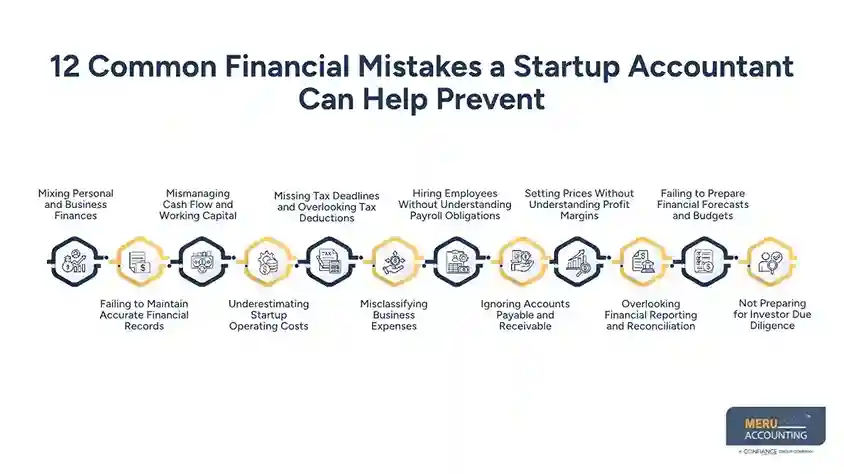
7. Hiring Employees Without Understanding Payroll Obligations
Hiring staff is a big step for any new firm. But payroll involves more than paying wages. Startups may need to track tax withholdings, payroll taxes, benefits, paid leave, and state rules.
A missed tax payment or wrong pay record can lead to fines and staff issues. Founders who handle payroll on their own may also miss key filing dates.
An accountant can help set up payroll records, track pay and tax costs, and check that entries match payroll reports. They can also work with payroll experts to help the firm meet its duties as it adds staff.
8. Ignoring Accounts Payable and Receivable
Late client payments can hurt cash flow, while missed vendor bills can harm trust and lead to late fees. Some startups track bills in emails or sheets but do not have a clear process to check what is due and when.
For example, a firm may have $15,000 in unpaid client bills but still need to pay $8,000 to vendors. Without a clear view of both, the founder may make poor cash choices.
A startup accountant can track accounts payable and accounts receivable, send due-date reports, and help set up a clear follow-up process. This helps the firm collect cash on time and pay vendors as planned.
9. Setting Prices Without Understanding Profit Margins
A startup may set prices based on what rivals charge or what clients seem ready to pay. But if prices do not cover direct costs and a fair share of overhead, the firm may lose money on each sale.
For example, a product that sells for $100 may cost $65 to make and ship. Once sales fees, staff time, and other costs are added, the profit may be much lower than the founder expects.
An accountant can review product or service costs, gross profit, and net profit. This helps founders set prices based on real costs and spot products or services that do not earn enough.
10. Overlooking Financial Reporting and Reconciliation
Bank balances, sales records, and book entries should match. If they do not, the books may have missing sales, duplicate costs, or errors that go unnoticed.
Some startups only review their books at tax time. By then, it may be hard to find the cause of an error or fix old entries.
A startup accountant can run bank and card checks each month and review key reports. These include the profit and loss statement, balance sheet, and cash flow statement. Regular checks give founders a clear view of the firm’s health.
11. Failing to Prepare Financial Forecasts and Budgets
A budget shows what a startup plans to earn and spend. A forecast helps it see what may happen based on sales, costs, and cash trends. Without both, founders may make plans based on hope rather than data.
For example, a startup may plan to hire five new staff members without checking if future sales can cover their pay. This can put cash under strain if sales grow more slowly than planned.
An accountant can help build monthly budgets and cash forecasts. They can also compare actual results with plans and explain why costs or sales are off track. This helps founders adjust plans before cash gets tight.
12. Not Preparing for Investor Due Diligence
Startups that seek funds need clear and reliable financial records. Investors may ask for tax returns, bank records, profit and loss reports, cash flow data, and details of past funding.
If the books are out of date or key records are missing, the review may take longer. It may also raise doubts about how well the firm is run.
A startup accountant can keep records in order, check account balances, and help prepare reports for review. This gives founders a better base when they speak with investors, lenders, or other funding partners.
How a Startup Accountant Helps Prevent Costly Financial Mistakes
A good accountant does more than log sales and costs. They help build sound money habits and give founders the data they need to make better choices.
Here are some key ways they add value:
- Clean bookkeeping: Keeps sales, bills, payroll, and costs up to date.
- Cash flow checks: Tracks cash needs and flags gaps before bills fall due.
- Tax support: Helps track tax dates, sort records, and plan for tax payments.
- Monthly reports: Gives founders a clear view of sales, costs, profit, and cash.
- Bank reconciliation: Checks that book entries match bank and card records.
- Budget and forecast support: Helps set targets and plan for future costs.
- Accounts payable and receivable: Tracks what the firm owes and what clients owe.
- Growth planning: Gives founders data to assess hiring, new costs, and funding needs.
The right level of support will depend on the firm’s size, type, and stage of growth. Some startups may only need monthly bookkeeping and tax help. Others may need full accounting support and regular cash flow reviews.
When Should a Startup Hire an Accountant?
There is no set time when every startup must hire an accountant. But early support can help prevent errors that are hard to fix later.
A startup should think about hiring an accountant when:
- It starts making regular sales and needs clean books.
- It hires staff and needs help with payroll and tax records.
- It has trouble tracking cash flow or unpaid bills.
- It plans to seek a loan or investor funding.
- It has sales in more than one state or a more complex tax setup.
- Its founder spends too much time on books instead of running the business.
Some founders hire an accountant at the time they set up the firm. Others start with basic bookkeeping and add more support as sales and costs grow. The key is to get help before poor records or cash issues start to affect the business.
How Meru Accounting Supports Startups With Outsourced Accounting Services
A missed bank reconciliation, an overdue client invoice, or an expense booked under the wrong account can affect more than the books. These issues can lead to poor cash flow decisions, incorrect profit reports, and problems during tax prep or investor reviews. Fixing them often takes more time than setting up the right process from the start.
At Meru Accounting, we help startups build better financial processes through hands-on accounting support. Our team works across the areas where early-stage businesses often need the most help:
- Bookkeeping and Bank Reconciliation: We record income and expenses, review transactions, match bank and card activity, and investigate discrepancies to keep financial records accurate.
- Accounts Payable and Receivable Management: We track vendor bills, payment dates, customer invoices, and outstanding balances to help reduce late payments and improve cash flow visibility.
- Payroll Accounting: We maintain payroll records, review payroll entries, and help reconcile wage expenses and related liabilities so payroll costs are properly reflected in the books.
- Tax Preparation Support: We organize expense records, maintain supporting documents, and help prepare tax-ready books so eligible deductions and tax obligations receive proper attention.
- Financial Reporting: We prepare profit and loss statements, balance sheets, and cash flow reports that help founders understand business performance and spot unusual costs.
- Catch-Up and Cleanup Accounting: We review outdated books, correct posting errors, address missing transactions, and bring financial records up to date.
- Budgeting and CFO Support: We help prepare budgets, review actual spending against targets, assess cash requirements, and build forecasts to support hiring, pricing, and growth plans.
Our work goes beyond entering transactions. We pay attention to how financial records connect across accounts, reports, and business decisions. With trained accounting professionals and a review process in place, we help founders get more reliable numbers and a clearer view of their finances.
If your startup is dealing with outdated books, unclear cash flow, or growing accounting needs, Meru Accounting can provide the support to get your financial processes back on track.
Our Expert Insight
One area founders often overlook is how quickly a startup’s financial structure can change after its first few hires. For instance, bringing on a mix of full-time employees, contractors, and freelancers creates different tax, payroll, and reporting needs. Treating all these payments the same can lead to worker classification issues and incorrect expense records.
We recommend reviewing worker agreements, payment terms, and payroll records whenever the team changes. Getting these details right early can save a startup from costly corrections and compliance issues later.
Key Takeaways
- Keep personal and business money in separate accounts.
- Update books on time and save proof of each sale and cost.
- Review cash flow, not just sales or profit.
- Plan for tax, payroll, and vendor payment dates.
- Use bank checks and monthly reports to find errors early.
- Set prices based on real costs and profit margins.
- Keep records ready if you plan to seek funds.
- Work with an accountant when your finance tasks become hard to manage.
FAQs
A startup should hire an accountant when it starts generating revenue, hiring employees, or dealing with tax and reporting needs. Getting help early can also prevent bookkeeping errors and make financial planning easier.
A startup accountant handles financial records, bank reconciliations, tax prep, payroll accounting, and financial reporting. They can also help with cash flow planning, budgets, and business decisions.
The cost depends on transaction volume, business size, and the services required. Basic bookkeeping costs less than full accounting support that includes payroll, tax prep, and financial reporting.
A bookkeeper records daily transactions, while an accountant reviews financial records, prepares reports, and handles more complex accounting and tax needs. Many startups need both as they grow.
Look for startup experience, clear pricing, a reliable review process, and services that match your business needs. Also consider the firm’s ability to support your business as it grows.
optional anymore
on running the business