Two businesses can make the same amount of money and still have very different tax bills simply because they operate in different states. That’s one reason state taxes can be hard to manage as a company grows. A sale, a new hire, or a change in where you keep your inventory can affect where you need to file and pay taxes. Understanding what is state tax nexus is the first step toward knowing where your business stands.
State tax nexus determines when a business has enough of a connection to a state for that state to impose certain taxes. But the rules aren’t the same everywhere, and having customers in another state doesn’t automatically mean you owe every type of state tax there. Let’s look at what creates nexus, which taxes it can affect, and how to check your business’s tax obligations.
What You Will Learn From This Blog
- What state tax nexus means and why it matters.
- How physical and economic nexus work.
- What business activities can create nexus in another state.
- Which state taxes may apply once nexus exists.
- How to check your business activity and find your filing duties.
- How to manage tax rules across more than one state.
What Is State Tax Nexus? Understanding the Basics
To understand what is state tax nexus, start with the link between a business and a state. This link gives the state the right to tax certain business activity. It may come from a place of work, staff, stock, sales, or other ties to that state.
For example, say your company is based in Texas but sells goods to buyers in California. If your sales meet California’s economic nexus rule, you may need to register and collect sales tax there. You don’t need a shop or office in California for this rule to apply.
State tax nexus does not mean that every business must pay every type of tax in each state where it has a buyer. The tax type, business activity, state law, and any legal limits all matter.
Nexus rules also differ from federal tax rules. Federal tax duties apply under federal law, while state nexus rules help each state decide when a business has tax duties within its borders.
optional anymore
on running the business
How Does State Tax Nexus Work for Businesses?
States use more than one test to decide if a business has enough of a link to them to create tax duties. The main types are physical presence and economic nexus. Other ties, such as staff, stock, and sales partners, may also matter.
1. Physical Presence Nexus
Physical presence nexus can arise when a business has a real link to a state. This may include:
- An office, shop, or other place of work.
- Staff who work in the state.
- Stock held in a local warehouse.
- A sales rep who visits buyers or seeks new orders.
- A branch or other fixed place of business.
For example, a firm based in Georgia hires a sales rep who works from home in North Carolina. That staff link may create tax duties in North Carolina, even if the firm has no local office.
The exact result depends on the type of tax and the state’s rules. A short visit may not have the same tax effect as a long-term place of work.
2. Economic Nexus
Economic nexus is based on sales or other business activity in a state, rather than a physical place there. It is common in sales tax rules for online sellers and remote firms.
In South Dakota v. Wayfair, Inc. (2018), the U.S. Supreme Court held that a state can require some out-of-state sellers to collect sales tax even without a physical presence. This gave states room to use economic tests for sales tax nexus.
Each state sets its own sales or transaction rules. Some use a sales amount, while others may also use a count of sales. Many states have changed their rules over time, so a business should check the current state law before it acts.
3. Employee and Remote Workforce Nexus
Hiring a worker in another state can create tax duties for your business. This may apply to a full-time employee, a remote worker, or, in some cases, a contractor.
The worker’s state may require your business to set up payroll accounts, withhold state income tax, or pay state unemployment tax. The worker’s role and the state’s rules can affect the result.
4. Affiliate and Click-Through Nexus
Some states use affiliate or click-through nexus rules. These may apply when a local person or firm helps an out-of-state seller make sales.
For example, a local partner may refer buyers to your website and earn a fee for each sale. If the state’s law treats this link as enough to create nexus, your business may have to collect sales tax there.
State Tax Nexus for Out-of-State Businesses: What Triggers Tax Obligations?
State tax nexus for out-of-state businesses can arise from more than one type of activity. A business should review its full link to each state, not just its sales.
Here are some common triggers:
Selling Products or Services in Another State
Sales to buyers in another state may count toward an economic nexus test. This can apply to online stores, direct sales, and some service firms. Check whether the state taxes your type of sale and what sales count toward its limit.
Hiring Staff Across State Lines
A remote worker may create payroll tax duties in the state where they work. The same may be true if you send staff there to sell goods, meet clients, or do work at a site.
Storing Goods in Another State
Stock in a warehouse or third-party fulfillment center may create physical nexus. This is a key issue for online sellers who use outside storage or shipping firms.
Opening an Office or Other Business Site
A shop, branch, office, or other fixed place can create a clear link to the state. It may lead to sales tax, income tax, or other state tax duties, based on the activity carried out there.
Attending Trade Shows or Business Events
Trade shows and short visits can raise nexus questions. Some states have rules for sellers who take orders or make sales at local events. The length and type of activity may affect the outcome.
Which Types of State Taxes Can Nexus Affect?
Nexus can affect more than one type of tax. It is vital to check each tax on its own, as one nexus test does not always apply to all state taxes.
1. State Sales and Use Tax
A seller with sales tax nexus may need to register, charge sales tax on taxable sales, file returns, and send the tax to the state. Use tax may also apply when a buyer owes tax on taxable goods bought without sales tax.
2. State Income Tax
A business may owe state income tax if its activity meets that state’s income tax nexus rules. These rules can differ from sales tax rules. A business may have sales tax nexus but not income tax nexus, or the other way around.
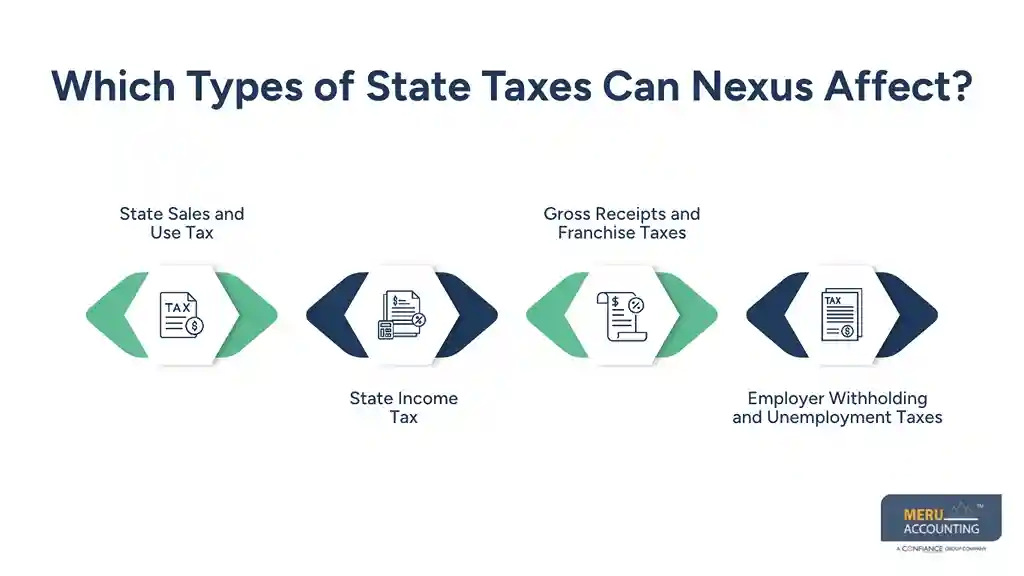
3. Gross Receipts and Franchise Taxes
Some states charge tax based on gross receipts, business activity, or a franchise tax base. These taxes may apply even when a business has little or no net income. Check the state’s rules to see which firms must file.
4. Employer Withholding and Unemployment Taxes
If your business has staff in another state, you may need to register for payroll tax accounts. This can include state income tax withholding and state unemployment tax. Some states also have other employer tax duties.
How to Determine If Your Business Has State Tax Nexus
If you sell, hire staff, or hold stock in more than one state, you should review your business activity on a regular basis. The following steps can help you find out where your business may have tax duties.
Step 1: Review Your Physical Business Presence
List all states where your business has an office, warehouse, shop, staff, or other place of work. Include both owned and rented sites. Also note where your sales staff and remote workers do their jobs.
Step 2: Check Sales Revenue and Transaction Limits
Review your sales by state. Compare your sales and transaction count with each state’s current economic nexus rules. Do not use one state’s sales limit for all states, as the rules can vary.
For example, if your online store sells goods to buyers in 10 states, you should check the sales tax rules in all 10 states. A high sales total in one state may create a filing duty, even if you have no office there.
You can use state tax agency websites or a trusted state-by-state nexus guide to check the rules. The Sales Tax Institute’s Economic Nexus State Guide provides a state-by-state view of these rules.
Step 3: Identify Employees and Contractors
Make a list of all states where your staff and contractors work. Note their work type, location, and start date. Then check if their work creates sales, income, or payroll tax duties in that state.
Step 4: Review Inventory and Shipping Locations
Check where your goods are stored and shipped from. If you use Amazon FBA or another third-party warehouse, find out where your stock is held. A warehouse link can create physical nexus, even if another firm owns and runs the site.
Step 5: Check Each State’s Tax and Filing Rules
Once you find a possible nexus link, check the rules for each tax type. Look at sales tax, income tax, gross receipts tax, and payroll tax as needed.
Use official state tax agency sites to confirm tax rates, sales limits, filing dates, and registration steps. Keep a record of the date you checked the rules, as states may change them.
Step 6: Register and Meet Your Tax Duties
If your review shows that you have nexus, find out when you must register and start filing. You may need to get a tax permit, collect sales tax, file returns, or set up payroll tax accounts.
Do not wait until tax season to check these duties. Some states may require returns even when you have no tax to report for a period.
How Meru Accounting Helps With State Tax Compliance
Expanding into new states can add more than sales to your business. It can also mean new tax registrations, filing deadlines, payroll duties, and reporting requirements. Meru Accounting helps businesses manage the accounting and tax work behind these obligations, so activity across different states doesn’t get lost in the books.
Our relevant services include:
- Multi-State Business Tax Preparation: Prepare business tax returns using organized financial records and state-wise business information.
- Tax Planning and Compliance Support: Review financial activity and tax records to help businesses plan for tax costs and meet filing requirements.
- Bookkeeping and Account Reconciliation: Maintain accurate sales, expense, and payment records to support state-level tax reviews.
- Payroll Accounting: Maintain payroll records, employee pay details, and tax data needed for state withholding and payroll reporting.
- Financial Reporting: Provide clear financial reports that help identify revenue and business activity across different locations.
- Tax Record Cleanup: Review and organize incomplete or outdated records before tax preparation and filing.
From tracking business activity to preparing tax returns, our team helps bring the accounting records and tax work together. This gives business owners a clearer view of their financial position and helps them stay prepared as their operations grow across state lines.
Our Expert Insight
One area that deserves attention is how a business handles marketplace sales versus direct sales. For example, Amazon may collect and remit sales tax on behalf of a seller in certain states. However, marketplace tax collection doesn’t automatically cover the seller’s direct website sales, wholesale orders, or other taxable transactions.
We recommend reviewing marketplace 1099-K forms, sales reports, exemption records, and direct sales separately during tax preparation. Treating all sales as marketplace transactions can lead to incorrect tax reporting, even when the marketplace has already collected some of the tax.
Key Takeaways
- State tax nexus is the link between a business and a state that can create tax duties.
- A business does not always need a local office to have nexus.
- Physical presence and economic activity can both create nexus.
- Remote workers, local stock, warehouses, and sales may trigger tax duties.
- Sales tax, income tax, and payroll tax have different nexus rules.
- Economic nexus limits vary by state and may change over time.
- Businesses should review their state links often and keep clear tax records.
- If nexus applies, timely registration, tax collection, and filing can help avoid penalties.
FAQs
A business generally needs to register when it establishes nexus and meets the state’s tax registration requirements. The deadline depends on the type of tax and the activity that creates nexus.
Not always. Selling to customers in another state does not automatically create state income tax liability. The state’s nexus rules and the nature of your business activity determine whether you need to file or pay tax.
Your business may face unpaid tax assessments, interest, late fees, and penalties. The state may also require you to file past-due returns and pay taxes for earlier periods.
Yes. Service businesses can establish nexus through employees, offices, or other business activities. Some states also have specific rules for sourcing service revenue.
Review your sales, employee locations, inventory, and business activities in each state. Compare them with current state tax rules or consult a tax professional to identify your registration and filing requirements.
optional anymore
on running the business