Managing a trucking business involves more than completing deliveries and collecting freight payments. Owner-operators must track fuel purchases, truck repairs, insurance, loan instalments, tolls, and other operating costs while maintaining accurate financial records. Missing transactions or delayed entries can affect cash flow and monthly profit reports. Trucking bookkeeping software gives owner-operators a structured way to record income, manage expenses, reconcile bank transactions, and review financial performance.
The right trucking bookkeeping software also reduces manual data entry and keeps important accounting records accessible throughout the year.
A fixed monthly accounting routine makes it easier to identify unpaid freight invoices, rising operating costs, and upcoming financial obligations. This blog explains the essential software features, monthly accounting workflow, and bookkeeping checklist for independent truck owners.
What You Will Learn From This Blog
- Why owner-operators need a monthly bookkeeping routine.
- How trucking bookkeeping software manages financial transactions.
- Which features matter when selecting accounting tools.
- How to organise bookkeeping tasks across four weeks.
- Which financial records need monthly review.
- How to avoid common accounting mistakes.
Why Owner-Operators Need a Structured Monthly Bookkeeping Workflow
Owner-operators handle several financial activities, including freight billing, fuel purchases, repairs, and customer collections. Without regular reviews, these transactions can become difficult to track.
Using trucking bookkeeping software as part of a monthly routine keeps financial records current and gives owners a clearer view of business performance.
- Income control: Match freight invoices with actual payments and identify overdue customer balances.
- Expense tracking: Review fuel, maintenance, insurance, and toll costs to understand monthly spending.
- Cash flow planning: Compare expected freight payments with loan instalments and supplier bills.
- Tax records: Maintain invoices, receipts, mileage details, and other supporting documents.
- Business decisions: Review monthly profit and operating costs before changing freight rates or spending plans.
What is Trucking Bookkeeping Software and How Does it Work?
Trucking bookkeeping software is an accounting system that records freight revenue, operating expenses, customer invoices, supplier payments, and other business transactions.
The system collects information through manual entries, bank feeds, receipt uploads, and connected platforms. Accounting software for trucking businesses uses these records to organise transactions and prepare financial reports.
Freight Income Recording
Record load revenue, broker details, invoice amounts, and payment dates. Trucking bookkeeping software keeps billed income separate from received payments, making outstanding amounts easier to identify.
Operating Expense Tracking
Classify fuel, repairs, insurance, tyres, tolls, and permits under suitable expense categories. This gives owners a clear record of the costs involved in running each truck.
Bank Transaction Matching
Import eligible bank transactions and match them with invoices, receipts, and payment records. Review unmatched entries before completing the reconciliation process.
Financial Report Preparation
Generate profit and loss statements, balance sheets, and cash flow reports from recorded transactions. These reports show business income, expenses, assets, liabilities, and available cash.
Monthly Record Management
Keep invoices, expense details, payment records, and financial statements in one system. Trucking bookkeeping software makes previous transactions easier to review during monthly and year-end accounting.
optional anymore
on running the business
Essential Features to Look for in Trucking Bookkeeping Software
Selecting trucking bookkeeping software requires checking whether its features match the financial activities of an owner-operated business. Accounting software for trucking businesses should cover the following areas.
Income and Freight Payment Tracking
The system should record load revenue, broker details, customer invoices, deductions, and payment dates. Trucking bookkeeping software should also show unpaid invoices and received payments separately.
Fuel, Maintenance, Insurance, and Operating Expense Management
Track diesel purchases, truck repairs, tyres, insurance premiums, tolls, and permits under separate categories. Accounting software for trucking businesses should make monthly expense reviews straightforward.
Mileage, IFTA, and Tax Record Management
Maintain mileage, fuel purchase details, and jurisdiction-wise travel records for applicable IFTA reporting. Check whether the software provides the required reports, as accounting records alone do not guarantee IFTA compliance.
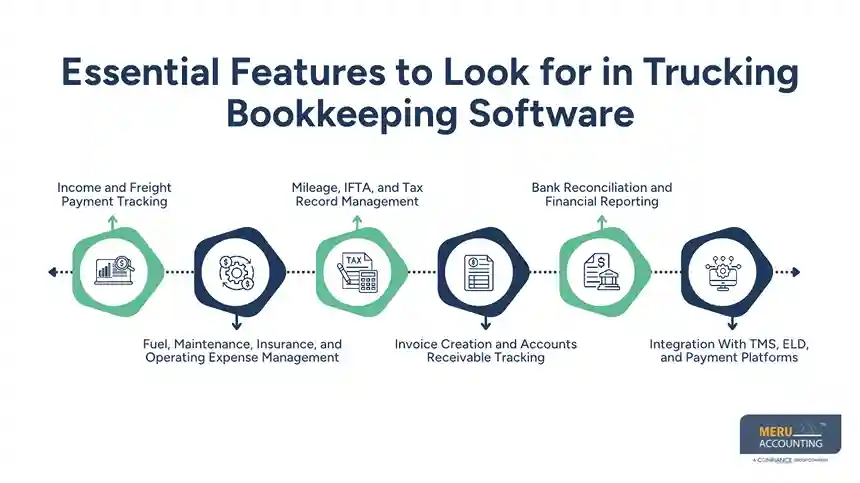
Invoice Creation and Accounts Receivable Tracking
Create freight invoices, set payment terms, and monitor outstanding customer balances. Trucking bookkeeping software should make it easy to identify delayed payments and review customer account activity.
Bank Reconciliation and Financial Reporting
Match accounting entries with bank and credit card statements to identify missing or duplicate transactions. The system should also prepare monthly income, expense, and cash flow reports.
Integration With TMS, ELD, and Payment Platforms
Check whether the software connects with transportation management systems (TMS), electronic logging devices (ELD), fuel cards, and payment platforms. These connections can reduce repeated data entry.
Monthly Bookkeeping Workflow for Trucking Owner-Operators
A four-week accounting routine divides financial tasks into manageable stages. Trucking bookkeeping software can be used throughout this process to record transactions and review monthly results.
Week 1: Collect Invoices, Receipts, and Load Payment Records
Gather freight invoices, broker statements, fuel receipts, repair bills, and payment confirmations from the previous month. Enter missing records into trucking bookkeeping software and verify load amounts against issued invoices.
Week 2: Categorise Fuel, Repairs, Tolls, and Other Operating Expenses
Review business purchases and assign each expense to the correct category. Accounting software for trucking businesses can keep fuel, maintenance, insurance, tolls, and equipment costs separate for monthly review.
Week 3: Reconcile Bank Accounts, Credit Cards, and Business Transactions
Compare recorded transactions with bank and credit card statements. Check deposits, supplier payments, fuel card charges, loan deductions, and bank fees. Investigate unmatched entries before completing reconciliation.
Week 4: Review Income Statements, Cash Flow, and Outstanding Payments
Review monthly revenue, operating expenses, unpaid invoices, and upcoming bills. Use trucking bookkeeping software to check financial reports and assess whether available cash can meet upcoming business expenses.
Monthly Trucking Bookkeeping Checklist for Owner-Operators
Use this checklist before closing each month. Accounting software for trucking businesses can keep the supporting records organised while owners verify the following items.
Verify Freight Invoices and Customer Payments
- Match load records with issued invoices.
- Confirm payments against customer statements.
- List overdue invoices and pending deductions.
Record Fuel Purchases and Mileage Details
- Enter fuel purchases with dates and amounts.
- Update mileage and jurisdiction-wise travel records.
- Match fuel card statements with recorded expenses.
Update Truck Maintenance and Repair Expenses
- Record repair, service, and tyre costs.
- Retain supplier invoices and receipts.
- Update major maintenance expenses.
Reconcile Bank and Credit Card Statements
- Compare recorded entries with monthly statements.
- Identify missing or duplicate transactions.
- Verify bank charges and card payments.
Review Accounts Payable and Accounts Receivable
- Check unpaid customer invoices.
- Review supplier bills and due dates.
- Confirm that received payments are recorded.
Check Loan Payments, Insurance, and Equipment Expenses
- Verify truck loan instalments and interest.
- Record insurance premiums and payments.
- Review equipment purchases and related costs.
Prepare Monthly Financial Statements
- Review the profit and loss statement.
- Check the balance sheet and cash flow report.
- Compare results with the previous month.
Organise Tax Documents and Supporting Records
- Store invoices, receipts, and bank statements.
- Maintain fuel and mileage records.
- Arrange documents by month and expense type.
How Accounting Software for Trucking Businesses Simplifies Monthly Bookkeeping
Accounting software for trucking businesses brings financial information from banks, fuel cards, brokers, and suppliers into a common accounting system. When used correctly, trucking bookkeeping software reduces repeated data entry and makes monthly financial reviews easier.
Automated Transaction Recording and Expense Categorisation
Bank feeds can import eligible transactions, while preset expense categories reduce manual classification. Owners should still review entries before approval to avoid incorrect records.
Centralised Financial Records for Multiple Income and Expense Sources
Freight income, customer payments, fuel costs, and supplier bills remain accessible in one system. Accounting software for trucking businesses reduces the need to check separate spreadsheets and folders.
Faster Bank Reconciliation and Financial Reporting
Transaction matching reduces manual comparisons between accounting records and bank statements. Once entries are verified, trucking bookkeeping software can prepare monthly reports more efficiently.
Better Tracking of Profit Margins and Operating Costs
Monthly reports compare freight revenue with fuel, maintenance, insurance, and other expenses. Accounting software for trucking businesses gives owners useful figures for reviewing freight rates and operating costs.
Common Bookkeeping Mistakes Owner-Operators Should Avoid
Even reliable trucking bookkeeping software cannot correct incomplete records or incorrectly entered transactions. Owner-operators should avoid these common accounting mistakes.
Mixing Personal and Business Transactions
Use separate bank accounts for personal and business spending wherever possible. Record personal funds used for business expenses correctly.
Missing Fuel Receipts and Expense Records
Retain fuel receipts, repair invoices, toll records, and other proof of business expenses. Bank entries alone may not provide enough detail to establish the purpose of a purchase.
Recording Freight Income Without Checking Payment Status
An issued invoice does not confirm that money has been received. Track billed income and actual payments separately in trucking bookkeeping software.
Overlooking Recurring Expenses and Loan Obligations
Review insurance premiums, loan instalments, permits, and subscription costs every month. Accounting software for trucking businesses can maintain these entries for regular review.
Delaying Bank Reconciliation and Monthly Reporting
Complete bank reconciliation every month instead of postponing it until tax season. Timely reviews make missing transactions and payment errors easier to identify.
How We Manage Trucking Bookkeeping and Accounting at Meru Accounting
Meru Accounting provides bookkeeping and accounting services for trucking businesses that need accurate financial records and regular reporting. We manage key accounting tasks, including freight income recording, expense classification, bank reconciliation, accounts payable, accounts receivable, payroll, and financial reporting.
Our trucking bookkeeping services cover:
- Freight income tracking: We record load revenue, broker invoices, customer payments, and outstanding balances to maintain accurate income records.
- Operating expense management: Our team classifies fuel, truck repairs, insurance, tolls, permits, and other business expenses.
- Bank reconciliation: We compare recorded transactions with bank statements and review differences before closing monthly accounts.
- Accounts payable and receivable: We maintain supplier payment records and track outstanding customer invoices.
- Payroll accounting: We maintain payroll entries, employee payment records, and related accounting information.
- Monthly financial reporting: We prepare reports covering business income, operating expenses, cash flow, and outstanding balances.
At Meru Accounting, we follow a structured monthly accounting process to keep financial records organised and ready for business reviews and tax preparation. Our reports give trucking business owners a clear view of their financial position and operating costs.
Our Expert Perspective
Trucking bookkeeping software is only as reliable as the financial information entered into it. Owner-operators should verify freight payments, retain expense receipts, and reconcile bank transactions every month rather than relying entirely on automated entries.
A consistent closing process also makes it easier to compare operating costs with freight revenue. A business may report a profit while facing a cash shortage because customers have not paid their invoices. Regular reviews of both profit and cash flow give owners a more accurate view of their financial position.
Key Takeaways
- Use trucking bookkeeping software to record freight income and operating expenses.
- Follow a four-week monthly accounting workflow.
- Verify invoices, fuel purchases, mileage, and customer payments.
- Reconcile bank and credit card statements every month.
- Review truck loans, insurance, and recurring expenses.
- Keep tax documents and supporting records organised.
FAQs
The best trucking bookkeeping software for US owner-operators should include freight income tracking, fuel expense management, bank reconciliation, invoicing, and IFTA record management.
Owner-operators should record freight payments, categorise operating expenses, reconcile bank accounts, review unpaid invoices, and prepare monthly financial statements.
Owner-operators should track fuel, truck repairs, tyres, insurance, tolls, permits, loan interest, and other eligible business expenses with supporting records.
Yes, trucking bookkeeping software can record freight invoices, customer payments, fuel purchases, maintenance costs, and other operating expenses in one accounting system.
A monthly bookkeeping checklist ensures that freight income, business expenses, bank transactions, loan payments, and tax records are reviewed before closing the accounts.
optional anymore
on running the business