Payroll tax errors can create financial and legal problems for small businesses, particularly when tax deposits, employee withholding amounts and quarterly returns do not match IRS records. A missed payment, incorrect tax calculation or late filing can result in penalties, interest charges and official notices from the Internal Revenue Service (IRS). Using payroll tax compliance software allows businesses to maintain payroll records, track tax liabilities and review filing and payment details before they become larger problems.
Small businesses must manage several payroll tax duties, including federal income tax withholding, Social Security and Medicare taxes, and Federal Unemployment Tax Act (FUTA) payments. Each duty has its own reporting and payment rules. Even when a business uses a payroll provider, the employer remains responsible for meeting its federal tax obligations.
Payroll tax software for small businesses provides a central system for recording employee wages, calculating payroll taxes, preparing tax returns and tracking payment activity. When an IRS notice arrives, these records can make it easier to identify the cause, check the amount due and prepare an accurate response.
This blog explains how payroll tax compliance software can assist small businesses with IRS notices, payroll tax records and future filing duties.
What You Will Learn From This Blog
- The main federal payroll tax duties that small businesses must follow.
- How payroll tax compliance software records tax calculations, deposits and filings.
- Common IRS payroll tax notices and the reasons businesses receive them.
- How to review an IRS notice and compare it with payroll records.
- Ways to prevent payroll tax errors, late deposits and filing gaps.
- How professional accounting services can improve payroll tax record management.
Understanding Payroll Tax Compliance Requirements for Small Businesses
Small businesses must follow federal rules for withholding, depositing and reporting employment taxes. Payroll tax compliance software can make these duties easier to track by keeping tax records and payment details in one place.
Federal Income Tax Withholding
Employers must withhold federal income tax from employee wages based on the employee’s Form W-4 and the applicable IRS withholding rules. The amount withheld must be recorded correctly using payroll tax software for small businesses and included in the required employment tax reports.
Social Security and Medicare Taxes
Employers generally withhold the employee’s share of Social Security and Medicare taxes and pay the employer’s share. Payroll tax compliance software records these amounts during each pay cycle and keeps a record of the tax liability.
Federal Unemployment Tax (FUTA)
FUTA is an employer-paid tax that funds federal unemployment programmes. It is not deducted from employee wages, and eligible employers generally report it through annual Form 940.
Quarterly and Annual Tax Returns
Most employers file Form 941 every quarter to report federal income tax withholding and Social Security and Medicare taxes. Some eligible small employers may receive IRS approval to file Form 944 annually instead.
Federal Tax Deposit Schedules
Employers generally follow monthly or semiweekly deposit schedules based on their tax liability during the IRS lookback period. A business that follows the wrong schedule may face a failure-to-deposit penalty.
optional anymore
on running the business
What is Payroll Tax Compliance Software and How Does it Work?
Payroll tax compliance software is a system that records payroll activity, calculates employment taxes and tracks tax reporting duties. Payroll tax compliance software gives small businesses a clearer view of their tax liabilities and the records needed to review IRS notices.
Employee Wage and Tax Data
The system stores employee details, gross wages, taxable pay, withholding amounts and other payroll data. These records form the basis for tax calculations and employment tax reports.
Automatic Payroll Tax Calculations
The software applies the relevant tax rates and withholding rules to employee wages. Payroll tax compliance software can reduce manual calculation errors, although employers must keep tax settings and employee details up to date.
Tax Filing and Deposit Tracking
Payroll tax software for small businesses records filing periods, tax liabilities and payment dates. Some platforms also offer electronic filing and payment features, while others only prepare reports for the employer or its tax professional.
Payroll Tax Reports and Records
Businesses can review payroll summaries, tax liability reports and payment histories. These records make it easier to compare reported figures with IRS account information.
Notice Review and Error Identification
Payroll tax compliance software can provide records that help identify differences between payroll calculations, filed returns and tax deposits. However, it cannot independently determine every reason for an IRS notice or replace a proper review of the tax account.
Common IRS Payroll Tax Notices Small Businesses Receive
IRS notices inform employers about unpaid balances, return adjustments, deposit issues and other tax account matters. Payroll tax compliance software can provide useful records when a business needs to investigate these notices.
CP161: Balance Due on Employment Tax Account
CP161 informs a business that the IRS records show an unpaid tax balance. The notice explains the amount due and may include penalties and interest. Employers should compare the notice with filed returns and payment records before paying or disputing the amount.
CP220: Changes to Tax Account
CP220 is an IRS tax adjustment notice that explains changes made to a tax account. The exact reason depends on the tax form and account involved. Businesses should read the notice, check the affected period and compare the adjustment with their original return.
CP276B: Federal Tax Deposit Information
CP276B informs an employer that the IRS did not receive the correct amount of timely tax deposits but decided not to charge a Federal Tax Deposit penalty on that occasion. The business should still review its deposit records and correct any mistakes to avoid future charges.
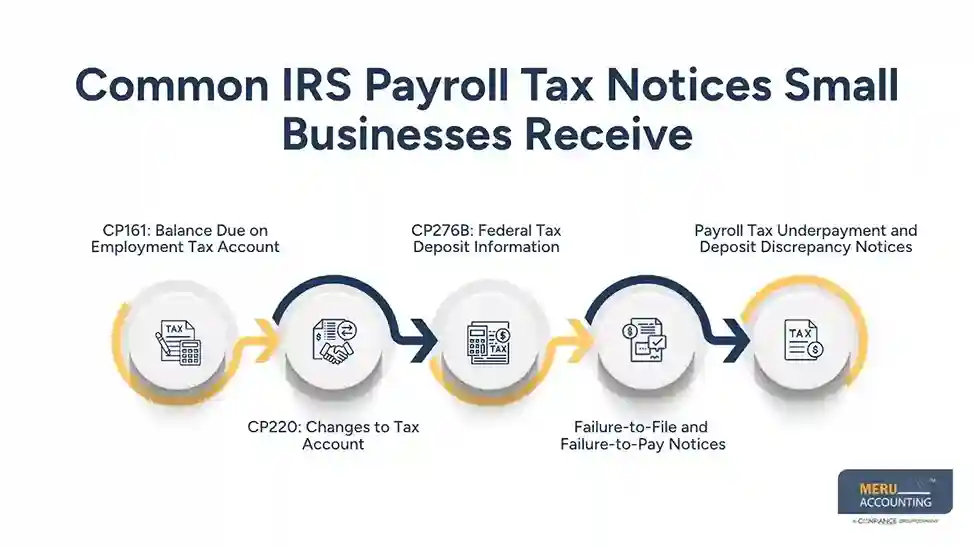
Failure-to-File and Failure-to-Pay Notices
These notices may arise when a business fails to submit a required return or does not pay the reported tax by the due date. Payroll tax compliance software can provide filing histories and payment records to identify missed duties.
Payroll Tax Underpayment and Deposit Discrepancy Notices
These notices may arise when the IRS records show a difference between reported tax liabilities and deposits received. Businesses should use payroll tax software for small businesses to check payment dates, tax periods, amounts and payment confirmation numbers before deciding how to respond.
How Payroll Tax Software for Small Businesses Helps Manage IRS Tax Notices
When a notice arrives, businesses need reliable records to find the reason for the difference. Payroll tax compliance software provides a record of payroll calculations, tax deposits and filing activity that can be used during this review.
Identifying Payroll Tax Calculation Errors
Incorrect wage data, employee classifications or withholding details can create differences in reported tax amounts. Payroll tax software for small businesses allows employers to review past payroll calculations and identify entries that may need correction.
Tracking Tax Deposits and Filing Discrepancies
A business can compare its recorded tax payments with IRS account details to find missing or incorrectly applied deposits. Payroll tax compliance software can also keep payment dates and confirmation numbers for future reference.
Maintaining IRS Notice-Related Payroll Records
Employers need access to payroll reports, filed returns, deposit confirmations and employee wage details when reviewing an IRS notice. A well-maintained software system keeps these records organised for review and future reference.
Reviewing Previous Payroll Tax Returns
A notice may relate to an earlier quarter or tax year rather than the current payroll period. Businesses can use stored reports to compare the original Form 941 or Form 940 figures with the amounts stated by the IRS.
Supporting Timely Tax Corrections and Payments
Once an error is confirmed, employers can review the required correction and arrange the payment or amended filing. Payroll tax compliance software provides the underlying records, but any correction must follow the relevant IRS rules and instructions.
How to Respond to an IRS Payroll Tax Notice
An IRS notice should never be ignored, even when the business believes its payroll taxes were paid correctly. Payroll tax compliance software can provide useful evidence, but the employer must follow the response instructions and deadline stated in the notice.
Identify the IRS Notice and Its Reason
Read the notice number, tax period, employer identification number and explanation carefully. Check whether the IRS is asking for payment, reporting an adjustment or requesting additional information.
Verify Payroll Tax Returns and Payment Records
Collect the relevant payroll reports, tax returns and payment confirmations. Payroll tax compliance software can provide the records needed to compare the reported amounts with the figures shown in the notice.
Compare IRS Assessments With Payroll Records
Check whether the tax amount, deposit dates and filing period match records maintained through payroll tax software for small businesses. For example, a payment made under the wrong tax period may not appear against the liability stated in the notice.
Correct Filing or Deposit Errors
If you identify an error, determine whether an amended return, payment correction or additional deposit is required. Follow the instructions for the relevant form and tax period rather than changing figures without proper review.
Submit Supporting Documents and Responses
If you disagree with the IRS assessment, provide a clear explanation and copies of relevant documents. Never send original records unless the IRS specifically requires them, and follow the response method stated in the notice.
Track IRS Correspondence and Resolution Status
Keep copies of the notice, response, supporting documents and payment confirmation. Record the date of each communication and check whether the IRS has updated the account after reviewing your response.
How to Prevent Future IRS Payroll Tax Notices
Preventing payroll tax notices requires accurate employee data, regular account reviews and timely tax deposits. Payroll tax compliance software can make these tasks easier to manage by keeping important records and due dates visible.
Maintain Accurate Employee Payroll Records
Review employee names, identification details, wage rates, working hours and Form W-4 information. Correct records reduce the risk of incorrect withholding and differences between payroll reports and tax returns.
Reconcile Payroll Tax Liabilities Regularly
Compare payroll tax liabilities with filed returns and payments each month or quarter. Payroll tax compliance software can provide reports that make it easier to identify unpaid amounts or differences before the next filing date.
Monitor Federal Tax Deposit Schedules
Check whether your business follows the monthly or semiweekly deposit schedule set by the IRS. Remember that deposit dates are not always the same as return filing dates, so both must be tracked separately.
Review Quarterly Form 941 and Annual Form 940 Filings
Compare Form 941 figures with payroll tax software for small businesses records and check annual FUTA amounts before filing Form 940. Review adjustments, taxable wages and payment details to reduce the risk of reporting errors.
Maintain Proof of Tax Payments and Filing Confirmations
Save electronic payment receipts, EFTPS confirmation numbers, filing acknowledgements and copies of submitted returns. Payroll tax compliance software can keep these records together, making it easier to respond when the IRS questions a payment or filing.
Why Choose Meru Accounting for Payroll Tax Record Management?
Meru Accounting provides accounting, bookkeeping, payroll and financial reporting services to businesses operating in the USA and other markets. Accurate payroll records and proper account reconciliation are important when businesses need to review tax liabilities, payment differences and IRS correspondence.
Small businesses can benefit from the following services:
- Payroll accounting: Recording employee payroll expenses, wage liabilities and related tax entries in the correct accounts.
- Account reconciliation: Comparing recorded transactions with bank statements and payment records to identify differences.
- Financial record management: Maintaining organised accounting data for review, reporting and tax-related work.
- Payroll expense reporting: Preparing financial reports that show payroll costs and related business expenses.
- Tax-related record review: Examining relevant financial records and identifying differences that may require further review.
Payroll tax compliance software can keep payroll information organised, while accurate accounting records provide a wider view of business transactions and liabilities. Our accounting and bookkeeping services can form part of this record management process. Businesses should also work with a qualified US tax professional for IRS representation, tax advice or formal notice responses where required.
Our Expert Perspective
An IRS payroll tax notice does not always mean that a business has calculated its taxes incorrectly. A payment may have been applied to the wrong tax period, a return may contain a reporting difference, or a deposit may have reached the IRS after its due date.
In our view, businesses should not wait for a notice before reviewing payroll tax records. Regular reviews of payroll tax software for small businesses reports, filed returns and deposit confirmations can reveal errors while there is still time to correct them.
Payroll tax compliance software is most useful when businesses review its reports regularly and do not rely on automated calculations without checking the underlying data.
Key Takeaways
- Small businesses must follow federal rules for employee withholding, tax deposits and employment tax returns.
- Payroll tax compliance software records payroll data, calculates tax liabilities and keeps filing and payment details.
- CP161 generally reports an unpaid balance, while CP276B provides information about federal tax deposits and a decision not to charge a penalty on that occasion.
- CP220 explains a tax account adjustment, so businesses must check the form and tax period involved.
- Employers should compare IRS notices with payroll reports, filed returns and payment confirmations before responding.
- Regular reconciliation and timely deposits can reduce the risk of payroll tax errors and penalties.
- Meru Accounting provides accounting, bookkeeping and payroll services that form part of accurate business record management.
FAQs
The best payroll tax compliance software for small businesses should offer accurate tax calculations, automated filing, federal tax deposit tracking and easy access to payroll records.
Payroll tax compliance software helps businesses review tax calculations, compare IRS assessments with payment records and identify payroll filing or deposit errors.
Common IRS payroll tax notices include CP161 for unpaid balances, CP220 for tax account adjustments, CP276B for federal tax deposit information and notices for late filing or payment.
A small business should review the notice number, verify the tax period, compare IRS records with payroll reports and submit the required payment or response before the stated deadline.
Payroll tax software for small businesses can reduce penalty risks by tracking tax deadlines, recording employee withholding, monitoring federal deposits and maintaining accurate filing records.
optional anymore
on running the business