
A paperless business is becoming a preferred choice for companies that want better control of financial records, lower operating costs, and quick access to important documents. Instead of managing paper invoices, receipts, bank statements, and reports, businesses store financial information electronically using cloud-based systems. This approach saves office space, reduces manual work, and makes it easier to find records whenever they are needed.
Many owners of a paperless business also choose outsourced bookkeeping and accounting services to keep their financial records accurate and up to date. Experienced accountants use secure cloud accounting software to manage bookkeeping, reporting, tax preparation, and compliance while business owners focus on daily operations and growth.
Whether it is a startup, an online company, or a growing virtual business, outsourcing financial tasks provides reliable records, better financial visibility, and easy access to information whenever required.
What You Will Learn From This Blog
- Understand what a paperless business is and why more companies are adopting it.
- Learn how paperless bookkeeping works with cloud accounting software.
- Explore the main advantages of outsourced bookkeeping and accounting services.
- Know how a virtual business benefits from digital financial management.
- Learn the common challenges of going paperless and practical ways to overcome them.
- Understand how professional bookkeeping keeps financial records accurate and organized.
- Find out how Meru Accounting supports businesses with outsourced bookkeeping and accounting services.
Introduction to Paperless Business
A paperless business works with digital records. It keeps data in the cloud or on secure systems instead of paper files. This shift helps business owners cut costs and save space. Many small and mid-size firms now choose this model.
Why Digital Business Makes Sense
- No paper means no printing costs or storage needs
- Cloud systems give access to records anytime
- Staff waste less time on filing and searching
- Data stays safe with strong backups
- It helps reduce bookkeeping costs, too
What Is Paperless Bookkeeping?
Paperless bookkeeping means all your financial data is stored and shared online. It uses tools that help manage bills, receipts, and reports with ease. Digital bookkeeping also cuts down on manual errors.
How Digital Bookkeeping Works
- Use apps to scan and store receipts
- Link bank accounts to bookkeeping software
- Share files with your accountant using cloud tools
- Track costs, taxes, and income in real time
- Access data from your phone or computer
Top Benefits of a Paperless Organization
Going paperless brings many wins, particularly for a virtual business that depends on digital operations. It saves time, money, and stress. With fewer files to manage, teams work better and faster.
Saves Office Space and Supplies
A paperless business removes the need for printers, paper, files, and ink. You save money and free up space. Less mess means more room for productive work and smoother movement in your workplace.
Boosts Speed and Workflow
Staff can share files, check records, and work in real-time. A paper-free business removes delays caused by lost papers or manual work. Faster processes mean better use of time and effort.
Cuts Human Errors
Manual bookkeeping often leads to mistakes and confusion. Paperless bookkeeping uses smart tools that auto-check entries. You reduce errors and gain trust in your financial records every day.
Supports Remote Work
Teams can work from any place with internet access. Cloud tools help staff reach files anytime. This flexibility boosts team happiness and keeps your digital business running without office limits.
Improves Data Safety
Digital files are saved on the cloud with backups and security. Strong passwords and encryption guard your data. Your digital business stays safe from theft, loss, or damage.
Makes Clients Happy
Clients love fast replies and easy file sharing. A Cloud-based business helps you send reports or invoices quickly. Good service builds long-term trust and a solid brand image.
Helps the Earth
A paperless business reduces your carbon footprint. Using fewer resources saves trees and cuts waste. This eco-friendly move supports green goals and improves your brand’s public image.
Why a Paperless Business Works Better With Outsourced Bookkeeping and Accounting Services
A paperless business works best when financial information is managed accurately, stored securely, and updated regularly.
Outsourced bookkeeping and accounting services make this possible by using cloud technology, digital workflows, and experienced accounting professionals. For a growing virtual business, this combination creates an organized financial system without adding internal workload.
Digital Financial Records Stay Organized
Invoices, receipts, bank statements, and expense records are stored electronically instead of filing cabinets. This allows a paperless business to locate documents quickly whenever required.
Daily Transactions Are Recorded Promptly
Professional bookkeepers record income and expenses regularly, reducing the chance of missing transactions. Updated records also provide a clearer picture of business performance.
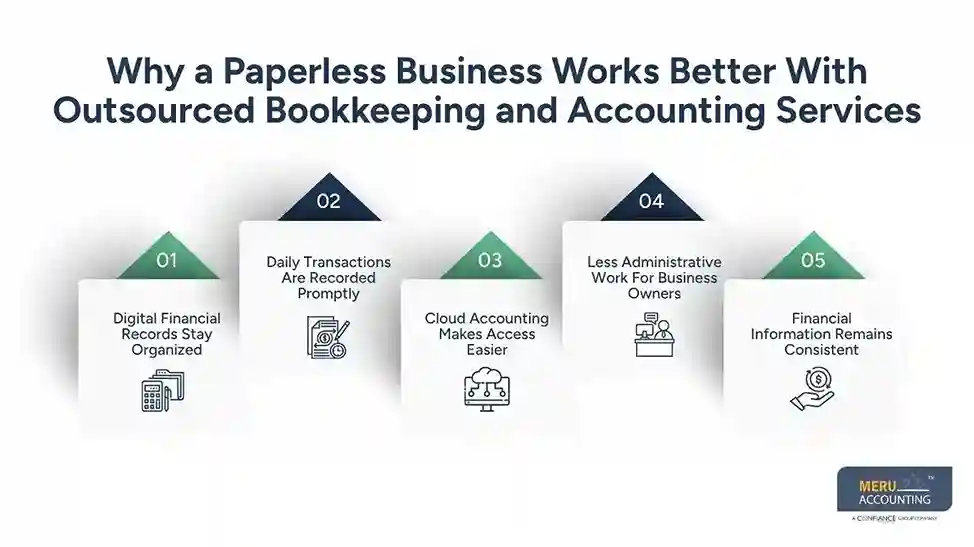
Cloud Accounting Makes Access Easier
Cloud accounting software allows authorized users to review financial information from different locations. This is especially useful for a virtual business operating with remote teams.
Less Administrative Work For Business Owners
Business owners spend less time entering financial data manually and more time managing customers, operations, and growth. This allows internal teams to focus on activities that generate revenue and improve customer service.
Financial Information Remains Consistent
Professional accounting procedures reduce duplicate entries and maintain consistency across financial reports throughout the year. Consistent financial records also make budgeting, forecasting, and tax preparation more reliable.
How Paperless Bookkeeping Enhances Efficiency
Paperless bookkeeping transforms how small firms manage accounts. It improves speed, clarity, and accuracy, making financial tasks easier to handle.
Easy File Tracking
You can locate records, invoices, or bills in seconds. No need to dig through cabinets. Digital bookkeeping makes document search fast, reliable, and stress-free for every team member.
Quick Updates
In a paperless business, your records update in real time with smart software tools. You always see current balances, unpaid invoices, and cash flow. This keeps your decisions sharp and fully informed.
Better Cash Flow Control
You can watch every payment in and out. Charts show trends clearly. Digital bookkeeping helps you avoid late fees and track where money goes, boosting financial control.
Simple Tax Filing
Your financial data stays sorted, clean, and ready for audits. Filing taxes becomes fast and smooth. Digital bookkeeping also reduces errors in reports, which lowers audit risks.
Less Paper, More Clarity
Digital reports are easier to read and share. Staff can open the same file and leave notes. Digital bookkeeping gives structure and flow to your data.
Shared Access
Team members can work on files together from different places. You don’t need to wait for someone to finish. This shared view improves speed and teamwork daily.
Strong Backup and Safety
For a paperless business, data is saved in the cloud with secure backup copies. Even if one tool fails, your files remain safe. This feature keeps your cloud-based business protected around the clock.
Common Drawbacks of a Paperless Business
Going paperless has many benefits, but there are a few challenges. With smart steps, these can be handled with ease.
Setup Cost
Starting a paperless business may need investment in tools and training. You buy devices and pay for software. But over time, savings from space, supplies, and staff time cover the cost.
Tech Skills Needed
Staff must learn new systems to work without paper. Some may take longer to adapt. With the right help and training, most people adjust well to paperless tools.
Risk of Data Breach
Online files are at risk from hackers or leaks. A digital business needs strong passwords and secure networks. Simple changes can keep your data safe from attacks.
Power or Wi-Fi Issues
When electricity or the internet fails, a virtual business may experience temporary work interruptions. A digital business should plan for this. Keep battery backups and mobile data to avoid major delays or downtime.
Legal or Audit Issues
Some rules still need printed documents. Your digital business should check tax laws and retain copies where needed. Smart scanning tools can help meet legal standards.
Screen Time Stress
Staff spend long hours looking at screens. This can cause eye strain or fatigue. Plan short breaks and provide good lighting to keep your team productive and healthy.
Tech Tool Failures
Software may crash or freeze. This stops work and affects deadlines. Your digital business must use reliable tools and keep backup systems to stay safe from errors.
How to Overcome the Drawbacks of Paperless Bookkeeping
Smart steps can solve most issues in paperless bookkeeping. Planning and tools make your business safer, faster, and easier to manage.
Train Your Team
Teach your team how to use paperless tools well. Offer short, clear lessons or guides. When people feel confident, they work faster and avoid mistakes.
Use Strong Passwords
Create passwords with numbers, letters, and symbols. Change them often. Add two-factor login to stop hacking. This keeps your Digital bookkeeping secure and under control.
Keep Offline Copies
Save copies of key files on USB or hard drives. Print only when laws require it. This backup system ensures no data loss in tough times.
Choose Good Software
Pick software with high ratings and reliable customer support to keep your paperless business running smoothly. Select software that offers regular updates and strong data security features.
Plan for Power Cuts
Use laptops with long battery life. Keep mobile hotspots ready. These steps keep your team active, even when the internet or power fails unexpectedly.
Review Data Rules
Know the local and national laws that apply to your paperless or virtual business and its digital records. Check audit and tax filing rules often. Staying updated helps you avoid trouble and fines.
Set Screen Breaks
Encourage short breaks from the screen every hour. Use eye-friendly settings and good chairs. These changes protect staff health and support long-term productivity.
How Meru Accounting Supports Your Paperless Business
Moving to a paperless business requires more than digital document storage. Accurate bookkeeping keeps financial records complete and organized. Secure systems protect important business information. Professional accounting also keeps reporting timely and reliably.
At Meru Accounting, we provide outsourced bookkeeping and accounting services. Our solutions fit modern businesses using cloud-based accounting systems.
Cloud-Based Bookkeeping
We maintain financial records using trusted cloud accounting software. Your financial data stays organized and easily accessible. Authorized users can securely access records whenever required.
Accurate Financial Reporting
We prepare accurate financial reports for informed business decisions. Clear reports show business performance and cash flow. Reliable reporting strengthens financial planning throughout the year.
Secure Document Management
We organize invoices, receipts, and financial records digitally. Secure systems protect sensitive business information from unauthorized access. Digital storage also reduces paperwork and manual filing.
Tax And Compliance Assistance
We prepare financial records for timely tax filing. Our team follows current accounting and compliance requirements. Proper documentation reduces reporting errors and missing information.
Flexible Accounting Services
Our services match businesses of different sizes and industries. We also support every growing virtual business with flexible solutions. Services expand as your accounting needs increase.
Experienced Accounting Professionals
Our experienced professionals manage daily bookkeeping with accuracy. We maintain organized financial records throughout the year. Business owners can focus on growth with confidence.
Our Expert Perspective
From our experience working with businesses across different industries, companies that adopt a paperless business model often gain better financial organization and easier access to important business records. Digital bookkeeping allows financial information to remain current while reducing the effort required to manage paper documents.
We have also observed that businesses using outsourced bookkeeping are often better prepared for financial reporting, tax filing, and business planning. As more companies operate as a virtual business or with remote teams, combining cloud accounting with professional bookkeeping creates a practical and dependable financial management system that supports long-term business success.
Key Takeaways
- A paperless business stores financial records electronically instead of relying on paper documents.
- Digital bookkeeping makes financial information easier to organize, access, and share.
- Outsourced bookkeeping reduces administrative work while maintaining accurate financial records.
- Cloud accounting allows secure access to financial information from different locations.
- A virtual business benefits from remote access to accounting records and financial reports.
- Paperless bookkeeping reduces printing, storage, and document management costs.
- Strong security practices protect digital financial information from unauthorized access.
- Proper bookkeeping simplifies tax preparation and regulatory compliance.
- Meru Accounting provides professional bookkeeping and accounting services that support modern paperless businesses.
FAQs
What is a paperless business?
A business runs without using printed documents. It uses digital tools to send, store, and manage files. This method saves space, time, and money while improving speed and accuracy.
Is paperless bookkeeping safe for my business?
Yes, this bookkeeping is very secure when done right. Tools use encryption, password protection, and backups. This keeps your business data safe from loss, theft, or system failure.
What are the biggest benefits of going paperless?
A digital business saves space, cuts costs, and improves speed. It supports remote work and reduces human errors. You also help the planet by using fewer resources like paper and ink.
Are there any risks in running a paperless business?
Yes, there are a few risks, like data breaches or tech failure. But with strong passwords, backups, and training, your business can stay safe and avoid major losses or downtime.
Can small businesses switch to Cloud bookkeeping?
Yes, small firms can easily move to cloud bookkeeping. It needs basic training and software setup. Over time, you save money and gain faster access to reports, invoices, and key data.