Accounts receivable management is the process of tracking customer invoices, payments, and outstanding balances. It helps businesses collect money on time, maintain steady cash flow, and reduce the risk of unpaid bills. A clear process also gives owners better insight into what customers owe and when payments are due.
What You Will Learn From This Blog
- Why accounts receivable management matters to business cash flow.
- What key tasks are involved in managing customer payments.
- How to identify issues that may lead to late payments.
- Which receivables metrics can help monitor payment performance.
- What practices can help improve the overall process.
What Is Accounts Receivable Management?
Accounts receivable management is the way a firm tracks and collects money that clients owe. It starts when a sale is made on credit and ends when the full sum is paid and logged. The aim is not just to get paid fast. It is also to keep each bill clear, keep cash flow on track, and spot pay risk early.
A sound process gives the team a clear view of open bills, due dates, past-due sums, and client pay trends. It can also help the firm find errors, fix bill gaps, and take action when a bill may not be paid on time.
For day-to-day use, this work may cover:
- Set clear pay terms before a sale.
- Send bills with the right data and due date.
- Track each open bill from issue to pay.
- Match each pay to the right bill and client.
- Review past-due bills and take due steps.
- Fix bill or pay gaps that may cause a delay.
- Check AR data to spot risk and pay trends.
In short, accounts receivable management gives a firm a set way to turn credit sales into cash while keeping its records clear and up to date.
The Importance of Accounts Receivable Management
See why accounts receivable management is important for a firm’s growth:
1. Faster Payments and Improved Cash Flow
- A smooth cash flow keeps your business on track.
- Accounts receivable management speeds up payments.
- Experts follow up with tested steps to recover dues.
- It boosts day-to-day cash control.
- You face fewer late or missed invoices.
2. Reduction in Bad Debts
- Trained staff follow up on past dues often.
- This lowers the chance of old debts going bad.
- Fast steps help stop losses and save profit.
- Accounts receivable management helps protect gains.
3. Cost-Effective
- No need to hire or train in-house teams.
- Saves on pay, tools, and office space.
- It turns fixed costs into costs you can scale.
- You pay only for what you use.
4. Better Customer Relationships
- Skilled reps deal with clients in a kind way.
- They speak with care and resolve issues fast.
- This helps avoid harm to client ties.
- You keep your brand strong while debts get paid.
5. Improved Reporting and Analytics
- Clear reports show how your receivables perform.
- Helps plan and guide smart money moves.
- Tracks key signs like DSO and payout speed.
- Good data backs strong business choices.
Main Tasks in Receivables Management
1. Invoice Tasks
- Send bills without delay.
- Check that all bill details are correct.
2. Payment Checks
- Keep track of who owes money.
- Send follow-ups if a bill is not paid.
3. Credit Terms
- Set how much credit each client gets.
- Make clear rules for when and how to pay.
4. Talk with Clients
- Send notes to remind them to pay.
- Fix issues with bills, if any.
Why Use Receivables Management Services?
- Speeds up cash coming into the business.
- Lowers the chance of not getting paid.
- Builds trust through clear and quick talks.
- Keeps good and clean money records.
What is Receivables Management, and How Does it Differ From Collections?
Receivables Management means handling customer bills that are not yet paid. It tracks what customers owe or have not paid in full. It helps get payments on time to keep cash flow strong. A receivables manager looks after credit and payments from clients.
Receivables Management | Collections |
Starts before bills are late | Starts when bills are late |
Helps stop missed payments | Tries to get back late payments |
Sets rules and tracks money | Calls or writes to get paid |
Done each day by the team | May be done by a separate group |
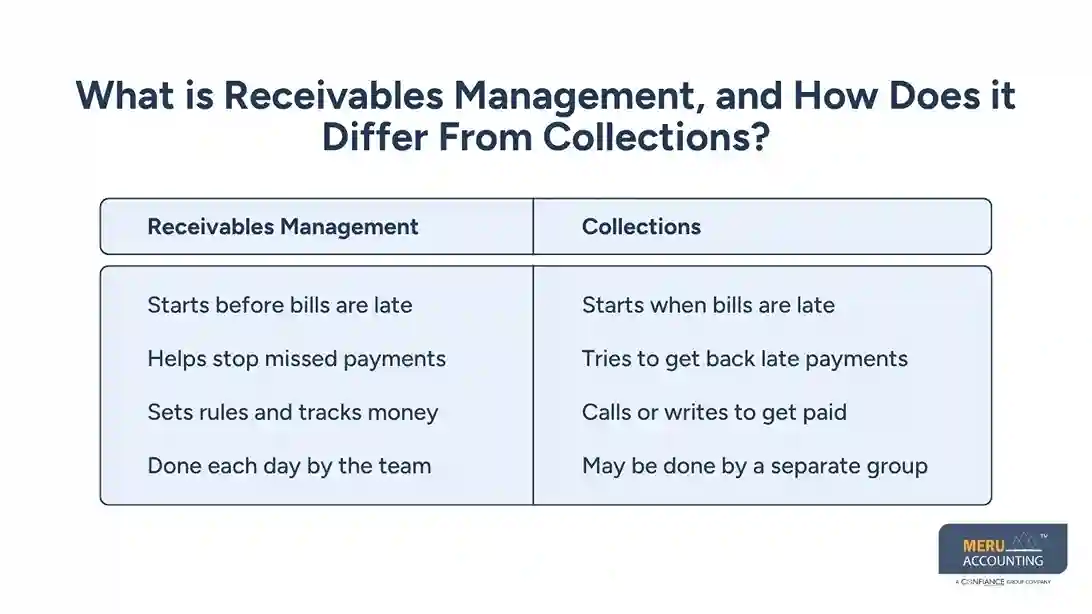
Receivables management helps get money from clients on time. It includes billing, credit rules, and follow-ups. It is not the same as collections, which deal with late payments.
Why the Management of Account Receivable is Critical
Accounts receivable management protects cash flow when clients delay payment. It affects cash flow. When clients don’t pay on time, cash flow can drop. Proper management of account receivable can help in avoiding this.
A strong receivables team can grow sales and profits. Offering credit options helps form a bond with clients, which makes them come back.
Management of account receivable improves cash flow and helps investors. It helps recover debts and shows a company’s credit health.
Managing accounts receivable is a detailed task. It involves:
- Checking credit for new clients.
- Communicating with clients to track payments.
- Finding overdue payments fast.
- Fixing overdue accounts quickly.
- Using accounts receivable systems to boost workflow.
Benefits of Outsourcing Accounts Receivable Management
1. Improved Cash Flow
Outsourcing accounts receivables management is a proven way to improve your cash flow. Accounts Receivable Management ensures fast payments. This reduces cash gaps and improves financial health.
2. Cost Savings
Outsourcing accounts receivable cuts costs by removing the need for an in-house team. It also boosts operational control. Outsource accounts receivables management to avoid staffing and overhead costs. No need for salaries, training, or office space.
3. Access to Expertise
Receivables Management gives access to skilled professionals who manage collections quickly and correctly. Outsource accounts receivables management to access experts on demand.
4. Focus on Core Activities
Outsourcing accounts receivable frees up your team, allowing them to focus on what matters most—growing the business. Outsource accounts receivables management to save time and focus.
5. Enhanced Accuracy
Outsourcing accounts receivables management helps reduce billing delays and errors. Expert management lowers errors in invoicing and tracking. This keeps your financial records accurate.
6. Better Customer Relationships
Outsourcing ensures timely follow-ups, improving client communication and strengthening business ties. Outsourcing accounts receivables management builds client trust.
7. Faster Dispute Resolution
Experts fix disputes fast, ensuring payments come on time.
8. Scalability and Flexibility
Outsource accounts receivables management for scalable, expert support. Outsourced accounts receivable services grow or shrink with needs, without extra hires.
Best Practices for Effective Accounts Receivable Management
Try these tips to boost your accounts receivable management:
- Set Clear Credit Terms
Define credit limits, deadlines, and late fees clearly. Ensure customers understand these rules.
- Check New Customers’ Credit
Perform credit checks on new clients. This lowers the risk of late payments.
- Automate Invoices
Use software to send invoices automatically. This quickens the process and reduces mistakes.
- Send Accurate Invoices Quickly
Make sure invoices are correct and sent right after delivery. Any delay can cause late payments.
- Offer Payment Options
Give customers different ways to pay, such as cards, bank transfers, or online payments.
- Follow Up on Late Payments
Set a regular schedule for reminders. Send alerts as payment dates approach and follow up if payments are missed.
Accounts receivable management boosts growth by improving how cash is handled. Effective AR management is key for cash flow, cutting risks, and building customer ties. A strong management of account receivable makes the process quicker and more precise. Outsourcing accounts receivable to Meru Accounting helps simplify tasks, offers expert care, and saves costs. Accounts receivables management when done by us makes your workflow more efficient. This lets businesses grow and stay financially stable.
Our Expert Insight
Businesses should not judge receivables only by the total amount due. The age of unpaid invoices, repeat late payers, and sudden changes in payment patterns can reveal issues that need attention. Reviewing this data regularly can help leaders make timely decisions and reduce the risk of larger cash gaps.
Key Takeaways
- Clear payment terms can help reduce confusion and delays.
- Accurate invoices and timely follow-ups support faster payments.
- Regular reviews can help identify overdue accounts early.
- Receivables data can provide useful insight into payment trends.
- A consistent process can support better cash flow management.