Property managers need more than rent records and bank statements to keep each property on track. An accountant for property management can set up clear books, track rent, record costs, and keep owner funds separate. Accurate records also make owner reports easier to read and tax work easier to review. For managers with many units, strong accounting can show where cash came from, where it went, and what each owner should get.
In 2026, property firms also face a greater need for clean data, quick reports, and clear audit trails. An accountant for property management can build a set process from rent receipt to owner payment, while keeping each unit and owner account clear.
What You Will Learn From This Blog
- How an accountant for property management can set a sound rent record process.
- Ways to keep books by property, unit, and owner.
- How owner distribution accounting can keep owner payments clear.
- Which reports owners need and why each report matters.
- Common errors that can lead to wrong rent, cost, or owner records.
- How Meru Accounting can manage daily property accounting tasks.
What Does an Accountant for Property Management Do?
Track Rent And Fees
An accountant for property management records rent, late fees, lease fees, and other income by unit. Each entry should link to the right tenant, unit, and property so the cash record can be checked with ease.
Record Property Costs
Costs may include repairs, lawn care, utilities, tax, insurance, and vendor bills. Proper cost coding ensures that each expense is tied to the right property and account, giving owners a more accurate view of what each asset costs to operate.
Reconcile Bank Accounts
Bank work should be done on a set cycle, not just at year-end. Bank feeds, deposits, checks, and fees should be matched to the books, while old or odd items should be checked before reports go out.
Manage Owner Funds
Owner funds need clear records from receipt to payout. Separate tracking for each owner makes it easier to identify firm income, owner balances, and funds that must remain in a property or trust account.
Prepare Tax-Ready Books
Rental records can include many cost types, and tax treatment may vary by case. The IRS notes that rental income and expenses must be reported under the rules that apply to the property and owner, so source records should be kept with care.
Review Month-End Data
A month-end review can catch unpaid rent, duplicate bills, missed fees, and bank items that do not match. An accountant for property management can use a set close list to complete owner distribution accounting before final owner reports are sent.
How an Accountant for Property Management Improves Rent Collection
Set A Rent Due List
A rent roll should show each unit, tenant, due date, rent amount, fee terms, and payment status. A clear due list gives the manager a firm base for follow-up and month-end checks.
Match Cash To Tenants
A bank deposit alone does not show which tenant paid or which rent period the cash covers. An accountant for property management can match each receipt to the tenant ledger and check deposits against the rent roll.
Track Late Rent
Late rent needs more than a note in a tenant file. The ledger should show the due date, amount due, fee charged when allowed, amount paid, and balance left after each payment.
Check Partial Payments
A tenant may pay only part of the rent or may pay rent and fees in one transfer. Clear entry rules can split these amounts so the tenant balance and income records remain correct.
Review Unpaid Balances
An aging report can show which tenants owe money and how long each balance has stayed open. Managers can then focus on old balances rather than relying on memory or scattered notes.
Reduce Posting Errors
Wrong tenant codes, duplicate receipts, and deposits posted to the wrong property can distort rent data. An accountant for property management can use bank checks and ledger reviews to find such issues before owner statements are issued.
optional anymore
on running the business
Property-Level Bookkeeping Strategies for Accurate Financial Records
Keep Each Property Separate
Each property should have its own income and cost view when the portfolio needs property-level reporting. An accountant for property management can set classes, locations, or separate ledgers based on the accounting system and reporting needs.
Use Clear Account Names
Account names should tell the reader what each entry means. Separate lines for repairs, supplies, utilities, insurance, tax, management fees, and owner payments make reports much easier to read.
Match Bills To Vendors
Every vendor bill should show the property, service date, amount, and payment status. A property accounting professional can match bills with bank payments and flag records that lack an invoice or receipt.
Record Deposits With Care
Security deposits should not be treated as rent simply because cash has entered the bank, particularly when preparing owner distribution accounting. The right account and local rules should guide how such funds are recorded and held.
Reconcile Each Month
Monthly bank reconciliation can find missing checks, duplicate entries, bank fees, and old items. A fixed close date also gives the manager a clear point at which the books are ready for owner review.
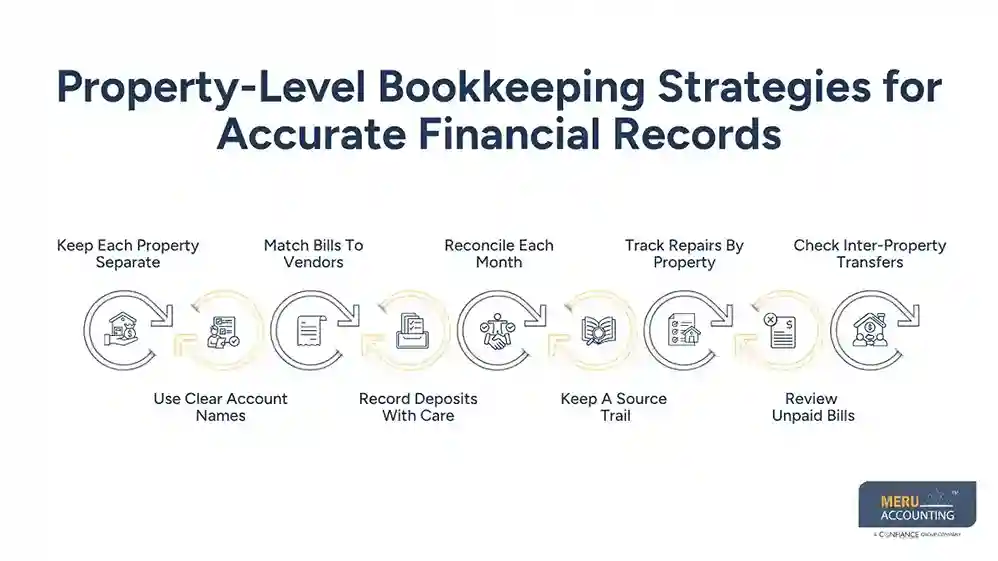
Keep A Source Trail
Invoices, leases, bills, receipts, bank records, and payment details form the source trail behind the ledger. An accountant for property management can keep these records linked or well filed for later review.
Track Repairs By Property
Repair costs should be tied to the property and, where useful, the unit or job. Such detail makes it easier to see which assets need more work and compare repair costs over time.
Review Unpaid Bills
Open vendor bills should be checked before the books are closed for the month. Reviewing unpaid costs gives managers a better view of upcoming cash needs and reduces the risk of missed expenses.
Check Inter-Property Transfers
Money moved between property accounts should have a clear reason and matching entry in the books. Proper records prevent one property’s cash or expenses from being wrongly assigned to another property.
Owner Distribution Accounting: Managing Property Owner Payments
Calculate Available Cash
Owner payouts should not be based on the bank balance alone. Before sending a payment, managers should account for rent received, property costs, unpaid bills, reserves, management fees, and any funds that must remain in the property account.
Set Reserve Rules
Owners may require funds to be held for repairs, taxes, insurance, or planned work. An accountant for property management can ensure reserve amounts are properly recorded and clearly explained on the owner statement.
Record Management Fees
Management fees should be posted to the correct property and owner account. The records should clearly show gross rent, approved costs, management fees, and the final amount available for the owner.
Check Owner Balances
Each owner should have a clear running balance that shows funds received, expenses, fees, previous payouts, and the remaining amount. Regular reviews can prevent errors in owner payments.
Match Payouts To Records
Every payment sent to an owner should match the amount shown on the owner statement. Comparing bank payments with accounting records can catch differences before the statement is finalized.
Keep An Approval Trail
Large repairs or unusual costs may need owner approval under the management agreement. A good record should show the bill, approval, payment, and accounting entry, giving owner distribution accounting a clear support trail.
Financial Reports Every Property Manager Should Provide To Owners
Owner Statement
An owner statement prepared with support from an accountant for property management should show income, property costs, fees, reserves, distributions, and the ending balance. Owner distribution accounting gives the statement its cash and payout detail.
Income And Expense Report
An income and expense report shows how much a property earned and spent during a set period. Owner payment records can connect the net result to the cash amount available for payout.
Rent Roll
A rent roll lists units, tenants, rent amounts, and payment status. Managers can use it to show current occupancy and unpaid balances without mixing tenant data with owner cash data.
Balance Sheet
A balance sheet gives a view of assets, liabilities, and equity at a set date. Owner balance records should tie owner-related amounts to the proper accounts rather than treating every cash item as profit.
Cash Flow Report
Cash flow shows how money moved in and out during the period, helping an accountant for property management determine how much cash is available after property obligations. Owner payment records can explain why cash held by the property differs from the amount sent to the owner.
Variance Report
A variance report compares actual results with a budget or past period. Owner distribution accounting can add useful context when rent, repairs, utilities, or other costs change more than expected.
Common Property Management Accounting Mistakes To Avoid In 2026
Mixing Owner And Business Funds
Mixing funds can make it hard to tell who owns the cash. An accountant for property management can set separate accounts and clear rules for owner, property, and management funds.
Recording Deposits As Income
A deposit received is not always earned income. Managers should check the nature of each receipt before posting it as rent or another income type.
Ignoring Unpaid Bills
A property can look more profitable when unpaid bills are left out of the books. A property accounting professional can review open vendor bills during the month-end close.
Paying Owners Too Early
A high bank balance does not always mean the full amount is ready for distribution. Owner distribution accounting should consider pending bills, reserves, fees, and other known obligations first.
Using One Ledger For All Properties
One mixed ledger can hide poor results at a single property. An accountant for property management can use property tags, classes, or separate books to give managers a clear property view.
Skipping Monthly Reconciliation
A book that is not checked against the bank can carry errors from one month to the next. Regular reconciliation gives the team a chance to find and fix gaps while source records are still easy to find.
How Meru Accounting Supports Property Management Accounting
Manage Daily Bookkeeping
Meru Accounting can manage daily entries for rent, vendor bills, property costs, fees, and other transactions. Our team, working as an accountant for property management, keeps records grouped by property so managers can review each property’s results with ease.
Track Rent And Expenses
Our team can record rent receipts and match them with tenant and bank records. Property costs can also be coded to the right property and account, giving managers a clear view of income and spending.
Reconcile Bank Accounts
Meru Accounting can review bank activity on a regular basis and match transactions with the books. Unmatched items, duplicate entries, and missing records can be flagged before month-end reports are shared.
Prepare Owner Reports
We can prepare owner statements, income and expense reports, cash flow reports, and other reports based on the manager’s needs. An accountant for property management can organize these reports so owners can clearly see rent, costs, fees, reserves, and payouts.
Handle Owner Distribution Accounting
Meru Accounting can maintain records for owner balances, reserves, fees, and distributions. Owner distribution accounting can then show how the final payout was reached and provide a clear record for each owner.
Keep Books Ready For Review
Our team can organize accounting entries with related invoices, bills, bank records, and payment details. An accountant for property management can also review month-end records before the final reports are sent to owners.
Our Expert Perspective
From our experience, property accounting works best when managers do not treat the bank balance as the amount available for owner payout. Rent, unpaid bills, repairs, reserves, fees, and owner balances should be checked before each distribution. Property-level records also matter because strong results across a full portfolio can hide losses at one property. Each rent payment should match the right tenant and unit, while vendor bills and bank activity should be checked during the month-end close. Clear owner reports should also explain major costs and changes in cash, not just show totals. Owner distribution accounting works best when every payout follows a set rule and has clear records behind it.
Key Takeaways
- Use one clear process from rent receipt to owner payout.
- Track income and costs by property whenever the setup requires it.
- Match bank deposits with tenant and property records.
- Keep owner funds, reserves, fees, and payouts clearly recorded.
- Use owner distribution accounting to show how owner payments are set.
- Review unpaid rent and open vendor bills before closing the books.
- Give owners clear income, expense, cash, and distribution reports.
- Keep source records with the related accounting entries.
- Use an accountant for property management when the portfolio needs regular, reliable accounting work.
FAQs
An accountant for property management records rent, tracks property expenses, reconciles bank accounts, manages owner balances, and prepares financial reports.
Property management accounting records each rent payment by tenant and property, tracks unpaid rent and late fees, and matches deposits with bank records.
Owner distribution accounting tracks the cash available for each owner after rent, property costs, management fees, reserves, and other approved payments are recorded.
Property managers should provide owner statements, income and expense reports, rent rolls, cash flow reports, balance sheets, and distribution details based on the owner’s reporting needs.
A property manager should hire an accountant when multiple properties, rent payments, vendor bills, owner payouts, or monthly reports become difficult to manage accurately.
optional anymore
on running the business