
Growth in a SaaS business often begins with a great product and a strong idea. As customer numbers increase, financial work also becomes more detailed. Subscription billing, investor reporting, payroll, software expenses, taxes, and cash planning require close attention. This is one reason accountant services for startups have become important for SaaS founders who want to build strong financial systems.
Many founders spend most of their time improving products and gaining users. Yet business growth also depends on organized financial management. SaaS companies usually work with monthly and annual payment plans, making accounting different from many traditional businesses.
What You Will Learn From This Blog
- Why SaaS startups have unique accounting needs
- Common financial issues SaaS founders face during growth
- Ways accounting support helps business planning
- Why recurring revenue tracking matters
- How financial reports support investor discussions
- How Meru Accounting helps growing SaaS businesses
- Practical insights for managing startup finances
How SaaS Business Growth Changes Financial Needs
Revenue Models Become More Complex
SaaS firms often work with monthly, yearly, and custom subscription plans, often requiring accountant services for startups. As customer numbers grow, revenue tracking becomes harder and requires greater accuracy.
Team Costs Increase Over Time
Hiring developers, sales teams, support staff, and managers increases business expenses. Founders need clear reports to understand spending patterns.
New Software Tools Add More Costs
Growing businesses often subscribe to project tools, cloud systems, analytics platforms, and communication software. Tracking these expenses becomes important.
Business Decisions Need Better Data
Growth creates more financial questions. Leaders need reports that show spending, profit patterns, and future financial needs.
Expansion Creates Reporting Challenges
As companies enter new regions, reporting requirements may increase. Founders often need stronger financial systems to stay organized.
Planning Becomes More Important
Growth can happen quickly for many SaaS companies during successful business periods and expansion phases, making accountant services for startups essential for structured financial planning and control.
Businesses that plan finances early usually manage changing business situations more effectively and confidently.
Customer Support Costs Continue To Rise
As customer numbers increase, support teams often need more staff, tools, and training resources. These additional operating costs can affect budgets and require careful financial planning.
Investor Expectations Become More Detailed
As startups grow and seek funding opportunities, investors often request deeper financial reports and performance data. Businesses need organized records and reliable information for these discussions.
Cash Flow Monitoring Becomes More Important
Rapid growth can increase income while also raising expenses across many business areas, often managed with accountant services for startups. Founders need regular cash flow reviews to understand spending patterns and avoid financial pressure.
Why SaaS Businesses Need A Different Financial Accounting Structure
Recurring Revenue Requires Careful Records
Unlike one-time product sales, SaaS companies collect recurring payments. Revenue recognition often needs detailed tracking. This helps businesses understand actual earnings spread across each service period.
Customer Changes Affect Financial Data
Customers upgrade plans, cancel subscriptions, or renew services. Small changes may affect reports and forecasting. These frequent changes make financial tracking more dynamic and time-sensitive.
Monthly Reports Matter More
SaaS founders often review business performance each month instead of waiting until year-end reporting periods. Regular reporting helps identify issues early and supports quicker decisions.
Global Customers Add Complexity
Selling software across countries can create different tax requirements and reporting obligations. Different regions may also follow separate compliance rules for revenue reporting.
Cash Movement Can Be Misleading
Annual payments may create strong cash balances at first, but business costs continue every month without accountant services for startups. This can create confusion if cash flow is not reviewed properly.
Data Supports Better Planning
Reliable financial information helps leaders understand growth patterns and spending trends. Accurate data also improves forecasting for hiring and expansion decisions.
Later in growth stages, many founders choose accountant services for startups because recurring revenue models require more organized financial processes.
Common Financial Challenges SaaS Founders Face
- Revenue recognition becomes confusing when subscription income is spread over long service periods, making timing and reporting harder to manage.
- Missing financial visibility happens when founders focus on growth and review financial reports less frequently than needed for clarity.
- Rapid expansion creates pressure as payroll, infrastructure, and reporting costs increase, often managed through accountant services for startups.
- Investor preparation takes time because funding needs detailed financial statements and well-organized business records supported by accountant services for startups.
- Manual processes increase errors when spreadsheets are used heavily and lead to missing entries or incorrect data.
- Tax rules keep changing for SaaS companies operating in different regions, creating extra compliance challenges.
- At this stage, many founders work with a tech startup accountant to improve structured reporting and financial accuracy.
Ways Founders Use Financial Reports During Growth
Monthly Revenue Trends Guide Decisions
Revenue reports help leaders understand growth speed clearly each month, often prepared using accountant services for startups. This helps founders identify early business changes before major impact.
Customer Costs Need Attention
Acquiring users often requires marketing and sales investments for growth. Tracking these costs helps improve planning and overall spending efficiency.
Spending Patterns Show Business Health
Expense reports help founders identify where funds are being used. This visibility reduces the risk of uncontrolled spending across business operations.
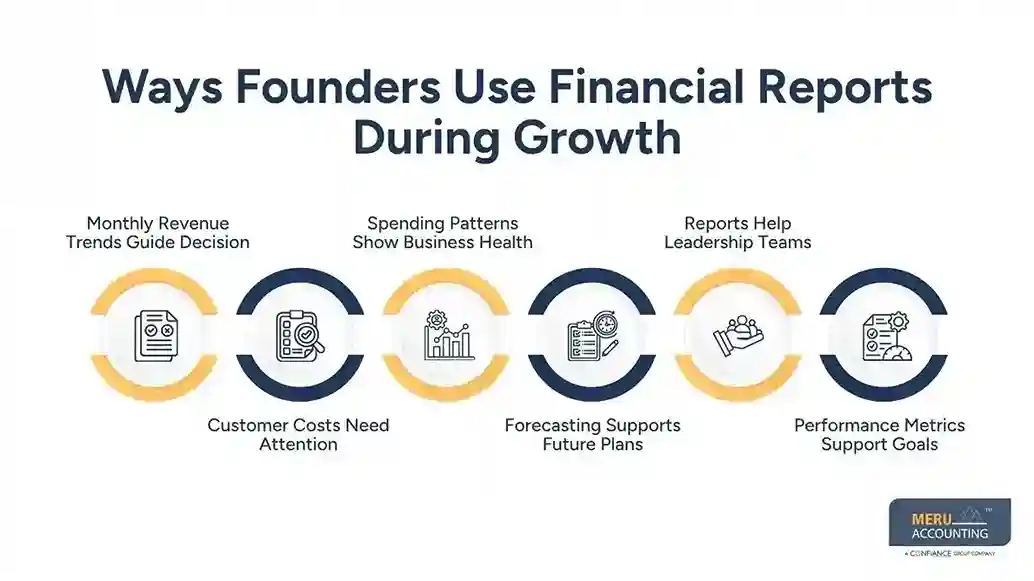
Forecasting Supports Future Plans
Business projections help estimate future expenses and expected revenue levels. This supports better hiring decisions and long-term planning for growth.
Reports Help Leadership Teams
Good financial reports support discussions among founders and investor groups. They ensure all teams work with the same accurate financial data.
Performance Metrics Support Goals
SaaS businesses often track customer retention and revenue growth indicators closely. These metrics help measure long-term stability and overall business performance.
Many founders rely on accountant services for startups when creating financial reports because organized records help improve accuracy.
How Accounting Support Helps During Expansion
Better Systems Reduce Confusion
As businesses scale, financial records become larger and more detailed. Organized systems help maintain consistency.
Budget Planning Improves Decisions
Budget plans help leaders understand expected costs and future financial requirements.
It allows businesses to allocate resources more effectively across departments.
Expense Tracking Improves Control
Knowing where money is spent helps businesses maintain healthy financial habits with accountant services for startups. It also highlights unnecessary spending patterns that need correction early.
Payroll Processes Become Larger
As employee numbers increase, payroll management becomes more detailed.
This requires accurate systems to ensure timely and correct salary processing.
Reporting Standards Become Important
Investors and business partners often review financial reports before making decisions.
Clear reporting builds trust and supports smoother funding discussions.
Growth Requires Strong Structure
Businesses usually benefit from organized financial processes, strengthened by accountant services for startups. A structured system helps manage rapid expansion without financial confusion.
A tech startup accountant often helps startups build systems that support these growing requirements.
Signs Your Startup May Need Accounting Support
Reports Take Too Much Time
If financial reports require large amounts of manual work, accountant services for startups may be needed. This often indicates a lack of proper systems for handling financial data efficiently.
Cash Questions Keep Increasing
Founders should understand where money comes from and where it is being used. Unclear cash flow often signals weak financial tracking within the business.
Investor Meetings Need Better Data
Funding discussions often require detailed reports and financial documents. Accurate data helps build investor confidence during important decision-making.
Business Growth Feels Hard To Measure
Without clear reporting, performance becomes difficult without accountant services for startups. This makes it harder to understand whether business strategies are working effectively.
Tax Work Creates Stress
Tax rules and reporting requirements become more complex during growth stages without accountant services for startups. This increases the risk of errors if financial records are not organized properly.
Team Expansion Adds More Tasks
More employees often increase payroll and administrative work for the company. It also requires more structured systems to manage financial responsibilities smoothly.
Businesses facing these situations sometimes consult a tech startup accountant for support and guidance.
Why Choose Meru Accounting?
Meru Accounting provides specialized support for startups and growing businesses that need better financial organization. We understand the challenges SaaS founders face while managing recurring revenue, changing expenses, and business expansion.
Our team provides accountant services for startups designed to help businesses improve financial visibility and reporting quality. We help create organized accounting systems that support business growth.
Our professionals assist with cloud accounting setup, reporting structure, bookkeeping support, software migration, tax preparation, and financial analysis. A dedicated tech startup accountant from our team works closely with founders to understand business goals and provide practical support.
As SaaS businesses grow, reliable financial systems often become an important part of long-term planning.
Our Expert Perspective
From our experience working with growing startups, most founders initially manage finances using basic tools and spreadsheets. As the business expands, financial complexity increases due to hiring, customer growth, and investor reporting needs. Strong financial systems built early help avoid reporting gaps and improve decision-making during scaling stages. Many businesses also adopt accountant services for startups before funding rounds to ensure accurate and well-structured financial records.
Key Takeaways
- SaaS growth creates more financial responsibilities and reporting needs
- Recurring revenue models require accurate tracking methods
- Financial reports help founders make informed business decisions
- Growth stages often create new accounting challenges
- Strong systems support planning and investor readiness
- Early financial organization can reduce future issues
- Professional accounting support helps startups manage expansion
FAQs
SaaS businesses often manage subscriptions, recurring payments, taxes, and financial reporting. Growth usually creates more complex financial needs.
A tech startup accountant helps with reporting, planning, budgeting, and financial management for growing technology businesses.
Many startups look for support when revenue grows, teams expand, or investors request financial reports.
Yes. Organized records and accurate reports help founders prepare for investor discussions.
Subscription businesses often recognize revenue over time, which creates accounting requirements different from traditional sales models.