
The hospitality industry runs on guest experience, service quality, and smooth daily operations. Hotels, restaurants, resorts, cafes, and travel businesses handle many financial tasks each day.
Accounting & bookkeeping services help these businesses manage income, costs, payroll, taxes, and records in a clear way. In hospitality management, where sales, bookings, inventory, and staff expenses change often, proper financial records support better control and planning.
Financial reports from the hospitality sector often show that labor costs, food costs, and operating expenses create major pressure on profit margins.
According to data from the American Hotel & Lodging Association and the National Restaurant Association, labor and operating expenses continue to affect business performance and planning decisions. Strong record management supports better visibility and fewer reporting errors.
What You Will Learn From This Blog
- Understand the role of accounting in hospitality businesses
- Learn why financial accuracy matters in hotels and restaurants
- Know how accounting & bookkeeping services support daily operations
- Discover methods for controlling costs and expenses
- Learn common financial mistakes hospitality businesses should avoid
- Understand how expert financial support helps business decisions
- Understand how Meru Accounting supports hospitality businesses
Introduction To Accounting & Bookkeeping Services In The Hospitality Industry
Hotels, restaurants, resorts, cafes, and travel businesses handle large volumes of daily financial activity, including payments, bookings, refunds, and staff expenses. Accounting & bookkeeping services play an important role in organizing these records and keeping financial data accurate and up to date.
When financial information is properly recorded, hospitality businesses are able to maintain better control over daily operations and reduce confusion in high-activity environments.
In hospitality operations, daily transaction tracking becomes essential due to the continuous flow of sales and service-based income. Companies offering bookkeeping and accounting services ensure that each transaction is recorded accurately, which helps reduce errors and improve clarity in financial reporting.
Along with this, revenue monitoring across rooms, food services, events, and other offerings provides a clear view of income sources and helps management understand business performance more effectively.
Payroll management also remains a key function, as staff costs form a major part of overall expenses, and accurate records support timely payments and proper tax reporting.
Strong financial reporting and compliance practices are equally important in the hospitality sector. Proper records help businesses prepare for tax requirements, audits, and regulatory checks with greater ease.
Businesses offering bookkeeping and accounting services often support organizations by maintaining structured reporting systems that improve accuracy and compliance readiness. With better financial visibility, owners can understand performance trends clearly and make informed decisions that support long-term stability and operational improvement.
Why Financial Accuracy Matters In Hospitality Businesses
Better Revenue Control
Hospitality businesses handle many daily transactions across different departments and services. Accounting & bookkeeping services record payments accurately and reduce missed entries.
Reduced Reporting Errors
Incorrect records can create problems during financial reviews and tax filing. Small reporting mistakes often become larger financial problems over a longer period.
Improved Budget Planning
Accurate reports help managers estimate future income and expected operating expenses. This 0supports practical financial planning and creates realistic business budget goals.
Stronger Investor Confidence
Investors and lenders often review financial reports before making important business decisions. Clear financial records help build trust and improve confidence among investors.
Tax Preparation Support
Hospitality businesses often manage different tax requirements across several business activities. Accurate financial data makes tax filing easier and reduces unnecessary reporting stress.
Business Stability
Reliable numbers supported by accounting & bookkeeping services improve financial management across business operations. Clear records help owners understand the actual condition of business finances.
Why Accounting & Bookkeeping Services Are Essential In Hospitality Management
Expense Tracking
Daily operations create many costs, including utilities, payroll, inventory, and maintenance. Accounting & bookkeeping services help organize expenses and improve spending visibility.
Cash Flow Monitoring
Hospitality businesses depend heavily on steady cash flow for daily operations. Monitoring cash flow regularly helps businesses avoid shortages and payment delays.
Profit Analysis
Managers need to know which services generate stronger returns and higher profits. Financial reports help identify profitable areas and support better planning decisions.
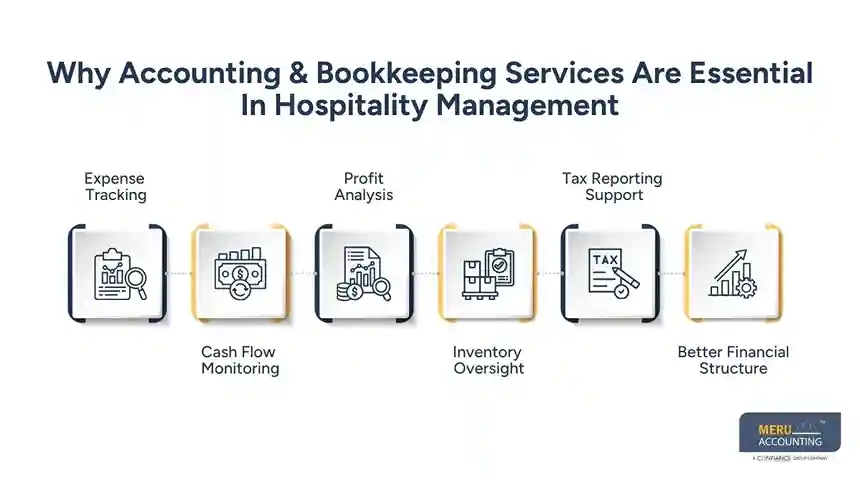
Inventory Oversight
Restaurants and hotels manage food supplies, materials, and other operational stock. Proper records reduce waste and support better inventory planning and control.
Tax Reporting Support
Tax rules often vary based on business type, location, and operational structure. Businesses offering bookkeeping and accounting services often assist hospitality firms with maintaining records that simplify tax reporting processes.
Better Financial Structure
Strong financial systems help businesses stay organized during daily business activities. Well-managed records also support future planning and long-term business growth.
Cost Control And Expense Management In Hospitality Management
Food Cost Monitoring
Restaurants and hotels often face changes in food prices. Accounting & bookkeeping services help monitor purchasing patterns and spending. This helps businesses maintain better control over kitchen expenses while reducing unnecessary losses.
Staff Cost Management
Labor is one of the largest expenses in hospitality businesses. Accurate records help managers review workforce costs and make better staffing decisions.
Utility Expense Review
Electricity, water, and maintenance costs affect profits. Expense reviews help identify areas of high spending. Regular tracking helps businesses plan utility usage more efficiently over time.
Vendor Payment Tracking
Hospitality businesses work with many vendors for supplies and services. Organized payment records supported by accounting & bookkeeping services help avoid duplicate or delayed payments. Organized payment processes also help strengthen vendor relationships and communication.
Budget Control
Budget reports help businesses compare actual spending with planned expenses. This helps managers adjust financial plans and avoid overspending.
Waste Reduction
Expense tracking helps identify unnecessary spending and improves resource utilization across hospitality operations.
It reduces waste in food, materials, and other daily operational activities by highlighting inefficiencies and helping businesses make better purchasing and usage decisions.
Common Financial Mistakes Hospitality Businesses Should Avoid
Mixing Personal And Business Expenses
Some owners use the same account for both personal and business spending regularly. This creates reporting problems and reduces financial clarity.
Poor Cash Flow Tracking
Ignoring cash movement may create payment difficulties and operational stress later. Hospitality businesses need steady monitoring for smooth operations.
Missing Expense Records
Missing invoices and receipts can affect financial reports and accuracy levels. Organized bookkeeping supports better records and reduces confusion.
Delayed Tax Filing
Late filing may create penalties and additional stress for businesses. Timely records help businesses stay prepared for tax needs.
Weak Inventory Monitoring
Poor inventory tracking may increase waste and losses in restaurants and hotels. It also affects cost control and stock planning accuracy.
Ignoring Financial Reports
Some owners focus only on operations and ignore financial reports regularly. Financial reviews help support long-term planning and decision-making.
How Professional Support Enhances Business Decision-Making
Clear Performance Reports
Managers need detailed reports to understand results clearly and accurately. Accounting & bookkeeping services provide information that supports better decision-making processes.
Better Pricing Decisions
Hospitality businesses need pricing based on costs and current market conditions. Financial reports help support pricing decisions that improve profitability levels.
Growth Planning
Expansion decisions often require accurate financial data and reliable records maintained through accounting & bookkeeping services. Reports help owners review business readiness before making expansion choices.
Seasonal Trend Analysis
Hospitality businesses often experience seasonal demand changes throughout the year. Reviewing trends helps prepare for both slow and busy business periods.
Investment Decisions
Financial data supports planning for equipment, staff, or property improvements. It helps owners choose investments that improve long-term business performance.
Risk Identification
Professionals offering bookkeeping and accounting services often identify financial gaps early and help businesses reduce operational risks. Early detection supports better control and reduces unexpected financial risks.
Why Hospitality Businesses Choose Meru Accounting?
Hospitality businesses often need support with bookkeeping, tax work, payroll, reporting, and financial reviews. At Meru Accounting, we understand the day-to-day financial needs of hotels, restaurants, cafes, and travel-related businesses.
Our team of certified professionals provides accounting & bookkeeping services designed to help businesses maintain organized records and improve financial clarity.
We focus on timely reporting, cost monitoring, tax support, and improving financial processes through reliable accounting support. We also have extensive experience in offering bookkeeping and accounting services to businesses across various industries and regions.
With proper support, hospitality owners can focus more on guest service while financial processes remain organized.
Our Author Perspective
During our work with businesses across service industries, we often observe a common challenge in hospitality operations. Many hospitality owners focus heavily on guest service and staff management, while financial records receive less attention. Over time, even small gaps in reporting can impact cash flow, tax preparation, and business planning decisions.
We have seen that businesses using structured accounting & bookkeeping services and maintaining organized financial records are able to understand their costs more clearly. They also gain better visibility into performance trends, which helps in making more stable and informed financial decisions over time.
Key Takeaways
- Hospitality businesses manage complex financial activities involving bookings, payroll, inventory, and multiple revenue streams.
- Accurate records support tax preparation and reporting
- Accounting & bookkeeping services help improve financial visibility
- Expense tracking supports cost control and profit management
- Organized reporting helps improve business decisions
- Avoiding common financial mistakes reduces operational risk
- Professional support can improve long-term financial management
FAQs
Financial records help businesses track income, expenses, taxes, and cash flow. They also help owners understand business performance.
They help manage financial records, monitor expenses, prepare reports, and support tax processes.
Cash flow helps businesses pay staff, vendors, and operating expenses on time.
Businesses should avoid missing records, delayed tax filing, poor cash tracking, and mixing personal expenses with business spending.
Firms offering bookkeeping and accounting services help businesses maintain organized financial records, improve reporting accuracy, and support better planning and decision-making.