
Managing advertising agency finances needs structured systems that help with various processes. Accounting for advertising agencies tracks income, expenses, client payments, and project costs. It also maintains accurate financial reports that support better decision-making. Organized records support budgeting and tax preparation as well. They provide better visibility into agency performance.
Accountants for advertising agencies manage multiple projects and vendor payments. They also handle employee costs throughout regular business operations. Without organized accounting practices, handling processes becomes challenging. Professional accounting methods maintain accurate records and control expenses. They also support project cost monitoring and cash flow management. Reliable accounting systems help agencies understand finances and make decisions.
What You Will Learn From This Blog
- Understand the importance of accounting for advertising agencies.
- Learn how agencies manage project-based financial records.
- Discover key accounting practices for advertising businesses.
- Identify common financial challenges faced by agencies.
- Explore the role of accountants for advertising agencies.
- Learn methods to improve budgeting and cash flow.
- Understand how professional accounting supports agency growth.
Why Accounting for Advertising Agencies Matters
What Is Accounting for Advertising Agencies?
Accounting for advertising agencies manages financial activities for creative businesses. It tracks client invoices, project expenses, salaries, vendor payments, taxes, and income.
Advertising agencies often manage multiple campaigns simultaneously with different budgets. Each project may have unique timelines, costs, and financial requirements. Proper accounting separates these details and provides clear project visibility. Accounting for advertising agencies supports effective financial planning and management.
Accounting for advertising agencies meets these specific financial requirements. It maintains organized records and provides valuable financial insights.
Why Accurate Financial Records Are Important
Accurate financial records help agencies understand their financial position. Poor recordkeeping can create cash flow and billing issues. It may also affect expense tracking and tax preparation.
Reliable accounting for advertising agencies provides several key benefits:
- Better tracking of project profitability.
- Improved expense management.
- Accurate financial reporting.
- Easier tax preparation.
- Better cash flow control.
- Stronger financial planning.
- Reduced accounting mistakes.
Agencies use these records to identify profitable services. They also improve financial strategies through better insights. Proper documentation supports compliance with accounting standards and tax requirements.
How Accounting Supports Agency Decision-Making
Advertising agencies make decisions using project costs and revenue data. They also evaluate operational expenses for business planning strategies. Without accurate financial information, identifying profitable opportunities becomes difficult.
Accounting for advertising agencies provides revenue and project margin reports. These insights highlight expense patterns and support resource allocation. Owners can identify improvement areas and investment opportunities.
For example, agencies may notice lower campaign profitability. High production costs can reduce overall project returns significantly. Financial reports identify these issues and improve pricing decisions.
Key Accounting Requirements for Advertising Agencies
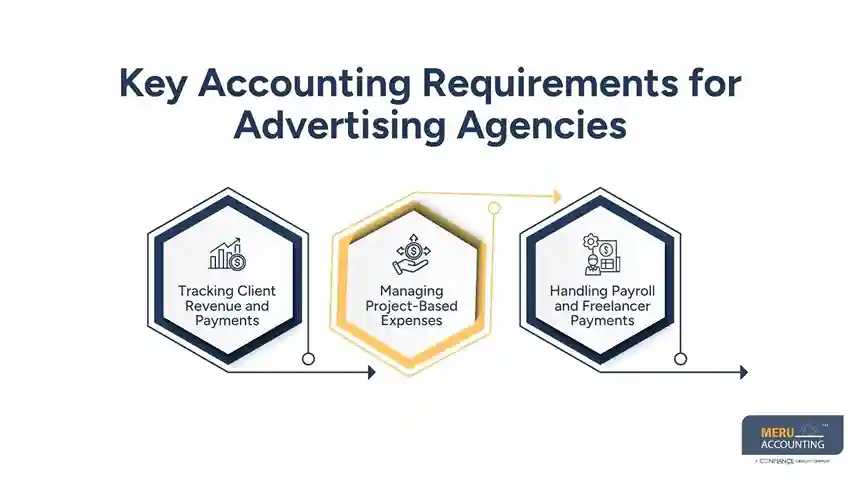
Tracking Client Revenue and Payments
Advertising agencies usually manage multiple clients with different contracts and payment schedules. Tracking invoices, advance payments, recurring fees, and outstanding balances is essential for maintaining healthy cash flow.
Accounting for advertising agencies helps organize client-related transactions and ensures payments are recorded correctly. It also allows agencies to monitor overdue invoices and follow up with clients when required.
Managing Project-Based Expenses
Every advertising campaign includes different types of expenses. These may involve creative tools, freelancers, production costs, and media spending. External services also contribute to overall campaign expenses.
Proper expense tracking helps agencies understand project costs accurately. Accountants for advertising agencies categorize expenses and prepare profitability reports. These reports show the actual financial performance of each project.
Clear expense management helps agencies create accurate future campaign budgets.
Handling Payroll and Freelancer Payments
Advertising agencies work with designers, writers, developers, and photographers. They also collaborate with other creative professionals regularly. Managing salaries and freelancer payments requires accurate financial records.
Accounting systems track payroll expenses and contractor payments effectively. They also manage related tax requirements and financial documentation. This ensures timely payments and reduces administrative challenges.
Professional accountants for advertising agencies maintain proper employee records. They also document independent contractor details for compliance. This improves financial accuracy and supports regulatory requirements.
optional anymore
on running the business
Common Financial Challenges in Advertising Agencies
Managing Irregular Cash Flow
Advertising agencies may experience uneven cash flow from projects. Client payments often depend on project milestones and completion schedules. Delayed payments can impact daily operations and business planning.
Accounting for advertising agencies tracks revenue and upcoming expenses effectively. Regular financial reviews help agencies manage payment delays better. They also support stable financial management and ongoing business continuity.
Tracking Multiple Client Projects
Agencies often manage multiple campaigns simultaneously. Each project has separate budgets, expenses, and revenue expectations.
Without proper accounting processes, measuring project profitability becomes challenging. Organized financial records help compare project performance and support planning.
Accountants for advertising agencies maintain clear financial information. They also support management across multiple client accounts.
Managing Tax and Compliance Requirements
Advertising agencies must maintain accurate financial records for tax compliance. Missing documents or incorrect records can create unnecessary complications.
Accounting for advertising agencies records income, expenses, and deductions properly. Professional accounting support helps prepare required financial documents. It also maintains organized records for easier compliance management.
Improving Financial Management Practices for Advertising Agencies
Create Clear Project Budgets
Advertising agencies should create detailed budgets before a campaign. Project budgets help track costs, client payments, and profit margins. Accounting for advertising agencies makes budget monitoring easier and more reliable.
Review Financial Reports Regularly
Regular financial reviews help agencies evaluate the performance of the business. Reports covering revenue, expenses, and profitability highlight financial trends. These insights support better decisions through effective financial planning.
Maintain Accurate Invoice Records
Proper invoicing helps agencies receive payments on time. Recording invoices, payment dates, and outstanding amounts improves cash flow visibility. Accountants for advertising agencies help maintain accurate billing records and reduce payment delays.
Separate Business and Project Expenses
Keeping business and project expenses separate improves financial clarity. It helps agencies understand campaign costs and overall operating expenses. Accurate expense classification also supports better reporting and budgeting.
Use Professional Accounting Support
Many advertising agencies choose professional accounting support to manage complex financial tasks. Accountants for advertising agencies provide expertise in reporting, tax preparation, and financial planning. This allows agency owners to fo
Choosing Meru Accounting Benefits
Meru Accounting provides specialized accounting services for advertising agencies. Our professionals understand agency financial needs and requirements. These include client billing, project expenses, payroll, vendor payments, and taxes. We maintain accurate records using reliable accounting practices. This improves reporting, simplifies management, and supports better decisions.
Our team uses modern accounting tools to organize financial data. We improve workflow efficiency through effective accounting processes. We help agencies monitor cash flow and project profitability. We also maintain proper documentation for financial activities. Whether managing small or growing agencies, Meru Accounting provides support. Our guidance strengthens accounting processes and improves financial management.
With industry-focused expertise, we manage complex agency finances accurately. Our services support reporting, expense tracking, and financial visibility. Organized records allow agencies to focus on creative projects. They also help maintain controlled and efficient financial operations. We assist businesses with cost trends and budgeting strategies. Reliable financial information supports better business decisions and planning. Our goal is to provide dependable accounting support for stability. We help creative businesses achieve sustainable financial growth.
Our Expert Perspective
Advertising agencies often prioritize campaigns over financial processes. Poor expense tracking and delayed invoicing can reduce profitability. Accounting for advertising agencies requires consistent management for financial visibility.
In our experience, agencies perform better with regular cost reviews. Reviewing project expenses and financial reports supports better planning. Working with accountants for advertising agencies reduces errors effectively. It also provides valuable insights for financial decisions. Strong accounting practices help agencies manage growth confidently.
Accurate financial records help agencies understand project performance better. They also support expense control and financial management. Regular accounting reviews improve cash flow and resource allocation. Organized financial systems allow agencies to focus creatively. They also maintain stable and efficient financial operations. These practices build a strong foundation for sustainable growth.
Key Takeaways
- Accounting for advertising agencies helps improve financial organization in many ways.
- Accurate records help agencies measure profitability effectively.
- Proper invoicing supports better management of cash flow.
- Expense tracking helps agencies control costs.
- Professional accountants for advertising agencies provide better financial expertise.
- Organized records help agencies plan future business growth.
FAQs
Accounting for advertising agencies involves tracking finances, expenses, and some client payments as well. It ensures accurate records for suitable decision-making that supports better outcomes.
Advertising agencies manage multiple projects and expenses. Specialized accounting helps track profitability and supports better decision-making.
Accountants for advertising agencies manage financial records, prepare reports, and ensure tax compliance while providing guidance on financial decisions.
Agencies should maintain invoices, expenses, payroll, contracts, and financial reports for accurate accounting.
Yes, outsourcing accounting can help agencies improve accuracy and save time. Professional support allows teams to focus more on creative and client-related activities.
optional anymore
on running the business