



Accounting for flipping houses means tracking every cost, from purchase to sale. Each flip involves repairs, permits, labor, materials, and taxes. Clean records and real-time tracking help you know your true profit. Flipping houses is all about speed and smart spending. When you renovate and sell fast, you need accurate numbers at each step. This blog explains how to manage your flipping business with strong accounting methods and the best house flipping accounting software.
Real-time updates help manage costs as they happen, while detailed logs ensure tax readiness. You stay in control and improve your return on every project. Accounting for flipping houses is a must to get better returns, plan taxes, and avoid errors.
What You Will Learn From This Blog
- Why good accounting for house flipping helps raise profits and control costs in a real estate business.
- The main money issues in house flipping, such as cash flow, loans, taxes, vendor pay, and job budgets.
- How house flipping accounting software makes cost tracking, profit reports, and tax prep much easier.
- Easy ways to track job costs, measure profit, and keep clear records for each home flip.
Key Financial Challenges in House Flipping
Flipping homes involves more than just buying low and selling high. Many financial hurdles can reduce your profits. Strong accounting for flipping houses helps manage finances better and supports informed decision-making. Tools and strategies reduce risks and improve results.
Managing Cash Flow and Repair Costs
Cash goes out quickly when flipping homes. You need to plan expenses like buying, permits, labor, and materials. Software helps track this in real time, ensuring no cost gets missed.
Tracking Loans, Interest, and Market Shifts
Most flippers take loans. Interest adds up fast if sales are delayed. Also, market prices change often. Accounting tools let you track interest and adjust for market price changes.
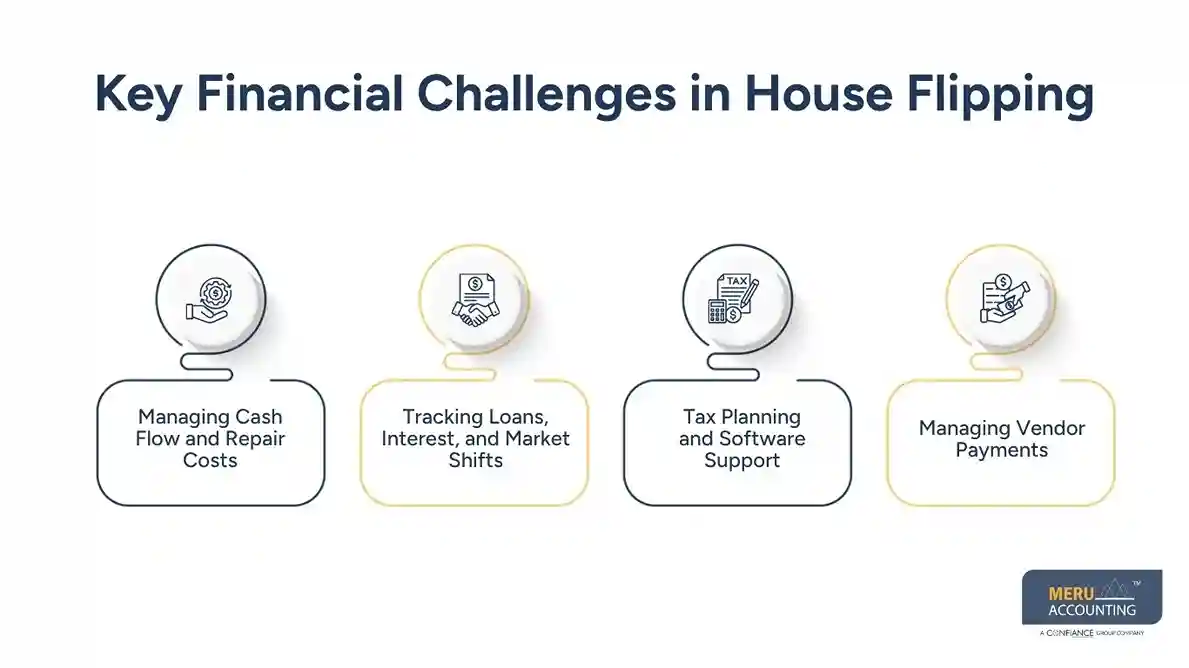
Tax Planning and Software Support
Flipping homes comes with tax rules that can hurt if ignored. Use house flipping accounting software to track bills, deduct costs, and avoid fines. These tools keep your books ready for tax season.
Managing Vendor Payments
Late payments delay projects. Track all payments to avoid work halts. Timely vendor payments keep the job moving and help build strong ties.
Role of House Flipping Accounting Software
You need smart tools to manage time, money, and records. House flipping accounting software removes manual tasks, limits errors, and offers clear views of each project. You save time and stay on top of costs.
Expense Tracking Made Easy
This software logs each expense in real time. It captures materials, labor, permits, and tools. You avoid missing items and keep your records clean.
Profit and Loss Reports
The tool shows your real earnings per flip. It compares income with all project costs. You know where you gain or lose money.
Loan and Interest Tools
You can track every loan, payment, and interest. Alerts help you avoid missing deadlines. It reduces extra fees and keeps loans under control.
Sync with Banks and Cards
Syncing your accounts means fast, hands-free updates. Data flows in directly. You save hours of manual entry work.
Time-Saving Features
Automation reduces your workload. You create reports in seconds, view spending trends, and stay organized across many projects without stress.
Essential Steps in Accounting for House Flipping Projects
Proper accounting for house flipping starts with planning and ends with clear reports. Each step must be simple, fast, and accurate. Use these key steps to stay ahead.
Budgeting the Project
Before buying, create a full project budget. Estimate the cost of buying, repairs, labor, permits, and sale. A clear plan sets a profit goal and helps manage your spending better.
Logging Every Expense
Every dollar matters in house flipping. Log all costs, even small ones like screws or nails. These records help in tax filing and show true project costs.
Recording Income
Once the home sells, record the sale price and net income. Clear income logs help with profit tracking and tax planning. Always enter these details as soon as the deal closes.
Using Software Tools
House flipping accounting software helps you manage each project with ease. It keeps budgets, costs, and sales data in one place, reducing confusion and saving time.
Reconciling with Bank Accounts
Check your accounting records against your bank often. Matching entries reveal missing or wrong items. It also helps find duplicate charges or errors fast.. You must track money flow from start to end. These steps make your books strong.
To earn well in the real estate business of flipping, you must track every cost and return. ROI tells you if your project made a profit or a loss. Accounting tools make this simple and accurate.
Tracking Costs and ROI in Real Estate Flipping
To earn well in the real estate business of flipping, you must track every cost and return. ROI shows whether your project made a profit or a loss. Accounting for house flipping helps you track each figure accurately
Real Cost Overview
Every project has visible and hidden costs. Include all items—repairs, materials, taxes, fees, and permits. This shows your true investment and gives a full financial picture.
Compare Budget vs. Actual
Compare your budget plan with the actual spend. Track overruns and find where the money went off-track. It helps refine your next project’s budget better.
ROI Per Project
Track the return on each home sold. Measure gain after all expenses are subtracted. Use tools to get clear profit reports and compare project results.
Project Timelines Matter
Delays cost money. The longer you hold a property, the higher your costs become. Timely completion improves ROI by cutting holding costs and interest payments.
Monthly or Weekly Review
Review your finances weekly or monthly. Spot issues early, correct mistakes, and stay within budget. Regular tracking improves success and future planning.
Tax Considerations in Accounting for Flipping Houses
Tax rules for flippers differ from rental real estate business owners. You must know these rules to stay in line with tax laws. Good recordkeeping helps lower tax risk and save money.
Active Income Tax Rates
Profits from flips are active income, not capital gains. They are taxed at higher rates. File the right way to avoid IRS interest and penalties. Plan ahead so you can set aside enough money for taxes.
Deductible Expenses
Many flip costs can be written off. Track tools, supplies, loan interest, and contractor fees. Keep receipts and clear records to lower taxable income. Good records also make tax filing much easier.
Holding Period Matters
How long you own the home can affect your tax bill. Short-term flips follow different tax rules than long-term holdings. Check the rules based on your time frame. This helps you plan each sale with more care.
Estimated Tax Payments
If you earn from flips, pay estimated taxes each quarter. Plan ahead to avoid underpayment penalties during the year. Paying on time also helps you avoid large tax bills later.
Use Software to Track Deductions
Use software to track all tax write-offs. These tools store receipts and create tax-ready reports with less work. They also help you find costs that may lower your tax bill.
Meru Accounting our team knows how to track costs, returns, and profits in house flipping. We use the best house flipping accounting software to manage your data. From start to end, we help with each step. We manage books, reports, and taxes. Our tools and team work to save your time and cut down costly mistakes.
Our Expert Insight
A strong house flipping plan needs more than a good buy and a fast sale. It also takes clear money records at every stage of the job. When you track each cost, loan, tax, and sale with the right house flipping accounting software, you can avoid costly mistakes, improve cash flow, make better choices, and grow your real estate business with more trust and steady profits.
Key Takeaways
- Track every cost from the home purchase to the final sale.
- Set clear budgets and compare planned costs with real spending.
- Use house flipping accounting software to save time and reduce manual work.
- Watch loans, interest, and job timelines to help protect your profit.
- Keep clean records and track tax write-offs for easy tax filing.
- Review your books often to improve future house flipping results.
FAQs
Accounting for flipping houses is the process of tracking all income and expenses from buying, repairing, and selling a property. It helps you measure profit, manage cash flow, and keep accurate tax records.
House flipping accounting software tracks project costs, loans, vendor payments, and profits in one place. It also saves time, reduces errors, and keeps your records ready for tax filing.
Yes, but it can be hard to track every expense and tax detail. Many investors use accounting software or a professional service like Meru Accounting to improve accuracy and save time.
No. Profits from house flipping are generally treated as active income instead of rental income or long-term capital gains. Keeping accurate records helps you stay compliant and prepare for tax filing.
Tracking every expense gives you a true view of your project costs and profit. It also helps you claim eligible tax deductions, control your budget, and make better decisions for your next house flip.


