
Accounting for Freelancers is an important part of managing a successful independent career. Many freelancers focus on finding clients, completing projects, and earning income, but financial management often receives less attention. Mixing personal and business money can create problems with expense tracking, tax filing, and business planning.
A clear financial system allows freelancers to understand their income, control costs, and maintain proper records. Separate accounts, organized expense reports, and regular financial reviews create better control over business finances.
Many independent professionals also work with a freelance accountant to maintain accurate records and make informed financial decisions. Professional accounting guidance becomes valuable when income grows, expenses increase, or tax rules become more complex.
What You Will Learn From This Blog
- Why separating personal and business finances matters
- How freelancers can create separate financial accounts
- Best methods for tracking freelance expenses
- How a freelance accountant manages financial records
- Common mistakes that affect freelance finances
- Ways organized accounting supports tax planning and growth
Understanding Accounting for Freelancers
Accounting for Freelancers involves managing income, expenses, invoices, taxes, and financial records for independent work. Unlike salaried employees, freelancers often handle multiple clients, irregular payments, and different business costs. A proper accounting system helps freelancers track earnings, manage expenses, and maintain clear financial records.
Tracking freelance income and business expenses is essential for accurate financial management. Recording client payments, invoices, receipts, software costs, marketing expenses, and other business transactions provides a complete view of financial activity. Organized records also make budgeting and tax preparation easier.
Regular financial reports, including profit and loss statements, help freelancers understand their business performance. A freelance accountant can prepare reports, review financial details, and provide guidance for better spending decisions and future business planning.
Why Freelancers Should Separate Personal and Business Finances
Accounting for Freelancers becomes easier when personal and business finances remain separate. Mixing household expenses with business transactions creates confusion and makes financial tracking more difficult. A separate financial system gives freelancers better control over income, expenses, and business performance.
Better Expense Management
Separate accounts make it easier to identify business-related payments without checking personal transactions. Clear expense records allow freelancers to track spending patterns and prepare accurate financial reports.
A freelance accountant can review categorized expenses and ensure important records remain complete. Organized expense tracking also supports better budgeting decisions.
Easier Tax Preparation
Keeping business and personal finances separate makes tax preparation more organized. Freelancers can provide clear income details, expense records, and financial documents during tax filing.
Proper separation reduces the chances of missing eligible business expenses. It also saves time when reviewing financial information.
Professional Financial Management
A separate financial structure creates a more professional approach toward freelance work. Clear records allow clients, advisors, and accountants to review business activities easily.
Well-managed finances show that freelance work is handled as a serious business. This approach also creates better opportunities for future growth.
Improved Cash Flow Tracking
Separate accounts help freelancers understand how much money enters and leaves the business. Tracking cash flow makes it easier to manage payments, savings, and upcoming expenses.
Accurate cash flow information allows freelancers to plan their finances with more confidence and improve their overall accounting for freelancers process. Regular reviews also highlight areas where spending can be controlled.
Better Business Planning
Organized financial records provide useful information for making business decisions. Freelancers can identify profitable services, set realistic goals, and plan future investments.
A clear separation between personal and business money creates a stronger foundation for long-term financial planning.
How to Create a Separate Business Bank Account for Freelance Income
A separate bank account is an important step in Accounting for Freelancers because it keeps personal and business transactions separate. It allows freelancers to track income, expenses, and payments with better accuracy.
A dedicated account creates organized financial records and makes tax preparation easier. It also provides a clear view of business earnings and spending patterns.
Choose a Suitable Bank Account
Freelancers should compare account fees, transaction limits, and banking features before selecting a business account. The chosen account should match their income level and business requirements.
Connect Payment Methods
Freelancers should link client payment options with their business account to maintain clear income records. Proper payment tracking prevents missed entries and keeps cash flow information updated.
Maintain Regular Reviews
Freelancers should review bank statements regularly to identify errors, missing payments, or unusual transactions. Monthly reviews keep financial records accurate and organized.
Automate Transaction Tracking
Freelancers can use accounting tools to record transactions automatically and categorize income and expenses, making Accounting for freelancers more efficient and organized. Automated tracking reduces manual work and keeps financial data updated.
Set Clear Account Rules
Freelancers should use their business account only for freelance-related transactions. Clear account rules prevent personal expenses from mixing with business finances.
Best Practices in Accounting for Freelancers to Manage Business Expenses
Effective expense management is a major part of Accounting for Freelancers. Freelancers often handle several small expenses that can become difficult to track without a proper process.
A structured expense system creates better control over spending and improves financial awareness.
Categorize Every Expense
Expenses should be divided into categories such as software, marketing, travel, office supplies, and professional fees. Clear categories make reporting easier and show where business money is being spent.
Store Digital Receipts
Digital receipt storage reduces paperwork and prevents important records from getting lost. Cloud-based accounting tools allow freelancers to access expense information whenever needed and simplify daily accounting for freelancers tasks.
Review Monthly Spending
Monthly expense reviews show spending patterns and unnecessary costs. Freelancers can adjust budgets based on actual business needs and financial goals.
Separate Fixed And Variable Expenses
Freelancers should separate regular costs from changing expenses to understand monthly financial commitments. This approach makes budgeting and expense planning more accurate.
Set Expense Limits
Creating spending limits helps freelancers control unnecessary costs and maintain better cash flow. Planned spending allows more effective use of business income.
Track Recurring Payments
Freelancers should monitor recurring payments such as software subscriptions, memberships, and online services. Regular tracking prevents unwanted charges and keeps expenses under control.
optional anymore
on running the business
How a Freelance Accountant Helps Maintain Accurate Financial Records
A freelance accountant provides professional assistance with bookkeeping, financial reports, and financial record management. Many freelancers choose accounting support when handling transactions, expenses, and tax records becomes difficult.
Accurate financial records allow freelancers to understand their business position and focus more on client projects. Professional accounting support creates better organization and improves financial clarity.
Managing Bookkeeping Tasks
As part of accounting for freelancers, an accounting professional can organize transactions, reconcile accounts, and maintain updated financial records. Proper bookkeeping creates reliable information for reviewing business performance.
Preparing Financial Statements
Financial statements show income, expenses, and profitability of a freelance business. These reports provide a clear understanding of financial progress and business results.
Supporting Tax Records
An accounting professional can organize tax-related documents and maintain records required for tax preparation. Proper documentation reduces confusion and makes filing processes easier.
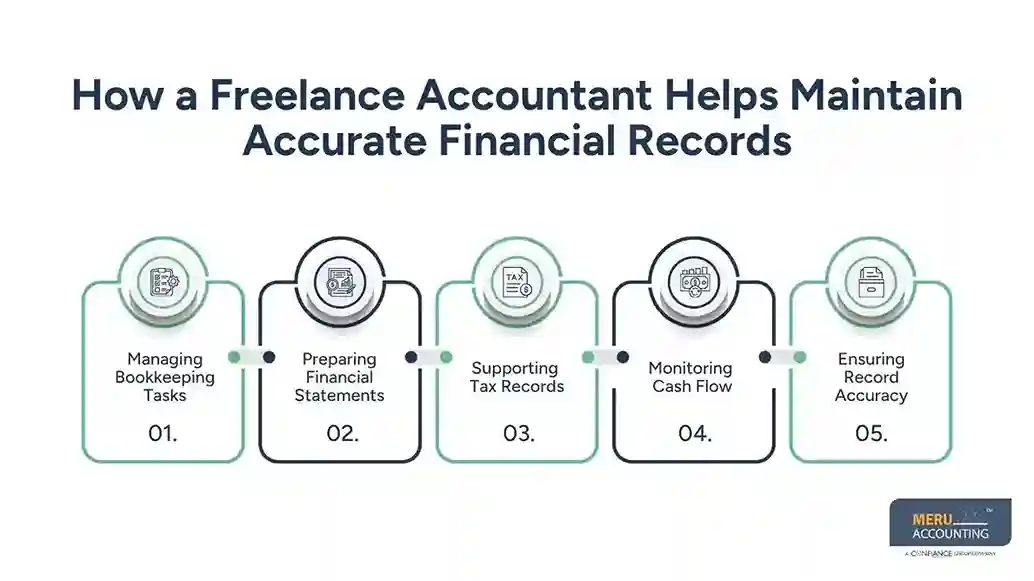
Monitoring Cash Flow
An accounting professional reviews incoming payments and outgoing expenses to maintain better cash flow records. Regular monitoring helps freelancers understand their available funds.
Ensuring Record Accuracy
An accounting professional checks financial entries and identifies missing or incorrect information. Accurate records are a key part of accounting for freelancers and help create stronger reports that support better business decisions.
Common Financial Mistakes Freelancers Should Avoid
Many freelancers face financial challenges because of poor record management and unclear money practices. Avoiding common mistakes helps freelancers maintain better control over income, expenses, and financial planning.
Proper financial habits create organized records and make business management easier. A freelance accountant can guide freelancers in maintaining accurate records and avoiding common accounting issues.
Mixing Personal And Business Money
Using one account for personal and business transactions makes financial tracking difficult. Separate accounts create clearer records and simplify expense management.
Ignoring Small Expenses
Small expenses can add up over time and affect overall business costs. Recording every expense supports effective accounting for freelancers by ensuring accurate reports and better tax preparation.
Not Planning For Taxes
Freelancers should plan for tax payments instead of waiting until deadlines. Setting aside funds regularly prevents unexpected financial pressure.
Failing To Track Income
Freelancers may lose track of payments when working with multiple clients. Maintaining proper income records ensures all earnings are recorded correctly.
Not Reviewing Financial Reports
Ignoring financial reports can make it difficult to understand business performance. Regular financial reviews are an essential part of accounting for freelancers because they help identify spending patterns and improve planning.
How Separating Finances Helps Freelancers Plan Taxes and Business Growth
Accounting for Freelancers plays an important role in long-term business planning and financial management. Organized records provide clear information about income, expenses, and business profitability.
Separate finances allow freelancers to create better growth strategies, manage taxes, and make informed decisions about future investments. Clear financial data also improves overall business planning.
Building Accurate Tax Records
Tax planning becomes easier when freelancers maintain clear records of income and expenses. Proper documentation supports accurate tax preparation and reduces last-minute financial issues.
Understanding Business Profit
Freelancers need to understand their actual profit after considering all business costs. Clear financial information helps identify profitable services and areas that need improvement.
Planning Future Investments
Reliable financial records help freelancers decide when to invest in equipment, software, or additional support. Proper planning allows better use of available business funds.
Managing Business Goals
Separate finances provide useful insights for setting realistic business goals. Freelancers can review financial progress and create plans based on actual performance.
Improving Cash Flow Planning
Accounting for freelancers creates a structured approach to tracking cash flow, managing expenses, and preparing for fluctuating income periods. Better cash flow planning creates more stability during periods of changing income.
Preparing For Business Expansion
Accurate financial records help freelancers evaluate growth opportunities and expansion plans. Clear data supports decisions about increasing services, hiring assistance, or taking larger projects.
Why Freelancers Choose Meru Accounting for Financial Management
- Meru Accounting provides organized bookkeeping solutions designed for freelancers who want better control over their business finances.
- Our accounting professionals manage income tracking, expense records, and financial reports to maintain accurate business information.
- We understand that freelancers often handle multiple projects, clients, and payment schedules, which makes proper financial organization important.
- Through professional Accounting for freelancers support, we help freelancers create reliable financial systems that simplify budgeting and tax preparation.
- Our team uses structured accounting processes to reduce errors and keep financial data updated regularly.
- Freelancers can focus on client work while our experts handle routine accounting responsibilities with accuracy and care.
- Meru Accounting provides professional guidance based on each freelancer’s financial needs, business goals, and reporting requirements.
Our Expert Perspective
At Meru Accounting, we help freelancers create a clear separation between personal and business finances through organized bookkeeping and accurate financial records. Our team assists independent professionals with tracking income, managing expenses, and maintaining proper documentation, allowing them to make better financial decisions and stay prepared for tax requirements.
Key Takeaways
- Separate personal and business finances from the beginning
- Create a dedicated bank account for freelance activities
- Maintain proper records of income and expenses
- Review financial reports regularly
- Consider professional accounting assistance when needed
- Plan taxes using accurate financial information
FAQs
Freelancers should use separate bank accounts, track business expenses, and maintain individual records for personal and freelance transactions.
A separate business bank account helps freelancers track income, manage expenses, prepare taxes, and maintain accurate financial records.
As part of Accounting for freelancers, freelancers should track expenses such as software subscriptions, office supplies, internet costs, marketing fees, and professional services.
Yes, a freelance accountant can support Accounting for freelancers by managing bookkeeping, organizing financial records, preparing reports, and assisting with tax-related requirements.
Common mistakes include mixing personal and business money, not tracking expenses, missing receipts, and delaying tax planning.
optional anymore
on running the business