
The hospitality sector operates very differently from most other industries, which is why accounting for hospitality requires a specialized approach.
Hotels, restaurants, resorts, cafes, and event businesses face constantly changing customer demand, high daily transaction volumes, and multiple income streams at the same time.
Unlike industries with fixed sales cycles, hospitality businesses must manage room bookings, food and beverage sales, service charges, inventory use, payroll shifts, and seasonal demand together.
This mix of activities makes financial tracking more detailed and complex, which is why hospitality accounting services are often used to maintain accuracy.
In hospitality, accounting goes beyond recording income and expenses. It also involves tracking different profit centers, managing costs closely, handling tax requirements, and maintaining steady cash flow across operations.
What You Will Learn From This Blog
- Why hospitality accounting differs from traditional accounting methods
- Common financial challenges faced by hospitality businesses
- Why cost control matters in hospitality operations
- How seasonal cash flow affects accounting decisions
- Tax areas that often require specialized support
- How professional accounting support can improve financial management
Understanding Accounting for Hospitality and Industry-Specific Challenges
Multiple Revenue Streams
Hospitality businesses often earn from several sources at once, making accounting for hospitality essential for accurate tracking and reporting.
Hotels may have room income, food service, event bookings, and spa revenue. Tracking each source correctly is important for accurate reporting.
High Transaction Volume
Many hospitality businesses process large numbers of small transactions daily. This creates a greater need for reconciliations and accurate daily reporting.
Without organized records, even minor errors can grow into reporting issues over time.
Labor-Heavy Operations
Payroll is often a major expense in accounting for hospitality, especially due to variable staffing structures.
Shift scheduling, overtime, service charges, and seasonal staffing add complexity that is managed through hospitality accounting services.
Inventory Management Needs
Food, beverages, cleaning supplies, and operating materials require close monitoring, which is a key focus area in hospitality accounting services. Inventory waste can affect margins quickly.
In many cases, hospitality accounting services work alongside inventory controls to reduce losses and improve purchasing decisions.
Constant Demand Changes
Customer demand can rise and fall due to seasons, events, and tourism trends, making accounting for hospitality highly dynamic. This makes forecasting harder than in many industries.
Accounting records help businesses plan for these changes and manage risks.
Why Accounting for Hospitality Differs from Other Industrial Sectors
Revenue Recognition Is More Complex
In many industries, revenue may come from one main source. Hospitality often includes several services tied to one customer, which increases complexity in hospitality accounting services.
For example, one guest’s stay may include lodging, meals, parking, and event charges. Each may need proper treatment in financial reporting.
Cost Structures Are Different
Hospitality has direct costs that change often, such as food costs, housekeeping supplies, and labor expenses.
These moving costs require regular monitoring, unlike fixed-cost models seen in some industries.
Daily Reporting Matters More
Many hospitality businesses rely on daily sales reports, occupancy reports, and operational summaries.
Frequent reporting helps management react quickly instead of waiting for month-end financial statements.
Profit Centers Need Separate Tracking
Hotels and restaurants often have departments that must be measured individually in hospitality accounting services.
Room operations, food service, and events may each have different margins, requiring separate reporting.
Customer Volume Impacts Accounting
Revenue often depends heavily on customer traffic.Occupancy rates, table turnover, and booking trends can directly affect accounting analysis within hospitality accounting services.
This makes financial monitoring more dynamic than in many sectors and highlights the need for accounting for hospitality expertise.
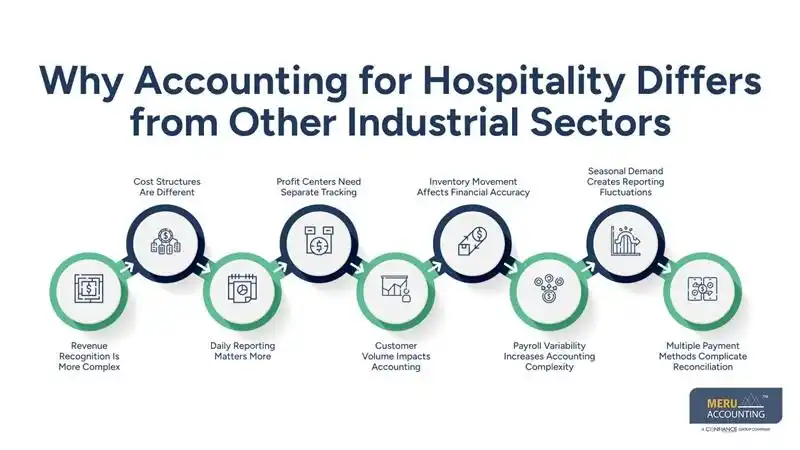
Inventory Movement Affects Financial Accuracy
Hospitality businesses handle fast-moving inventory like food, beverages, and supplies. Small issues like spoilage or over-ordering can quickly impact cost control and profit margins.
Payroll Variability Increases Accounting Complexity
Staffing in hospitality often changes with shifts, seasons, and occupancy levels. This makes payroll tracking more complex compared to industries with fixed staffing models.
Seasonal Demand Creates Reporting Fluctuations
Many hospitality businesses experience strong seasonal highs and lows. Accounting must adjust for these variations to maintain accurate forecasting and planning.
Multiple Payment Methods Complicate Reconciliation
Hospitality businesses often accept cash, cards, online payments, and third-party platforms, which must be managed carefully in accounting for hospitality.
This increases the need for regular reconciliation to avoid mismatches in financial records.
Unique Financial Challenges in the Hospitality Industry
Managing Thin Profit Margins
Margins can be tight due to labor costs, food costs, and operating expenses. Detailed financial oversight helps protect profits in this environment.
Handling Variable Operating Costs
Utility costs, supply costs, and labor expenses may often shift. Budgets need regular review because assumptions can change quickly, especially in hospitality accounting services setups.
Monitoring Cash and Card Transactions
Hospitality businesses often handle mixed payment methods. Strong controls help support reconciliations and reduce reporting errors.
Dealing With Waste and Shrinkage
Food waste, spoilage, and inventory loss can reduce profit without strong hospitality accounting services controls. Accounting data can help identify where controls may need improvement.
Tracking Vendor Costs
Supplier pricing can often change, especially in food and beverage operations, which directly affects accounting for hospitality accuracy. Regular cost review helps maintain pricing and margin control.
Why Cost Control Plays a Critical Role in Hospitality Accounting
Food Cost Monitoring
Food costs can rise due to waste, pricing shifts, or poor purchasing. Regular analysis helps businesses maintain healthy margins.
Labor Cost Management
Labor is often one of the largest expenses in hospitality operations. Tracking labor percentages helps hospitality businesses align staffing levels with actual revenue patterns.
Department-Level Expense Review
Different departments may have different spending patterns. Reviewing expenses by department improves financial control.
Budget Versus Actual Comparison
Comparing expected costs with actual results can reveal financial gaps early. This supports faster corrective action and better cost planning in hospitality.
Pricing Decisions Depend On Cost Data
Menu prices, room rates, and service pricing often depend on accurate cost analysis. Without reliable numbers, pricing decisions may reduce profitability and weaken margins.
How Does Accounting for Hospitality Handle Seasonal Cash Flow Challenges
Planning For High And Low Seasons
Many hospitality businesses earn heavily during peak periods, which requires structured planning in hospitality accounting services.
Accounting helps prepare for slower periods through planning and reserves, a key function of accounting for hospitality.
Managing Working Capital
Cash needs may change with occupancy levels or tourism demand. Working capital monitoring helps support operations during slower months.
Forecasting Revenue Trends
Past performance can help project future cash flow. Forecasting improves budgeting and financial planning in accounting for hospitality operations.
Controlling Expenses During Slow Periods
Lower demand often requires tighter spending control, a common challenge in accounting for hospitality. Accounting reports help identify where costs can be adjusted.
Preparing For Unexpected Demand Changes
Travel shifts, weather events, or market changes can affect revenue. Cash planning helps businesses handle these risks in accounting for hospitality environments.
What Are the Major Financial Challenges Faced by Hospitality Businesses
Maintaining Profitability
Balancing revenue and rising costs can be difficult. Strong accounting supports better profit monitoring.
Managing Debt And Financing
Some hospitality businesses carry loans for property or expansion. Financial planning helps manage repayment obligations.
Handling Tax Complexity
Sales taxes, occupancy taxes, payroll taxes, and service charges may all apply. Proper accounting helps reduce compliance risk.
Improving Internal Controls
High transaction activity can increase control risks. Good processes help protect business finances.
Making Better Financial Decisions
Owners need reliable data for pricing, staffing, and expansion decisions supported by accounting for hospitality. Accounting supports those decisions with clear financial information.
Why Tax Compliance Requires Specialized Hospitality Accounting Services
Sales And Indirect Tax Rules
Restaurants and hotels often face industry-specific tax requirements and obligations. Correct reporting helps avoid penalties and ensures accurate compliance with regulations.
Payroll Compliance Needs
Hospitality payroll may involve tips, overtime, and varied staffing models across shifts, requiring structured accounting for hospitality processes. These areas require close review to ensure wages, deductions, and reporting are handled correctly.
Occupancy And Tourism Taxes
Some businesses must manage lodging-related taxes based on local rules, which adds complexity to hospitality accounting services. These taxes add complexity beyond standard business tax reporting requirements.
Multi-Location Tax Reporting
Businesses operating in multiple regions may face different tax structures and rules. Specialized support helps manage filings and compliance across all locations properly.
Audit Readiness Support
Good financial records help businesses prepare for tax reviews or audits with ease. This reduces compliance risk and supports smoother verification processes.
Regulatory Filing Deadlines Management
Hospitality businesses often deal with multiple tax deadlines throughout the year. Proper tracking ensures timely submissions and avoids unnecessary penalties.
How Meru Accounting Supports Hospitality Businesses
Industry-Focused Accounting Support
Meru Accounting understands the financial structure of hospitality businesses. Our team supports hotels, restaurants, resorts, and related businesses with accounting services designed for industry needs.
We help improve reporting quality, strengthen controls, and support informed decisions using structured accounting for hospitality practices.
Cost And Profitability Analysis
We assist businesses in monitoring margins, controlling costs, and reviewing department-level performance. This helps clients improve financial visibility.
Bookkeeping And Reporting Services
Our services support daily bookkeeping, reconciliations, financial reporting, and management reporting. Reliable reporting helps businesses stay organized and make better decisions.
Tax Compliance Assistance
Meru Accounting helps businesses manage tax compliance requirements while supporting accurate records and reporting. This reduces administrative pressure and compliance risk.
Scalable Financial Support
Whether a business is growing or improving internal systems, we provide support that can scale with operational needs. Our goal is practical financial support that helps hospitality businesses operate with confidence.
Our Experts Perspective
From our experts’ perspective, hospitality businesses often face financial pressure not because revenue is weak, but because costs are not tracked closely enough. Small variations in labor, inventory, or pricing can quickly impact profitability.
We have observed that businesses that strengthen their reporting discipline tend to gain better control over margins and cash flow. In many cases, improved accounting practices also lead to operational improvements that go beyond finance alone.
Key Takeaways
- Hospitality accounting differs because of multiple revenue streams and high transaction activity.
- Cost control is often central to profitability in hospitality businesses.
- Seasonal demand creates unique cash flow challenges.
- Tax compliance in hospitality can involve specialized requirements.
- Strong financial reporting is a core outcome of effective accounting for hospitality.
- Professional accounting support can help improve control and reduce risk through structured accounting for hospitality practices.
FAQs
Hospitality businesses often deal with many daily transactions, labor costs, inventory use, and changing demand. This makes accounting more detailed than in many other industries.
Costs such as food, labor, and supplies can affect profit quickly. Good cost control helps protect margins.
Revenue may rise in peak periods and fall in slower months. Accounting helps businesses plan for these changes.
Hospitality may involve sales taxes, lodging taxes, payroll rules, and other industry-specific tax matters that need proper handling.
Yes. Professional support can improve reporting, compliance, cost control, and financial planning for hospitality businesses.