
Law firms and advisory practices work in a fast-paced field where billing, tax rules, payroll, cash flow, and daily accounting tasks all affect profit and long-term growth. Unlike firms that sell products, these businesses earn from billable hours, legal services, client retainers, and service agreements. Even small accounting mistakes may lead to late invoices, cash flow issues, tax problems, lost work time, and lower client trust. This is why accounting services for professional services now play a key role for law firms, tax firms, and advisory companies. Legal accounting services help firms manage records, track costs, prepare reports, run payroll, and support better business planning.
Many firms spend most of their time on client service and case work, which makes it hard to handle bank reconciliations, invoice tracking, tax filing, and daily accounting work in-house. Without strong systems, small accounting gaps may slowly hurt growth and staff output. Today, many firms use bookkeeping for professionals and skilled accounting teams to keep records organized, manage business costs, and improve daily workflow. In this blog, we will explain why accounting services for professional services matter to law firms and advisory practices.
What You Will Learn From This Blog
In this blog, you will learn:
- The main financial challenges faced by law firms and advisory practices
- Why accurate financial management is important for business growth
- How legal accounting services support daily operations
- The benefits of outsourcing accounting support
- Why accounting services for professional services improve operational efficiency
- How Meru Accounting supports law firms and advisory practices
Understanding the Financial Challenges Faced by Law Firms and Advisory Practices
Law firms and advisory practices handle many accounting tasks that need accuracy, industry knowledge, and strong financial systems. Their daily work includes billable hours, retainer plans, trust accounts, tax filing, payroll, and client cost tracking. Firms often rely on legal accounting services to handle these specialized financial requirements accurately.
Complex Billing Structures
Law firms and advisory practices may use:
- Hourly billing
- Fixed-fee billing
- Retainer agreements
- Milestone billing
- Project-based pricing
When firms manage billing manually, they may face late invoices, lost income, and weak cash flow. Reliable accounting services for professional services help firms maintain clear billing records and send invoices on time.
Irregular Cash Flow Cycles
Many firms face uneven cash flow because some clients pay late or large projects take more time than planned. Poor cash flow control may affect payroll, tax planning, hiring plans, and daily business tasks.
This is one reason why bookkeeping for professionals is common among law firms and advisory practices. Accurate records and regular cash flow checks help firms track receivables, manage unpaid invoices, and plan costs in a better way.
Compliance and Reporting Requirements
Law firms and advisory practices must follow tax laws, payroll rules, and reporting needs at the federal, state, and local levels. Poor recordkeeping or wrong tax filing may lead to fines, stress, or lower client trust.
Strong accounting systems help firms keep records organized and lower the risk of tax or compliance issues.
Payroll and Partner Compensation Complexity
Many firms must manage:
- Employee pay
- Partner distributions
- Bonus plans
- Contractor payments
- Performance incentives
Without strong systems, payroll work may take more staff time and raise the risk of payroll errors.
Limited Internal Accounting Capacity
Small and mid-sized firms may not have large in-house accounting teams. In many cases, attorneys and senior staff spend time checking invoices, running payroll, and handling bank reconciliations instead of focusing on client service and firm growth.
This is why many firms now use accounting services for professional services to help maintain organized and efficient financial operations.
Why Accurate Financial Management Is Critical for Professional Service Firms
Strong financial management helps firms make informed decisions, reduce operational risks, and support long-term business growth. When firms maintain accurate records and reliable reports, they gain a better understanding of overall business performance.
Better Profitability Tracking
Law firms and advisory practices need to monitor:
- Client profitability
- Team productivity
- Service line performance
- Office expenses
- Project profitability
Reliable accounting systems help firm leaders identify which services generate the highest returns and which operational areas may need improvement.
Improved Financial Visibility
Business leaders need accurate and current financial reports that show:
- Cash flow
- Outstanding invoices
- Payroll expenses
- Tax liabilities
- Operating costs
Trusted accounting services for professional services help firms access reliable reports that support better planning and daily decision-making.
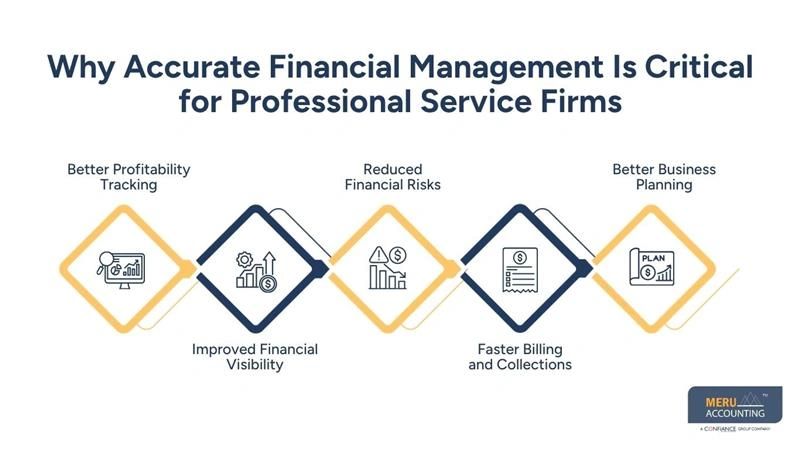
Reduced Financial Risks
Strong accounting practices help reduce the risk of:
- Tax filing errors
- Payroll compliance issues
- Missing financial reports
- Regulatory violations
- Inaccurate records
With proper reviews and reliable systems, firms can reduce financial stress and maintain stable operations.
Faster Billing and Collections
Delayed invoicing may reduce cash flow and affect business planning. Effective accounting systems help firms issue invoices faster, monitor collections, and reduce overdue client payments.
Better Business Planning
Law firms and advisory practices need accurate data to support staffing decisions, office expansion, and financial planning. Reliable reports help leadership teams make informed long-term business decisions.
The Role of Accounting Services for Professional Services in Daily Financial Operations
Accurate bookkeeping is the foundation of strong accounting operations. Law firms and advisory practices use accounting services for professional services to maintain organized records and support efficient daily operations.
Recording Daily Transactions
Bookkeeping teams help manage:
- Client payments
- Business expenses
- Bank transactions
- Credit card activity
- Payroll entries
Accurate records help firms prepare reliable reports and reduce the risk of missing financial data.
Managing Accounts Payable and Receivable
Law firms must carefully monitor both operational expenses and client receivables. Bookkeeping for professionals helps firms:
- Issue invoices
- Track receivables
- Monitor overdue payments
- Manage vendor payments
- Review client billing
This helps firms maintain healthy cash flow and reduce payment delays. In law practices, legal accounting services can also help improve invoice tracking and retainer management.
Bank and Credit Card Reconciliation
Bank reconciliations help firms confirm that accounting records match bank statements. This process helps identify missing transactions, duplicate entries, or inaccurate records early.
Payroll Support
Payroll management requires accuracy and regular oversight. Legal accounting services help firms manage payroll processing, tax deductions, employee compensation, and contractor payments.
Financial Reporting Assistance
Bookkeeping teams help firms prepare:
- Profit and loss statements
- Cash flow reports
- Balance sheets
- Expense reports
These reports help law firms and advisory practices evaluate business performance and support strategic planning.
Benefits of Outsourcing Accounting Functions for Professional Firms
Many law firms and advisory practices now outsource accounting operations to reduce internal workload and improve financial efficiency.
Access to Specialized Expertise
Firms that provide accounting services for professional services understand the accounting requirements associated with law firms and advisory practices. Their experience helps reduce errors and improve operational workflows.
Reduced Operational Costs
Large in-house accounting departments may increase expenses because of:
- Employee salaries
- Staff benefits
- Office overhead
- Employee training
- Accounting software
Using outsourced accounting support may reduce these costs while still providing firms with experienced financial professionals.
More Focus on Client Service
Attorneys and business advisors create greater value when they focus on client relationships and firm growth instead of back-office accounting responsibilities.
Scalable Financial Support
As firms expand, accounting responsibilities also increase. Outsourced accounting teams can scale support based on business size and operational demands.
Improved Technology Integration
Many accounting providers now use cloud-based tools that improve:
- Reporting speed
- Team collaboration
- File accessibility
- Data security
- Remote accounting support
Cloud accounting systems help firms access financial information securely from any location.
Better Financial Reporting
Reliable accounting support helps firms access reports that support strategic planning and long-term growth tracking.
Why Accounting Services for Professional Services Support Long-Term Growth
Law firms and advisory practices need strong accounting systems for both day-to-day work and long-term growth.
Improved Operational Efficiency
Strong accounting systems help cut manual work, speed up billing, and improve day-to-day finance tasks. They also help staff save time and reduce daily work pressure.
Better Cash Flow Management
Regular tracking of receivables and business costs helps firms keep steady cash flow and better cost control. This helps firms pay bills on time and avoid cash gaps.
Enhanced Client Trust
Clear invoices and well-kept records help build client trust and show a strong business image. Clear finance records also help firms give clear answers to clients when needed.
Stronger Business Forecasting
Good reports help firms plan staff growth, office growth, and future business plans. Clear finance data also helps firms set better short-term and long-term goals.
Better Strategic Decisions
When firms have clear and up-to-date finance data, they can make smart business choices with less risk. Strong reports also help firm owners make faster and more informed plans.
Because of these gains, accounting services for professional services now play a key role in helping law firms and advisory practices stay stable, well managed, and ready for long-term growth.
How Meru Accounting Supports Professional Service Firms
Meru Accounting provides accounting and bookkeeping support for law firms, tax firms, and advisory practices. Our legal accounting services provide firms who require accurate reports, organized records, and efficient systems for their daily operations and long-term growth.
Meru Accounting offers accounting services for professional services that help firms monitor cash flow, manage financial reporting, and maintain organized accounting operations.
Specialized Accounting Support
Meru Accounting helps firms with:
- Bookkeeping services
- Payroll support
- Cash flow monitoring
- Tax support
- Bank reconciliations
- Expense tracking
- Client billing
- Financial reporting
Our legal accounting services help firms maintain accurate and organized accounting operations.
Bookkeeping for Professionals
Meru Accounting provides bookkeeping for professionals to help law firms and advisory practices manage expenses, monitor invoices, and maintain accurate financial records.
Cloud-Based Accounting Systems
The firm uses cloud accounting tools that help teams access secure files, generate reports quickly, and improve collaboration from any location.
Scalable Financial Solutions
As firms grow, accounting responsibilities also increase. Meru Accounting provides support plans that align with firm size and operational needs.
Better Financial Accuracy and Compliance
Reliable accounting systems help firms reduce tax risks, maintain accurate records, and improve financial oversight across the organization.
Key Takeaways
- Law firms and advisory practices face complex accounting and billing responsibilities
- Accounting services for professional services help firms improve reporting, billing, and compliance management
- Bookkeeping services for professionals help firms maintain accurate financial records
- Strong accounting systems help firms monitor profitability and reduce financial risks
- Outsourced accounting support may reduce administrative workload and improve efficiency
- Cloud accounting systems improve reporting access and operational flexibility
- Meru Accounting provides legal accounting services for law firms and advisory practices
FAQs
Accounting services help law firms manage billing, payroll, tax compliance, cash flow, and financial reporting more efficiently.
Bookkeeping for professionals refers to bookkeeping and financial recordkeeping services designed for law firms, tax firms, and advisory practices.
Legal accounting services help firms manage invoicing, payroll, reporting, tax compliance, and cash flow with greater accuracy and efficiency.
Outsourced accounting support helps firms reduce administrative workload, improve efficiency, and gain access to experienced accounting professionals.
Meru Accounting provides bookkeeping, payroll support, financial reporting, cash flow monitoring, and cloud accounting support for professional service firms.