
Multi-property real estate work is not simple. It comes with many units, many costs, and many income streams. Without a clear accounting system, things can get messy fast. This is the reason why commercial bookkeeping is essential. It helps bring structure to daily financial activity across all properties. It also reduces confusion when multiple tenants, bills, and repairs happen at the same time.
Good bookkeeping helps owners see how each property is doing. It shows where money comes in and where it goes out. It also helps avoid mistakes that can lead to loss or stress at tax time. It also supports better planning for future investments and upgrades. Owners can make decisions based on real numbers instead of estimates.
For real estate investors and managers, strong records are not just helpful. They are needed for long-term growth and stable income. They also help build trust with lenders and partners. Clear records make it easier to scale a property portfolio and manage risk with confidence.
What You Will Learn From This Blog
In this blog, you will learn:
- What commercial bookkeeping mean in real estate
- Why is it important for multi-property owners
- Key benefits for daily property work
- Common money problems in property management
- Mistakes to avoid in financial tracking
It will also help you understand how financial clarity improves decision-making. You will see how proper systems reduce stress and save time. You will also learn how structured accounting supports long-term real estate growth.
What Is Commercial Bookkeeping in Multi-Property Businesses?
Commercial bookkeeping is the process of recording and tracking money flow in business properties. In real estate, it means tracking rent, bills, repairs, taxes, and other costs for each property. It also includes organizing financial data so it is easy to review at any time.
In multi-property setups, this work becomes more complex. Each building or unit may have its own income and cost pattern. That is why clear tracking is needed for every asset. Without proper systems, small errors can grow into bigger financial issues over time.
The term commercial real estate bookkeeping refers to the same process but is focused on business real estate. It helps owners understand full financial health across all properties in one system. It also supports better reporting for investors, banks, and tax authorities, which improves transparency and trust.
With proper bookkeeping, investors can see which property makes a profit and which one needs attention. It also helps identify long-term patterns in income, expenses, and occupancy rates. This leads to better financial control and smarter planning.
Why Commercial Bookkeeping Matters for Real Estate Investors
Real estate investors deal with large sums and many moving parts. Even small errors can lead to big losses. They also manage multiple tenants, contracts, and expenses at once, which increases complexity.
Here is why commercial bookkeeping is so important:
It gives clear data on rent income and costs. It helps track late payments and unpaid rent. It also shows repair costs and ongoing bills. It also ensures nothing is missed during financial tracking, which improves accuracy.
Without it, investors may only guess their true profit. With it, they can make smart and fast choices. It also helps reduce stress during audits and financial reviews because everything is already organized.
It also helps with planning. Investors can decide when to buy, sell, or improve a property based on real numbers, not guesswork. It also supports long-term financial strategy and reduces risk in decision-making.
Key Benefits of Commercial Bookkeeping for Multi-Property Portfolios
Clear Cash Tracking
With commercial bookkeeping, all money in and out is recorded. This helps owners know their real cash flow at any time. It also gives a clear picture of liquidity across all properties.
They can see if rent covers all costs or if a property is running low on profit. It also helps detect cash shortages early before they become serious financial problems. This improves overall financial stability.
Property-Level Profit View
Each property is different. Some earn more, some cost more. With structured bookkeeping, each unit is tracked separately.
With strong records, owners can see which properties perform well. This helps in better planning and smart investment moves. It also helps identify weak-performing assets that may need improvement or restructuring.
Easy Cost Control
Repairs, staff pay, and utility bills can add up fast. Bookkeeping helps track each cost clearly. It also shows where unnecessary spending may be happening.
This makes it easier to cut waste and control spending. It also helps negotiate better contracts with vendors and service providers, improving cost efficiency.
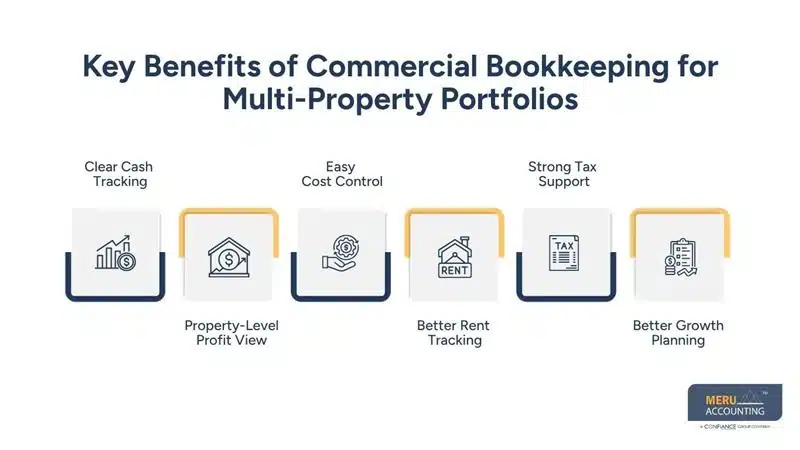
Better Rent Tracking
Late rent is a common issue. With good systems, owners can track who has paid and who has not. It also helps automate reminders and follow-ups.
This helps reduce delays and improve cash flow. It also strengthens tenant accountability and reduces disputes over payments.
Strong Tax Support
Tax season becomes much easier with clean records. All income and costs are already sorted. It also ensures deductions are properly tracked.
This reduces stress and helps avoid errors. It also speeds up tax filing and improves accuracy in financial reporting.
Better Growth Planning
With clear numbers, investors can plan growth with confidence. They know when to expand or improve their portfolio. It also helps in forecasting future income.
This is a key part of commercial real estate bookkeeping for long-term success. It also supports data-driven investment decisions that reduce financial risk.
Common Financial Challenges in Multi-Property Management
Multi-property owners face many money issues. Some of the most common are inconsistent tracking, missed payments, and rising expenses. These challenges increase as portfolios grow.
Mixed Income Records
When all property income is mixed, it becomes hard to track true profit. It also creates confusion during audits and financial planning.
Missed Payments
Without a system, late rent or missing payments can go unnoticed. It also affects monthly cash flow and creates financial gaps.
High Repair Costs
Repairs across many units can become hard to control. It also leads to unpredictable expenses that affect budgeting.
Poor Expense Tracking
Small costs often get ignored but add up over time. It also reduces accuracy in financial reports and profit analysis.
Tax Confusion
Without clean records, tax filing becomes slow and stressful. It also increases the risk of penalties or missed deductions.
Commercial bookkeeping helps solve all these issues by giving structure, clarity, and control. It also improves long-term financial decision making.
Mistakes to Avoid in Multi-Property Financial Management
Many property owners make avoidable mistakes that affect profits and stability.
No Separate Records per Property
Mixing all data into one file leads to confusion. It also makes it impossible to track individual property performance.
Delayed Record Entry
Waiting too long to record data can lead to missing details. It also increases the chance of human error.
Ignoring Small Costs
Small costs like cleaning or minor fixes often get ignored but matter over time. They slowly reduce overall profit.
No Backup System
Losing records can cause serious issues. Always keep backups to protect financial data.
Weak Tracking Tools
Using outdated tools makes work slow and less accurate. It also limits growth and scalability.
Good commercial bookkeeping helps avoid all these mistakes. It also builds a strong financial foundation for expansion.
Meru Accounting's Commercial Bookkeeping Services
Meru Accounting helps real estate owners manage their books with ease. Our services are based on our decade of experience and expertise for multi-property accounting needs.
We provide full support for commercial bookkeeping, including:
- Rent and income tracking
- Expense sorting per property
- Monthly financial reports
- Tax-ready records
- Cash flow updates
- Custom reports for investors
Our commercial real estate bookkeeping service helps owners stay stress free and focused on growth instead of daily accounting work. With expert support, owners get clear data without spending hours on manual work.
Our Expert Insight
In real estate, profit is not just about rent collection. It is about full control of money flow across all assets. Without proper systems, even profitable properties can hide real losses. Many owners think they are making a profit, but poor records often hide real costs. That is why commercial bookkeeping is so important. It brings truth to the numbers.
With our experience in working with real estate businesses, we can say that when numbers are clear, decisions become easier. Owners can plan repairs, upgrades, or new purchases with more confidence. It also improves long-term financial stability and business growth. Strong bookkeeping is not just support work. It is a core part of real estate success.
Key Takeaways
- Commercial bookkeeping gives full financial control
- Multi-property owners need separate tracking for each unit
- It helps manage rent, costs, and taxes accurately
- It reduces errors and saves time
- It supports smarter investment and growth decisions
- Commercial real estate bookkeeping improves long-term stability
- It also helps owners scale their portfolio with confidence and clarity.
FAQs
It is the process of tracking all financial activity in real estate properties. It includes rent, bills, repairs, and taxes. It also helps maintain organized financial records.
It helps track income and expenses per property. It also improves financial accuracy and decision-making.
It keeps all records organized and ready for filing. It also reduces errors and speeds up tax preparation.
Basic bookkeeping covers general business finances. Commercial real estate bookkeeping focuses on property-level income and expense tracking.
Yes, Meru Accounting offers full bookkeeping services for real estate owners, including reporting, tracking, and financial management support.