
Businesses today operate in an environment where financial risks, regulatory requirements, and operational challenges are increasing faster. Managing these risks requires more than periodic reviews. There is a need for a structural approach that identifies weaknesses before any performance issues occur. Internal audit support helps organizations evaluate risks and strengthen governance. When combined with a regular internal controls assessment, businesses can detect control gaps early and support in reducing operational issues.
Outsourcing internal audit support provides access to experienced professionals who help strengthen risk management. In this blog, we will discuss when businesses should consider outsourcing and how it contributes to stronger internal controls in a smarter manner.
What You Will Learn From This Blog
- Understand the purpose of internal audit support.
- Learn how internal controls assessment improves risk management.
- Learn about signs that indicate it is time to outsource audit support.
- Regarding benefits of outsourcing internal audit and related activities.
- Learn about best practices for working with an external audit team.
- Understand how outsourcing strengthens compliance.
- Discover how businesses improve governance through effective audit support.
Understanding Internal Audit Support
Internal audit support refers to the professional assistance businesses receive to evaluate financial processes, operational activities, compliance procedures, and internal controls. The main aim is to find weaknesses along with recommended improvements, and help management reduce errors and risk before any complicated situations arise.
Unlike external audits, which primarily focus on financial statements, internal audits support evaluation of how effectively an organization manages risks and follows established policies.
As businesses expand, internal audit activities become more complex. Professional support helps organizations maintain consistent reviews with growing changes in the market.
Why Internal Audit Support Is Important
The majority of businesses face operational and financial risks. With inaccurate and regular reviews, weaknesses in internal processes, compliance issues, or operational disruptions.
Internal audit support helps management identify these concerns with productive reviews, advanced operational procedures, and governance practices.
Organizations that perform regular audits are often better prepared for regulatory inspections and are better prepared for other demanding concerns with ease.
What Internal Audit Support Typically Includes
The scope of internal audit support depends on business size and industry requirements. However, most engagements include activities such as:
- Reviewing financial processes.
- Evaluating operational risks.
- Examining compliance procedures.
- Assessing internal control effectiveness.
- Reviewing policy implementation.
- Identifying process improvement opportunities.
- Preparing audit reports for management.
These activities provide management with practical recommendations that strengthen overall business performance.
The Connection Between Internal Audit and Risk Management
Risk management depends on timely and useful information. Audit support provides independent evaluations that help management understand risk and how it can be managed.
Instead of reacting after problems occur, businesses use audits to make things better by improving policies and strengthening monitoring procedures.
An effective audit function contributes to stronger governance and helps with business decisions.
Why Internal Controls Assessment Matters
Internal controls form the foundation of effective financial management that is needed. They establish procedures that help prevent fraud and ensure transactions are properly authorized and well recorded.
A controls assessment evaluates whether these controls are effective and operating as needed.
Strengthening Financial Accuracy
Accurate financial reporting depends on reliable accounting processes.
A controls assessment reviews areas such as transaction approvals, reconciliations, documentation, and financial reporting procedures. Identifying weaknesses early helps businesses reduce reporting errors and improve confidence in financial information.
Strong controls also simplify future audits by ensuring supporting records remain organized throughout the year.
Reducing Operational Risks
Operational risks extend beyond accounting functions. Inconsistent documentation, along with weak procedures or inadequate monitoring, affects many business activities.
An internal controls assessment helps identify various weaknesses before issues become complicated.
Businesses can then implement corrective actions that improve efficiency with less risk.
Supporting Regulatory Compliance
Many industries operate under strict regulatory requirements. Businesses must demonstrate that they maintain effective financial controls and meet the standards required.
Regular audit support combined with a controls assessment helps firms to verify compliance that is good, with improved documentation, and address deficiencies before regulatory reviews.
Improving Management Decision-Making
Management decisions rely on accurate operational and financial information.
When internal controls operate effectively, business leaders receive more reliable reports that support budgeting, investment planning, and strategic decision-making.
Regular assessments also provide valuable insight into risk that needs attention.
optional anymore
on running the business
When Businesses Should Outsource Internal Audit Support
As organizations grow, internal audit responsibilities often become more demanding. Many businesses reach a point where existing staff cannot effectively manage both operational responsibilities and independent audit activities.
Several situations indicate that outsourcing may be the right solution.
Business Growth Increases Operational Complexity
Business expansion usually brings additional systems and financial transactions.
Managing these changes requires stronger oversight. Audit support provides experienced professionals who can review expanding operations with better process handling.
Regular internal controls assessment also helps ensure new processes are effective and productive.
Limited Internal Audit Resources
Many small and mid-sized businesses do not have a dedicated internal audit department. Existing finance teams often focus on accounting, reporting, taxation, and daily operations, leaving little time for independent audit reviews.
Outsourcing audit support provides access to experienced professionals without the cost of building a full-time audit team. This enables businesses to conduct regular reviews while maintaining operational efficiency.
Increasing Regulatory Requirements
As regulatory expectations continue to grow, businesses must demonstrate stronger governance and compliance. Delayed audits or weak documentation may increase compliance risks.
Professional audit support helps organizations review policies, monitor compliance activities, and prepare for regulatory inspections. A regular controls assessment also identifies gaps before they become compliance issues.
Frequent Audit Findings
Repeated observations from external auditors often indicate weaknesses in existing processes.
Common findings include:
- Incomplete documentation.
- Weak approval procedures.
- Poor segregation of duties.
- Delayed reconciliations.
- Inconsistent policy implementation.
Outsourced audit professionals help businesses address these findings through structured reviews and practical recommendations, reducing the likelihood of recurring issues.
Preparing for Expansion or Investment
Businesses planning acquisitions, expansion, or attracting investors need reliable governance and strong financial controls.
Audit support helps management evaluate business processes before major strategic decisions. Independent reviews improve confidence among investors, lenders, and other stakeholders by demonstrating effective risk management.
Best Practices for Outsourcing Internal Audit Support
Outsourcing delivers the greatest value when businesses establish clear expectations and maintain strong collaboration with their audit partner.
Define Audit Objectives Clearly
Every audit engagement should begin with clear objectives.
Management should determine:
- Areas to be reviewed.
- Key business risks.
- Compliance requirements.
- Expected reporting outcomes.
- Timelines for completion.
Well-defined objectives ensure audit support focuses on the areas that create the greatest value.
Maintain Open Communication
Regular communication allows management and auditors to address concerns quickly and keep audit activities on schedule.
Periodic meetings, progress updates, and prompt responses to audit requests improve collaboration and reduce delays during the engagement.
Strong communication also helps management understand audit findings and implement recommendations more effectively.
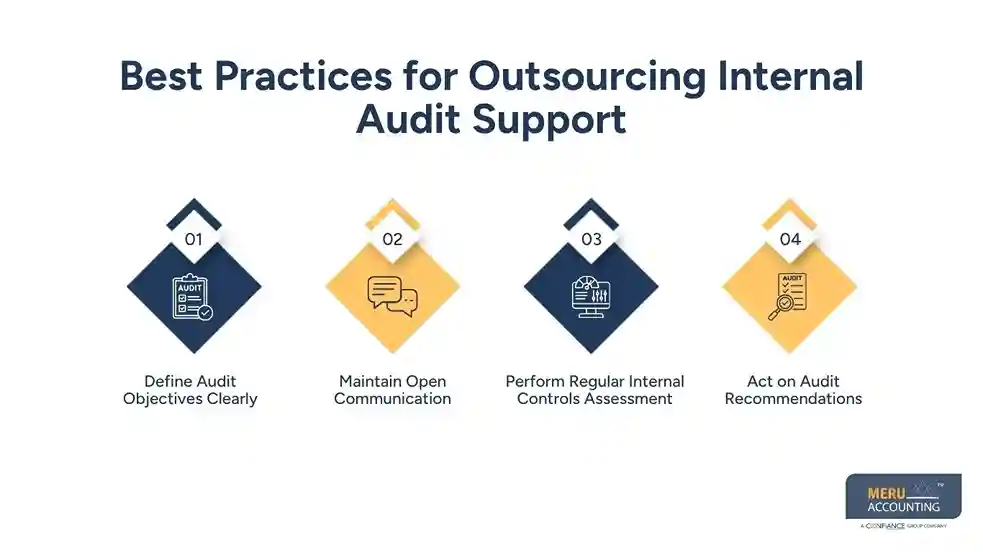
Perform Regular Internal Controls Assessment
Internal controls should be evaluated continuously rather than only during annual reviews.
A regular internal controls assessment helps businesses:
- Verify control effectiveness.
- Identify process weaknesses.
- Improve financial reporting.
- Strengthen fraud prevention.
- Enhance operational efficiency.
Ongoing assessments allow organizations to respond to changing risks while maintaining reliable business processes.
Act on Audit Recommendations
Audit reports provide valuable guidance only when recommendations are implemented.
Management should establish action plans, assign responsibilities, and monitor progress after each review. Businesses that consistently apply audit recommendations often experience stronger governance, improved compliance, and better operational performance over time.
Why Choose Meru Accounting for Internal Audit Support
Effective audits require better information and also good knowledge, experience, and practical understanding of business operations. We provide audit support that helps organizations strengthen governance and improve compliance with accuracy.
Businesses choose Meru Accounting because we provide:
- Experienced accounting and audit professionals.
- Comprehensive controls assessment services.
- Risk-based audit methodologies.
- Support across multiple industries.
- Guidance on regulatory compliance.
- Practical recommendations for process improvements.
Our team works closely with management to evaluate existing controls and also identify improvement opportunities. We focus on delivering practical solutions that are supportive of business expansion and also for productive decisions.
Our Expert Perspective
In our experience, businesses often wait until an external audit identifies significant issues before reviewing their internal processes. This approach usually results in additional costs and unnecessary corrective work.
Organizations that invest in regular internal audit support and perform a consistent controls assessment gain better visibility into their operations. Better weaknesses are controlled with superior compliances and smarter decisions with information that are accurate with it.
Key Takeaways
- Audit support strengthens business risk management.
- Regular controls assessment improves financial and operational controls.
- Business benefits from independent audit expertise.
- Early detection of weaknesses reduces future business risks.
- Productive documentation supports compliance and governance.
- Superior monitoring improves operational efficiency.
- Professional audit support helps businesses prepare for growth and regulatory requirements.
FAQs
Internal audit support involves professional assistance in reviewing financial processes, operational activities, and compliance procedures, which helps make better decisions.
A controls assessment evaluates whether business controls are properly designed and operating effectively. Helpful to reduce errors and improve compliance with reliable reports.
Businesses should consider outsourcing when operations become more complex. Regulatory requirements increase, and internal resources are also limited.
Most businesses benefit from conducting a controls assessment on an annual basis. Also, whenever significant operational or organizational changes occur.
Outsourced internal audit support identifies control weaknesses and helps management address risks easily and accurately.
optional anymore
on running the business