A property manager may collect thousands of dollars in rent each month, but how much of that money is actually left after repairs, maintenance, insurance, and other costs? And does every property in the portfolio bring in the return its owner expects? These are the kinds of questions that accounting for property managers should help answer.
Managing property finances means looking beyond rent collection. You need to know where money is coming from, which costs are eating into returns, and whether every transaction is recorded under the right property. In this guide, we’ll look at the accounting practices, financial reports, and controls that help property managers keep their numbers straight and make better decisions.
What You Will Learn From This Blog
- What accounting for property managers covers and why it matters.
- Common accounting issues that arise when managing multiple properties.
- Key accounting practices to keep property records clear and accurate.
- Financial reports that help track property income and costs.
- Ways to improve accounting accuracy and save time.
- How expert accounting support can help property management firms grow.
What Does Accounting for Property Managers Involve?
Accounting for property managers covers the financial work needed to manage rental homes, units, and commercial spaces. It helps keep each property’s income, costs, and cash flow clear. It also helps property managers meet their duties to owners and keep proper records.
Here are the main tasks involved:
1. Tracking Rental Income
Property managers need to track rent from each unit and record when payments come in. They must also keep a record of late rent, part payments, fees, and unpaid balances. This helps them see which tenants have paid and which accounts need follow-up.
2. Recording Property Expenses
Each property may have costs for repairs, upkeep, insurance, taxes, utilities, and vendor work. These costs should be logged under the right property and expense type. This makes it easier to track spending and review the net income from each unit.
3. Managing Security Deposits
Security deposits must be tracked with care. They are not rental income and should not be shown as such. Property managers need to keep clear records of deposits held, refunds made, and any lawful deductions at the end of a lease.
4. Handling Owner Payments and Reports
Property managers often collect rent on behalf of owners and pay costs from those funds. They must keep a clear record of rent, fees, bills, and the net amount due to each owner. Clear reports help owners see how their assets are doing.
5. Managing Vendor Bills and Payments
From repair firms to cleaning teams, property managers deal with many vendors. They need to check bills, record due dates, track payments, and make sure each cost is linked to the right property.
optional anymore
on running the business
Common Accounting Challenges Property Managers Face
As a property portfolio grows, so does the risk of errors. Even small gaps in the books can lead to wrong reports, late payments, and poor cash flow plans.
Some common issues include:
1. Mixing Funds From Different Properties
When funds from many properties pass through the same bank account or ledger without clear records, it becomes hard to see who owns what. This can lead to errors in owner balances and property reports.
2. Tracking Late Rent and Unpaid Dues
A large portfolio may have many rent due dates. If rent is not tracked on time, unpaid balances can go unnoticed. This can affect cash flow and delay action on late payments.
3. Managing Repair and Upkeep Costs
Repair costs can vary from month to month. A small leak may need a quick fix, while a major repair may need a large sum. Without clear cost records, property managers may find it hard to plan budgets or spot high costs.
4. Keeping Vendor Bills in Order
Late bills, missed payments, and duplicate entries can affect cash flow and vendor ties. Property managers need a set process to check bills and track what is due.
5. Preparing Accurate Owner Reports
Owners expect clear and timely reports. If income, costs, or fees are logged under the wrong property, the reports may not show the true results. This can lead to more queries and less trust.
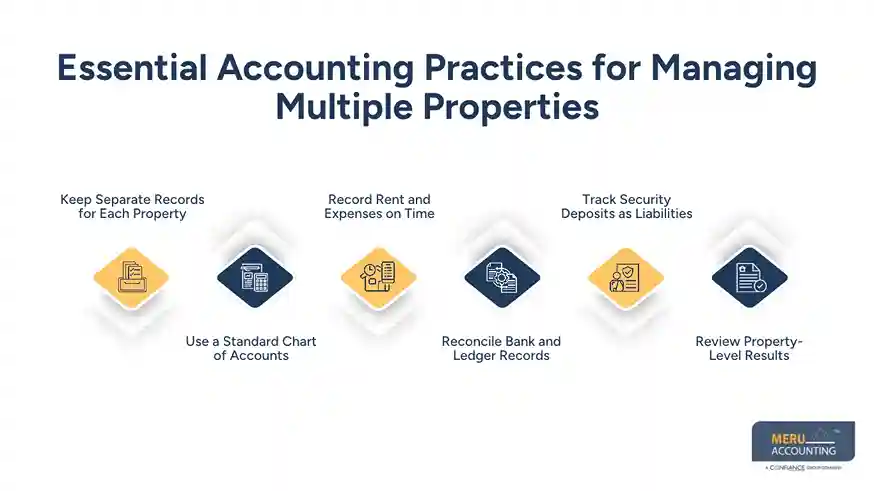
Essential Accounting Practices for Managing Multiple Properties
A clear set of rules can make day-to-day accounting easier. These steps help property managers keep clean books and stay on top of each asset.
1. Keep Separate Records for Each Property
Each property should have its own set of income and cost records. Even if you use one bank account for some tasks, each entry should show which property it relates to. This helps you check results without mixing funds or costs.
2. Use a Standard Chart of Accounts
A chart of accounts groups each entry by type, such as rent, repair costs, taxes, insurance, and vendor fees. Use the same account names and codes across your portfolio. This makes it easier to compare costs and prepare reports.
3. Record Rent and Expenses on Time
Do not wait until the end of the month to enter all transactions. Record rent, bills, fees, and refunds as they occur. Timely entries help reduce errors and give you a more current view of cash flow.
4. Reconcile Bank and Ledger Records
Bank reconciliation helps check that the books match the bank records. It can reveal missing entries, wrong amounts, duplicate charges, and payments that have not cleared. Set a monthly schedule to review each account.
5. Track Security Deposits as Liabilities
Keep deposits separate from rent and other income. Record the amount held for each tenant and check it against the balance in the related account. This helps you manage refunds and meet local rules.
6. Review Property-Level Results
Do not look only at the total income from your full portfolio. Review each property’s rent, costs, and net income. This helps you spot assets with high upkeep costs, low rent, or weak cash flow.
Financial Reports Every Property Manager Should Prepare
Good reports help property managers make sound choices and give owners a clear view of their assets. These are some key reports to prepare:
1. Income and Expense Statement
This report shows the rent and other income earned by a property, along with the costs paid during a set period. It helps you see the net income and spot changes in costs.
2. Cash Flow Report
A cash flow report shows the money that comes in and goes out. It helps property managers plan for bills, repairs, owner payments, and other costs that may fall due.
3. Rent Roll and Accounts Receivable Report
A rent roll lists key lease details, rent due, and tenant data for each unit. An accounts receivable report shows unpaid rent and other open balances. Together, they help you track rent and follow up on late payments.
4. Property Owner Statement
This report gives owners a view of rent received, costs paid, fees charged, and the amount due to them. It should be clear, timely, and backed by proper records.
5. Budget vs. Actual Expense Report
This report compares planned costs with the amounts spent. It helps property managers find areas where costs are higher than planned and take steps to control them.
How to Improve Accounting Accuracy Across Multiple Properties
Accurate books need more than good software. You also need clear steps, regular checks, and people who know how to handle property records.
Here are a few ways to improve your process:
- Set clear work steps: Create a set process for rent entry, bill checks, vendor payments, and owner reports. Make sure each team member knows their role.
- Use accounting software: Choose a system that can track income and costs by property, handle many bank feeds, and create useful reports.
- Automate routine tasks: Use tools for rent reminders, bill entry, and bank feeds where they fit your needs. Review each entry to catch errors.
- Set a monthly close date: Fix a date each month to check bank records, clear open items, review costs, and prepare reports.
- Keep digital records: Store lease data, bills, receipts, bank records, and vendor files in a safe and easy-to-find place.
- Review access and approvals: Limit who can change records or approve payments. Set clear rules for large bills and refunds.
These steps make accounting for property managers more reliable as the number of units grows. They also help reduce manual work and make it easier to find errors before they affect owner reports.
Manage Your Property Finances With Meru Accounting’s Property Management Accounting Services
A portfolio-wide profit figure doesn’t tell the whole story. Property managers need to know which units are generating rental income, where maintenance costs are rising, how much rent remains unpaid, and what funds are due to each owner. Getting these numbers right requires consistent records and a clear accounting process for every property.
At Meru Accounting, we understand that property management accounting involves more than recording rent and paying bills. Our team provides property management accounting services designed to help firms maintain accurate property-level records, track financial activity, and prepare reports for owners. We can support the following areas:
- Property-Wise Bookkeeping: Recording rental income, management fees, maintenance costs, insurance, utilities, and other transactions under the correct property.
- Rent and Receivables Management: Tracking rent payments, outstanding balances, late payments, and other amounts due from tenants.
- Accounts Payable and Vendor Accounting: Recording vendor invoices, checking payment records, tracking due dates, and managing property-related expenses.
- Security Deposit Accounting: Maintaining deposit records, tracking refunds, and ensuring tenant deposit balances are properly accounted for.
- Bank and Account Reconciliation: Matching bank activity with accounting records and reviewing unmatched or duplicate transactions.
- Property Financial Reporting: Preparing income and expense statements, cash flow reports, rent reports, and owner statements.
- Month-End Accounting and Closing: Reviewing account balances, checking open transactions, and preparing financial records for the next reporting period.
Our experience across multiple industries helps us understand the different cost structures, reporting needs, and financial workflows businesses deal with. We bring that accounting experience to property management firms, with support that can fit their portfolio size and existing processes.
Whether you manage residential rentals, commercial properties, or a mixed portfolio, Meru Accounting can help you maintain reliable books and give property owners a clearer view of their investments.
Our Expert Insight
One accounting mistake property managers should watch for is treating rental income as a sign of available cash. A property may show high rental income for the month, but that doesn’t mean the same amount is available to pay bills or distribute to the owner.
For example, rent may be due on the first of the month, while a major insurance payment, property tax bill, or contractor invoice falls due a few weeks later. If these costs aren’t included in cash flow planning, a property manager may distribute too much money to the owner and leave too little to cover upcoming obligations.
Our recommendation is to review upcoming expenses and cash commitments before preparing owner distributions. Keep a clear record of unpaid bills, scheduled payments, reserve funds, and amounts owed to owners. Also, review property-level cash flow alongside income statements. This gives a more realistic view of available funds and helps prevent shortfalls, even when rental income looks healthy.
Key Takeaways
- Accounting for property managers helps track rent, costs, cash flow, and owner funds.
- Each property should have clear records to avoid mixed income and expenses.
- Bank reconciliation and regular reviews help keep books accurate.
- Income statements, cash flow reports, and owner statements help track results.
- A set month-end process can reduce errors and save time.
- Expert accounting support can help property managers handle a growing portfolio.
FAQs
Accrual accounting is often useful because it records income when earned and expenses when incurred, not just when cash changes hands. It gives property managers a clearer view of each property’s financial performance.
Security deposits should be recorded as liabilities, not rental income. Keep a record of each tenant’s deposit, any deductions, and refunds to ensure the funds are properly accounted for.
No. Property management fees are business income for the management company and an operating expense for the property owner. They should be recorded separately from rental income.
Generally, routine repairs and maintenance are deductible rental expenses. Major improvements may need to be capitalized and depreciated instead, depending on IRS rules.
Look for software with property-level tracking, rent management, expense records, bank reconciliation, vendor payments, and owner reporting. It should also support multiple properties and provide clear financial records.
optional anymore
on running the business