Accounting for restaurants and bars is a key part of running a profitable food business. Owners must track sales, food costs, wages, rent, stock, tax, tips, and many other costs. A busy dining room does not always mean strong profit. Good books show where cash comes from, where it goes, and what needs care.
Restaurant and bar finances can change from day to day. A rise in food prices, staff hours, waste, or card fees can cut profit with little warning. A sound accounting system gives owners clear data for daily choices and long-term plans.
What You Will Learn From This Blog
- How accounting for restaurants and bars works in daily business.
- Which costs need close review each month.
- How to track sales, stock, payroll, tips, and cash.
- Which common errors can hurt restaurant profit.
- How to read key financial measures with ease.
- How break-even analysis can guide sales goals.
- When restaurant accounting services may be a good fit.
- How better records can guide sound business choices.
Introduction to Accounting For Restaurants and Bars
Accounting for restaurants and bars starts with clear daily sales records. In practice, owners often need to compare POS totals with cash, card settlements, delivery payments, refunds, discounts, and tips before closing each day. These checks can reveal differences that may otherwise remain unnoticed.
Cash flow needs close attention because profit and available cash are not always the same. A business may show profit while cash is tied up in stock, unpaid bills, or debt. Professional restaurant accounting services can also help owners maintain accurate records and review cash needs regularly.
Good records should cover income, expenses, purchases, payroll, and other key business activity. The IRS notes that business records should be complete and accurate, whether kept on paper or through electronic systems. Regular reviews can also make it easier to spot errors, control costs, and prepare tax records.
Key Accounting Challenges Faced By Restaurants and Bars
Food Waste
Food waste can lower profit without showing up as a clear bill. Spoiled food, poor portion size, wrong orders, and overbuying can all raise costs. A waste log can show where loss takes place.
Stock Control
Stock needs close care because food and drink can spoil, break, or move fast. Effective accounting for restaurants and bars helps connect stock changes with purchases and sales.
Staff Pay
Restaurants and bars often have varied staff hours. Payroll can include wages, overtime, tips, taxes, and paid leave. Errors can create tax or pay issues, so payroll data should be checked each pay cycle.
Tips And Service Charges
Tips need clear records and correct tax treatment. The IRS states that tips are income and that employers have duties for tip records, tax withholding, and reporting. Mandatory service charges are treated as wages when paid to staff, rather than as tips.
Many Sales Channels
Modern food firms may sell through a POS, website, delivery apps, catering, and third-party sites. Each source may have its own fee and payment timing. Sales should be matched with deposits so missing income or fees do not go unnoticed.
Essential Accounting Practices For Restaurants and Bars
Use a Clear Chart Of Accounts
Set accounts for food sales, drink sales, delivery sales, food cost, wages, rent, utilities, repairs, marketing, and other key items. A well-organized chart of accounts makes accounting for restaurants and bars easier by separating income, direct costs, and operating expenses.
Reconcile Bank Accounts
Bank reconciliation should be done on a regular cycle. Match deposits, card payments, checks, fees, and withdrawals with the books. Unmatched items should be checked rather than left for year-end.
Count Inventory Often
Use a set stock count method for food, drinks, and key supplies. Record units, cost, and count date. Compare actual stock with expected use based on purchases and sales. Differences can point to waste, portion changes, spoilage, recording errors, or other stock issues that need review.
Review Vendor Bills
Check vendor bills before payment as part of effective accounting for restaurants and bars. Match each bill with the goods received and the agreed price.
A simple check can catch duplicate bills, unexpected price changes, and charges for goods not received. Comparing invoices with purchase orders or delivery records also helps confirm that billed quantities match actual deliveries.
Close Books On Time
Do not let months of work build up. Close books on a set date each month and review the profit and loss report, balance sheet, cash position, and key cost figures.
Common Accounting Mistakes Restaurants and Bars Should Avoid
Mixing Personal And Business Funds
Owners should keep personal spending out of business accounts. Mixed funds make books hard to read and may cause problems when tax records are checked. Keeping accounts separate also makes accounting for restaurants and bars easier to manage.
Ignoring Small Costs
Small costs can add up across a year. Cleaning items, delivery fees, repairs, bank fees, and small supply buys should all be recorded in the right account.
Delaying Reconciliation
Late bank checks can hide errors for weeks or months. Regular review gives owners a chance to fix wrong entries while the source records are still easy to find.
Missing Inventory Loss
Stock loss is not always caused by theft. Waste, spills, poor storage, wrong portions, and staff meals can all affect stock. Record the reason for major stock changes.
Tips to Improve Accounting For Restaurants and Bars
Set a Daily Close
A daily close should compare POS sales with cash, card, online sales, refunds, discounts, and tips. Any gap should be reviewed before the next business day begins. Checking these differences while POS records, receipts, and settlement reports are readily available can make the cause easier to identify.
Review Weekly Costs
Weekly cost reviews can make accounting for restaurants and bars more useful by highlighting changes before the monthly report. Check food cost, labor cost, waste, sales, and major bills against the prior week.
Set Stock Levels
Set a target stock level for key goods. Too much stock can tie up cash, while too little stock can cause missed sales. Update levels when sales patterns change.
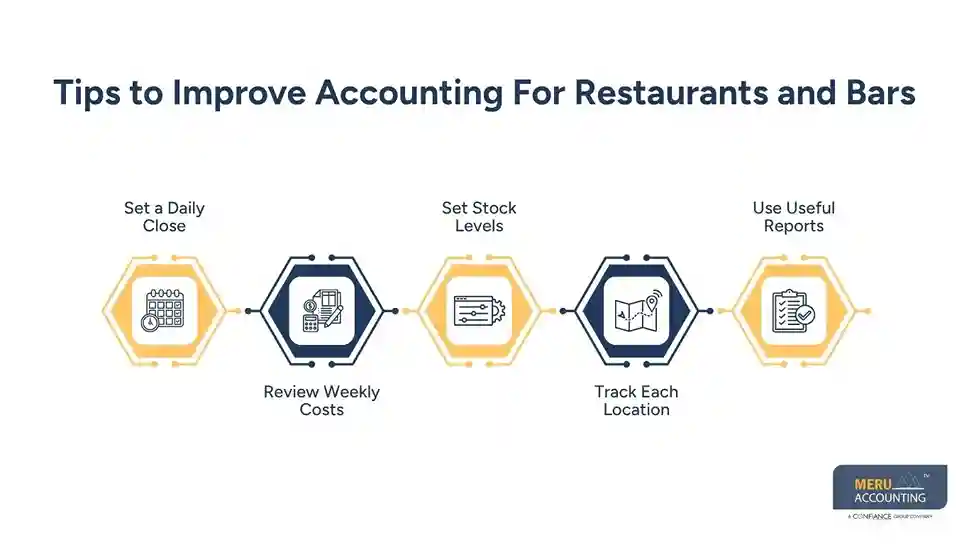
Track Each Location
Owners with more than one site should keep records for each location. Separate reports make it easier to see which site earns the most and which site needs action.
Use Useful Reports
Good reporting gives accounting for restaurants and bars a practical purpose by helping owners identify costs, cash needs, and financial trends. Reliable restaurant accounting services can help turn these reports into useful information for cost and cash decisions.
optional anymore
on running the business
How to Measure Restaurant Financial Performance
Sales Growth
When reviewing accounting for restaurants and bars, sales growth can show whether revenue is rising or falling over time. Compare sales by week, month, season, site, and sales channel to find useful trends.
Gross Profit
Gross profit is sales minus the direct cost of goods sold. For a food firm, this often includes food and drink costs. A fall in gross profit can point to price, waste, stock, or vendor issues.
Prime Cost
Prime cost combines key direct costs such as food and drink cost with labor. Owners often watch this figure closely because these costs can take a large share of sales.
Net Profit
Net profit shows what remains after operating costs and other charges are taken from revenue. Review both the amount and the margin so a rise in sales does not hide a weak return.
Cash Position
Cash should be reviewed along with profit to support better accounting for restaurants and bars. Look at bank cash, near-term bills, payroll needs, tax needs, debt payments, and expected sales before making large spending plans.
Break-Even Analysis For Restaurants and Bars
Know Fixed Costs
Fixed costs can include rent, insurance, base software fees, and some salaries. These costs tend to stay stable within a set sales range, even when sales change.
Know Variable Costs
Variable costs rise or fall with sales. Food, drink, some packaging, and some card or delivery fees can change with order volume. Clear cost data makes the break-even view more useful.
Find Break-Even Sales
A simple break-even formula is:
Break-even sales = Fixed costs ÷ Contribution margin ratio
For example, if fixed costs are $30,000 per month and the contribution margin ratio is 40%, break-even sales are $75,000. Owners should use real business data and review the result when costs or prices change.
Set a Sales Goal
In accounting for restaurants and bars, break-even sales show the revenue level needed to cover fixed and variable costs. Owners can then add a target profit to set a higher sales goal. The goal should also account for slow days and seasonal changes.
Review the Result
Break-even is a planning tool, not a promise. Rent, wages, food prices, menu prices, and sales mix can change. Review the calculation when major business costs or prices change.
Strengthen Your Restaurant Accounting With Meru Accounting
Practical Accounting Help
Meru Accounting provides accounting and bookkeeping support for businesses that need organized financial records. Our team can work with routine books, reports, reconciliations, payroll data, and other finance tasks.
Clear Financial Reports
Our approach focuses on clear records and useful reports. Owners can use timely data to review sales, costs, cash, and profit without spending all day on routine finance work.
Business-Focused Support
Meru Accounting can provide restaurant accounting services based on each business’s bookkeeping, reporting, and financial management needs. A structured process can make monthly close work, record review, and financial reporting easier to manage.
Save Owner Time
Restaurant owners have many daily tasks to manage. For many owners, outsourcing accounting for restaurants and bars can reduce routine finance work while keeping financial information up to date.
Our Expert Insight
Focus On The Numbers
Quality restaurant accounting services can help owners review financial numbers throughout the year instead of waiting for year-end. A monthly close, weekly cost check, and daily sales review can give a much clearer view of business health.
Watch Cost Changes
Food and labor costs can move quickly. A small change in waste, portion size, staff hours, or vendor price may affect profit over time. Regular checks make such changes easier to see.
Use Data For Decisions
Reports used in accounting for restaurants and bars should answer useful business questions. Which menu item earns the best margin? Which day has weak sales? Which vendor costs more? Which site has high labor cost?
Good reports turn these questions into clear actions. Comparing sales, labor, food costs, and margins over regular periods can help owners identify unusual changes and decide where further review is needed.
Key Takeaways
- Keep daily sales records and match them with deposits.
- Track food, drink, labor, rent, and other key costs.
- Count stock often and record waste with care.
- Reconcile bank and card accounts on a regular plan.
- Keep tip and payroll records in line with tax rules.
- Use accounting for restaurants and bars to review profit, cash, gross margin, and prime cost regularly.
- Use break-even analysis when setting sales goals.
- Review reports each month and act on key changes.
- Consider restaurant accounting services when finance work takes too much owner time.
- Keep records that support income, costs, payroll, and tax filings.
FAQs
Accounting for restaurants and bars means tracking sales, costs, payroll, stock, cash, taxes, and other money records. It gives owners a clear view of profit and cash.
Accounting shows where money is earned and spent. Good records can also make tax work, cash planning, cost checks, and business decisions easier.
A restaurant may use restaurant accounting services when bookkeeping takes too much time or when records are hard to keep current. Outside help can also be useful during growth.
Use one clear record system, reconcile accounts often, check vendor bills, count stock, and review sales data. Restaurant accounting services can also provide regular record checks and reports.
Restaurant accounts should be reconciled regularly, with daily sales checks and monthly bank reconciliations. Consistent accounting for restaurants and bars can help identify missing deposits, duplicate entries, and payment differences sooner.
optional anymore
on running the business