An accounting structure for small business gives owners a clear way to record, sort, check, and report money. A good structure starts with separate bank accounts and clear records. It then moves into account setup, daily entries, monthly checks, and financial reports.
A sound system also makes tax work less hard. The IRS says businesses need records that clearly show income and expenses and support items reported on tax returns.
The right accounting structure for small businesses should fit the firm’s size, type, sales cycle, staff, and tax needs. A service firm may need a simple setup, while a firm with stock, staff, loans, or many sales may need more detail.
What You Will Learn From This Blog
- How an accounting structure for small businesses works.
- Why a clear account system matters.
- How to choose cash or accrual accounting.
- How to build a chart of accounts for small business needs.
- Which steps belong in a small business accounting setup.
- How to track bills, sales, and cash flow.
- Which records should be checked each month.
- How clean books lead to useful financial reports.
Why Does An Accounting Structure Matter For Small Businesses?
A clear accounting structure for small businesses gives each transaction a set place. Owners can then see where money comes from, where it goes, and what the firm owns or owes.
Clear Financial Records
Good books show sales, costs, assets, debts, and owner equity. The IRS notes that good records can aid financial statements, tax returns, and expense tracking.
Better Cash Control
A good system shows cash due in and bills due out. Owners can spot a cash gap before it becomes a larger issue.
Easier Tax Work
Clean records give tax staff the facts needed for return work. Income, costs, payroll, and other records can be checked before filing.
Useful Business Reports
An effective accounting structure for small businesses can produce a profit and loss report and balance sheet. These reports give owners a view of sales, costs, assets, debts, and equity.
How To Choose The Right Accounting Method For Your Business
The method used in an accounting structure for small businesses sets the time when income and costs are recorded. The choice should match the firm’s needs and tax rules.
Cash Accounting
Cash accounting records income when money is received and costs when money is paid. The IRS lists cash as one of the main accounting methods.
Accrual Accounting
Accrual accounting records income when earned and costs when incurred. Such a method can give a better view of sales and costs for firms with unpaid bills or open invoices.
Business Size And Type
A small service firm with few transactions may need less detail. A firm with stock, credit sales, or many bills may need a more robust method.
Tax Rules
Tax rules can limit the method a business may use. IRS guidance states that a business must use a method that clearly reflects income and must apply it in a consistent way.
Expert Review
An accountant can review the firm’s type, tax status, sales cycle, and records before setup. Such a review can reduce the risk of using the wrong method.
How To Set Up An Accounting Structure For Small Business
Building an accounting structure for small business starts with the right accounts, tools, rules, and record flow. Each step should have a clear owner and a set review date.
Separate Business Accounts
Open a bank account for business use and keep personal spending apart. IRS guidance also advises new businesses to keep business and personal accounts separate.
Pick Accounting Software
Choose software that can record sales, bills, bank activity, payroll data, and reports. The tool should fit the firm’s size and not add features that are not needed.
Set User Roles
Give each person only the access needed for their work. For example, staff may enter bills while an owner or accountant reviews and approves them.
Set Record Rules
Create rules for invoices, bills, receipts, refunds, owner draws, and bank entries. Clear rules make daily work more uniform and reduce errors.
Set A Close Routine
Set a monthly close date for bank checks, account review, and report review. A fixed routine keeps books current instead of leaving work for year-end.
How To Create A Chart Of Accounts For Small Business
A chart of accounts for small business lists the accounts used to group each transaction. The list should be detailed enough for useful reports but not so large that daily work becomes hard.
Asset Accounts
Asset accounts may include cash, bank balances, accounts receivable, stock, and equipment. These accounts show what the firm owns or expects to collect.
Liability Accounts
Liability accounts track debts and amounts owed, giving the accounting structure for small businesses a clear view of financial obligations. Common examples include accounts payable, loans, credit card balances, and taxes due.
Equity Accounts
Equity shows the owner’s claim after liabilities are taken from assets. Account names may vary based on the legal form of the business.
Income Accounts
Income accounts group sales and other business earnings. A firm may use separate income accounts for products, services, or major sales lines.
Expense Accounts
Expense accounts track costs such as rent, wages, software, ads, travel, and office costs. Good categories make cost review more useful.
Small Business Accounting Setup: Essential Steps To Follow
A strong small business accounting setup connects records, bank data, invoices, bills, and reports. Each part should work as one process rather than as separate tasks.
Collect Source Records
Keep invoices, receipts, bills, bank statements, and payment records in order. The IRS says such documents support entries in books and tax returns.
Record Transactions
Enter sales, costs, payments, deposits, and other business activity on a set schedule. The IRS notes that daily recording is generally a good practice.
Reconcile Bank Accounts
Regular reconciliation strengthens the accounting structure for small businesses by keeping recorded balances accurate. Differences should be found, checked, and fixed before reports are issued.
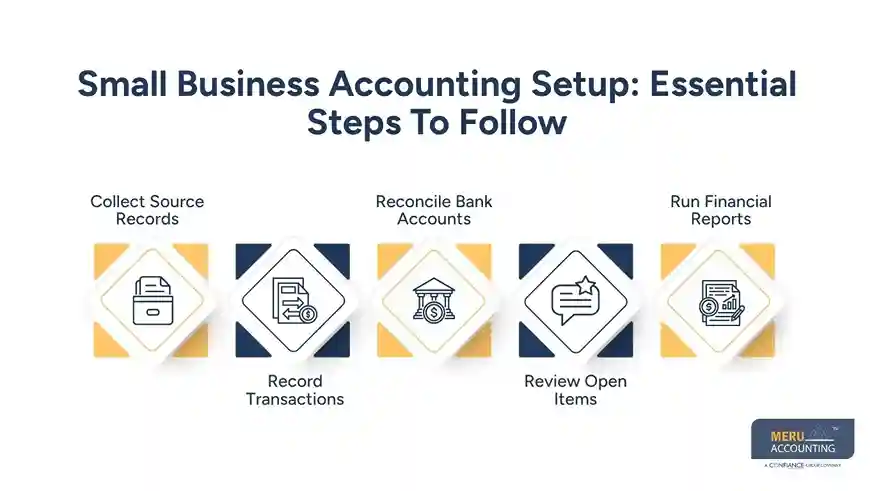
Review Open Items
Check unpaid bills and unpaid customer invoices. Old balances may point to a late payment, missing entry, wrong account, or other issue.
Run Financial Reports
A small business accounting setup should produce reports such as profit and loss and balance sheet. Cash flow reports may also be useful for firms with changing cash needs.
optional anymore
on running the business
How To Manage Accounts Payable And Accounts Receivable
Accounts payable and receivable are key parts of an accounting structure for small businesses. One tracks money the firm owes, while the other tracks money customers owe.
Track Vendor Bills
Record each bill with the right vendor, date, due date, amount, and account. This gives the owner a clear view of near-term cash needs.
Set Payment Dates
Group bills by due date and set a review plan. Paying on time can reduce late fees and keep vendor records clean.
Track Customer Invoices
Record each invoice when issued and link it to the right customer. Open invoices should be checked often so late balances do not go unnoticed.
Follow Up On Late Bills
Set clear steps for overdue accounts. A simple reminder plan can keep collections more regular without creating confusion.
Match Payments
Apply customer and vendor payments to the right invoice or bill. Correct matching keeps the ledger and open balance reports accurate.
Common Accounting Structure Mistakes Small Businesses Should Avoid
Weak processes can damage an accounting structure for small businesses even when the software is good. Most errors come from poor setup, late entry, or weak review.
Mixing Personal And Business Costs
Personal spending should not be mixed with business costs. Separate accounts and clear owner entries make records easier to review.
Using Too Many Accounts
A very large chart of accounts for small businesses can make entry work slow and reports hard to read. Use account groups that serve a clear reporting need.
Delaying Bank Reconciliation
A reliable accounting structure for small businesses also depends on regular reconciliation to keep account balances accurate. Monthly checks give owners a better chance to find missing or duplicate entries.
Ignoring Small Errors
A small wrong entry can affect later reports when it stays in the books. Review unusual balances and fix errors when they are found.
How Meru Accounting Builds A Strong Accounting Structure For Small Business
Meru Accounting works with small businesses that need clear books and reliable financial records. Our approach focuses on practical account setup, regular bookkeeping, account review, and useful financial reports.
Review Your Current Accounting Setup
Our team first reviews the existing books, bank accounts, account list, and transaction records to assess the current accounting structure for small business. This review can show gaps, duplicate accounts, old balances, and areas that need better control.
Build A Clear Chart Of Accounts
We can create or refine a chart of accounts for small businesses based on the firm’s income, costs, assets, and debts. Clear account names make monthly reports easier to read and review.
Organize Daily Bookkeeping
Our bookkeeping process covers income, expenses, bills, payments, deposits, and other routine entries. Regular entry keeps records current and gives owners better data for monthly review.
Reconcile Bank And Credit Accounts
Meru Accounting can compare bank and credit card records with the books each month. Differences are checked so missing, duplicate, or wrong entries can be found sooner.
Prepare Financial Reports
A strong accounting structure for small business should lead to clear reports. Our team can prepare profit and loss statements, balance sheets, and other reports based on the firm’s needs.
Keep Records Ready For Tax Work
Our team can organize income, expenses, invoices, receipts, and other records needed for tax review. Well-kept books give tax professionals a clearer base for filing and planning.
Our Expert Perspective
A good accounting system should do more than record past transactions. It should give the owner a clear view of how the business is performing and where attention may be needed.
A useful test is simple: Can the owner look at a monthly report and quickly understand where money came from and where it went? If the answer is no, the account structure may need a review. Too few accounts can hide key details, while too many can make reports hard to follow.
Another useful check is this: Does the accounting structure still match the way the business operates today? If the business has added new services, staff, loans, or sales channels, the account setup may need changes. A well-planned structure should give owners clear information without making daily bookkeeping harder.
Key Takeaways
- A good accounting structure for small business should match the firm’s needs.
- Keep business and personal accounts separate.
- Pick an accounting method based on business and tax rules.
- Build a clear chart of accounts for small business needs.
- Keep source records such as invoices and receipts in order.
- Reconcile bank accounts each month.
- Track bills and customer invoices on time.
- Use professional review when tax or reporting rules are complex.
FAQs
An accounting structure for small business is the system used to record, sort, check, and report business transactions.
A small business accounting setup should include bank accounts, accounting software, account categories, source records, transaction rules, and monthly checks.
A chart of accounts for small businesses is a list of accounts used to group income, expenses, assets, liabilities, and equity.
The right method depends on the business, tax rules, and reporting needs. The IRS recognizes both cash and accrual methods, with specific rules that may apply.
Most firms should review and reconcile their books each month. More frequent checks may be useful when a business has many transactions or tight cash needs.
optional anymore
on running the business