
Managing medical practice finances needs accurate records and well-organized processes. Accounts for doctors track patient payments, expenses, salaries, and transactions. Proper financial management helps doctors in many ways. It supports informed decisions, budgeting, and cash flow control that is required.
Doctors manage various financial responsibilities along with providing better patient care. Without proper accounting systems, tracking expenses becomes challenging. Professional financial practices maintain accurate records and improve daily operations. Accounting software for doctors automates routine tasks and provides better financial visibility.
What You Will Learn From This Blog
- Understand the importance of accounts for doctors in medical practices.
- Learn how doctors can manage financial records effectively.
- Discover key accounting requirements for healthcare professionals.
- Identify common financial challenges faced by doctors.
- Explore the role of accounting software for doctors.
- Learn methods to improve budgeting and expense tracking.
- Understand how professional accounting support helps medical practices.
Why Accounts For Doctors Matter In Healthcare Practices
What Are Accounts For Doctors?
Accounts for doctors manage financial activities within medical practices. They record patient payments, treatment income, expenses, payroll, and taxes. Accurate accounting maintains complete financial records for medical practices. It also helps doctors understand overall practice performance.
Medical professionals handle multiple income sources and daily expenses. Consultation fees, procedures, insurance payments, and equipment costs require tracking. Organized accounting separates transactions and creates clear financial reports.
Accounts for doctors identify revenue patterns and expense trends. These records help healthcare professionals monitor practice profitability. Reliable financial information supports better operational control and planning. Accounts for doctors help in many ways.
Why Accurate Financial Records Are Important
Medical practices depend on accurate financial information daily. Poor recordkeeping can create various expense management issues. Organized records help doctors to make better decisions.
Some important benefits include:
- Better tracking of patient revenue.
- Improved expense management.
- Accurate financial reporting.
- Easier tax preparation.
- Better cash flow monitoring.
- Stronger financial planning.
- Reduced accounting errors.
Proper records help doctors understand service profitability. They can review staff, equipment, supply, and facility expenses. This information supports better financial planning throughout the year.
Healthcare businesses need proper documentation for compliance requirements. Accurate records support tax reporting and better financial reviews.
How Accounting Supports Medical Practice Decisions
Doctors make business decisions based on financial information. They need accurate data to review expenses, revenue, and performance. Without proper accounting, identifying profitable areas becomes challenging.
Accounts for doctors provide income, expense, and cash flow reports. These reports show practice performance during different periods. Doctors use this information to control costs effectively.
For example, clinics may experience increasing supply expenses. Financial reports reveal when these cost increases occur. Doctors can review suppliers, usage, and purchasing decisions. This helps reduce unnecessary expenses and improve control.
Reliable accounting supports hiring and service expansion plans. It also helps doctors plan equipment purchases effectively. Clear financial information enables confident practice management decisions.
Key Financial Requirements For Medical Practices
Tracking Patient Revenue And Payments
Medical practices receive payments from different sources. These may include patient consultations, procedures, insurance reimbursements, and healthcare packages. Tracking each payment accurately is important for maintaining financial control.
Accounts for doctors help organize revenue records from different services. They ensure payments are recorded properly and reduce confusion during financial reviews. Clear revenue tracking also helps identify outstanding payments.
Doctors often manage delayed insurance payments and pending patient balances. Organized accounting makes it easier to monitor unpaid amounts. It also supports better cash flow management for daily practice needs.
Many medical professionals use accounting software for doctors to simplify revenue tracking. These systems help record transactions, organize financial data, and generate useful reports.
Managing Medical Practice Expenses
Doctors manage various expenses while operating their practices. These include medical supplies, equipment maintenance, employee salaries, rent, utilities, and administrative costs. Recording each expense accurately is essential for understanding overall profitability.
Accounts for doctors categorize expenses based on their purpose. This helps medical professionals identify major cost areas and control unnecessary spending. Proper expense classification also improves financial reporting.
For example, a clinic may experience higher equipment maintenance costs. Organized expense records help identify these increases quickly. Doctors can then review service contracts or replacement options.
Accurate expense management supports better budgeting decisions. It helps practices prepare for regular costs and unexpected financial requirements.
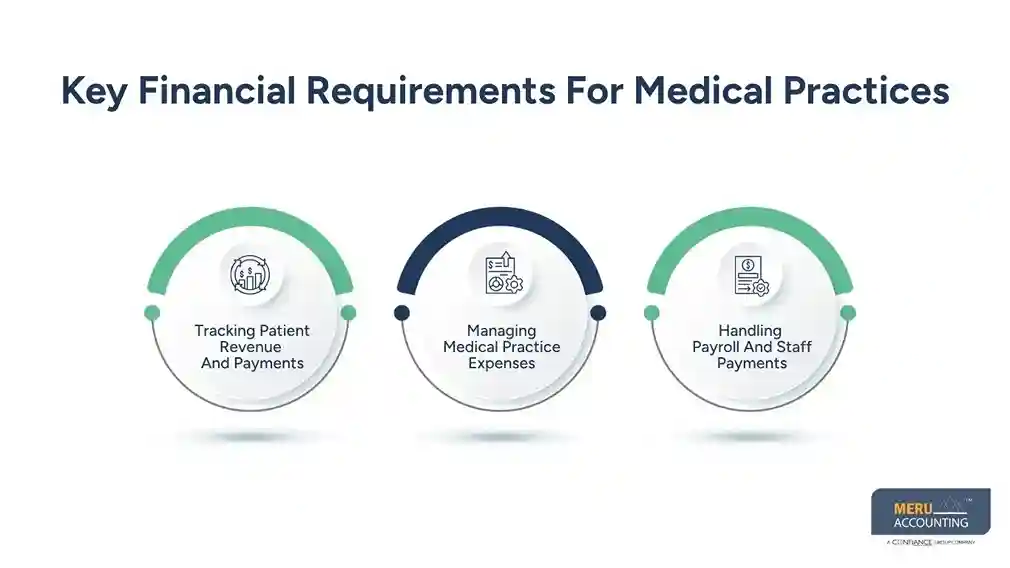
Handling Payroll And Staff Payments
Medical practices often employ nurses, assistants, receptionists, and administrative staff. Managing salaries, benefits, and employee payments requires accurate financial records. Payroll mistakes can affect staff satisfaction and compliance.
Accounting systems help maintain employee payment records and salary information. They also organize payroll-related expenses for easier reporting. This reduces manual work and improves payment accuracy.
Accounts for doctors help maintain complete payroll documentation. Proper records support financial reviews and tax preparation. They also help doctors understand staffing costs and operational expenses.
Using accounting software for doctors can simplify payroll tracking. Automated systems help organize payment information and reduce repetitive administrative tasks.
optional anymore
on running the business
Common Financial Challenges In Medical Practices
Managing Complex Billing Processes
Medical billing involves multiple payment sources and detailed records. Doctors often handle patient payments, insurance claims, and reimbursement processes. Managing these transactions manually can increase errors.
Accounts for doctors provide better control over billing records. They help organize payment details and improve financial tracking. Accurate records make it easier to identify missing payments or billing issues.
Professional accounting practices support smoother billing management. They reduce confusion and provide better visibility into financial activities.
Controlling Rising Operational Costs
Healthcare expenses continue to increase due to equipment, supplies, and staffing needs. Doctors must monitor these costs carefully to maintain financial stability.
Accounts for doctors help review expense patterns and identify cost increases. Regular financial reports show where money is being spent. This allows doctors to make better cost-control decisions.
Accounting software for doctors can simplify expense monitoring. It provides organized reports that help medical professionals review financial performance regularly.
Improving Financial Management Practices For Doctors
Create A Clear Financial Budget
Medical practices should prepare budgets to manage finances effectively. A proper budget estimates operational costs, staff payments, and equipment expenses. It also helps doctors plan future investments accurately.
Accountants simplify budget tracking by organizing financial information properly. Doctors can compare expenses with planned budgets easily. This helps identify areas requiring improvement and attention. Regular budget reviews help maintain stronger financial control. They support informed decisions about service expansion and operations.
Review Financial Reports Regularly
Financial reports provide insights into medical practice performance. Doctors should regularly review income statements, expenses, and cash records. Accounting for doctors creates accurate reports showing revenue patterns. These insights help doctors understand financial strengths and challenges.
Regular reviews identify unusual expenses and declining revenue early. Early detection helps professionals take corrective actions quickly.
Maintain Proper Financial Documentation
Medical practices manage various financial documents every day. These include patient payments, invoices, payroll records, and tax documents. Expense receipts also require proper organization and maintenance.
Proper documentation improves accounting accuracy and supports compliance requirements. Organized records simplify financial reviews and tax preparation processes.
Doctors maintain complete financial information systematically. Proper documentation reduces confusion and supports reliable financial reporting.
Use Accounting Technology For Better Efficiency
Modern accounting tools help doctors manage finances more efficiently. Manual recordkeeping takes time and increases error possibilities. Accounting software for doctors automates transaction recording, expense tracking, reporting, and financial organization. It reduces repetitive tasks and provides easier access to important financial information. Technology-based solutions allow doctors to focus more on patient care. They also provide
Why Choose Meru Accounting
Meru Accounting provides specialized accounting support for healthcare professionals. Our team understands doctors’ financial needs and requirements. These include patient payments, practice expenses, payroll, and tax records.
We maintain accurate records through reliable accounting practices. Our services organize transactions and improve reporting accuracy. We also help doctors manage expenses more effectively. Structured accounting processes support better financial planning.
Our professionals use modern methods for simpler financial management. We help practices monitor cash flow and review expenses. We also maintain organized documentation for medical businesses. Whether managing clinics or growing practices, Meru Accounting provides guidance.
With healthcare-focused experience, we support accurate financial records. Our approach helps doctors maintain better financial control. Reliable accounting support allows doctors to focus on healthcare services.
Our Expert Perspective
Medical professionals often prioritize patient care over financial tasks. Delayed records, incomplete tracking, and poor cash monitoring create challenges.
In our experience, doctors benefit from regular financial reviews. Accurate records help identify cost issues and improve management.
Using accounts for doctors with proper processes improves financial clarity. Accounting software for doctors reduces administrative tasks and improves reporting accuracy.
Strong financial practices help professionals manage expenses effectively. They support investment planning and maintain stable practice operations. Consistent accounting support creates better financial control for doctors.
Key Takeaways
- Accounts for doctors improve medical practice financial management.
- Organized records support accurate revenue and expense tracking.
- Proper accounting helps with budgeting and financial planning.
- Accurate documentation supports tax preparation and compliance needs.
- Accounting software for doctors reduces manual financial tasks.
- Regular reviews improve medical practice decision-making processes.
- Professional accounting support manages complex financial records effectively.
- Better financial management helps doctors focus on patient care.
FAQs
Accounts for doctors involve managing medical practice financial records. They help track income, expenses, and tax-related information accurately.
Doctors need accounting support to manage expenses accurately. It also improves financial planning through organized processes. Professional guidance helps reduce errors and strengthen financial management.
Accounting software for doctors automates expense tracking and financial reporting. It helps save time and improve overall financial accuracy.
Doctors should maintain patient payments, expense receipts, tax documents, and financial reports for smart accounting.
Yes, many doctors choose professional accounting services to improve accuracy and save time. Experts help manage financial records while doctors focus on healthcare services.
optional anymore
on running the business