The accrual method of accounting is a trusted system that records income when earned and expenses when incurred. This gives a real view of your business’s financial health. In this blog, we explain how to use this method step by step. You’ll learn the key parts of the system and how to avoid common issues when shifting from cash accounting.
Why Businesses Prefer the Accrual Concept in Accounting
The accrual concept in accounting helps track money in real-time. It records income and the costs tied to it in the same time frame. This makes reports more honest and useful. It helps owners make better choices, stay tax-ready, and grow smartly. Businesses that use this method often spot issues early and plan.
Key Components of the Accrual Method of Accounting
Revenue Recognition
Revenue is recorded when a sale happens, not when money is received. This helps track income fairly and makes your profit and loss statement more accurate every month.
Matching Principle
The matching rule records expenses in the same time frame as related income. It helps link cost to revenue and gives a full view of how much you truly earn.
Accounts Receivable
This tracks all the money owed by clients. Even if you haven’t been paid yet, this entry shows expected income and keeps your reports updated and useful.
Accounts Payable
This shows the money you owe vendors. Even unpaid bills are logged to track your true business costs and help you avoid missed payments or late fees.
Prepaid Expenses
Prepaid expenses are costs paid in advance, like rent or insurance. They’re spread out over time so each month shows the right amount used during that period.
Accrued Expenses
Accrued expenses are recorded even if not yet paid. They help you account for bills coming due and match them with the right time frame.
Unearned Revenue
If you get paid before doing the work, it counts as unearned revenue. It counts as a debt until you give the product or service.
Steps to Implement the Accrual Method of Accounting
Step 1: Review Your Current Accounting System
The accrual method of accounting needs a new way to log income and expenses. First, check if your current system fits or needs updates for this change.
Step 2: Pick a Simple and Smart Tool
Select software that supports accrual features. It should track receivables and payables, and produce real-time reports to help manage financial data better.
Step 3: Train Your Team on the New Method
Make sure staff understand how to record revenue and expenses under accrual. This helps avoid mistakes and ensures reports stay clean and accurate.
Step 4: Adjust Entries for Receivables and Payables
Update your books with unpaid income and bills. This sets a strong base for accrual records and reflects the true financial state of your business.
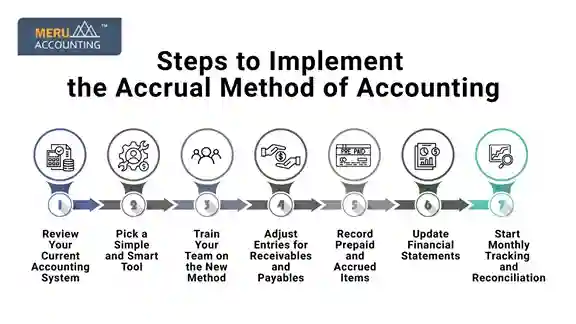
Step 5: Record Prepaid and Accrued Items
Create accounts for items like rent or bills paid in advance. Also include unpaid expenses that must be shown to match real-time financial activity.
Step 6: Update Financial Statements
Run new reports using accrual entries. Balance sheets, income statements, and cash flow summaries should now reflect this method for better planning.
Step 7: Start Monthly Tracking and Reconciliation
Each month, review entries, match costs with sales, and reconcile accounts. This keeps your records clear and helps avoid issues during audits or tax filings.
Common Mistakes to Avoid During Implementation
Mixing Cash and Accrual Data
Never use both methods at once. Mixing them leads to wrong totals and misleads decision-making based on poor data.
Forgetting to Record Accrued Expenses
Unpaid bills must be logged even if not yet due. Missing them creates gaps in financial reports and affects real profit visibility.
Failing to Update Invoices and Receipts
Late updates cause report gaps. In the accrual method of accounting, you must log sales and bills as they happen, noy when cash hits or leaves.
Not Monitoring Prepaid Expenses
Prepaid costs should be spread over time. Using them all at once shows a false drop in income and overstates monthly costs.
Lack of Staff Training
Each month, check for gaps or wrong entries. Reconciliations are vital in the accrual concept in accounting to fix mistakes before tax or audit time.
Skipping Monthly Reconciliations
Monthly checks help catch errors and missing data. Skipping them builds up mistakes and causes trouble during reviews or audits.
No Clear Process for Adjustments
You need a clear plan to fix mistakes or update entries. Without it, data may stay wrong and affect decision-making.
Accrual Accounting Compliance and Reporting Standards
Follow GAAP or IFRS Rules
Use GAAP or IFRS standards while reporting. These rules guide how and when to record income and expenses under accrual accounting.
Use Accurate Cutoff Dates
Make sure entries are recorded in the correct period. This ensures your reports are clear, accurate, and in line with reporting laws.
Keep Detailed Journal Entries
Each entry must show what happened, when, and why. Detailed records help during audits and provide full financial clarity at all times.
Maintain Strong Internal Controls
Have systems that review data for errors or fraud. Controls improve trust, and accuracy, and help keep financial data safe and correct.
Perform Regular Internal Audits
Review your books every quarter or month. This catches mistakes early and ensures your reports are always up to date and audit-ready.
Report Accrual Adjustments Clearly
Show all changes made to move to accrual. Clear reporting helps owners, auditors, and stakeholders understand how your books were updated.
Stay Updated with Tax Rules
Tax rules change often. Track updates to avoid problems and to make sure your accrual-based books meet tax and compliance needs.
The accrual method of accounting helps track income and costs when they happen, not when cash moves. It shows your real profit and gives better control. Using the accrual concept in accounting boosts clarity and trust. Meru Accounting set up and manages it for you, so your business stays accurate, smart, and ready for growth.
FAQs
1. What is the accrual method of accounting?
It records income when earned and expenses when due. This helps show your business’s real profit, even before cash moves in or out.
2. Why do most firms use the accrual concept in accounting?
It gives a clear view of earnings and costs. You can plan better, follow rules, and track true business growth month by month.
3. How do I move from cash to the accrual method?
First, review your books. Then, adjust entries for unpaid bills and sales. Use software and expert help to manage the shift with ease.
4. Is the accrual method good for small businesses?
Yes. It helps even small firms see real-time profits. You’ll know what you earn and owe, which helps with tax filing and growth.
5. Do I need software to use accrual accounting?
Yes, using software makes it easy. It tracks bills, invoices, and reports in one place, saving time and avoiding errors.