Meru Accounting

Are Dental Costs Tax Deductible? Understanding Dental Practice Expenses and Tax Planning

Contents
Want to learn more?

Subscribe for business tips, tax updates, financial fundamental and more


    Are Dental Costs Tax Deductible_ Understanding Dental Practice Expenses and Tax Planning

    Running a dental practice means managing much more than patient care. You also have to cover staff wages, dental supplies, rent, equipment, software, insurance, marketing, and other costs that keep the practice running. This raises an important question for practice owners: are dental costs tax deductible?

    In general, many costs tied to operating a dental practice may be deductible if they meet IRS rules. The IRS generally requires a business expense to be both ordinary and necessary. An ordinary expense is common and accepted in your trade or business, while a necessary expense is helpful and appropriate for the business.

    But not every cost paid by a dental practice qualifies. The type of expense, its business use, timing, and records can all affect how it is treated for tax purposes.

    This blog looks at common dental practice expenses, equipment costs, recordkeeping, and tax planning for dentists. It also explains how good dental bookkeeping can help you keep your financial records ready for tax work.

    What You Will Learn From This Blog

    In this guide, you will learn:

    • Which dental practice costs may be tax-deductible
    • What types of practice expenses may not qualify
    • How dental equipment and large purchases may be treated
    • Why accurate expense records matter
    • How dental bookkeeping can support tax preparation
    • How dentists can plan for taxes throughout the year
    • When professional accounting support may be useful

    Are Dental Costs Tax Deductible for a Dental Practice?

    Yes, many costs of running a dental practice may be tax-deductible when they meet the applicable IRS rules.

    The main question is whether the cost is a valid business expense. A practice may incur hundreds or even thousands of transactions each month, but each cost should have a clear business purpose and be recorded in the right account.

    Common examples include dental supplies, office rent, employee wages, business insurance, advertising, professional fees, and certain technology costs.

    However, a deduction is not automatic simply because the practice paid the bill. Some costs may need to be depreciated instead of deducted in full in the year they are purchased. Others may have special rules or limits.

    For example, a dental practice that buys routine supplies used for patient care may treat those costs differently from a practice that buys a high-cost imaging system or dental chair.

    This is why the answer to are dental costs tax deductible depends on the type of cost and how it is used in the practice.

    Keeping business and personal expenses separate is also important. Personal costs should not be recorded as dental practice expenses simply because they were paid with a business account.

    Good financial management isn't
    optional anymore
    Meru Accounting handles the accuracy, so you can focus
    on running the business

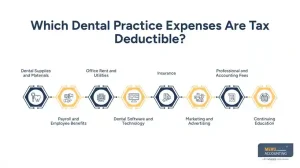
    Which Dental Practice Expenses Are Tax Deductible?

    Dental practices have many day-to-day costs. When these costs meet the IRS requirements, they may generally be treated as business expenses.

    Dental Supplies and Materials

    Dental supplies are a core operating cost for most practices.

    Examples may include:

    • Gloves and masks
    • Sterilization supplies
    • Dental instruments
    • Filling materials
    • Impression materials
    • Needles and syringes
    • Disposable patient-care items
    • Other clinical materials

    Your records should show what was purchased, the amount paid, the date, and the business reason for the cost.

    Payroll and Employee Benefits

    Payroll can be one of the highest costs for a dental practice. Wages paid to employees for work performed for the practice may generally qualify as business expenses, along with certain employee benefits and payroll-related costs.

    Your payroll records should match the amounts in your accounting system. Errors in payroll records can affect both financial reports and tax filings.

    Office Rent and Utilities

    If you lease space for your dental practice, rent is a common business cost. Utilities and other costs needed to operate the office may also qualify.

    Keep lease agreements, invoices, utility bills, and proof of payment with your accounting records.

    Dental Software and Technology

    Modern dental practices often rely on practice management systems, scheduling tools, accounting software, cloud services, and other technology.

    Software subscriptions used for the practice may qualify as business expenses when they meet the applicable rules. The tax treatment can differ for software that is purchased as a larger asset rather than paid for as a recurring service.
    Which Dental Practice Expenses Are Tax Deductible-Are Dental Costs Tax Deductible

    Insurance

    Dental practices may carry several types of business insurance. Depending on the policy and its purpose, premiums for coverage related to the practice may qualify as business expenses.

    Keep policy documents, invoices, and payment records so the purpose of each insurance cost is clear.

    Marketing and Advertising

    Marketing helps dental practices attract and retain patients. Costs for online ads, website services, printed materials, signs, and other forms of business promotion may qualify when they are ordinary and necessary business costs.

    Your bookkeeping records should make it easy to see how much the practice spends on marketing each month and each year.

    Professional and Accounting Fees

    Dental practices may hire accountants, attorneys, consultants, bookkeepers, and other professionals.

    Fees paid for services that support the operation of the practice may qualify as business expenses. Keep invoices that explain the service provided and retain proof of payment.

    Continuing Education

    Dentists and their staff may take courses, attend conferences, or complete other forms of professional education.

    Certain education costs may qualify when they meet the applicable tax rules. Keep course receipts, registration details, and other supporting documents.


    Which Dental Practice Costs May Not Be Tax Deductible?

    Not every cost linked to a practice should be treated as a deduction.

    Personal Expenses

    Personal expenses do not become business expenses simply because the practice pays for them.

    For example, a personal purchase made with a business credit card should not be posted as a dental supply or office expense. It should be handled correctly in the accounting records.

    Non-Business Spending

    A cost that has no connection to the dental practice generally does not qualify as a business deduction.

    If you are unsure whether a cost is business-related, ask your accountant before treating it as a deduction.

    Fines and Penalties

    Certain fines and penalties paid to government agencies are generally not deductible for federal income tax purposes. They should not be grouped with normal operating expenses without checking the applicable tax rule.

    Unsupported Expenses

    Good records are a key part of claiming business deductions.

    Bank and credit card statements can show that money was paid, but they may not fully explain what the cost was for. Keep receipts, invoices, contracts, and other records that support the expense.

    The IRS advises businesses to keep records that support income, deductions, and credits reported on a tax return.

    How Are Dental Equipment and Large Purchases Deducted?

    Equipment can be a major investment for a dental practice. Dental chairs, X-ray systems, imaging equipment, scanners, computers, and other high-cost assets may have a different tax treatment from routine supplies.

    A qualifying asset may need to be capitalized and recovered through depreciation. Depending on the asset and current tax rules, a practice may also be able to use provisions such as Section 179 or applicable first-year depreciation rules.

    The timing of the purchase matters too. Buying equipment does not always mean the entire cost can be deducted immediately. The property generally needs to meet the requirements for the tax treatment being used and, in many cases, must be placed in service.

    For 2026, the IRS lists a Section 179 maximum deduction of $2.56 million, with the deduction reduced once the total cost of qualifying property placed in service exceeds $4.09 million. Other rules and limits can apply.

    Tax treatment can also change based on the type of equipment, when it was acquired, when it was placed in service, and how it is used.

    For this reason, talk with your tax professional before making a major equipment purchase. A good plan looks at both the tax effect and the financial effect on the practice.


    Tax Planning for Dentists: How to Prepare for Tax Season

    Effective tax planning for dentists should take place throughout the year, not just before the tax return deadline.

    Review Income and Expenses Regularly

    Review your books each month. Look at revenue, supplies, payroll, rent, software, marketing, and other major costs.

    Monthly reviews can help you spot missing transactions, unusual costs, and errors before they become harder to fix.

    Plan Major Purchases

    If you expect to buy new dental equipment, discuss the purchase with your tax professional before placing the order.

    The timing and tax treatment of a large asset can affect your taxable income and cash flow. Planning ahead gives you more options than making the decision at year-end.

    Monitor Estimated Tax Payments

    Practice owners may need to make estimated tax payments during the year. Your tax professional can help you estimate your tax needs based on your income, deductions, prior tax position, and other factors.

    Do not wait until tax season to find out that you need a large amount of cash for taxes.

    Review Your Practice Structure

    Your tax obligations can vary based on your business structure. A dental practice may operate as a sole proprietorship, partnership, S corporation, professional corporation, or another entity.

    If your practice is growing, adding owners, opening another location, or changing its ownership structure, discuss the tax impact with your accountant.

    Keep Records Up to Date

    Receipts, invoices, bank statements, credit card records, payroll reports, and equipment documents should be organized throughout the year.

    Strong dental bookkeeping helps create a clean record of where your practice earns and spends money.

    Dental Bookkeeping Services for Dental Practices

    Meru Accounting provides dental bookkeeping services to help dental practice owners keep their financial records organized and updated. Instead of waiting until tax season to sort through months of transactions, you can maintain a consistent bookkeeping process throughout the year.

    Our dental bookkeeping services include:

    • Recording and categorizing practice income and expenses
    • Bank and credit card reconciliation
    • Accounts payable and accounts receivable tracking
    • Monthly financial reports
    • Payroll record support
    • Equipment and fixed asset tracking
    • Book cleanup and catch-up work
    • Organizing financial records for tax preparation

    Clean books can also give you a better view of practice performance. You can see where money is going, compare costs over time, and make better decisions about hiring, equipment, expansion, and cash flow.

    If your books are behind or your current process makes tax time stressful, Meru Accounting can help you put a more consistent system in place.

    Our Expert Insight

    One area dental practice owners often overlook is the difference between an expense and an asset. A routine supply purchase may be recorded as an operating cost, while a major equipment purchase may need different treatment for tax and accounting purposes.

    We also recommend reviewing the expense mix, not just the total amount spent. A sudden rise in lab fees, supplies, payroll, or software costs can affect both practice margins and tax planning.

    Good dental bookkeeping should make these changes easy to spot. When your books clearly show where practice funds are going, you and your tax professional can make better decisions about deductions, large purchases, and cash needs before year-end.

    Key Takeaways

    • Many costs of operating a dental practice may be tax deductible when they meet IRS requirements.
    • Common practice expenses can include supplies, payroll, rent, insurance, software, marketing, and professional fees.
    • Personal and non-business costs should not be treated as dental practice deductions.
    • Large equipment purchases may be subject to depreciation, Section 179, or other tax rules.
    • Tax treatment can depend on the type of asset, purchase date, placed-in-service date, and business use.
    • Good dental bookkeeping helps keep deductible expenses properly recorded and supported.
    • Tax planning for dentists works best when it starts well before the end of the tax year.
    • Dentists should discuss major purchases, business structure changes, and complex tax issues with a qualified tax professional.

    FAQs

    Yes. Dental lab fees paid for patient care may generally qualify as deductible business expenses when they meet IRS rules and are properly documented.

    Yes, a valid business expense may still qualify even if you paid it with a personal card. It should be recorded correctly in your practice books and kept separate from personal costs.

    Some startup costs may qualify for a deduction, while others may have to be capitalized or treated under special tax rules. Keep records from the start and review them with your tax professional.

    Not always. The tax treatment of dental equipment depends on factors such as the type of asset, when it is placed in service, and the depreciation rules that apply.

    Keep receipts, invoices, bank and card records, payroll reports, lease papers, and equipment records. These documents help support your deductions if the IRS asks for proof.

    Good financial management isn't
    optional anymore
    Meru Accounting handles the accuracy, so you can focus
    on running the business