
Small businesses often face an important decision: should bookkeeping tasks be managed by an internal team or handled by outside experts? The benefits of using Intuit QuickBooks become valuable in both cases, as the software helps track income, expenses, payroll, invoices, and financial reports in a simple and organized way.
Whether bookkeeping is managed in-house or externally, accurate financial records play a key role in daily business operations. Many growing businesses begin with one employee or owner handling invoices, expenses, and bank transactions.
However, as transaction volume increases, managing books internally can become more difficult and time-consuming. At that point, many businesses consider whether to continue with an internal system or outsource QuickBooks bookkeeping support to improve efficiency and reduce workload.
What You Will Learn From This Blog
- The difference between in-house and outsourced bookkeeping models
- Key benefits of using Intuit QuickBooks for small firms
- Common issues firms face with internal bookkeeping
- Reasons many firms outsource QuickBooks bookkeeping work
- A comparison between the two bookkeeping methods
- Tips for selecting the right bookkeeping partner
- How Meru Accounting can help firms manage bookkeeping tasks
Understanding In-House Vs Outsourced Bookkeeping Models
Internal Team Structure
Many firms assign bookkeeping work to office staff or finance teams. Staff record bills, track sales, and update financial reports. Internal teams often work well during early business stages with fewer transactions.
Daily Financial Tasks
Bookkeeping includes invoice entry, expense records, payroll review, and account checks. As firms grow, these tasks increase and require more time.
Outsourced Service Method
Some businesses hire bookkeeping firms for outside support. Many choose to outsource QuickBooks bookkeeping work when internal staff face time limits.
Cost Management Needs
Internal teams may include payroll costs, training costs, and software support. Outside services often reduce overhead expenses.
Technology Support
Modern firms rely on cloud accounting tools. One of the key benefits of using Intuit QuickBooks is that it allows both internal teams and external professionals to access financial data in a centralized system.
Top Benefits Of Using Intuit QuickBooks For Small Businesses
Easy Financial Tracking
One of the major benefits of using Intuit QuickBooks is simple tracking of income and expenses across daily business operations. Business owners can view records without using difficult systems or manual spreadsheets.
Real-Time Reports
QuickBooks provides reports on profit, expenses, and cash flow for better business monitoring and planning. The advantages of using Intuit QuickBooks include fast access to updated financial data and reports.
Bank Connection Features
The system links with bank accounts and imports transactions automatically into financial records. This reduces manual work, data entry tasks, and saves valuable staff time.
Invoice Management
Users can create invoices and track payment status through one organized accounting platform. The advantages of using Intuit QuickBooks also include better payment follow-up and cash collection.
Cloud Access Support
Users can work from different places and access financial records through secure cloud support, which is one of the key benefits of using Intuit QuickBooks. This feature supports firms that outsource QuickBooks bookkeeping to remote accounting teams.
Tax Preparation Support
Tax records stay organized throughout the year with proper transaction tracking and reporting support. One of the major benefits of using Intuit QuickBooks is that it helps reduce stress during tax filing and preparation periods.
Common Challenges Of Internal Bookkeeping Management
Staff Skill Limits
Not all employees have accounting knowledge or experience with bookkeeping and financial reporting tasks. Bookkeeping mistakes can happen if staff lack proper training and a practical system understanding.
Time Pressure
Owners and staff already manage many tasks across daily business activities and operations. Bookkeeping work can take time away from sales growth and customer-related responsibilities.
Training Expenses
Internal teams need regular software updates, training sessions, and ongoing accounting skill improvement. These costs increase over time and may affect overall business operating expenses.
Human Error Risks
Manual entry can create duplicate records, missing data, or incorrect transaction information, even when using systems that offer the benefits of using Intuit QuickBooks.
Errors may affect taxes, financial reporting, and overall business decision-making processes.
Growth Problems
As firms expand, bookkeeping work also increases with higher transaction volume and reporting needs. Many firms decide to outsource QuickBooks bookkeeping support at this business growth stage.
Software Knowledge Gaps
Even with the benefits of using Intuit QuickBooks, users still need system knowledge and software training. Without proper use and understanding, reports may become inaccurate and create financial confusion.
Why Businesses Outsource QuickBooks Bookkeeping Services
Reduced Operating Cost
One reason firms outsource QuickBooks bookkeeping work is lower staffing and operational cost requirements. Owners avoid hiring full-time accounting employees due to added payroll and training expenses.
Access To Skilled Teams
Bookkeeping firms often have trained staff with years of accounting and software experience. They understand software updates, reporting needs, and financial record management practices.
Better Time Use
This reflects one of the practical benefits of using Intuit QuickBooks, especially when bookkeeping tasks are handled externally to reduce internal workload. Outside support handles bookkeeping tasks and reduces internal workload for business teams.
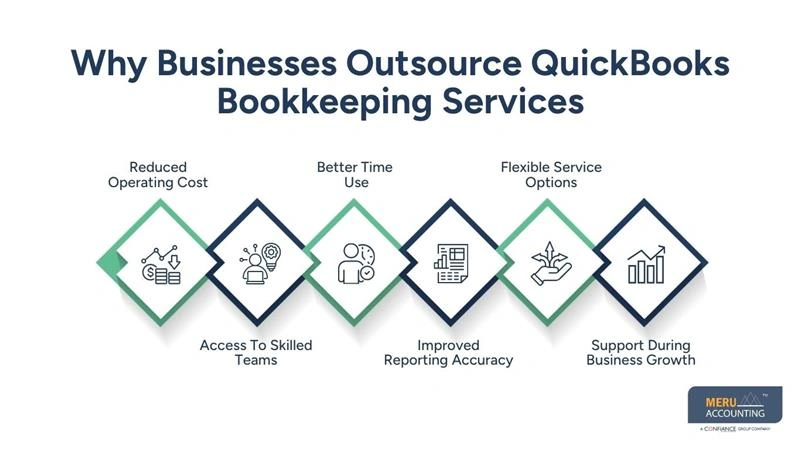
Improved Reporting Accuracy
Experts regularly review financial records and reduce errors through proper checks and structured review processes. QuickBooks delivers better results when supported by skilled management and professional bookkeeping oversight.
Flexible Service Options
This flexibility aligns with the benefits of using Intuit QuickBooks, allowing businesses to adapt bookkeeping support according to changing financial requirements. Seasonal firms often prefer this option for better cost control and support flexibility.
Support During Business Growth
As firms expand, bookkeeping volume grows with increasing transactions and reporting requirements. Many firms outsource QuickBooks bookkeeping work to handle larger workloads and changing business needs.
In-House Vs Outsourced QuickBooks Bookkeeping: A Detailed Comparison
Cost Structure
Internal bookkeeping includes salaries, software costs, staff training, and additional employee-related business expenses. Outside support often uses monthly service plans with more predictable and flexible pricing structures.
Control Of Records
Internal teams provide direct oversight and allow business owners closer access to financial activities. Some owners prefer keeping financial work inside the office for greater monitoring and control.
Skill Availability
Outside firms often have staff with broad experience in bookkeeping, accounting, and reporting tasks. This becomes useful for tax preparation, reporting work, and handling complex financial situations.
Flexibility During Growth
Internal teams may struggle with sudden increases in workload and rising transaction volume demands. Businesses often outsource QuickBooks bookkeeping support for better flexibility during expansion periods.
Software Usage
One of the major benefits of using Intuit QuickBooks is that it supports both in-house and outsourced systems equally for daily bookkeeping operations. Cloud tools allow users to work from different locations with easier access and better collaboration.
Time Investment
Internal management often needs more owner attention and regular supervision throughout daily operations. Outside services can reduce daily workload and free time for business growth activities.
Factor | In-House | Outsourced |
Staff Cost | Higher | Lower |
Training Need | High | Low |
Flexibility | Moderate | High |
Daily Oversight | High | Moderate |
Skill Access | Depends on the staff | Specialized teams |
How To Choose The Right QuickBooks Bookkeeping Partner
Review Industry Experience
Select firms with experience in bookkeeping support and handling different business industry requirements. Industry knowledge helps improve reporting quality and supports better financial process management.
Check QuickBooks Skills
Ask about software certifications, training programs, and experience with accounting software platforms. One of the key benefits of using Intuit QuickBooks is fully realized when teams have a strong understanding of the platform.
Review Security Standards
Financial records require proper security and strong systems for protecting sensitive business information. Check how firms protect client data through secure processes and access controls.
Study Service Scope
Understand what services are included before selecting a bookkeeping support provider or accounting firm. Some firms provide payroll, tax support, and additional financial reporting assistance services.
Read Client Reviews
Feedback can provide insight into service quality, client satisfaction, and overall support experience. Past client results often help decision-making and improve confidence during partner selection.
Review Communication Methods
Clear updates help avoid confusion and improve coordination between businesses and bookkeeping providers. This matters when you outsource QuickBooks bookkeeping work to an outside accounting team.
Why Meru Accounting Can Support Your Business
Skilled Accounting Team
Meru Accounting offers bookkeeping and accounting support for firms across many industries and sectors. Our team of certified experts works with different accounting tools, software platforms, and business operating models.
QuickBooks Experience
Our professionals understand the benefits of using Intuit QuickBooks and help clients maintain accurate records. We support setup, migration, reporting, and bookkeeping needs for growing business requirements.
Flexible Service Plans
Businesses have different requirements based on industry type, size, and financial workload needs. Meru Accounting provides support based on business size and changing operational demands.
Migration Support
Many firms move from spreadsheets or older systems to modern accounting software platforms. We help clients shift data with proper planning, review processes, and organized implementation support.
Reporting Assistance
Our team supports management reports, financial tracking, and regular bookkeeping performance monitoring activities. Businesses that outsource QuickBooks bookkeeping tasks often seek regular report updates and insights.
Long Industry Experience
For over a decade, Meru Accounting has provided outsourced bookkeeping and accounting support to businesses worldwide. Our experience helps businesses manage records with better structure and financial accuracy.
Our Expert Perspective
In our experience working across multiple business types, small firms often begin with in-house bookkeeping for simplicity and control, but complexity increases as transaction volume grows. The benefits of using Intuit QuickBooks become more evident when supported by structured bookkeeping processes and regular reviews aligned with evolving business needs.
Key Takeaways
- The benefits of using Intuit QuickBooks include reporting, invoice tracking, and cloud access
- Internal bookkeeping provides control but may require more staff time
- Growing firms often outsource QuickBooks bookkeeping tasks for support
- Outside bookkeeping services may reduce operating costs
- Software tools work best when handled by skilled users
- Selecting the right partner improves reporting quality and accuracy
FAQs
QuickBooks helps businesses manage invoices, expenses, payroll, sales tracking, and financial reports in one system.
Small firms often choose it because the benefits of using Intuit QuickBooks include simple reporting and easy record management.
Many firms outsource QuickBooks bookkeeping work because it can reduce costs and save time.
Yes. Staff can learn QuickBooks, but training and practice help improve results.
Businesses should update records often, usually weekly or daily, to keep reports current and reduce errors.