
The use of blockchain in accounting is changing how firms manage money records, checks, and reports. Modern firms need clear data, safe records, and better ways to track each transaction. Blockchain gives a shared record system where data stays protected and easy to review.
Many companies now look for tools that match the needs of digital accounting while keeping trust and accuracy at the center. The rise of new financial tools has made record-keeping more organized and more open. This blog explains how blockchain can bring value to modern firms and their finance teams.
What You Will Learn From This Blog
- How blockchain works and why it matters for accounting teams.
- The main benefits of blockchain for business finance tasks.
- The difference between old accounting methods and blockchain-based systems.
- How digital accounting practices use blockchain tools.
- Common issues firms may face while using blockchain.
- How Meru Accounting can guide firms with modern finance solutions.
How Blockchain is Transforming Modern Accounting Practices
Blockchain in accounting is changing the way financial records are stored, checked, and shared. Instead of keeping data in one place, blockchain creates a record that many approved users can view. This creates stronger trust between firms, clients, and financial teams.
Shared Transaction Records
Blockchain stores each approved entry in a shared record. Each update gets a time mark, which makes it easier to check when and how a change happened.
Better Data Control
Financial teams can track records with more control because blockchain keeps past entries visible. This lowers the chance of hidden changes or missing information.
Faster Record Checking
Audits often take time because teams need to compare many files. Blockchain gives auditors a clear trail of entries, making review work more direct.
Stronger Trust Between Parties
Suppliers, customers, and firms can use the same verified records. A common record reduces confusion and builds better working links.
New Accounting Methods
The use of blockchain in accounting brings new ways to handle reports, payments, and verification. Firms can plan better with trusted financial data.
Key Benefits of Blockchain in Accounting for Businesses
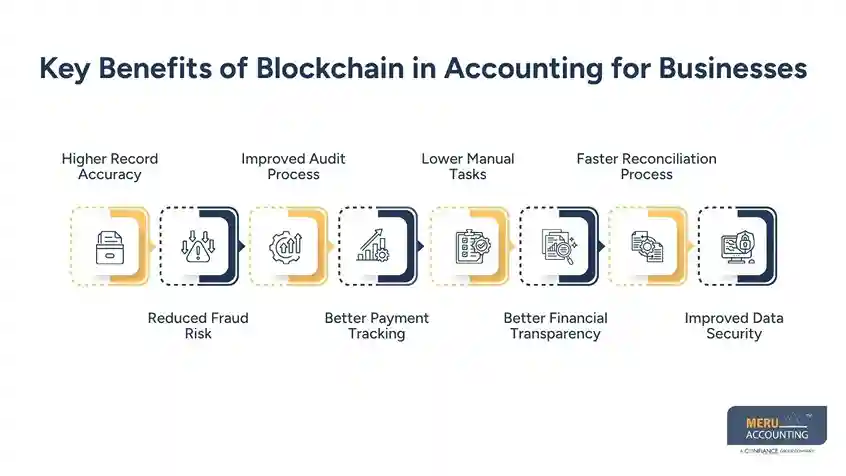
Blockchain in accounting offers many benefits for firms that want safe and clear financial processes. It creates a strong base for accurate records and better review methods. Businesses can use it to reduce manual work and keep financial data more reliable.
Higher Record Accuracy
Blockchain keeps each entry connected with earlier records. This makes it harder for incorrect data to stay unnoticed.
Reduced Fraud Risk
A fixed record system makes unwanted changes more difficult. Firms gain stronger protection against false entries and unclear transactions.
Improved Audit Process
Auditors can review transaction history in a structured way. The process becomes easier because records have clear proof points.
Better Payment Tracking
Blockchain can track payment steps from start to finish. Finance teams can see where each transaction stands.
Lower Manual Tasks
Automatic record updates reduce repeated data entry work. Teams can spend more time on planning and review.
Better Financial Transparency
Blockchain creates a clear record of financial activities that approved users can review. Businesses can maintain better visibility across transactions and financial operations.
Faster Reconciliation Process
Blockchain reduces the need to compare multiple records from different sources. Finance teams can verify transactions more quickly and reduce delays.
Improved Data Security
Blockchain stores information in a protected structure that reduces the risk of unauthorized changes. Businesses can maintain safer financial records with stronger control.
Blockchain vs Traditional Accounting: Key Differences
Traditional accounting relies on stored files, databases, and manual checks. Blockchain uses a shared record method that changes how financial information moves between users.
Comparison Area | Traditional Accounting | Blockchain-Based Accounting |
Data Storage | Records are often stored in separate files or databases managed by specific users or teams. | This approach shows how blockchain in accounting supports secure and accessible financial record management. |
Record Changes | Updates may happen without a clear history of every change made. | Every approved update creates a visible record trail for better tracking. |
Transaction Review | Reviews often require comparing invoices, documents, and different records manually. | Transaction history is connected, making checking and verification easier. |
User Access | Access usually depends on permissions controlled by one system owner. | Selected users can view the same verified records based on access rights. |
Data Security | Security depends on system controls, passwords, and internal checks. | Data is stored in a protected structure that makes unauthorized changes harder. |
Future Finance Work | Many businesses continue using traditional tools with manual processes. | Blockchain adds stronger record trust and can work with modern finance systems. |
Role of Blockchain in Digital Accounting Solutions
Digital accounting is becoming a key part of business finance, and blockchain adds stronger record control to these systems. Companies use digital tools to manage invoices, payments, and reports with better speed and accuracy.
Secure Digital Records
Blockchain gives digital accounting platforms a trusted record base. Teams can store and check financial data with more confidence.
Connected Finance Systems
Modern finance tools often connect with other business apps. Blockchain can create better links between these systems.
Smart Contract Use
Smart contracts can perform agreed actions when set conditions are met. They can reduce delays in routine finance steps.
Better Client Access
Clients can view approved financial records without waiting for repeated checks. This creates clearer communication.
Data Sharing
Digital accounting solutions with blockchain allow safer sharing between teams. Access can be given only to approved users.
Real-World Applications of Blockchain in Accounting
The use of blockchain in accounting is growing across different business areas. Companies are testing blockchain for payments, reporting, audits, and financial checks.
Invoice Management
Blockchain can record invoice details and payment updates. Firms can track invoice history with fewer disputes.
Supply Chain Payments
Businesses can record supplier payments and delivery information. This creates better visibility across transactions.
Tax Record Support
Tax teams can use verified records during preparation work. Clear data can make tax reviews more organized.
Payroll Tracking
Companies can maintain payroll records with stronger tracking. Payment history stays linked with approved entries.
Audit Services
Audit teams can review financial activity with a clear record trail. This creates better proof during checks.
optional anymore
on running the business
Challenges of Implementing Blockchain in Accounting
While blockchain offers value, firms must plan before adding it to their finance process. The use of blockchain in accounting requires training, cost planning, and proper system selection.
Setup Costs
Blockchain projects may need investment in tools, training, and system changes. Small firms may need careful budgeting.
Technical Knowledge
Teams need basic knowledge of blockchain systems. Training is important before full use.
System Integration
Old finance software may need updates to work with blockchain tools. Planning avoids problems during setup.
Rules And Compliance
Financial rules differ by location and industry. Firms must check legal needs before using new systems.
User Adoption
Employees may need time to adjust to new processes. Clear guidance can make the change easier.
How Meru Accounting Supports Modern Blockchain-Based Finance Needs
Meru Accounting understands how technology is changing financial work. Our team provides accounting and bookkeeping services with a focus on accuracy, clear reporting, and modern tools.
Expert Accounting Services
Our professionals manage financial records with care and follow structured processes. We work with businesses to keep their finance tasks organized.
Technology-Based Solutions
Meru Accounting uses modern software and systems to manage client needs. We focus on better data handling and smooth finance operations.
Accurate Bookkeeping Support
Our bookkeeping services keep records updated and ready for review. Businesses can rely on clear financial information.
Software Integration Guidance
We assist firms with accounting software setup, migration needs, and emerging solutions related to blockchain in accounting. Our team works with tools that match business goals.
Trusted Finance Partner
Meru Accounting brings years of experience in accounting and bookkeeping services. We focus on quality work and long-term client relationships.
Our Expert Perspective
Our experience shows that technology works best when combined with strong accounting knowledge. Blockchain is not only about new systems; it is about creating trust in financial records.
Firms should study their current needs before adopting any new solution like blockchain in accounting. A good mix of expert advice, proper tools, and clear processes creates better financial control.
Key Takeaways
- The growth of blockchain in accounting introduces a smarter approach to managing, verifying, and protecting financial information.
- Businesses can gain better record tracking and stronger data protection.
- Digital accounting systems can become more reliable with blockchain features.
- Blockchain can support audits, payments, invoices, and reporting tasks.
- Proper planning is needed before using blockchain tools.
- Expert accounting guidance can make technology adoption easier.
FAQs
Blockchain in accounting means using blockchain technology to record and verify financial data. It creates a shared record that approved users can check.
Yes, blockchain can be useful for small businesses when used for the right tasks. It can support safer records and better transaction tracking.
Blockchain adds stronger record checks to digital accounting systems. It creates a trusted way to store and review financial information.
No, blockchain cannot replace accountants. Experts are still needed for analysis, planning, tax work, and financial decisions.
Businesses should understand blockchain in accounting because it may change how financial records are managed. Early knowledge helps firms make better technology choices.