
A bookkeeper for medical practice helps keep the financial side of your practice in order while you focus on patient care. But bookkeeping is not just about recording income and expenses. Patient payments, insurance revenue, payroll, medical supplies, equipment, and unpaid balances all need to be tracked and reviewed at the right time.
The bigger issue is timing. A practice may look profitable one month, yet have cash tied up in unpaid claims or rising costs that are easy to miss. That’s why medical bookkeeping needs a steady routine. Monthly tasks keep your records current, quarterly reviews help you spot trends, and annual checks make sure your books are ready for year-end and tax work.
In this blog, we’ll cover the key tasks a medical bookkeeper should handle throughout the year, common mistakes to avoid, and how regular bookkeeping for medical practices can give you a clearer view of your finances.
What You Will Learn From This Blog
This blog explains the key tasks handled by a bookkeeper for medical practice throughout the year. You’ll learn:
- What should be done each month
- Which tasks need a quarterly review
- What to check before year-end
- Common bookkeeping errors in medical practices
- When to bring in a medical bookkeeper
- How outsourced medical bookkeeping can support your practice
The goal is simple: help you build a routine that keeps your financial records current, clear, and ready for review.
Why Medical Practices Need Specialized Bookkeeping
Medical practices have financial needs that can differ from those of many other small businesses. Revenue may come from patient payments, insurance claims, payment plans, and other sources. Costs can include staff pay, medical supplies, rent, equipment, software, insurance, and professional fees.
A general bookkeeper may record these items, but a bookkeeper for medical practice should also understand the flow of a health care business. This can help reduce errors and make financial reports more useful to the practice owner.
Good bookkeeping for medical practices also means keeping business and personal costs apart. It means matching bank records to the books, reviewing unpaid balances, and checking that income and costs are posted to the right accounts.
A medical bookkeeper can also work with your CPA or tax professional. Clean books give the tax team better records to use during tax prep and year-end review.
The goal is not just to enter transactions. It is to keep your financial data useful for day-to-day decisions.
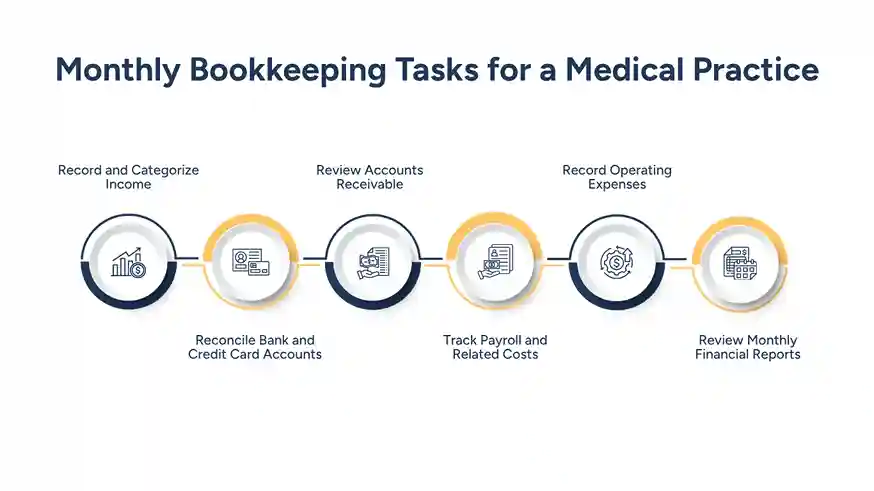
Monthly Bookkeeping Tasks for a Medical Practice
Monthly work forms the base of good medical bookkeeping. It helps you spot errors while they are still easy to fix.
Record and Categorize Income
A bookkeeper for medical practice should record income from patient payments, insurance payments, and other practice sources. Each entry should be placed in the right account and tied to the right source when needed.
This gives you a better view of the money your practice earns each month.
Reconcile Bank and Credit Card Accounts
Bank and card records should be matched with your accounting records. The bookkeeper for medical practice checks for missing entries, duplicate items, bank fees, and other gaps.
Monthly reconciliation can also help find errors before they grow into larger year-end issues.
Review Accounts Receivable
A medical practice can have money tied up in unpaid patient and insurance balances. A medical bookkeeper can review aging reports and flag old or unusual balances.
This review helps you see what is still due and where follow-up may be needed.
optional anymore
on running the business
Track Payroll and Related Costs
Payroll can be one of the largest costs for a medical practice. Monthly medical bookkeeping should include wages, employer costs, benefits, and other payroll-related items.
Your books should show these costs in a clear and consistent way.
Record Operating Expenses
A bookkeeper for medical practice should record regular costs such as rent, utilities, software, supplies, insurance, office costs, and professional fees.
Proper coding makes your financial reports easier to read and review.
Review Monthly Financial Reports
At the end of each month, the bookkeeper for medical practice can prepare reports such as the profit and loss statement and balance sheet.
These reports can help you compare income and costs, watch cash flow, and spot changes that need a closer look.
Quarterly Bookkeeping Tasks for Medical Practices
Monthly work keeps records current. Quarterly work gives you a wider view of how the practice is doing.
A bookkeeper for medical practice can review the last three months as a group instead of looking at each month on its own.
Review Profit and Loss Trends
Look at revenue, payroll, supplies, rent, and other key costs. Compare the results with prior periods when useful.
A medical bookkeeper can point out large changes that may need review. A rise in one cost may be normal, but it may also show an issue in coding or spending.
Review Accounts Receivable Aging
Quarterly review of receivables can show whether unpaid balances are rising or falling. It can also help identify old balances that need attention.
This is an important part of medical bookkeeping because revenue recorded in the books does not always mean cash has already been received.
Check Balance Sheet Accounts
The bookkeeper for medical practice should review key balance sheet accounts for accuracy. This can include cash, credit cards, loans, equipment, and other liabilities.
Old or unusual balances should be checked rather than left open for months.
Review Tax and Payroll Records
Quarterly reviews can help confirm that payroll and other tax-related records are complete and ready for your tax professional.
A medical bookkeeper can organize the records, while your CPA or tax professional can handle tax advice and filing work.
Review Practice Performance
Quarterly reports can give owners a better view of trends. You may see changes in income, staffing costs, supply costs, or other key areas.
This makes bookkeeping for medical practices more than a data-entry task. It becomes a useful part of financial planning.
Annual Bookkeeping Tasks for a Medical Practice
Year-end work is more than closing the books. It is a chance to make sure the records are complete and ready for tax review.
A bookkeeper for medical practice should work through the accounts before the year is closed.
Complete Year-End Reconciliations
Bank, card, loan, and other key accounts should be reconciled. Any open items should be reviewed and resolved where possible.
Review Income and Expenses
The medical bookkeeper should review major income and expense accounts for errors, missing entries, and unusual activity.
This can help keep the final reports more accurate.
Review Equipment and Fixed Assets
Medical practices may own costly equipment and other assets. Year-end books should show these items in the right accounts.
Your CPA or tax professional can then review items such as depreciation based on the practice’s tax needs.
Review Accounts Receivable and Liabilities
A bookkeeper for medical practice should review unpaid balances, loans, credit cards, and other liabilities.
The goal is to make sure the year-end balance sheet reflects the records on hand.
Prepare Records for Tax Work
A medical bookkeeper can organize financial reports and supporting records for your CPA or tax professional. This can make tax work more efficient and reduce the need to search for basic records later.
Bookkeeping for Medical Practices: Common Mistakes to Avoid
Even a busy practice can avoid many common errors with a clear bookkeeping process.
Mixing Personal and Practice Costs
Personal spending should not be mixed with practice costs. Separate accounts and clear records make the books easier to manage.
Waiting Until Year-End
Putting off medical bookkeeping until tax time can leave months of errors and missing records to fix. Monthly work is usually easier to manage.
Ignoring Old Receivables
Old patient or insurance balances should not be left without review. A bookkeeper for medical practice can flag aging balances so the practice can decide what action is needed.
Poor Expense Coding
If costs are placed in the wrong accounts, reports may not show a true view of practice spending. Consistent coding matters.
Relying Only on the Bank Balance
Your bank balance does not tell the full story. A practice can have cash in the bank while unpaid bills or receivables still affect its financial position.
Medical Bookkeeping Services by Meru Accounting
A bookkeeper for medical practice needs to understand how patient payments, insurance income, payroll, supplies, and other practice costs flow through the books. At Meru Accounting, we bring a structured approach to medical bookkeeping, keeping financial records accurate, current, and easy to review.
What Meru Accounting Handles For You:
Our medical bookkeeping services can include:
- Recording and categorizing income and expenses
- Bank and credit card reconciliation
- Accounts receivable tracking and review
- Payroll and payroll-related entries
- Medical supplies, equipment, and vendor expense tracking
- Monthly and year-end financial reports
- Account cleanup and year-end preparation
We tailor the bookkeeping process to your practice, accounting system, and volume of transactions. The goal is simple: clean books, timely records, and financial reports you can use. With consistent bookkeeping for medical practices, you can spend less time sorting through numbers and more time running your practice.
Our Expert Insight
In our experience, the bank balance doesn’t always show how a medical practice is doing financially. Insurance payments can take time to arrive, while payroll, supplies, and other costs are due on schedule. Reviewing collections and outstanding receivables alongside expenses gives practice owners a more useful view of cash flow.
A bookkeeper for medical practice should also question unusual changes instead of simply recording them. A sudden rise in supplies, a drop in collections, or an old receivable can point to an issue worth checking. That kind of review makes medical bookkeeping more than data entry—it helps keep the numbers useful for day-to-day decisions.
Key Takeaways
- Monthly bookkeeping keeps transactions and accounts up to date.
- Quarterly reviews help you spot trends and unusual balances.
- Annual bookkeeping prepares the records for year-end and tax work.
- A medical bookkeeper should understand the financial flow of a medical practice.
- Good bookkeeping for medical practices can help owners make better financial decisions.
- A bookkeeper for medical practice can work with your CPA or tax professional to keep records organized.
- Regular medical bookkeeping is usually easier to manage than a large year-end cleanup.
FAQs
Common records include bank statements, credit card activity, patient and insurance payments, payroll records, bills, receipts, loan statements, and equipment purchases.
Yes. A bookkeeper can work with accounting and practice management systems, depending on the software and how the practice records its financial data.
Frequent unreconciled transactions, old receivables, unexplained account balances, or reports that don’t match the practice’s records are common warning signs.
The profit and loss statement, balance sheet, cash flow statement, and accounts receivable aging report are useful for reviewing the practice’s financial position.
A bookkeeper can organize and reconcile financial records and prepare reports for the tax process. Tax returns, tax advice, and tax planning are generally handled by a CPA or other qualified tax professional.
optional anymore
on running the business