
Every business needs good financial records. They help you track sales, pay bills, and plan for the next step. When your books are up to date, you can make better choices with more trust. Clean records also make tax time much less stressful. Many business owners spend more than they should on bookkeeping fees. As a business grows, it has more sales, bills, bank transactions, and tax work. That definitely means more time and more cost. Hiring full-time staff, paying for office space, and buying software can raise costs fast.
This is why many firms now choose outsourced bookkeeping. A skilled team can keep your books in good shape without the cost of a full in-house staff. You pay only for the work you need, which helps keep bookkeeping fees under control.
Many firms also offer flexible bookkeeping packages. These plans let you pick the right mix of services for your size and goals. You do not have to pay for work you will never use.
In this blog, you will learn what affects bookkeeping fees, why they can rise over time, and how outsourced bookkeeping helps lower costs. You will also see how the right bookkeeping packages can help your business save money while keeping your books clear and up to date.
What You Will Learn From This Blog
By the end of this blog, you will know:
- What bookkeeping fees are and what they cover.
- Why do many firms pay more than they need to?
- How outsourced bookkeeping helps cut costs.
- How bookkeeping packages help you stay on budget.
- Signs that tell you it may be time to outsource.
- What to look for when you pick a bookkeeping firm.
What Are Bookkeeping Fees?
Bookkeeping fees are the costs you pay for keeping your business books in order. Bookkeeping covers the day-to-day work of tracking sales, costs, bills, bank moves, and other money records. It helps keep your books clean and ready for tax time and business reviews.
The amount you pay can change from one business to the next. A small firm with few sales will often pay less than a large firm with many daily tasks. Your costs may also change based on the type of work you need.
Most bookkeeping firms use one of these pricing plans.
Hourly Rates
Some firms charge by the hour. You pay only for the time spent on your books. This plan may work well if your needs change from month to month. Still, the total cost can be hard to plan.
Flat Monthly Rates
Many firms charge a flat fee each month. This gives you a clear cost that is easy to plan for. Most fixed plans come with bookkeeping packages that list the work you will get each month.
Custom Plans
Some firms need more help than a basic plan can give. They may have more sales, more staff, or work in a field with added rules. In these cases, the bookkeeper may build a plan that fits the firm’s needs.
When you know how bookkeeping fees work, it is much easier to compare firms and pick the best fit for your budget.
Why Do Businesses Often Pay Higher Bookkeeping Fees?
Many owners think bookkeeping is only about typing numbers into a system. In truth, it takes time, skill, and the right tools to keep books right. If a business is not set up well, costs can rise fast.
Here are some of the main reasons firms pay high bookkeeping fees.
Hiring Full-Time Staff
A full-time bookkeeper costs more than a paycheck. You also pay to hire, train, and keep that person. If the bookkeeper leaves, you must spend more time and money to find a new one. These costs add up over time and raise your total bookkeeping spend.
Pay and Office Costs
A full-time team needs desks, PCs, office space, and work tools. You may also pay for health plans, paid time off, and other staff costs. All of these costs raise your bookkeeping fees, even though they are not part of the bookkeeping work.
Software Costs
Good bookkeeping needs good software. Most firms pay for cloud tools, data backup, and system updates. These costs may seem small at first, but they grow year after year.
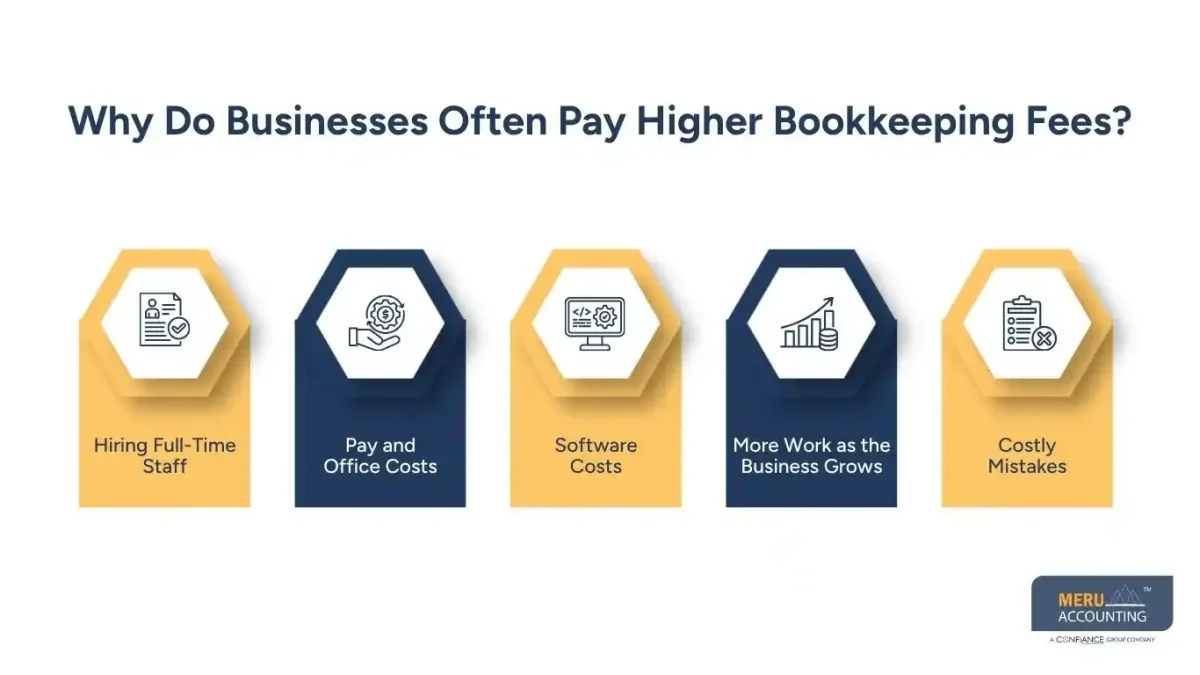
More Work as the Business Grows
As your firm grows, you have more sales, more bills, more bank moves, and more tax work. This means your team must spend more time on your books. Some firms hire more staff to keep up. That choice often leads to much higher bookkeeping fees.
Costly Mistakes
Bookkeeping errors can cost a lot. Missed sales, wrong records, or poor bank checks can lead to tax issues and bad reports. Fixing these errors takes time and may cost more than doing the work right the first time.
How Outsourced Bookkeeping Services Reduce Bookkeeping Fees
Outsourced bookkeeping gives you the help you need without the high cost of a full in-house team. You pay for the work that fits your business, not for full-time staff and extra office costs.
For many firms, this is one of the best ways to lower bookkeeping fees while still keeping good financial records.
Lower Staff Costs
One of the top ways outsourcing saves money is by cutting staff costs. You do not need to hire, train, or manage a full-time bookkeeper. You also avoid costs for pay, staff perks, and office space. This lets you get good bookkeeping help at a lower cost.
Skilled Bookkeepers
Outsourced teams work on books every day. They know how to keep records right, check bank accounts, and make clear reports. Their work helps cut errors that may cost your firm more in the long run. You get the help of a skilled team without paying the full cost of an in-house staff.
Built-In Tools
Most firms that offer outsourced bookkeeping already use good cloud tools and book systems. In many cases, these tools are part of their bookkeeping packages.
This means you do not have to buy new software or pay for updates on your own. It helps lower costs while giving you fast and safe access to your financial records.
Fewer Errors and Less Rework
Bookkeeping errors can cost both time and money. A wrong entry, a missed bill, or a bank record that does not match can lead to more work later. It may also slow tax filing or cause poor money reports.
A skilled bookkeeping team checks your books on a set plan. This helps find and fix small issues early. Less rework means lower bookkeeping fees over time.
Easy to Grow with Your Business
Your bookkeeping needs will change as your business grows. You may add new staff, sell more, or work in new markets. With an in-house team, you may need to hire more people as the work grows.
Outsourced bookkeeping gives you more room to grow. You can add or remove services as your needs change. This helps you avoid paying for help you do not need.
How the Right Bookkeeping Packages Help Control Costs
Not all firms need the same level of bookkeeping help. A new business may need only basic record keeping, while a large firm may need payroll support, reports, and account checks.
This is where bookkeeping packages make a real difference.
Many service firms offer more than one plan. You can choose the one that fits your work, your budget, and your goals.
The right bookkeeping packages help you:
- Pay only for the services you need.
- Keep monthly costs easy to plan.
- Add more help as your business grows.
- Avoid paying for work that adds no value.
- Get clear reports without extra costs.
When you choose a plan that fits your business, you gain better value while keeping bookkeeping fees under control.
Hidden Ways Outsourced Bookkeeping Creates Long-Term Savings
The value of outsourced bookkeeping goes beyond lower monthly costs. It also helps your business save money in ways that are easy to miss.
Better Cash Flow
Up-to-date books show where your money comes from and where it goes. This helps you spot slow payments, cut waste, and plan future spending.
Faster Reports
Good reports help you make quick business choices. You spend less time looking for data and more time growing your business.
Easier Tax Filing
Clean books make tax time much easier. Your records stay in one place, and you are less likely to miss key forms or due dates. This can help lower the cost of tax work.
More Time for Your Business
Bookkeeping takes time. When you pass this work to a trusted team, you can spend more time on sales, new clients, and daily work that helps your business grow.
Over time, these gains can save much more than the cost of the service itself.
optional anymore
on running the business
Signs Your Business Should Consider Outsourcing Bookkeeping
Many owners wait too long before they ask for help. If bookkeeping takes too much time or costs too much, it may be time to outsource.
Some clear signs include:
- Your bookkeeping fees keep going up each year.
- You spend too much time on your books.
- Your bank records often do not match.
- Bills or tax dates are easy to miss.
- Your business is growing faster than your team can keep up.
- You need better financial reports to make smart choices.
If you see more than one of these signs, outsourced bookkeeping may be a better fit for your business.
Get Complete Bookkeeping Packages with Meru Accounting
At Meru Accounting, we know that every business has its own bookkeeping needs. That is why we offer flexible bookkeeping services that help you save time, lower costs, and keep your books in good shape.
Our team works with businesses of all sizes across many industries. We use secure cloud tools and proven work methods to keep your records up to date and easy to review.
Our bookkeeping packages are built to match your business needs. Whether you need basic monthly bookkeeping or full support with bank checks, payroll, reports, and daily records, we have a plan that fits.
When you choose Meru Accounting, you get:
- Skilled bookkeeping experts.
- Clear and fair bookkeeping fees.
- Flexible bookkeeping packages.
- Safe cloud-based bookkeeping.
- On-time reports and quick support.
- More time to focus on your business.
With the right team by your side, you can reduce costs while keeping your books clean, correct, and ready for growth.
Our Expert Insight
Many business owners try to lower costs by doing bookkeeping on their own or by hiring more staff only when work piles up. In many cases, this leads to more errors, lost time, and higher costs later.
A better plan is to use outsourced bookkeeping before these issues grow. The right service helps keep your books up to date, gives you clear money reports, and helps control bookkeeping fees without lowering the quality of your financial records.
Key Takeaways
- Bookkeeping fees can rise because of staff costs, software, and extra work.
- Outsourced bookkeeping helps lower costs without giving up quality.
- Skilled bookkeepers help reduce errors and save time.
- Flexible bookkeeping packages let you pay only for the services you need.
- Better bookkeeping supports cash flow, tax work, and business growth.
- Choosing the right bookkeeping partner helps your business save money over the long term.
FAQs
Bookkeeping fees depend on your business size, the number of monthly transactions, the type of services you need, and how often your books need updates.
In many cases, yes. Outsourced bookkeeping helps lower costs by removing the need for full-time staff, office space, employee benefits, and software purchases.
Most bookkeeping packages include transaction recording, bank account checks, financial reports, expense tracking, and monthly book updates. Some plans also include payroll and bill management.
Yes. Small businesses often save both time and money by using outsourced bookkeeping. They get expert support without paying for a full-time bookkeeping team.
Start by looking at your business size, monthly work, and budget. Choose bookkeeping packages that include the services you need today and allow you to add more support as your business grows.