Bookkeeping for real estate can get hard when agents, brokers, and investors pay many vendors, contractors, referral partners, and other nonemployees. Each payment needs the right record, payee details, and tax treatment. A missing W-9, incorrect amount, or late 1099 can create extra work when tax forms are due.
Accurate 1099 bookkeeping keeps payment data tied to bank records, invoices, W-9 forms, and the general ledger. For 2026 payments, the IRS says Form 1099-NEC generally applies when payments for services to a nonemployee reach $2,000 during the year. The rule was $600 for payments made before 2026.
What You Will Learn From This Blog
- An overview of how 1099 rules apply to bookkeeping for real estate professionals and agents.
- Common payment errors that may lead to 1099 reporting issues during tax season.
- Clear and simple ways to track payments made to independent contractors throughout the year.
- The importance of accurate W-9 forms and taxpayer identification numbers for proper reporting.
- Practical ways to match 1099 forms with accounting records before filing each year.
- How a consistent bookkeeping process can reduce year-end tax work and prevent costly errors.
How 1099 Bookkeeping Works For Real Estate Professionals
Track Nonemployee Payments
1099 bookkeeping starts with a clear list of payments made to people or firms that are not employees. Common examples can include contractors, accountants, attorneys, photographers, repair workers, and other service providers.
Collect W-9 Forms
A W-9 gives the payer key data such as the payee name, address, and taxpayer identification number. Keeping the form before payments build up can reduce errors in year-end reporting. IRS guidance notes that a W-9 is commonly used to obtain a U.S. payee’s TIN.
Check The Reporting Rule
Not every payment belongs on Form 1099-NEC. The IRS states that the form is used for qualifying nonemployee compensation paid in the course of a trade or business, subject to the applicable reporting threshold.
Record Payments By Payee
A separate vendor record makes it easier to see the total paid to each contractor during the year. Bookkeeping for real estate should not rely only on bank descriptions because one vendor may receive several payments under different invoice numbers.
Match Forms With Books
The final 1099 amount should tie to the accounting records. A simple check between the vendor ledger, bank transactions, invoices, and filed form can catch many errors before submission.
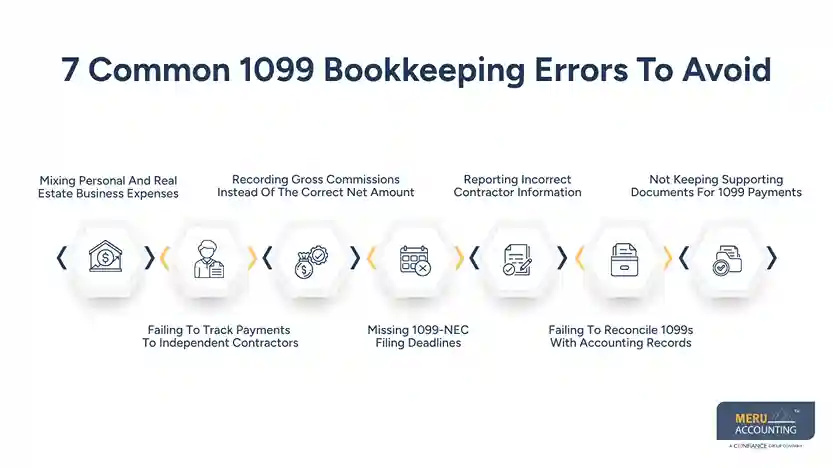
7 Common 1099 Bookkeeping Errors To Avoid
Mixing Personal And Real Estate Business Expenses
Personal charges can make real estate bookkeeping hard to review. Business payments should be made from the proper business account whenever possible, while personal spending should stay separate.
A clean account trail makes it easier to identify real contractor costs and determine which payments may need tax reporting.
Failing To Track Payments To Independent Contractors
Small payments can be easy to miss when a contractor receives several checks, ACH payments, or card payments. A year-end total may then be wrong.
1099 bookkeeping should track each payee throughout the year, with payment date, amount, method, invoice, and account code. IRS rules require qualifying nonemployee service payments to be reported on Form 1099-NEC when the applicable threshold is met.
Recording Gross Commissions Instead Of The Correct Net Amount
Real estate commissions can pass through several steps before money reaches an agent’s bank account. Broker fees, transaction fees, splits, and other deductions may appear on the settlement or commission statement.
Bookkeeping for real estate should keep the broker statement with the related transaction. Recording only the bank deposit can hide the gross commission and the costs taken out before payment.
Missing 1099-NEC Filing Deadlines
Late filing is a common year-end risk. The IRS states that Form 1099-NEC is generally due to the IRS and the recipient by January 31.
A good process starts well before January. Contractor data, W-9 forms, payment totals, and accounting records should be checked before the filing period begins.
optional anymore
on running the business
Reporting Incorrect Contractor Information
A wrong legal name, address, or TIN can cause a mismatch between the information return and IRS records. Such errors may lead to notices and the need to correct the form.
1099 bookkeeping should keep the signed W-9 with the vendor record and use that source when preparing the form. IRS guidance also notes that incorrect or missing TIN information can create backup withholding duties in certain cases.
Failing To Reconcile 1099s With Accounting Records
A 1099 should not be prepared from memory or from a quick bank review. The reported amount needs to match the underlying payment records.
A useful check compares the vendor ledger, bank activity, invoices, W-9 data, and draft 1099. Differences should be reviewed before the form is filed.
Not Keeping Supporting Documents For 1099 Payments
A 1099 amount should have records behind it. Invoices, W-9 forms, contracts, payment confirmations, bank records, and vendor details can show why a payment was made and how it was reported.
Bookkeeping for real estate should keep these records in an organized system so the tax file can be reviewed without searching through old emails or bank statements.
Best Bookkeeping For Real Estate Practices To Prevent 1099 Errors
Keep Vendor Records In One Place
Effective bookkeeping for real estate keeps contractor details, W-9 forms, and payment history organized in one place for easier 1099 review. One clear record cuts down duplicate vendor entries.
Use Clear Expense Accounts
Account names should show what the payment was for, such as repairs, legal fees, marketing, or outside services. Clear coding makes year-end review more useful.
Review Payments Each Month
Monthly review is better than waiting until tax season. Unmatched payments, missing W-9 forms, and unusual vendor balances can be fixed while the details are still fresh.
Separate Deal Costs
Deal-level records can show which property or transaction caused a cost. Such tracking is useful for agents, brokers, and investors who handle many transactions during the year.
Set A Year-End Review
A year-end review should compare contractor totals with the general ledger and bank activity. Bookkeeping for real estate becomes more reliable when the review is part of the normal close process.
How To Organize 1099 Bookkeeping Records For Tax Season
Start With A Vendor List
Create one list of all nonemployee service providers paid during the year. Include the total paid and whether a W-9 is on file.
Check Payment Totals
Accurate bookkeeping for real estate requires checking vendor totals across all relevant expense accounts to avoid overlooking reportable payments.
Review W-9 Details
Check the legal name and TIN data against the current W-9 before preparing forms. Do not copy old vendor data without checking whether a new form is available.
Match Bank Activity
Bank and credit card records can confirm that recorded payments were actually made. Unmatched transactions should be reviewed before filing.
Save The Final File
Keep filed forms, source records, correction notes, and related vendor documents in an organized tax folder. A clear record makes later questions easier to answer.
How Professional Bookkeeping For Real Estate Agents Improves 1099 Accuracy
Better Payment Tracking
A professional process tracks payments as they happen rather than rebuilding the year from bank statements. That gives each vendor a clearer payment trail.
Stronger Monthly Review
Regular review can flag duplicate entries, missing bills, and unusual balances before they affect tax reporting. 1099 bookkeeping becomes part of the monthly close instead of a rushed year-end task.
Cleaner Commission Records
Broker statements can be matched with deposits and transaction costs. Such checks give agents a clearer view of gross commissions, deductions, and net cash received.
Better Document Control
W-9 forms, invoices, contracts, and payment records can be kept with the related vendor. That makes source checks faster when a form needs review.
Fewer Year-End Surprises
Accurate bookkeeping for real estate gives tax preparers a cleaner set of records. Early checks can reduce last-minute questions and corrections.
Meru Accounting For Real Estate 1099 Bookkeeping
Meru Accounting provides bookkeeping services for real estate agents, brokers, and firms that need clean records for income, expenses, commissions, and contractor payments. Our team can track vendor payments, organize W-9 forms, review bank entries, and keep 1099 records tied to the books.
Our bookkeeping for real estate clients focuses on keeping each payment linked to the right vendor, expense account, and source document. Regular account reviews can also flag missing records, duplicate entries, and payment differences before tax filing begins.
For real estate professionals with many deals and vendors, Meru Accounting can manage routine bookkeeping tasks while keeping records ready for review by the tax professional. The goal of bookkeeping for real estate businesses is to give owners a clear set of books and a better record trail throughout the year.
Our Expert Perspective
A reliable 1099 process starts with accurate records throughout the year, not with a last-minute check before tax filing. In practice, keeping W-9 forms, payment details, invoices, and bank records together makes errors much easier to spot. Regular reviews also make it easier to catch missing payments, wrong vendor details, or mismatched amounts before they turn into filing issues.
Key Takeaways
- Keep personal and business spending separate to maintain clear, accurate bookkeeping records for real estate businesses.
- Collect W-9 forms from contractors before preparing 1099 forms for tax filing.
- Track each payment made to nonemployee service providers by vendor.
- Keep broker statements with the related commission records for proper income tracking.
- Check the applicable 1099 reporting rules for each type of payment.
- Review contractor payment totals before preparing and filing 1099 forms.
- Match 1099 amounts with the related entries in the accounting ledger.
- Keep invoices, W-9 forms, contracts, payment records, and other supporting documents together for organized bookkeeping for real estate.
- Review bookkeeping records each month instead of waiting until tax season.
- Check the latest IRS rules and filing requirements before submitting tax forms.
FAQs
1099 bookkeeping for real estate agents means tracking qualifying contractor payments and keeping the records needed for accurate 1099 reporting.
Form 1099-NEC is generally due to the recipient and the IRS by January 31, subject to current IRS rules.
A real estate business may need to issue Form 1099-NEC to eligible nonemployees who receive qualifying payments for services.
Real estate agents should keep W-9 forms, invoices, contracts, payment records, bank statements, and other documents that support 1099 payments.
Regular bookkeeping for real estate can track contractor payments, verify vendor details, reconcile records, and flag missing information before filing.
optional anymore
on running the business