Small businesses often begin with simple recordkeeping. Owners track sales, expenses, invoices, and bank entries to stay organized. As the business grows, financial work becomes more detailed. This is where a bookkeeping service provider becomes important.
A bookkeeping firm does much more than enter numbers into software. They help businesses improve cash flow, understand reports, manage taxes, and plan for future growth.
Many firms now depend on a professional bookkeeping firm because financial mistakes can affect profits, taxes, and daily operations. Modern small business bookkeeping solutions help a bookkeeper provide clear financial data and better control over business decisions.
In this blog, we will explain how a bookkeeping service provider helps businesses move beyond basic bookkeeping and why professional financial support matters for long-term success.
What You Will Learn From This Blog
- The difference between basic bookkeeping and advanced financial support
- How a bookkeeping service provider improves business reporting
- Why cash flow tracking matters for small businesses
- The role of small business bookkeeping solutions in tax compliance
- How financial data helps business owners make better decisions
- Ways professional bookkeeping supports business growth
- Why outsourcing bookkeeping can save time and reduce errors
- How Meru Accounting supports businesses with bookkeeping services
Understanding the Limits of Basic Bookkeeping
Recording Daily Transactions
Basic bookkeeping mainly focuses on entering sales, expenses, and payments into accounting software. While this is necessary, it only covers the first stage of financial management.
Managing Receipts And Bills
Small businesses often begin by storing receipts, invoices, and payment records manually or in spreadsheets. This method works for a short period but becomes difficult as transactions increase.
Preparing Simple Financial Reports
Basic bookkeeping usually includes simple reports like profit and loss statements and expense summaries. These reports may not provide enough details for planning business growth.
Handling Bank Reconciliation
Matching bank statements with company records is another common bookkeeping task. Errors in reconciliation can create financial confusion and affect cash tracking.
Limited Financial Analysis
Without proper analysis from an experienced bookkeeper, businesses may not understand spending trends, seasonal changes, or areas causing profit loss. This is where a bookkeeping service provider adds more value.
Difficulty During Tax Filing
Businesses relying only on basic records may face problems during tax preparation. Missing entries or poor records can lead to delays and penalties.
How a Bookkeeping Service Provider Supports Business Growth
Improving Financial Accuracy
A professional bookkeeping service provider reviews financial records regularly to reduce errors. Accurate books help businesses avoid reporting mistakes and tax issues.
Creating Detailed Financial Reports
Professional bookkeeping includes detailed reports such as cash flow statements, balance sheets, and expense breakdowns. These reports help owners understand business performance clearly.
Monitoring Business Expenses
A reliable bookkeeping firm helps businesses track expenses and identify unnecessary costs. A bookkeeping service provider helps business owners control spending and improve profit margins.
Supporting Budget Planning
Businesses need realistic budgets, and a qualified bookkeeper helps create and monitor them effectively. Professional bookkeeping helps companies compare actual spending with planned budgets.
Tracking Business Performance
Monthly and quarterly financial reviews help business owners measure progress. Good reporting allows owners to adjust plans based on real financial data.
Helping With Better Decisions
A business owner can make stronger decisions when financial records are clear and updated. Reliable reports help in pricing, hiring, expansion, and investment planning.
Why Small Businesses Need More Than Data Entry
Financial Data Helps Planning
Entering transactions is not enough for growing businesses. Financial records should help owners understand trends, cash movement, and future risks.
Better Cash Flow Control
Cash flow problems are one of the main reasons small businesses struggle. Proper small business bookkeeping solutions help businesses track incoming and outgoing funds carefully.
Support During Business Expansion
When businesses open new locations or add services, financial management becomes more complex. A professional bookkeeping service provider helps maintain organized records during expansion.
Managing Vendor Payments
Late supplier payments can affect business relationships. Professional bookkeeping ensures bills are tracked and paid on time.
Improving Customer Invoice Tracking
Many businesses lose revenue because invoices remain unpaid. Bookkeeping systems help businesses monitor customer payments and reduce overdue balances.
Preparing For Funding Opportunities
Banks and investors often request financial reports before approving loans or investments. Organized books improve business credibility during funding discussions.
Role of Small Business Bookkeeping Solutions in Financial Control
Organizing Financial Records
Modern small business bookkeeping solutions help businesses organize transactions, invoices, payroll records, and tax data in one system. This makes it easier to find financial information quickly when preparing reports or reviewing business performance.
Reducing Manual Errors
Manual bookkeeping increases the risk of duplicate entries and missing transactions. Automated systems improve accuracy and save time.
Managing Payroll Records
Payroll mistakes can create employee issues and tax problems. Proper bookkeeping systems help businesses maintain accurate payroll records.
Supporting Tax Compliance
A professional bookkeeping service provider ensures records are prepared according to tax rules. Organized books make tax filing easier and reduce stress during audits.
Improving Financial Visibility
Business owners need a clear picture of profits, expenses, and liabilities. Financial visibility supports stronger business planning.
Helping Remote Access
Cloud-based small business bookkeeping solutions allow owners and accountants to access records securely from different locations.
This improves communication between the business owner and the bookkeeping service provider while allowing faster financial review and decision-making.
How a Bookkeeping Service Provider Helps With Tax Preparation
Maintaining Organized Tax Records
A reliable bookkeeping service provider keeps invoices, expenses, and income records organized throughout the year. This reduces pressure during tax season.
Tracking Tax-Deductible Expenses
Businesses can miss valid deductions without proper bookkeeping. A bookkeeping service provider helps identify deductible business expenses correctly.
Supporting GST And Sales Tax Filing
Businesses dealing with GST or sales tax need accurate transaction records. Professional bookkeeping reduces filing mistakes.
Reducing Audit Risks
Incomplete records increase audit risks. Organized books help businesses provide documents quickly if tax authorities request information.
Working With Tax Professionals
Bookkeepers and tax preparers often work together to maintain compliance. Updated records make tax return preparation more accurate.
Avoiding Penalties
Late filings and reporting mistakes may result in penalties. A professional bookkeeping service provider helps businesses maintain financial discipline.
According to the Internal Revenue Service (IRS), maintaining accurate financial records is necessary for tax reporting and business management.
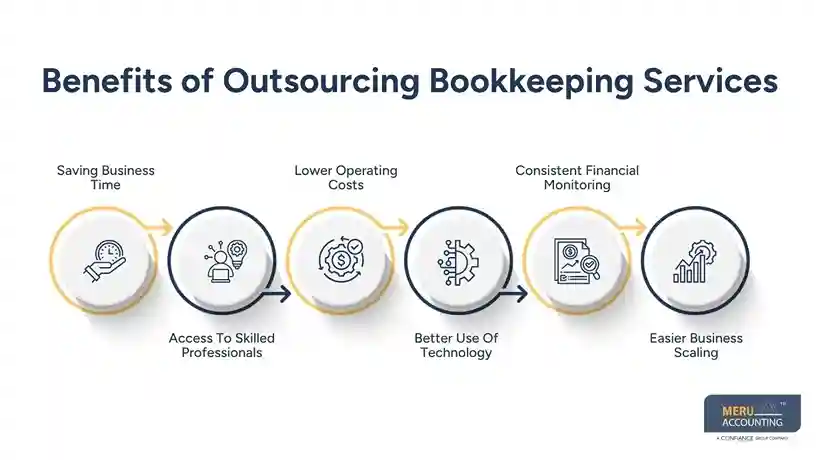
Benefits of Outsourcing Bookkeeping Services
Saving Business Time
Business owners often spend long hours handling bookkeeping tasks. Outsourcing to a bookkeeping service provider allows owners to focus more on operations and customer service.
Access To Skilled Professionals
A professional bookkeeping service provider has trained staff with experience in accounting systems, reporting, and compliance work. Their knowledge helps businesses maintain accurate and organized financial records.
Lower Operating Costs
Hiring and training an in-house team can be expensive. Outsourced bookkeeping offers flexible support at controlled costs.
Better Use Of Technology
Outsourced firms often work with advanced accounting software that improves reporting and data management. These systems help businesses maintain faster and more accurate financial processing.
Consistent Financial Monitoring
Regular bookkeeping reviews help businesses detect problems early and avoid financial confusion. Ongoing monitoring also supports better cash flow management and expense control.
Easier Business Scaling
As transaction volumes increase, outsourced bookkeeping services can expand support without major disruptions. This allows businesses to grow without worrying about handling additional bookkeeping workload internally.
How Small Business Bookkeeping Solutions Improve Reporting
Real-Time Financial Reports
Modern small business bookkeeping solutions provide updated financial reports that help owners monitor business performance regularly.
Real-time reporting provided by a bookkeeping service provider allows businesses to respond faster to financial changes and operational needs.
Better Profit Tracking
Businesses can track profit by service, product, or department. This helps owners identify strong and weak areas. Profit tracking also supports better pricing and resource allocation decisions.
Expense Trend Analysis
Professional reporting shows how expenses change over time. Owners can review spending habits and adjust budgets. This helps businesses identify unnecessary expenses and improve cost control.
Cash Flow Forecasting
Forecasting helps businesses prepare for upcoming expenses and seasonal sales changes. Better forecasting reduces the risk of cash shortages during slower business periods.
Financial Ratio Analysis
Advanced bookkeeping reports help businesses understand liquidity, profitability, and operational performance. Financial ratio analysis also helps owners compare business performance over time.
Improved Decision Support
Clear reports help business owners make informed financial decisions with less guesswork. Accurate financial data also improves confidence when planning future business activities.
The U.S. Small Business Administration explains that proper financial management improves planning and business stability for small companies.
Common Problems Faced Without Professional Bookkeeping
Missing Financial Records
Businesses without proper bookkeeping often lose receipts, invoices, and payment records. Missing documents can create issues during audits and tax filing.
Delayed Reporting
Late financial reports make it difficult to understand business performance on time. Delayed reporting can also slow important business decisions.
Unclear Cash Position
Without updated records, owners may not know how much cash is available for operations. This can lead to unexpected payment and budgeting problems.
Incorrect Tax Filing
Poor bookkeeping can result in reporting errors and missed deadlines. Tax mistakes may also increase the risk of penalties and notices.
Difficulty Managing Growth
As businesses grow, financial work becomes more detailed. Basic bookkeeping methods may no longer support business needs. This can create confusion in tracking income and expenses accurately.
Poor Business Decisions
Decisions based on incomplete data can affect profits and future growth. Reliable financial records help owners make more confident business decisions.
How Technology Supports Modern Bookkeeping Services
Cloud-Based Accounting Software
Many businesses now use cloud accounting systems for secure access and automatic updates. These systems also help business owners review financial data anytime when needed.
Automated Bank Feeds
Bank transactions can sync directly into accounting systems, reducing manual work. Automated updates also help businesses maintain more accurate financial records.
Invoice Automation
Modern systems create and send invoices automatically, improving payment tracking. Faster invoicing can also help businesses receive payments on time.
Secure Data Storage
Digital bookkeeping systems provide safer storage for financial records and reports. Secure storage reduces the risk of losing important financial documents.
Faster Financial Processing
Automation helps a bookkeeping service provider complete financial tasks more efficiently. Faster processing allows owners to review financial reports without long delays.
Better Collaboration
A bookkeeping service provider and business owner can work together more easily through shared accounting platforms. Shared access also improves communication and financial review processes.
According to QuickBooks Resource Center, automated bookkeeping systems help reduce manual errors and improve reporting efficiency for small businesses.
Why Financial Insights Matter For Small Businesses
Understanding Profit Margins
Businesses need to know which products or services generate better profits. Financial reports help identify profitable activities. This helps owners focus more on areas that generate steady income.
Managing Seasonal Changes
Sales may rise or fall during different months. Financial analysis helps businesses prepare for seasonal changes. Better planning reduces pressure during slower business periods.
Planning Future Investments
Business owners need reliable reports before purchasing equipment, hiring staff, or expanding operations. Accurate financial data supports safer investment decisions.
Monitoring Debt Levels
Proper bookkeeping helps businesses manage loans, credit balances, and repayment schedules. Regular monitoring also helps businesses avoid unnecessary financial pressure.
Tracking Customer Payment Trends
Late customer payments affect cash flow. Financial records help businesses monitor collection patterns. This allows businesses to improve follow-up and payment recovery processes.
Supporting Long-Term Stability
Consistent bookkeeping creates a stronger financial structure for future growth. Stable financial records maintained by a bookkeeping service provider improve business confidence and planning.
Why Meru Accounting is a Trusted Bookkeeping Service Provider
Experienced Accounting Professionals
Meru Accounting has experienced professionals who support businesses across multiple industries with bookkeeping and accounting services. The team understands different financial requirements based on industry and business size.
Support For Multiple Accounting Platforms
The company works with accounting software such as QuickBooks, Xero, Odoo, and other systems based on business needs. This allows businesses to continue using software that matches their operations.
Customized Financial Support
Meru Accounting provides small business bookkeeping solutions designed for different business sizes and industries. Customized support helps businesses manage their financial records more effectively.
Accurate Reporting Services
The firm helps businesses maintain updated financial records and prepare useful financial reports for decision-making. Accurate reports also improve financial clarity and planning.
Tax And Compliance Assistance
Businesses receive support with tax preparation, reconciliations, payroll, and compliance-related financial tasks. Proper compliance support helps reduce reporting errors and filing delays.
Flexible Outsourcing Support
Meru Accounting offers outsourced bookkeeping services that help businesses reduce operational workload and improve financial management. Flexible service options allow businesses to scale support based on changing needs.
Our Expert Perspective
Our experience with growing businesses shows that bookkeeping becomes more valuable when it supports planning and decision-making instead of only record-keeping. Many small businesses face cash flow pressure not because sales are low, but because financial tracking is weak. A professional bookkeeping service provider helps owners understand where money is spent, how profits are changing, and what financial steps are needed for stable growth. Reliable bookkeeping also creates confidence during tax filing, loan applications, and business expansion.
Key Takeaways
- A bookkeeping service provider does more than record transactions
- Professional bookkeeping improves financial accuracy and reporting
- Small business bookkeeping solutions help businesses manage cash flow better
- Organized records reduce tax filing problems and audit risks
- Outsourced bookkeeping saves time and operational costs
- Financial reports support better business decisions
- Modern bookkeeping systems improve efficiency and data security
- Accurate bookkeeping supports long-term business growth and stability
FAQs
A bookkeeping service provider manages financial records, tracks expenses, prepares reports, handles reconciliations, and supports tax preparation for businesses.
Small business bookkeeping solutions help businesses organize records, improve reporting, manage cash flow, and reduce financial mistakes.
Yes. Outsourcing reduces the cost of hiring and training in-house bookkeeping staff while giving access to experienced professionals.
Bookkeeping records should be updated regularly, usually weekly or monthly, to maintain accurate financial information.
Professional bookkeeping provides clear financial reports and cash flow tracking, helping owners make informed business decisions.