
Finance bookkeeping plays an important role in helping healthcare organizations maintain accurate records and follow legal requirements. In hospitals, clinics, and diagnostic centers, even small mistakes in financial records can lead to reporting issues or compliance risks. Strong recordkeeping ensures that financial activities remain clear, traceable, and aligned with healthcare rules.
Many healthcare providers also depend on financial accounting services to manage structured reporting, audit preparation, and billing accuracy. These services help reduce errors in financial documentation and support better compliance with healthcare regulations.
In this blog, we will understand how financial record management supports compliance in healthcare organizations, improves transparency, and reduces financial risks.
What You Will Learn From This Blog
- How financial record systems support healthcare compliance
- Why accurate billing and reporting are important in hospitals
- How audit preparation becomes easier with proper financial control
- The role of structured reporting in healthcare operations
- How finance and accounting services reduce compliance risks
- Common challenges in healthcare financial management
Understanding Finance Bookkeeping In Healthcare
Healthcare organizations handle a constant flow of financial activity, including patient billing, insurance claims, and vendor payments. Finance bookkeeping ensures that every transaction is recorded in a structured and accurate manner.
This reduces confusion in financial data and helps maintain consistency across all records, which is especially important in environments where multiple departments handle financial inputs.
Billing and claims management in healthcare is often complex because it involves insurance systems, medical coding, and multiple approval layers.
Proper financial records help match services provided with the correct charges, which reduces the chances of claim rejections. Along with this, daily tracking of income and expenses helps hospitals and clinics maintain updated financial information, which supports better decision-making and smoother operations.
Insurance claims also require strong documentation as financial proof. Finance bookkeeping ensures that all supporting documents are properly recorded and can be retrieved quickly when needed.
Regular internal monitoring further helps in identifying missing entries or inconsistencies at an early stage, improving internal control and reducing financial risks.
Overall, well-maintained financial records play an important role in compliance preparation by ensuring that healthcare organizations are always ready for audits and regulatory checks without delays.
Role Of Finance Bookkeeping In Healthcare Compliance Management
Ensuring Regulatory Alignment
Finance bookkeeping helps healthcare organizations keep financial records in line with required healthcare rules and standards. It ensures every transaction is properly recorded for compliance checks and reporting accuracy.
Reducing Financial Reporting Errors
Structured bookkeeping reduces mistakes in financial entries, invoices, and claims. This helps healthcare providers avoid penalties and maintain accurate financial reporting.
Supporting Audit Preparation
Well-maintained records make audit preparation easier and faster for healthcare organizations. Auditors can verify financial data smoothly when information is organized and updated regularly.
Improving Transparency In Financial Records
Clear financial records allow healthcare providers to track every transaction without confusion. This improves trust and makes regulatory review more efficient.
Strengthening Internal Control Systems
Finance bookkeeping supports internal control by tracking income, expenses, and billing activities in detail. It helps identify inconsistencies early and reduces financial risks.
Ensuring Accurate Billing Practices
Proper bookkeeping ensures services are billed correctly and matched with accurate charges. This reduces billing disputes and supports smooth insurance claim processing.
Regulatory Requirements In Healthcare Finance
HIPAA Financial Guidelines
Healthcare organizations must protect financial and patient-related data. Finance bookkeeping ensures sensitive data is recorded and handled safely.
CMS Billing Standards
Centers for Medicare & Medicaid Services (CMS) has strict billing rules. Following them requires accurate and timely financial records.
Tax Compliance Rules
Healthcare organizations must follow tax laws carefully. Proper financial records support accurate tax filing and reporting.
Audit Documentation Needs
Auditors require complete and organized financial data. Finance accounting services help prepare this documentation in the correct format.
Fraud Prevention Systems
Financial mismanagement can lead to fraud risks. Strong recordkeeping helps detect unusual activities early.
Data Protection Practices
Financial information must be stored securely to avoid misuse. Proper systems help maintain data integrity.
How Finance Accounting Services Support Compliance
Structured Financial Reports
Finance accounting services help create structured reports that support better decision-making and compliance tracking. These reports ensure that healthcare financial data is presented in a clear and organized format for audits and reviews.
Early Error Detection
These financial bookkeeping services help identify errors in financial records early, reducing long-term risks. Early correction of mistakes prevents compliance issues and improves overall accuracy in reporting.
Tax Filing Assistance
Accurate tax records are essential for compliance. Professional support ensures correct tax preparation. This reduces the chances of penalties and supports timely filing with regulatory authorities.
System Integration Support
Modern accounting tools help integrate financial data for better accuracy and tracking. This integration reduces manual errors and ensures consistent financial reporting across systems.
Audit Support Services
Audit processes become smoother when finance bookkeeping ensures financial data is well organized and verified in advance. It helps auditors review records quickly and ensures compliance requirements are met without delays.
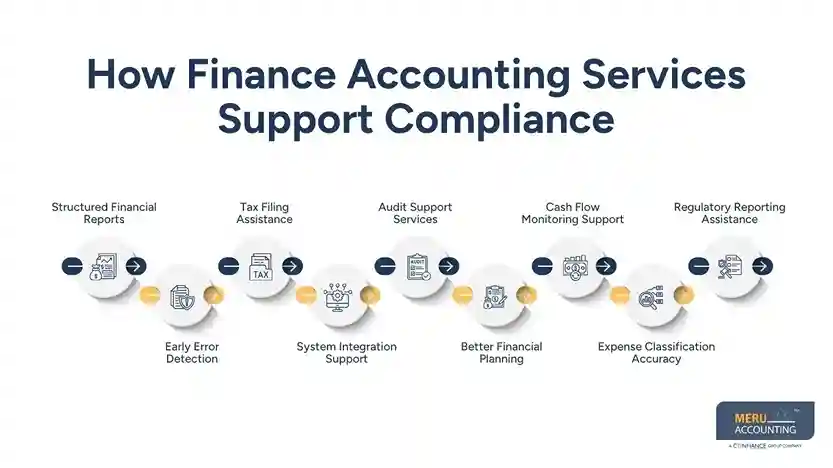
Better Financial Planning
Good financial planning supports compliance by ensuring resources are used correctly and recorded properly. It also helps healthcare organizations maintain financial stability while meeting regulatory standards.
Cash Flow Monitoring Support
Finance accounting services help track cash inflows and outflows in a structured way. This ensures healthcare organizations maintain enough liquidity while staying financially compliant.
Expense Classification Accuracy
Proper classification of expenses in the finance bookkeeping helps maintain clear financial records. It ensures that every cost is recorded under the correct category for reporting and compliance purposes.
Regulatory Reporting Assistance
These finance bookkeeping services support the preparation of reports required by healthcare regulators. This ensures timely submission and reduces the risk of compliance delays or errors.
Challenges In Healthcare Financial Compliance
Complex Billing Processes
Healthcare billing involves insurance claims, patient payments, and government programs. This complexity increases the risk of errors. It also requires careful matching of services, codes, and approvals, which makes financial tracking more difficult.
Changing Regulations
Healthcare rules often change, making finance bookkeeping compliance difficult without updated systems.
Organizations must regularly adapt their financial processes to meet new legal and reporting requirements.
High Risk Of Human Errors
Manual data entry can lead to mistakes that affect financial accuracy. Even small errors can create compliance issues or delay claim approvals in healthcare systems.
Time-Heavy Documentation
Healthcare organizations manage large volumes of financial data, which requires consistent effort. Maintaining and updating records daily can become time-consuming for internal teams.
Limited Financial Visibility
Without proper systems, it becomes difficult to understand financial performance clearly. This can lead to poor decision-making and delayed identification of financial issues.
Pressure On Internal Teams
Staff often face workload pressure, making it difficult to maintain accurate records. This can impact the quality and timeliness of financial reporting in healthcare organizations.
Why Choose Meru Accounting?
Experience In Healthcare Financial Management
Meru Accounting provides strong support in finance and bookkeeping for healthcare organizations, ensuring accurate and compliant records. The team understands the financial challenges faced by hospitals, clinics, and diagnostic centers.
Advanced Accounting Tools
The team uses platforms like QuickBooks, Xero, Zoho Books, and Odoo to improve accuracy in finance bookkeeping and reduce manual errors. These tools help maintain structured and real-time financial data for better reporting.
Customized Financial Solutions
Finance accounting services are tailored based on the size and needs of healthcare organizations. This ensures that each client receives support that matches their operational and financial structure.
Compliance-Focused Approach
The firm ensures that financial records follow healthcare rules and audit requirements. This helps organizations stay prepared for regulatory checks and reduces compliance risks.
Skilled Financial Professionals
Experienced professionals handle complex healthcare financial tasks with accuracy and care. Their expertise helps improve reporting quality and reduce financial inconsistencies.
Global Client Support
Meru Accounting supports clients across regions, helping healthcare providers maintain consistent financial control. This ensures smooth coordination regardless of location or time zone differences.
Our Expert Perspective
From our experience with healthcare organizations, delayed financial recording due to operational pressure often leads to reporting inaccuracies and compliance challenges. Consistent finance bookkeeping ensures timely updates, improving billing clarity and financial control. Structured finance accounting services also help reduce audit stress and strengthen overall financial discipline.
Key Takeaways
- Accurate financial records maintained through finance bookkeeping play an important role in supporting healthcare compliance and reducing reporting issues.
- Proper billing practices and complete documentation help lower financial risks and prevent claim or payment errors.
- Being ready for audits depends on how well financial data is organized, updated, and easy to access.
- Healthcare regulatory requirements make consistent and timely recordkeeping essential for all organizations.
- Structured financial systems improve transparency, making it easier to track income, expenses, and liabilities.
- Professional financial support improves accuracy in records and helps healthcare teams focus more on patient care and operations.
FAQs
It is the process of recording and managing financial transactions in healthcare organizations to ensure accuracy and compliance.
It helps maintain accurate billing, supports audits, and ensures compliance with healthcare regulations.
They assist in reporting, tax filing, audit preparation, and maintaining accurate financial records.
Yes, it helps small clinics manage billing, expenses, and compliance more effectively.
Incorrect records can lead to penalties, audit issues, and billing errors in healthcare organizations.