
Bookkeeping services play an important role in helping businesses manage daily financial work in an organized way. As businesses grow, tasks such as invoice tracking, expense recording, and account reconciliations become more complex and time-consuming.
Without a proper system, small errors can turn into larger financial issues that affect cash flow, reporting accuracy, and business decisions.
Many companies rely on bookkeeping services because financial records need regular attention and accuracy. Missing invoices, untracked spending, or unmatched bank records can create confusion and affect financial planning.
Proper bookkeeping practices help businesses maintain organized records and support smooth day-to-day operations.
What You Will Learn From This Blog
- Understand the role of bookkeeping in everyday business operations
- Learn why businesses need organized financial systems
- Explore how invoices are handled through bookkeeping support
- Understand methods used to track and manage business expenses
- Learn how reconciliations help maintain accurate records
- Explore factors to consider when selecting bookkeeping support
- Understand how professional accounting firms support financial management
Understanding The Role Of Bookkeeping Services In Daily Business Operations
Recording Daily Transactions
Businesses handle multiple financial transactions each day. Sales, payments, vendor bills, and purchases need proper records to maintain financial clarity.
Bookkeeping services help organize these records and ensure each transaction is entered accurately.
Maintaining Financial Records
Financial records serve as the foundation for business reporting. Organized records help management understand business activity and financial performance.
Proper documentation also reduces confusion during reviews and financial audits.
Supporting Financial Decisions
Business decisions often depend on financial information. Reports based on organized records help owners understand spending patterns and cash movement.
Reliable financial records help improve planning and reduce uncertainty.
Improving Internal Processes
Manual processes can increase errors and consume time. Organized bookkeeping systems help improve workflow and reporting practices.
Automated bookkeeping systems reduce duplicate entries by syncing transactions across bank feeds and accounting software.
Helping With Compliance Needs
Businesses often need accurate records for tax filings and legal requirements.
Maintaining complete financial information supports compliance and lowers reporting issues.
Why Businesses Depend On Bookkeeping Services For Financial Organization
Keeping Financial Information Structured
Businesses generate large amounts of financial data, and bookkeeping services keep this information structured and easier to locate and review.
Structured records support better control over business finances.
Reducing Human Errors
Manual financial work can create data entry mistakes and calculation issues.
Bookkeeping support helps review records and identify inconsistencies before they become larger concerns.
Managing Growing Financial Activity
As companies expand, transaction volume often increases, making business bookkeeping services essential for maintaining financial order.
Professional support helps maintain order even when financial activity becomes more complex.
Improving Cash Flow Visibility
Business owners need a clear understanding of incoming and outgoing funds, which becomes more transparent with bookkeeping and accounting services. Proper bookkeeping allows businesses to monitor cash movement and identify patterns.
Creating Better Financial Reports
Reports become more reliable when records remain updated and organized through business bookkeeping and accounting services. Accurate reports support budgeting, planning, and business discussions.
How Bookkeeping Services Help Manage Invoices Efficiently
Tracking Customer Invoices
Invoices play an important role in maintaining steady cash flow, while business bookkeeping services ensure accurate tracking and recording of each transaction.
Bookkeeping teams help record invoice dates, payment amounts, customer details, and payment status to maintain better accuracy.
Monitoring Due Dates
Late customer payments can directly affect daily business operations and overall cash management. Invoice tracking helps businesses monitor payment schedules, meet deadlines, and reduce delays.
Organizing Vendor Bills
Businesses regularly receive invoices from suppliers, contractors, and external service providers. Organized financial systems help ensure bills are recorded, reviewed, and processed properly on time.
Reducing Missing Payments
Lost, delayed, or forgotten invoices can create payment confusion and financial reporting issues. Proper invoice management systems help businesses maintain complete records and reduce payment gaps.
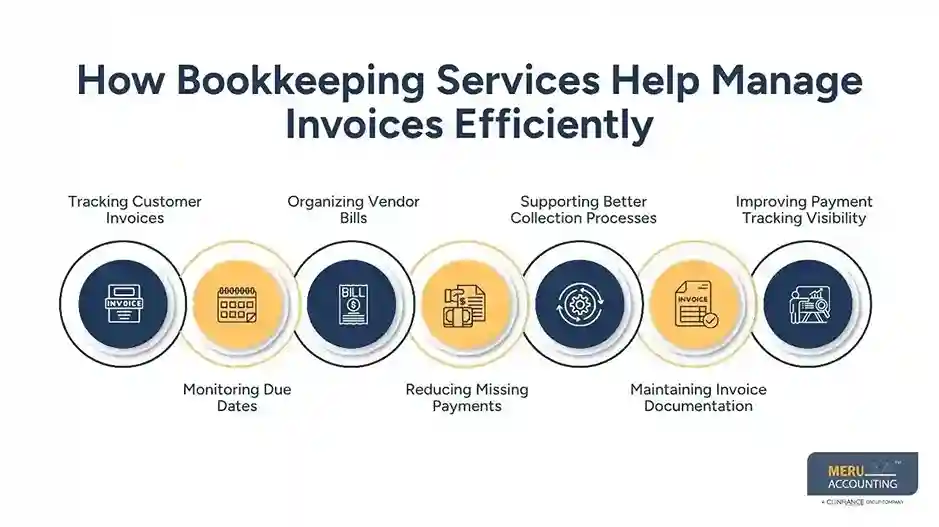
Supporting Better Collection Processes
Invoice records help businesses identify unpaid balances and follow up with customers when necessary. Timely collection efforts support stronger cash flow management and improve overall financial stability.
Maintaining Invoice Documentation
Proper invoice documentation helps businesses maintain records for future reference and reporting needs. Well-organized files make financial reviews, audits, and payment verification much easier and faster.
Improving Payment Tracking Visibility
Businesses need clear visibility into pending, completed, and overdue invoice payments regularly. Bookkeeping systems help create organized tracking methods that improve financial monitoring and reporting accuracy.
Managing Business Expenses Through Professional Bookkeeping Services
Recording Daily Expenses
Expense tracking helps businesses understand where money is spent across different operational areas. Bookkeeping support helps record financial transactions in a structured and organized manner.
Categorizing Spending Activity
Expense categories help management review spending trends and understand financial patterns clearly. Categories such as travel, payroll, office expenses, and utilities improve reporting accuracy and clarity.
Monitoring Cost Patterns
Regular financial reviews help businesses identify spending habits and recurring expense trends. Expense reports can reveal areas where unnecessary costs and excess spending may exist.
Supporting Budget Planning
Businesses often create budgets based on previous financial activity and spending records. Accurate expense records provide useful financial information for better planning and forecasting.
Improving Financial Control
Untracked business spending can create financial uncertainty and reporting challenges over time. Organized expense management supports stronger financial oversight and better cost control.
Identifying Unnecessary Expenses
Regular expense analysis helps businesses identify costs that may not add business value. This process supports better spending decisions and helps improve overall financial efficiency.
How Business Bookkeeping Services Simplify Account Reconciliations
Comparing Financial Records
Reconciliation involves matching business records with external statements and financial transaction data. This process helps confirm financial accuracy and maintain complete reporting consistency.
Matching Bank Transactions
Bank records and internal financial entries should align correctly and consistently. Bookkeeping teams compare records carefully to identify differences and resolve mismatches.
Identifying Errors Quickly
Missing transactions and duplicate entries can negatively affect financial reports and records. Regular reconciliation helps identify issues early before they become larger reporting concerns.
Supporting Accurate Reporting
Financial reports created with business bookkeeping services depend on reliable records and well-organized financial data. Reconciliation helps improve confidence in financial reports and business decision-making processes.
Reducing Audit Concerns
Clear and organized records often make financial reviews and checks much easier. Accurate reconciliations support documentation requirements during audits and financial assessments.
Detecting Unusual Transactions
Regular reconciliation reviews can help identify unusual transactions or unexpected account activity. Early detection supports better financial monitoring and helps maintain accurate business records.
How To Choose Reliable Business Bookkeeping Services For Your Business
Review Industry Experience
Different industries have unique financial structures and reporting requirements. Experience in a specific sector helps improve accuracy, compliance, and overall service quality.
Evaluate Service Scope
Businesses should clearly understand what services are included in the package. Invoice handling, reconciliations, reporting, and expense tracking may vary across providers.
Assess Technology Use
Modern accounting systems used in business bookkeeping services improve speed, accuracy, and financial reporting efficiency. Technology support also improves record management and reduces manual errors in bookkeeping work.
Check Communication Practices
Regular communication helps businesses stay informed about their financial position and updates. Service providers should explain financial information in a clear and simple manner.
Consider Growth Support
Business needs often change as operations expand and transaction volume increases over time, making scalable business bookkeeping services important for continuity.
Choosing flexible support helps businesses adapt smoothly to financial and operational changes.
Verify Data Security Practices
Strong data protection measures are important for safeguarding sensitive financial information. Reliable providers follow secure systems to protect records and maintain confidentiality.
Why Businesses Choose Meru Accounting For Financial Support
Meru Accounting has years of experience providing bookkeeping and accounting support to businesses across different industries and business sizes.
Financial management needs often vary from one business to another, which is why experienced support can make a meaningful difference. The team understands daily accounting requirements and works to help businesses maintain organized financial records.
Meru Accounting assists with important financial tasks such as invoice management, expense tracking, account reconciliation, and financial reporting.
Managing these activities regularly helps businesses maintain accurate records and better visibility into their financial position. Consistent support also helps reduce reporting errors and improve financial organization.
Businesses today use different accounting platforms based on their operational needs, and Meru Accounting supports a wide range of accounting software and financial tools.
The company follows structured processes with a strong focus on accuracy and detailed record management. As business requirements change over time, Meru Accounting also provides flexible support designed to align with business growth and changing financial needs.
Our Expert Perspective
From our experience in accounting and bookkeeping support, businesses often face financial organization issues when records are not managed consistently. Missing invoices, delayed reconciliations, and untracked expenses can create reporting challenges over time, while organized bookkeeping practices help improve financial visibility, reporting accuracy, and informed business decision-making.
Key Takeaways
- Structured bookkeeping improves cash flow visibility and financial decision-making
- Invoice tracking ensures better payment control and reduces delays
- Expense management improves financial discipline and cost efficiency
- Reconciliation strengthens accuracy in financial reporting
- Organized records support compliance and audit readiness
- Professional bookkeeping reduces financial inconsistencies and errors
- Businesses should choose providers based on experience, systems, and scalability
- Meru Accounting delivers business bookkeeping services designed to support structured financial management and long-term business growth.
FAQs
Bookkeeping services help businesses record and organize financial transactions. These services include invoices, expenses, reports, and reconciliations.
Invoices help businesses track payments from customers and manage money received for products or services.
Expense tracking helps businesses understand spending patterns and maintain financial control.
Reconciliation means comparing records with bank statements or other financial reports to confirm accuracy.
Professional bookkeeping helps small businesses maintain organized records, improve reporting accuracy, and reduce financial errors.