




Strong business focus on financial management is one of the most practical ways to increase long term business revenue. When a company tracks money flow, controls costs, and plans spending with clarity, it builds a stable base for growth.
Many small and mid-size firms lose earnings not due to low sales, but due to weak financial control and poor decision making. A clear business focus on financial systems can change this pattern and create steady business revenue growth over time.
In this blog, you will learn how financial management connects directly with revenue growth, what practices matter most, and how strong control systems lead to better profit outcomes.
What You Will Learn From This Blog
In this blog, you will understand how a strong business focus on financial management directly supports business revenue growth. You will also learn:
- How financial discipline improves profitability
- The connection between cost control and revenue stability
- Key financial management practices that support long-term growth
- Budgeting strategies that improve business efficiency
- Challenges That Reduce Business Focus and Productivity
- Practical ways to improve financial decision-making
- How data, reporting, and analytics support better outcomes
What Is Business Focus?
A clear business focus in financial management means giving priority to all decisions that directly affect income, cost, and profit. It helps businesses avoid random spending and keeps attention on measurable results. This structured approach allows companies to understand how pricing, expenses, and investments shape overall performance.
Financial management is not just about recording numbers; it influences how money is planned and used in daily operations, which directly impacts stability in business revenue over time.
Modern businesses also rely on data such as sales trends and cost patterns to make better financial decisions. A strong business focus ensures this data is used to reduce errors, control expenses, and improve planning accuracy.
When financial systems are well managed, daily operations run smoothly with fewer interruptions, and teams stay aligned with budgets. This discipline supports consistent performance and helps protect business revenue from sudden fluctuations during changing market conditions.
Key Business Focus Areas for Sustainable Growth
Focus on Your Customers
Customers expect fast and helpful service. They want businesses that understand their needs and solve their problems effectively. To improve this:
- Ask customers for feedback on what they like and what needs improvement
- Use simple surveys after visits or purchases
- Resolve issues quickly and professionally
- Use tools like chat support or help desks for real-time communication
When you focus on customers, they remain loyal and recommend your business to others, which directly contributes to higher business revenue.
Focus on Your Online Presence
More people are shopping online than ever before. To stay competitive:
- Ensure your website is mobile-friendly and easy to navigate
- Use social media to showcase products, behind-the-scenes content, and offers
- Run targeted online ads to reach new audiences
- Share helpful content such as tutorials and tips
A strong online presence helps customers find and trust your business
Focus on Efficient Operations
Working efficiently is essential.
- Identify tasks that take time but add little value
- Use tools to manage finance, scheduling, and customer service
- Train employees to use systems effectively
- Regularly review and improve workflows
Efficient operations help your team achieve more with less effort.
Focus on Financial Health
A strong business focus on financial management keeps a business stable.
- Monitor profit, expenses, cash flow, and debt regularly
- Prepare monthly or quarterly financial reports
- Save funds for emergencies and slow periods
- Use accounting tools for accurate tracking
Strong financial discipline directly improves long-term profitability and revenue stability.
Focus on Team Growth
A skilled and motivated team drives success.
- Set clear goals and celebrate achievements
- Provide training and mentoring opportunities
- Give constructive feedback and encourage ideas
- Maintain a positive and supportive work environment
A strong team improves productivity and retention.
Focus on Sustainability
Sustainability is increasingly important to customers.
- Reduce plastic usage wherever possible
- Recycle and manage waste responsibly
- Save energy by turning off unused equipment
- Share your sustainability efforts with customers
Small actions create a positive environmental impact and strengthen your brand image.
Focus on Online and Offline Sales
A balanced sales approach increases reach.
- Maintain a user-friendly website with smooth checkout
- Use online marketplaces and social platforms for selling
- Provide excellent in-store experiences with good service and layout
- Keep pricing and offers consistent across channels
This ensures a seamless customer experience across all platforms.
Focus on Innovation
Innovation helps businesses stay competitive.
- Listen to customer feedback for improvement ideas
- Test new ideas gradually to reduce risk
- Collaborate with experts when needed
- Adapt to changes in the market
Continuous innovation supports long-term growth and strengthens business revenue potential.
Focus on Data and Analytics
A strong business focus on data helps make better business decisions.
- Track key metrics such as sales, customer behavior, and performance trends
- Use simple dashboards or reports for clarity
- Set measurable goals and track progress regularly
- Use insights to improve strategies
Data-driven decisions improve accuracy and growth.
Focus on Digital Security
Protecting business data is essential.
- Use strong and updated passwords
- Keep software and systems updated
- Back up important data regularly
- Train staff to identify scams and phishing attempts
Strong digital security builds trust and reduces risk.
Key Financial Management Practices That Improve Business Revenue
Accurate Record Keeping
Proper recording of all financial transactions creates clear visibility of income and expenses.
Clear records strengthen business focus by reducing confusion and supporting better financial decision making across the business. Daily entries reduce errors and make audits more reliable for long-term planning.
Regular Financial Review
Frequent reviews help identify gaps and errors in financial performance at an early stage. Early detection of issues allows timely corrections and keeps operations under control.
Review cycles also highlight weak areas in spending and income patterns for quick action.
Expense Monitoring System
Regular tracking of expenses prevents unnecessary spending and keeps costs under control.
Controlled spending helps maintain a healthy balance between income and outflow. Detailed monitoring also helps identify hidden costs that affect profit levels.
Profit Margin Analysis
Understanding profit margins helps businesses know how much actual profit is earned after costs.
Better pricing decisions become possible with clear insight into cost and return structure. Strong margin analysis also supports product-wise and service-wise performance comparison.
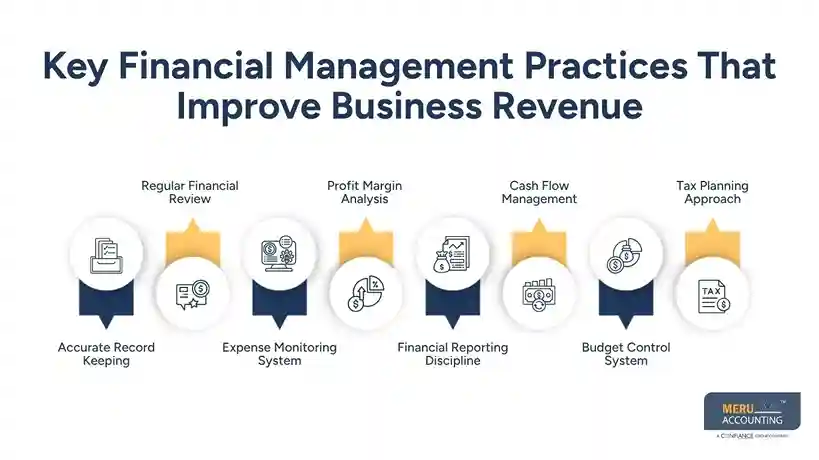
Financial Reporting Discipline
Regular reporting gives a clear view of financial performance over time. Business owners gain accurate data for planning and stronger decision making. Well-prepared reports also improve transparency between teams and stakeholders.
Cash Flow Management
Cash flow tracking ensures availability of funds for daily operations and obligations. Proper monitoring reduces payment delays and financial pressure. Healthy cash flow also supports smoother working capital management.
Budget Control System
Structured budgeting helps set clear spending limits for each department. Spending discipline reduces financial imbalance and supports stable operations. Regular budget tracking also highlights overspending at an early stage.
Tax Planning Approach
A business focus on tax planning reduces unnecessary financial burden on the business. Timely compliance avoids penalties and legal issues. Organized tax management also improves year-end financial stability and planning accuracy.
Budgeting Strategies To Strengthen Business Focus and Profitability
Setting Clear Budget Limits
Clear budget limits create a strong structure for financial control in any business. Spending boundaries help avoid unnecessary costs and maintain financial discipline.
Department Wise Allocation
Budget allocation across departments improves clarity in financial planning. Each team receives resources based on priority and operational needs.
Monthly Budget Tracking
Regular monthly tracking helps monitor spending patterns with better accuracy. Financial gaps become easier to identify before they affect performance.
Adjusting Budgets Based On Data
Budget adjustments based on real data help align spending with business conditions. Decisions become more accurate when guided by updated financial information.
Preventing Budget Leakages
Leakage control focuses on identifying hidden or unnecessary financial outflows. Careful monitoring reduces wastage and improves overall cost efficiency.
Top 10 Problems That Will Affect Business Focus and Growth
Running a business is both exciting and challenging. In the modern business environment, many tools, tasks, and demands can easily pull attention away from what truly matters. Here are some simple reasons why business focus can get affected and how to stay on track:
Too Many Jobs at Once
Some people try to handle many tasks at the same time. This often leads to confusion and missed priorities. Good business focus means completing one important task properly before moving to the next.
New Tools and Technology
There are always new apps, software, and digital tools launching. While they can be useful, trying too many at once can distract from core business work and reduce productivity.
Not Enough Time
Business owners often feel they do not have enough time. Without proper time management, planning gets ignored, and goals become unclear. Simple scheduling helps improve focus.
Trying to Make Everyone Happy
While customer satisfaction is important, trying to satisfy everyone can reduce efficiency and create confusion. It is better to focus on the right target customers and serve them well.
No Clear Goals
Without clear goals, businesses can lose direction easily. A clear goal works like a roadmap and helps guide daily actions and decisions effectively.
Too Much Competition Pressure
With increasing competition, businesses may feel pressure to copy others. This can reduce originality. Every business should focus on its own strengths and value.
Worrying About Money
Financial concerns are natural, but too much worry can affect decision-making. Balanced financial planning helps maintain stability and better focus on growth.
Team Not Working Together
If the team is not aligned with the same goals, productivity drops. Clear communication and shared objectives are important to keep everyone focused in the same direction.
No Time for Planning
Many businesses skip planning due to busy schedules. Without planning, work becomes unorganized. Even a short daily or weekly plan can improve clarity and focus.
Not Using Helpful Tools
Avoiding useful tools can slow down work and increase errors. The right tools help save time, improve accuracy, and support better decision-making.
optional anymore
on running the business
Cost Control Techniques That Improve Financial Efficiency
Identifying Unnecessary Costs
Careful review of expenses helps spot areas where money is being wasted. Removing such costs improves overall financial efficiency and strengthens profitability.
Vendor Cost Comparison
Comparing multiple suppliers helps businesses secure better pricing and terms. Better vendor selection reduces overall expenses and improves cost control.
Process Optimization
Improving internal workflows reduces delays and lowers operational costs. Efficient processes ensure better use of time, money, and resources.
Technology Cost Use
Use of digital tools reduces manual work and lowers operational expenses. Automation increases accuracy while improving overall financial efficiency.
Regular Cost Audits
Regular audits with a strong business focus help uncover hidden costs and improve long-term spending control. They also ensure compliance and create transparency in financial management.
Meru Accounting’s Role in Strengthening Business Financial Management
At Meru Accounting, we help businesses build a strong foundation for financial clarity, control, and long-term revenue growth. A structured business focus on financial management is at the core of every service we provide.
Our team specializes in bookkeeping, accounting, and financial reporting solutions that help businesses track every financial movement with accuracy. From daily transaction recording to advanced financial analysis, we ensure that decision-makers always have clear and reliable data.
We also support businesses in implementing modern accounting tools such as Xero, QuickBooks, and other cloud-based systems to improve efficiency and reduce manual errors. This allows companies to focus more on strategy and growth while we handle the financial backbone.
With a global client base and experienced professionals, Meru Accounting helps businesses reduce financial leakage, improve cash flow visibility, and strengthen profitability through structured financial systems.
Our Expert Perspective
A strong business focus on financial management is essential for improving profitability, maintaining cash flow stability, and ensuring long-term revenue growth. When businesses implement structured accounting, budgeting, and reporting systems, they gain clearer visibility over costs and financial performance, which leads to better decision-making.
At scale, this discipline reduces financial leakage, improves operational efficiency, and supports sustainable business revenue growth across changing market conditions.
At Meru Accounting, we observe that businesses using organized financial systems consistently achieve stronger control over resources and more predictable revenue outcomes.
Key Takeaways
- Strong financial management is essential for increasing business revenue
- Business focus helps reduce unnecessary costs and improve efficiency
- Accurate financial records lead to better decision-making
- Cash flow management is critical for business stability
- Budget control systems prevent overspending and financial leakage
- Data-driven decisions improve long-term business performance
- Continuous monitoring of financial performance supports sustainable growth
- Professional accounting support can significantly improve financial clarity
FAQs
Financial management increases revenue by controlling costs, improving cash flow, and enabling better profit-focused decision-making.
Business focus ensures financial decisions prioritize profit, cost efficiency, and long-term growth instead of random spending.
Key areas include budgeting, cash flow management, expense control, financial reporting, profit analysis, and tax planning.
Budgeting improves profitability by setting spending limits, reducing waste, and helping allocate resources more efficiently.
Cash flow management ensures smooth daily operations by maintaining sufficient funds for expenses and obligations.


