Becoming a CPA in California is a strong career choice. A CPA license shows skill, trust, and professionalism in accounting. To get it, you must meet the California certified public accountant requirements. These rules cover education, exams, work experience, and ethics. Following them ensures you serve clients safely and legally.
Many people think CPA rules are hard to follow at first. Planning and guidance make the path easier to follow. This blog will explain all key steps clearly. You will understand how to meet California certified public accountant requirements step by step.
Essential Requirements for California Certified Public Accountants
Education Requirements
Education is the first step to becoming a CPA. You must earn a bachelor’s degree from an approved school.
You also need 150 semester units in total. These include accounting and business courses. At least 24 units must be in accounting subjects. Another 24 units must cover business topics like law and finance.
Completing education builds a strong foundation for exams. Education also prepares you for real work tasks. Meeting this step fulfills the key part of the California certified public accountant requirements.
Exam Requirements
After education, you must pass the CPA exam. The exam tests accounting, auditing, business, and tax knowledge.
The Uniform CPA Exam has four sections: AUD, BEC, FAR, and REG. You must pass all sections within 18 months. You can sit for the exam after completing the required courses.
Passing the exam proves your skill to work professionally. It is a key step in the California certified public accountant requirements. Good preparation helps you succeed in each exam part.
Experience Requirements
Work experience is required after passing the exam. You must work at least 12 months full-time in accounting.
The experience must be supervised by a licensed CPA. Work can include accounting, auditing, tax, or reporting tasks. Experience ensures practical skills match your school knowledge.
Proper documentation is needed to meet California certified public accountant requirements. This step trains you for real accounting challenges.
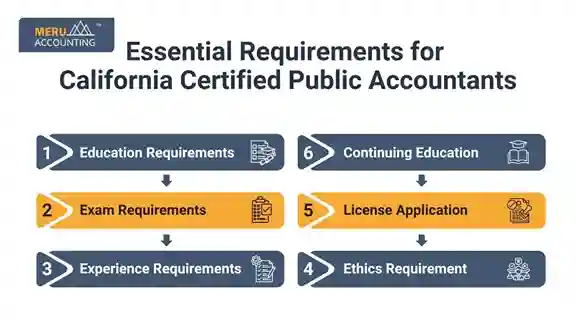
Ethics Requirement
Ethics is a key part of becoming a CPA. You must complete an ethics course and pass an exam.
The Professional Ethics for CPAs (PETH) exam tests your understanding of professional rules. Ethics training helps you make fair and honest decisions.
Passing the ethics exam is mandatory for California certified public accountant requirements. Ethics ensures trust with clients and employers in all work.
License Application
After completing education, exams, experience, and ethics, you can apply for a license. The California Board of Accountancy (CBA) handles the process.
You must submit proof of education, exam results, and experience. You also need to pay fees and pass a background check. The CBA reviews all applications carefully before granting licenses.
Once approved, you become a licensed CPA. This completes the California certified public accountant requirements officially. You can now serve clients legally.
Continuing Education
Even after licensing, CPAs must keep learning. This is needed to maintain the California certified public accountant requirements.
You must complete 80 hours of continuing education (CPE) every two years. Courses cover accounting, auditing, tax, and ethics. CPE helps CPAs stay updated on new rules and tools. Learning often keeps your skills sharp and reliable. This step helps CPAs give correct advice to clients.
Key Duties and Responsibilities of a California CPA
1. Prepare Financial Statements
- Make financial reports for small and large businesses.
- Ensure numbers are right and easy to read.
2. Handle Taxes
- Prepare tax forms for people and businesses on time.
- Check all numbers to avoid errors and fines.
3. Conduct Audits
- Examine books to find mistakes or fraud in records.
- Report errors and suggest ways to fix them.
4. Give Business Advice
- Help clients plan budgets and manage money well.
- Guide businesses to grow and avoid losses.
5. Follow Rules and Laws
- Make sure work meets state and federal laws.
- Help clients obey tax and accounting rules.
6. Communicate with Clients
- Explain reports and advice in clear, simple words.
- Answer questions and help clients make good choices.
7. Keep Ethics and Trust
- Always act fair and honestly in all work.
- Build trust with clients through safe and right actions.
Benefits of Becoming a California CPA
1. Faster Career Growth
Meeting California CPA rules helps you grow fast. Licensed CPAs get more promotions and lead roles than non-licensed staff.
2. More Trust from Clients and Employers
CPAs are known for skill and honesty. Clients and bosses trust their work. This builds strong, long-term work ties.
3. Higher Pay
CPAs earn more than non-licensed accountants. The CPA title shows skill and trust. Firms value this, which can raise your salary.
4. More Job Options
CPAs can work in public accounting, finance, or government jobs. This gives you choice and room to grow.
5. Advisory and Consulting Work
CPAs can guide clients on money and planning. This adds more value than just accounting tasks.
6. Stronger Credibility
A CPA license boosts your trust in the field. Clients and peers rely on your work. It helps build lasting relationships.
7. Shows Professionalism
Following CPA rules proves you are ethical and dependable. Clients and bosses know you meet high standards.
Common Challenges
Complete 150 Semester Units
Many need extra courses beyond a bachelor’s degree. This can take extra time and effort.
Pass All Four CPA Exam Sections
All four parts are tough. You must plan and study well. Practice and review help improve scores.
Gain Work Experience
Finding work under a licensed CPA can take time. Real experience is key to learning the job.
Maintain Ethics and CPE
You must follow ethics rules and complete CPE hours on time. Regular study keeps your skills up to date.
Stay Organized
Good planning helps finish all steps without stress or delay. Keeping a schedule makes it easier to track progress.
Tips to Meet the Requirements
Here are tips to meet California certified public accountant requirements successfully:
1. Plan Education Early
- Finish 150 units by adding extra courses if needed.
- Focus on accounting and business subjects equally.
2. Prepare for Exams
- Use review courses and practice tests often.
- Set a study schedule and stick to it strictly.
3. Gain Work Experience
- Work under a licensed CPA in accounting or auditing.
- Ensure your work is documented for verification.
4. Complete Ethics Requirement
- Take the PETH course and pass the exam.
- Apply ethical knowledge in all accounting tasks.
5. Track Continuing Education
- Record all CPE hours every two years.
- Take courses on updated rules and accounting ethics.
6. Stay Organized
- Plan exams, work, and courses in advance.
- Keep certificates and documents ready for licensing.
State vs. National Requirements
Aspect | California | Other States / National |
Education Units | Must complete 150 semester units | Varies by state, usually 120–150 units |
Ethics Requirement | Must take the PETH course and exam | Some states have their own ethics courses |
Exam | Uniform CPA Exam (all four parts) | Uniform CPA Exam accepted nationwide |
Work Experience | Must work 12 months under a licensed CPA | Usually 12–24 months under a licensed CPA |
Licensing | California Board of Accountancy (CBA) | State boards handle licensing individually |
Rules Difference | Strict California rules on units & ethics | Slight variations per state |
Why California CPA Requirements Are Important?
Grow Your Career
Meeting California CPA rules opens doors to promotions and lead roles. It also sets a clear path to senior positions.
Earn More
Licensed CPAs earn more than non-licensed accountants. Higher pay comes with proven skill and trust.
Take Leadership Roles
CPAs can work in advisory, consulting, and management jobs. You can lead teams and shape business plans.
Show Professionalism
Following CPA rules proves you are honest, skilled, and reliable. It shows your strong work ethic and care.
Gain Respect
Licensed CPAs are valued in the field and get more opportunities. Peers and employers see you as an expert they can trust.
Stay Ahead of Rules
Licensed CPAs know laws and rules, cutting down errors and risks. You can guide clients with clear and correct advice.
Boost Job Security
CPAs with a license are in high demand and have steady careers. Companies count on them for key accounting tasks.
Pathways to Becoming a California CPA
1. Get the Right Degree
- Start with Accounting
Earn a bachelor’s degree in accounting to begin your path to becoming a California CPA. - Other Degree Options
Some students choose business, finance, or economics to meet California CPA rules.
2. Complete Extra Units
- Reach 150 Units
Take extra courses after college to meet the 150-unit requirement for a California CPA. - Plan Early
Planning ahead makes it easier to meet all California CPA requirements on time.
3. Follow California CPA Rules
- Know the Rules
Learn California CPA rules to avoid delays in your CPA journey. - Stay on Track
Following each step early helps you qualify as a California CPA faster.
Early planning helps meet California certified public accountant requirements fast.
Becoming a CPA in California is a clear, structured path. Meeting California certified public accountant requirements ensures you have the knowledge, skill, and ethics. Education, exams, experience, and ethics all build a strong foundation.
Meru Accounting helps CPAs and accounting professionals with their financial and business tasks. We offer fast bookkeeping, clear reports, and full compliance help. By working with Meru Accounting, CPAs can focus on growth while we manage the numbers. With our support, you can build a trusted and strong accounting practice in California.
FAQs
- How long does it take to meet California’s certified public accountant requirements?
It usually takes five to seven years in total. - Do I need 150 units before taking the CPA exam?
No, you can sit for the exam with a bachelor’s degree. - Can I use online courses to meet education requirements?
Yes, online courses from accredited schools are accepted. - What type of work experience qualifies for CPA licensure?
Accounting, auditing, tax, or financial reporting work counts. - How often do CPAs need continuing education?
CPAs must complete eighty hours of CPE every two years. - Is the ethics exam mandatory for all CPAs?
Yes, passing the ethics exam is required for licensing. - Can foreign education meet California CPA requirements?
Yes, if it is evaluated and approved by CBA.