A building can collect $40,000 in rent each month and still leave its owner with less cash than expected. A vacant unit, a major repair, a loan payment, or an unpaid tenant account can change the figures quickly. A commercial real estate CPA reviews these details to show what a property earns, where the money goes, and which items need tax review.
Choosing a commercial real estate CPA is not as simple as picking the lowest quote. One firm may file annual tax returns, while another may maintain monthly financial statements, track costs by property, and review tax issues before a sale. For a CPA for Commercial Property Owners, the scope of work matters as much as the quoted fee.
Before hiring a commercial property accountant, compare the actual work, the full fee, and the quality of the records you will receive. The right choice depends on your properties, ownership structure, reporting needs, and budget.
What You Will Learn From This Blog
- Which tasks a commercial real estate CPA handles for property owners.
- How a CPA for Commercial Property Owners can manage accounting and tax needs.
- How to compare accounting services, tax work, and reporting packages.
- What affects commercial real estate CPA fees and may lead to extra charges.
- How to maintain accurate financial records for tax review and avoid last-minute adjustments.
- Which bookkeeping services Meru Accounting can provide under an agreed scope.
What Does a Commercial Real Estate CPA Do?
A commercial real estate CPA looks beyond the rent total to review the records behind a property’s results. A CPA for Commercial Property Owners may handle routine accounting, tax filing, asset costs, loans, and major property deals, depending on the engagement.
Review Rental Income
Suppose a tenant owes $12,000 but pays only $9,000 before month-end. A commercial real estate CPA reviews the lease, invoice, and payment record to check how the unpaid amount should appear in the financial records. Rent concessions and shared property charges may also need separate review.
Review Property Expenses
A new roof, a plumbing repair, and a routine cleaning bill do not always receive the same tax treatment. A CPA for Commercial Property Owners checks the work done, the invoice, and the relevant rules before deciding how each cost should be recorded.
Prepare Tax Returns
A property held by an individual may have different filing needs from one owned by a partnership or corporation. A real estate tax professional reviews the ownership structure and financial records to determine which returns and schedules are required.
Track Depreciation
The purchase price of a building may include both land and the structure. A commercial real estate CPA reviews cost records, eligible assets, improvements, and past depreciation claims to check the figures used for tax purposes.
Review Property Transactions
When an owner sells a warehouse or refinances an office building, the closing papers may include loan payoffs, fees, and changes to asset records. An accountant specializing in commercial real estate reviews these documents to identify accounting entries and tax issues that may affect the deal.
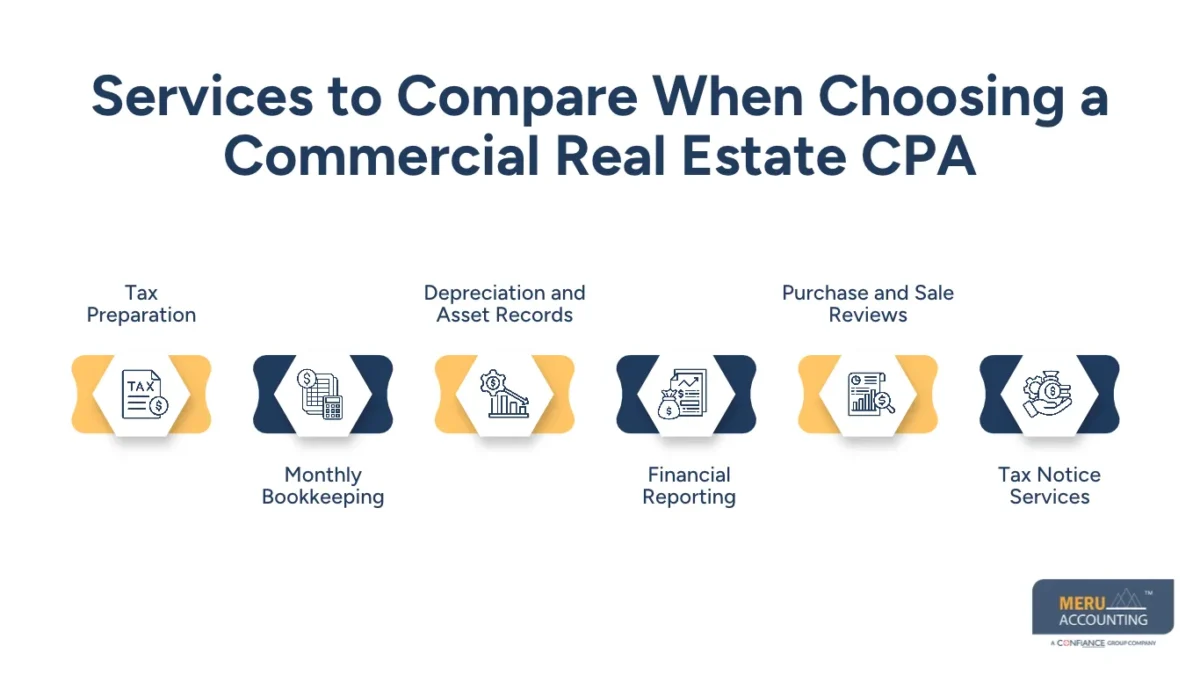
Services to Compare When Choosing a Commercial Real Estate CPA
Two firms may use similar service names but include different tasks. When comparing a commercial real estate CPA, check the work listed in each proposal rather than assuming every accounting package covers the same needs.
Tax Preparation
Check whether the quote covers each required return, related schedules, and estimated tax reviews. A CPA for Commercial Property Owners should also clarify whether properties held in separate entities require separate filing fees.
Monthly Bookkeeping
Ask whether the firm enters transactions or only checks books prepared by your staff. Confirm whether bank reconciliation, bill tracking, and correction of old entries are included in the monthly fee.
Depreciation and Asset Records
A useful property accounting service keeps records of building costs, eligible assets, and later improvements. Ask whether the accountant reviews depreciation each year and whether a cost segregation study requires a separate fee or outside specialist.
Financial Reporting
A portfolio-wide profit figure may hide a building that keeps losing money. Ask whether the commercial property accountant prepares property-level reports showing income, costs, and key balances, along with a combined view if you own several buildings.
Purchase and Sale Reviews
A property transaction can affect financial statements and tax liabilities. Confirm whether the firm reviews closing statements, fixed asset records, and loan balances before the transaction closes or after receiving the final documents.
Tax Notice Services
A standard tax filing fee may not cover an IRS notice or audit request. Ask whether the commercial real estate CPA will review the notice, collect records, prepare a response, and explain any additional charges before the work begins.
Commercial Real Estate CPA Fees and Pricing Factors
Commercial real estate CPA fees depend on the workload, record quality, number of entities, and services required. A low quote may cover only the return, while a higher one may include year-round bookkeeping. Compare the full annual cost before deciding which option offers better value.
Hourly Fees
Hourly billing charges for the time spent on the work. Ask an accountant specializing in commercial real estate for an estimate and check whether calls, record checks, and follow-up questions are billed separately.
Fixed Annual Fees
A fixed fee can make budgeting easier when the work is clearly defined. Check whether the agreement excludes amended returns, tax notices, property sales, or incomplete records.
Monthly Service Plans
Monthly plans may include transaction entry, bank checks, and regular reports. When comparing a CPA for Commercial Property Owners, check the number of properties, accounts, and reports covered instead of judging the plan by its monthly price alone.
Property and Entity Count
Several buildings owned through separate entities may require more work than the same buildings held by one entity. Ask the commercial real estate CPA to list the fee for each return and bookkeeping account.
Record Quality
If rent entries are missing and bank accounts have not been reconciled for months, the firm may need extra time before filing. Request a separate catch-up estimate so the regular accounting fee for commercial properties remains clear.
Additional Tax Work
A sale, amended return, or complex asset review can add to the bill. Ask when extra work requires your approval and whether the accountant specializing in commercial real estate will provide a price estimate first.
Tax-Ready Bookkeeping for Commercial Property Owners
Tax-ready books should show what came in, what went out, which property was involved, and what documents prove each entry. A commercial real estate CPA can review records more efficiently when the financial records match bank statements, invoices, lease terms, and loan documents.
Separate Each Property
Do not combine repair bills for a retail unit and a warehouse under one unclear expense record. Use separate accounts or tracking codes so a property accounting specialist can compare property costs and spot unusual changes.
Record Rent and Tenant Charges
Match each payment to the right tenant and lease. If a tenant pays less than the amount billed, keep the remaining balance visible instead of treating the full invoice as cash received.
Reconcile Bank and Loan Accounts
Compare bank statements with the ledger every month. A CPA for Commercial Property Owners should also check loan statements, since principal repayments and interest costs have different accounting and tax effects.
Keep Bills and Receipts
Save vendor invoices, proof of payment, lease records, property tax bills, and closing papers. These documents give the commercial real estate CPA a clear basis for reviewing the figures in the financial statements.
Review Repairs and Improvements
A $25,000 project is not automatically a repair or a capital improvement just because of its price. Keep the scope of work, invoice, and payment record so the tax professional can assess the correct treatment.
Review Monthly Financial Records
Reconcile bank and loan accounts, verify tenant balances, record outstanding expenses, and resolve discrepancies each month. Updated monthly records provide a reliable basis for financial reporting and tax preparation.
optional anymore
on running the business
How to Evaluate a CPA for Commercial Property Owners
A firm’s website may list many services, but the hiring decision should rest on its experience and work process. Evaluate each CPA for Commercial Property Owners using the same checks so you can compare firms on equal terms.
Check Property Experience
Ask whether the firm has worked with offices, warehouses, retail centers, or multi-property portfolios. Experience with a property type similar to yours can make discussions about costs, leases, and reports more useful.
Verify Professional Credentials
Check the CPA’s license status with the relevant state licensing board. Also ask who prepares the tax return, who reviews the final work, and who is responsible for addressing questions or errors.
Review Sample Reports
Request a sample report with client details removed. Check whether you can identify the property’s income, main costs, account balances, and unresolved items without needing a long explanation.
Understand the Review Process
Ask who checks bank reconciliations and unusual entries. A commercial real estate CPA should explain how the team records corrections and deals with differences between the ledger and source documents.
Check Software and Data Access
Confirm that the firm can work with your current accounting system. Ask how you will share records, who can access them, and how files will be returned if the engagement ends.
Read the Engagement Letter
Check the service list, fees, deadlines, and duties of both parties. A CPA for Commercial Property Owners should explain what falls outside the agreement and how extra work is approved.
Questions to Ask Before Hiring a Commercial Real Estate CPA
What Does the Fee Include?
Ask for a written list of returns, bookkeeping tasks, reports, and meetings covered by the quote. This makes it easier to compare commercial real estate CPA services on equal terms.
Who Reviews the Tax Return?
Confirm who prepares the return, who checks it, and who answers questions about tax treatment. Ask how the real estate tax professional handles corrections if a problem appears after filing.
What Records Must I Provide?
Request a checklist covering bank statements, leases, loan records, invoices, and asset changes. Agree on submission deadlines so the CPA for Commercial Property Owners can maintain accurate financial records and complete reconciliations on schedule.
How are Extra Fees Approved?
Ask whether the firm will tell you the cost before starting work outside the agreed scope. Written approval can prevent a surprise bill at year-end.
Can You Review a Planned Property Sale?
Ask whether the commercial real estate CPA can review the tax and accounting issues before you sign the closing papers. Confirm the scope and fee, since a brief call may not cover a full transaction review.
What Happens When Records are Missing?
Ask how the firm flags gaps and what proof it needs to complete the work. A CPA for Commercial Property Owners should identify unresolved items rather than guess at figures or create unsupported entries.
Why Choose Meru Accounting for Commercial Real Estate Financial Management
Meru Accounting provides accounting and bookkeeping services for businesses that need clear records and regular reports. For commercial real estate firms, our service scope can cover property records, transaction volume, and reporting needs agreed with each client.
Property-Level Bookkeeping
Our team records rent, vendor bills, and operating costs under agreed account codes. Separate records give owners a clearer view of each property’s income and expenses before the commercial real estate CPA reviews the accounts.
Bank Reconciliation
We compare bank and ledger balances and flag differences for review. Regular checks make missing entries and duplicate transactions easier to identify before year-end.
Accounts Payable Records
Our team records vendor bills, checks for duplicate entries, and tracks unpaid amounts within the agreed scope. The client retains payment approval and release unless the contract states otherwise.
Accounts Receivable Records
We record tenant charges and payments based on the information provided. Owners can review outstanding balances and follow up on unpaid amounts before preparing reports for their CPA for Commercial Property Owners.
Financial Reporting
Meru Accounting prepares reports based on the agreed service scope. These can show property income, costs, balances, and open accounting items for review by management or a commercial real estate CPA.
Accounting Software
We work with QuickBooks, Xero, Zoho Books, NetSuite, and Odoo, depending on the client’s setup. Tax preparation should be assigned separately unless it is expressly included in the engagement.
Our Expert Perspective
A property can show a healthy rent total while one building carries rising costs or overdue tenant balances. The useful question is not only whether the books balance, but whether the figures explain what is happening at each property. Monthly account checks, clear cost records, and timely review of major spending give owners and their commercial real estate CPA a stronger basis for decisions and tax review.
Key Takeaways
- Compare the full scope and yearly cost before choosing a commercial real estate CPA.
- Check property experience, credentials, reporting quality, and review procedures.
- Keep separate records for each property and ownership entity.
- Save invoices, leases, loan statements, and asset records for tax review.
- Confirm extra charges and responsibilities in writing.
- Assign bookkeeping and tax filing duties clearly between service providers.
FAQs
A commercial real estate CPA reviews rental income, property expenses, depreciation, financial statements, and tax obligations.
Fees depend on the number of properties, ownership entities, bookkeeping needs, transaction volume, and tax services required.
Common records include rent rolls, lease agreements, bank statements, loan statements, expense receipts, and property purchase documents.
Calculations depend on the property’s cost basis, eligible improvements, depreciation history, sale price, and applicable tax rules.
Compare real estate experience, service scope, fees, financial reporting, software compatibility, and the handling of property-specific tax requirements.
optional anymore
on running the business