Commercial real estate taxation often becomes difficult at the point where two sets of numbers stop matching. A property owner may see $500,000 of income on the books, while the tax records show a different figure. The reason may be depreciation, a major property upgrade, loan costs, or an expense that receives different treatment for tax. The difference itself is not always a problem. An unexplained difference is.
That is why book-to-tax reconciliation matters. It turns the gap between accounting income and taxable income into a clear record of what changed and why. For commercial property owners, this can make tax reporting easier to review and create better data for future commercial real estate tax planning.
What You Will Learn From This Blog
- How commercial real estate taxation differs from financial accounting.
- What book-to-tax reconciliation means for commercial properties.
- Which property transactions often create tax and book differences.
- How to track these differences from one year to the next.
- How reconciliation can make tax reporting clearer.
- How accurate accounting records can support commercial real estate tax planning.
What Is Commercial Real Estate Taxation and Why Does It Matter?
Tax Treatment Starts With Property Income
Rent is only one part of commercial real estate taxation. Property owners may also deal with management income, repairs, insurance, property taxes, interest, depreciation, improvements, and sale-related gains or losses.
Each item can have its own tax treatment, so simply copying the profit shown in the books into a tax return may not give the right result.
Book Income and Taxable Income Can Differ
Financial statements and tax returns follow different rules. An expense recorded in the books may need to be capitalized for tax, while another item may be deductible at a different time.
The result is two numbers that can both be correct under their respective rules, and understanding the difference is an important part of commercial real estate tax planning.
Depreciation Is a Major Tax Difference
Depreciation is one of the clearest examples. Financial books may use an estimated useful life for an asset, while tax depreciation follows IRS rules.
For example, nonresidential real property generally uses a 39-year recovery period under the Modified Accelerated Cost Recovery System.
Property Basis Affects Future Tax Results
The amount treated as tax basis can affect future depreciation and the gain or loss when a property is sold. Purchase costs, improvements, and other amounts therefore need careful review.
A mistake in the basis schedule can continue affecting commercial real estate taxation for years.
Tax Reporting Affects More Than One Year
A tax adjustment is not always a one-year event. Some differences reverse later, while others remain until an asset is sold.
A proper reconciliation keeps that history visible instead of forcing the owner or tax preparer to rebuild it each tax season.
What Is Book-to-Tax Reconciliation in Commercial Real Estate?
Start With the Book Income
The process begins with income reported in the financial statements. The tax records are then reviewed to identify amounts that need different treatment.
This creates a bridge from book income to taxable income and gives commercial real estate tax planning a clearer starting point for reviewing tax adjustments.
Separate Temporary Differences
A temporary difference affects the timing of income or expenses but may reverse later, making it an important consideration in commercial real estate taxation. Different depreciation amounts are a common example.
Tracking the difference year by year shows what remains open and what has already reversed.
Identify Permanent Differences
Some items may be treated differently for tax and never reverse. These are recorded separately from temporary differences.
This simple split makes the reconciliation easier to read and reduces errors that can affect commercial real estate taxation from one year to another.
Link Adjustments to Supporting Records
A reconciliation should answer a basic question: “Where did this number come from?”
Invoices, closing statements, loan records, fixed asset schedules, prior returns, and depreciation reports can provide the evidence behind major adjustments.
Keep a Roll-Forward Each Year
Commercial property records can span decades. A yearly roll-forward shows the opening balance, current-year activity, reversals, and closing balance for important differences.
This is especially useful when commercial real estate taxation involves several properties or entities.
Which Book-to-Tax Differences Commonly Affect Commercial Real Estate?
Depreciation and Fixed Assets
The book value of an asset and its tax basis may move at different rates. The difference should be recorded in a fixed asset and reconciliation schedule.
Without this record, future depreciation calculations can become difficult to trace.
Repairs and Capital Improvements
A repair and a property improvement may look similar on a bill but can receive different tax treatment. Certain improvements must be capitalized rather than deducted at once.
That makes invoice review an important part of commercial real estate taxation.
Loan Interest and Financing Costs
Loan payments contain more than one item. Principal, interest, fees, and other financing costs may require separate accounting and tax treatment.
Section 163(j) can limit certain business interest deductions, while qualifying real property trades or businesses may have an election available under specific rules.
Property Taxes and Closing Costs
Closing costs should not all be treated alike. Some acquisition costs may form part of the property’s basis instead of becoming an immediate deduction.
Good commercial real estate taxation records should show what was paid, what it related to, and how it was treated.
Sale and Depreciation Recapture
When a property is sold, book value and tax basis may not match. Previous depreciation can also affect the tax treatment of the sale.
This makes the historical reconciliation and asset schedule valuable long after the property was purchased.
How Can Book-to-Tax Reconciliation Improve Commercial Real Estate Tax Reporting?
Creates a Clear Tax Bridge
A reconciliation makes the tax calculation easier to follow. Instead of asking why taxable income differs from book income, the reviewer can see the adjustments in sequence.
That makes commercial real estate taxation more transparent.
Reduces Repeated Research
A well-kept workpaper records the reason for each major adjustment. The next year’s tax review can build on that record instead of starting from scratch.
This is useful for properties with recurring depreciation and financing differences.
Makes Asset Records Easier to Review
A commercial building may have a roof, HVAC system, electrical work, flooring, parking improvements, and tenant build-outs. Keeping these costs visible makes later tax review more precise.
It also gives the tax preparer better information when reviewing depreciation.
Gives Owners Better Tax Visibility
Owners do not need to understand every tax rule to ask useful questions. A reconciliation can show whether a change came from depreciation, improvements, interest, or another item.
That information can also provide a sound base for commercial real estate tax planning.
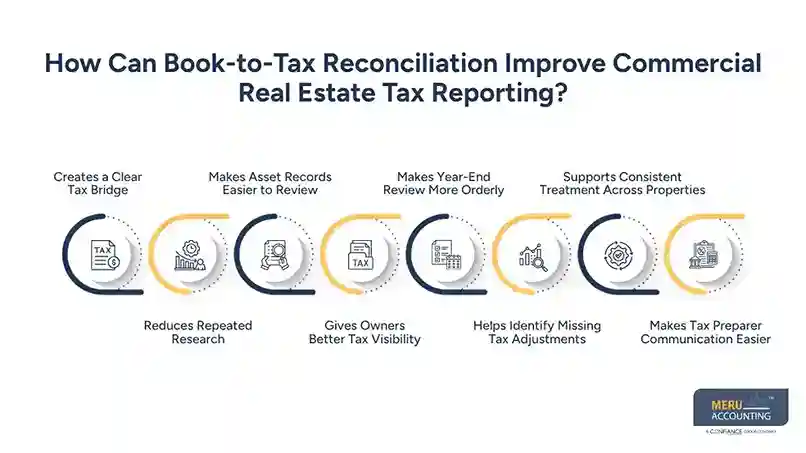
Makes Year-End Review More Orderly
Year-end tax work becomes easier when major differences are already listed and supported. The final review can focus on changes rather than rebuilding old records.
This creates a cleaner process for commercial real estate taxation.
Helps Identify Missing Tax Adjustments
A reconciliation can reveal transactions that were recorded in the accounting system but were not properly considered in the tax records. Reviewing depreciation, improvements, financing costs, and other property-related items helps identify gaps before the tax return is finalized.
Supports Consistent Treatment Across Properties
Owners with multiple commercial properties may have similar transactions recorded in different ways. A standardized reconciliation process helps compare property-level adjustments and maintain more consistent commercial real estate taxation records.
Makes Tax Preparer Communication Easier
A well-organized reconciliation gives tax professionals a clear summary of book income, tax adjustments, supporting documents, and unresolved differences. This can reduce back-and-forth questions and make the tax reporting review more efficient.

optional anymore
on running the business
How Should Commercial Real Estate Owners Track Tax and Book Differences?
Build a Property-Level Schedule
Keep purchase price, land allocation, building value, improvements, depreciation, and tax basis by property.
For owners with multiple buildings, this prevents one property’s tax data from being mixed with another’s.
Track Improvements Separately
A $250,000 roof project should not disappear inside a broad repairs account. Major property costs should be clearly described and supported so their tax treatment can be reviewed.
Maintain a Depreciation Schedule
Record the asset name, cost, placed-in-service date, tax life, method, and accumulated depreciation.
This gives the tax preparer a clear source for commercial real estate taxation calculations.
Keep Loan Records With the Property
Keep loan statements with records for principal, interest, fees, and refinancing costs. A bank payment alone does not explain the tax treatment of each part.
Review the Reconciliation Before Filing
Compare the current reconciliation with the prior year and investigate large changes. New properties, sales, refinancing, and major improvements deserve particular attention.
How Can Book-to-Tax Reconciliation Improve Commercial Real Estate Tax Reporting?
Connect Tax Work With Daily Accounting
Tax reporting works better when the accounting records already contain useful property details, especially when those records support accurate commercial real estate taxation. Waiting until year-end to identify every improvement or financing cost can create avoidable gaps.
Flag Unusual Transactions Early
A property purchase, sale, large renovation, refinancing, or new tenant build-out can change the tax picture. Flagging these events during the year gives the tax team time to review them.
Keep Tax Planning Tied to Real Data
Commercial real estate tax planning should start with actual income, costs, basis, expected transactions, and the tax rules for the relevant year.
The reconciliation provides the financial facts needed for that review.
Create a Review Trail
Each major adjustment should show the book amount, tax amount, difference, reason, and source document.
That small record can save substantial time when the same transaction is reviewed years later.
Review Rules When Transactions Change
Tax treatment in commercial real estate taxation should not be assumed from an old transaction. New purchases, refinancing, improvements, and sales may require a fresh review under the rules for that tax year.
How Meru Accounting Can Manage Commercial Real Estate Tax Reporting
Property-Focused Accounting Records
Meru Accounting provides accounting and bookkeeping services for property income, expenses, fixed assets, improvements, and related transactions.
Clear property records give owners a stronger base for commercial real estate taxation and tax review.
Book-to-Tax Reconciliation Support
Meru Accounting provides services for organizing book and tax differences, including depreciation data, fixed asset records, and property-related adjustments.
The records can be arranged so each adjustment has a clear source and reason.
Multi-Property Record Management
When several properties are involved, separate property records make transactions easier to trace.
Meru Accounting provides services that organize these records and create useful financial reports for owners and tax professionals.
Accounting Systems and Reporting
Meru Accounting provides bookkeeping services using QuickBooks, Xero, Zoho Books, NetSuite, and Odoo.
Structured reports can give property owners clearer data for accounting reviews and commercial real estate tax planning.
Our Expert Perspective
Book-to-tax reconciliation is most useful when it tells a story that the numbers alone cannot.
A depreciation difference, for example, should not just appear as an adjustment. The record should show which asset caused it, when the asset was placed in service, and how the difference will be treated in later years.
For commercial real estate taxation, that history matters because property transactions rarely end with one year’s books.
Key Takeaways
- Commercial real estate taxation can produce results that differ from book income.
- Book-to-tax reconciliation explains the gap between accounting and tax figures.
- Depreciation, improvements, repairs, financing, and property basis are common areas of difference.
- Property-level records make long-term tax data easier to trace.
- Supporting documents should be linked to major reconciliation adjustments.
- Commercial real estate tax planning should rely on current rules and accurate records.
- A yearly roll-forward can keep tax differences clear from one year to the next.
FAQs
Book-to-tax reconciliation for commercial real estate compares book income with taxable income and explains differences caused by depreciation, improvements, and financing costs.
Book-to-tax reconciliation makes commercial real estate taxation easier to review by documenting differences between financial accounting and tax reporting.
Depreciation, capital improvements, repairs, financing costs, closing costs, and certain interest expenses can create differences between book and tax treatment.
It provides organized records of income, expenses, tax basis, depreciation, and other adjustments for reviewing future tax transactions
Commercial real estate book-to-tax differences should be tracked in property-level schedules with the adjustment amount, reason, supporting document, and year-to-year balance.
optional anymore
on running the business