CPA bookkeeping services can manage accrual accounting for small businesses that need clear and well-organized financial records. Accrual accounting records income when it is earned and costs when they are incurred, even when cash is received or paid at a later date.
For a small business, this method can make monthly profit reports more useful. It can also make it easier to track unpaid invoices, unpaid bills, payroll costs, prepaid expenses, and other items that do not match the timing of cash movement.
Managing these records takes time and care. CPA bookkeeping services can handle the daily entries, account checks, adjusting entries, and month-end tasks needed to keep accrual books in order.
What You Will Learn From This Blog
- What accrual accounting means for a small business.
- How accrual accounting differs from cash accounting.
- How CPA bookkeeping services manage accrual records.
- How unpaid invoices and bills are recorded.
- When accrual accounting may be a good fit.
- How CPA outsourcing can provide outside accounting support.
- Common problems that can affect accrual records.
- How Meru Accounting can assist with ongoing bookkeeping needs.
Understanding Accrual Accounting For Small Businesses
What Is Accrual Accounting?
Accrual accounting records income when the business earns it and records costs when the business incurs the expense. The payment date does not always decide the accounting period.
For example, a business may finish work in June but receive payment in July. The June income can still belong to June under accrual accounting.
Accrual Accounting Vs. Cash Accounting
Cash accounting focuses on money received and money paid. Accrual accounting focuses on when income is earned and when costs are incurred.
CPA bookkeeping services can help businesses track these differences, while CPA outsourcing can provide ongoing support for maintaining accurate accrual-based records.
Why Timing Matters
Timing is one of the key parts of accrual accounting. Income and expenses need to be placed in the period they relate to.
For example, a service received in December but paid in January may need to be recorded as a December expense.
Accounts Receivable
Accounts receivable shows money that customers owe the business. When a business sends an invoice for work already completed, the sale and receivable can be recorded before payment arrives.
Regular checks of open invoices can also show which customers have unpaid balances.
Accounts Payable
Accounts payable shows bills that the business needs to pay. Under accrual accounting, a cost can be recorded before the business pays the bill.
This gives the owner a clearer view of current obligations and reduces the risk of missing costs from monthly reports.
Can CPA Bookkeeping Services Manage Accrual Accounting?
Recording Revenue
CPA bookkeeping services can record revenue based on when the business earns it. The accounting team can review invoices, sales records, contracts, and work details to identify the correct period.
This is useful for businesses where customers often pay after the work is complete.
Recording Expenses
Expenses can also be recorded before payment. A business may receive a bill in one month and pay it in the next month.
The accounting team can record the cost in the proper period and then clear the payable when payment is made.
Managing Adjusting Entries
Accrual books often need adjusting entries at month-end. These may relate to unpaid costs, prepaid expenses, depreciation, or income that has been received in advance.
The accounting team can prepare and maintain these entries as part of a regular close process.
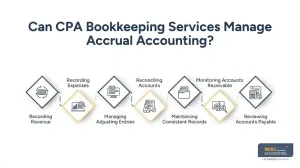
Reconciling Accounts
Account reconciliation checks whether the recorded balance agrees with supporting records. Bank accounts, credit cards, receivables, payables, loans, and other accounts may need regular checks.
Good reconciliation can find missing entries, duplicate entries, and unusual balances. CPA outsourcing can help businesses perform these checks regularly and keep account balances current.
Maintaining Consistent Records
Accrual accounting works best when the same process is followed each month. Set procedures can be used for invoices, bills, payroll, adjustments, and reconciliations.
A consistent process also makes month-to-month reports easier to compare.
Monitoring Accounts Receivable
CPA bookkeeping services can review customer balances, overdue invoices, and payment activity each month.
Regular monitoring keeps receivable records current and shows where collections may need attention.
Reviewing Accounts Payable
The accounting team can check unpaid bills, vendor balances, and expenses recorded during each period.
Regular payable reviews keep costs accurate and give the business a clearer view of upcoming payments.
How CPA Bookkeeping Services Handle Accrual Accounting
Review Business Transactions
The accounting team reviews sales, purchases, bills, payroll, bank activity, and other records. Each transaction is placed in the correct account and reporting period.
Track Unpaid Customer Invoices
The team records unpaid invoices under accounts receivable and checks their aging. This shows how much customers owe and which balances need attention.
Track Unpaid Business Bills
The accounting team records costs that have been incurred but not yet paid. This keeps unpaid expenses in the correct month and prevents missing costs.
Complete Month-End Close
CPA bookkeeping services review income, expenses, receivables, payables, payroll, and adjustments at month-end. The close process gives owners a clearer and more complete view of monthly results.
optional anymore
on running the business
Benefits of Using CPA Bookkeeping Services For Accrual Accounting
Clearer Monthly Profit
Accrual accounting can show income and expenses in the periods where they belong. This can give owners a better view of business activity during each month. The report may differ from the bank balance, but both views have value.
Better Invoice Tracking
Accrual accounting records sales even when customers have not paid. CPA bookkeeping services can then maintain the related receivable balance. Owners can use this information to monitor unpaid invoices and follow up on overdue accounts.
Better Bill Tracking
Bills can also be recorded before payment. This shows costs that the business has already taken on but has not yet paid. Such records can give owners a better view of upcoming cash needs.
More Useful Financial Reports
Accrual-based reports can provide useful information about sales, expenses, receivables, payables, and profit. These reports can also give lenders, owners, and business advisers a clearer view of financial activity when properly prepared.
Less Work For Owners
Accrual bookkeeping can involve many small checks each month. Business owners may not have enough time to review every invoice, bill, adjustment, and account balance.
CPA bookkeeping services can take on these routine accounting tasks while the owner focuses on running the business.
When Should a Small Business Use Accrual Accounting?
Businesses With Credit Sales
A business that gives customers time to pay may benefit from accrual accounting. Sales can be recorded when earned instead of waiting for payment.
This can give the owner a better view of sales made during the period.
Businesses With Regular Bills
Businesses that receive bills after services are provided may also need accrual records. Costs can fall into a different month from the payment.
Accrual accounting keeps the cost connected to the period in which the business received the service.
Businesses With Inventory
Inventory can make accounting more complex. Purchases, sales, stock levels, returns, and product costs may all affect financial records.
A business with inventory should choose its accounting method with care and consider advice from a qualified tax or accounting professional.
Growing Small Businesses
A growing business often has more customers, workers, vendors, invoices, and payment terms. Cash records may become harder to use for monthly management.
At this stage, CPA bookkeeping services can provide a more structured accounting process.
Businesses Seeking Financing
Accrual records can provide useful information about sales earned, expenses incurred, assets, and liabilities. CPA outsourcing can help businesses maintain organized financial records when preparing for financing discussions or lender reviews.
How CPA Outsourcing Supports Small Business Accounting
Access To Accounting Skills
CPA outsourcing gives small businesses access to outside accounting professionals without requiring a large internal accounting team.
The service can be built around the business size, transaction volume, and level of support required.
Reduced Internal Work
A business owner may spend many hours each month entering transactions, checking accounts, and preparing reports.
An outside accounting team can handle routine recording, reconciliations, and other recurring bookkeeping tasks.
Flexible Service Levels
Not every small business needs the same level of accounting support. Some may need regular bookkeeping, while others may need month-end close and reporting.
The service can be arranged around the actual work required rather than a fixed internal staffing model.
Better Process Control
An outside accounting team can follow set steps for transaction entry, account reconciliation, invoice checks, bill checks, and month-end close.
Clear procedures can also define responsibilities between the business owner and the accounting team.
Ongoing Accounting Support
Accrual accounting is not a one-time task. Records need attention every month as new invoices, bills, payroll entries, and adjustments arise.
With CPA outsourcing, a small business can have an ongoing accounting process instead of handling the work only at tax time. CPA bookkeeping services can provide recurring support throughout the year, helping keep financial records current for reporting and tax preparation.
Common Accrual Accounting Challenges For Small Businesses
Missing Unpaid Expenses
A business may receive a service but forget to record the related cost until the bill is paid. This can make one month look more profitable than it really is.
For businesses using CPA outsourcing, regular month-end checks can help identify unpaid expenses before financial reports are finalized.
Recording Revenue Too Early
Revenue should not be recorded simply because an invoice was created. The business must consider when the income was actually earned.
Clear records and proper review can reduce early revenue entries.
Forgetting Prepaid Costs
A large payment may cover several months. Recording the full amount in one month can distort the monthly expense figure.
The accounting team should check payments that relate to future periods.
Poor Account Reconciliation
Unreconciled accounts can hide missing or incorrect transactions. Small errors may also build up when accounts are not checked regularly.
CPA bookkeeping services can include reconciliation as part of the monthly close.
How Meru Accounting Manages Accrual Bookkeeping
Organized Transaction Records
Meru Accounting keeps sales, bills, expenses, payroll, and other records organized for regular bookkeeping. This creates a clear base for recording accrual entries in the right period.
Regular Account Reconciliation
Our CPA outsourcing support includes checking bank, credit card, receivable, payable, and other key accounts during the bookkeeping cycle. Regular checks can identify missing entries, unusual balances, and other record issues.
Accurate Month-End Entries
As part of our cpa bookkeeping services, Meru Accounting can manage month-end entries for unpaid costs, prepaid expenses, and other accrual items. These entries give small businesses a more complete view of income and expenses for the period.
Clear Financial Reports
Our bookkeeping process keeps financial reports linked to the underlying accounting records. Business owners can use these reports to review revenue, costs, receivables, payables, and monthly profit.
Ongoing Accounting Support
Meru Accounting provides ongoing bookkeeping support instead of limiting accounting work to tax season. Our team can maintain regular accrual records as the business adds new sales, bills, payroll, and expenses.
Our Expert Perspective
From our experience providing cpa bookkeeping services, accrual accounting works best when businesses follow a consistent monthly process for recording income, expenses, receivables, payables, and adjustments. Regular account reviews, complete source records, and timely month-end checks can give owners a clearer view of their actual financial position and reduce common bookkeeping errors.
Key Takeaways
- Accrual accounting records income when earned and costs when incurred.
- Cash received or paid may happen in a different period.
- Accounts receivable and accounts payable are key parts of accrual records.
- Month-end adjustments are important for accurate reports.
- CPA bookkeeping services can manage recurring accrual bookkeeping work.
- Regular account reconciliation can catch errors before reports are issued.
- Growing businesses may need a stronger accounting process as transactions increase.
- CPA outsourcing can provide outside accounting support without building a large internal team.
- Business owners should keep personal and business transactions separate.
- The right accounting method depends on the business and applicable accounting and tax rules.
FAQs
Yes. CPA bookkeeping services can record accrual income, expenses, receivables, payables, prepaid costs, and month-end adjustments based on the business records and accounting method.
Not always. Accrual accounting may give a clearer view when a business has credit sales, unpaid bills, inventory, or regular timing differences. The right method depends on the business.
Accrual accounting can show income and expenses in the periods they relate to. As a result, monthly profit may differ from the cash movement shown in the bank account.
Yes. CPA outsourcing can include transaction entry, account reconciliation, receivable tracking, payable tracking, adjusting entries, and monthly financial reporting, depending on the service plan.
A small business may consider CPA bookkeeping services when its transactions become harder to manage, monthly reports are needed, unpaid invoices and bills are growing, or the owner no longer has enough time for regular bookkeeping.
optional anymore
on running the business