A construction job can bring in a big payment and still fall short of its profit target. Higher material costs, extra labor, delayed payments, and unplanned work can eat into margins before you know it. For contractors juggling multiple projects, a CPA for construction companies can help track job costs, spot budget gaps, and keep each project’s finances on track.
From job costing and cash flow planning to tax prep and financial reports, the right accounting support helps you see where your money goes and what your business earns. In this guide, we’ll cover the key accounting and tax services for construction firms and explain how a construction CPA can help you make better financial decisions.
What You Will Learn From This Blog
- What a construction CPA does and how the role differs from that of a general accountant.
- Which accounting and tax services help contractors run their firms.
- How cash, accrual, and long-term job methods affect reports and tax plans.
- How a construction CPA firm can help track costs and protect profit.
- How to deal with common tax and cash flow risks in the trade.
What Does a CPA for Construction Companies Do?
A Certified Public Accountant (CPA) helps a business manage its books, tax duties, and financial plans. For a builder or contractor, this work must fit the way construction jobs run. Costs may build up for months before a client pays the full bill. A job may also face delays, price hikes, or changes in scope.
A CPA for construction companies can help with tasks such as:
- Job cost tracking: Match labor, supplies, equipment, and other costs to each job.
- Tax planning and filing: Review tax duties, plan for payments, and file the right forms on time.
- Financial reports: Prepare income statements, balance sheets, and cash flow reports.
- Budget checks: Compare planned costs with real costs to spot gaps.
- Cash flow planning: Forecast when cash may come in and when bills fall due.
- Business advice: Use sound financial data to help guide bids, hiring, and growth.
A CPA may also help review work-in-progress (WIP) reports, track retainage, and set up sound ways to record job income and costs. These steps help owners see if a job is on track before it ends.
Key Accounting Services for Construction Companies
Construction firms need more than basic bookkeeping. Each job can have its own budget, crew, supply needs, and pay terms. A clear system helps owners track each job and keep the whole firm on sound footing.
1. Job Costing and Budget Tracking
Job costing links each cost to the job that caused it. This may include wages, materials, gear rental, permits, and subcontractor fees. When costs are logged on time, owners can compare real spend with the bid and budget.
For example, if a job has a $200,000 budget for labor and supplies but costs rise to $225,000, the extra $25,000 needs review. The cause may be waste, a price hike, extra work, or a poor bid. A CPA can help find the cause and improve future bids.
2. Bookkeeping and Financial Reports
Accurate books help show how much a firm earns, owes, and has on hand. A CPA can review bank records, card spend, vendor bills, client payments, and payroll entries. They can also prepare monthly reports that show income, costs, debts, and cash flow.
These reports help owners see if the firm can cover wages, buy supplies, pay vendors, and take on new jobs. They also give lenders and other key parties a clearer view of the firm’s finances.
3. Accounts Payable and Receivable
Late client payments can strain cash, even when a firm has strong sales. At the same time, late vendor bills can harm trust or lead to fees. A good process tracks due dates, unpaid invoices, vendor bills, and client balances.
A CPA can help set up clear steps to send bills, track late payments, review cash needs, and plan vendor payments. This helps the firm manage cash without losing sight of its duties.
4. Tax Planning and Compliance
Construction firms may face tax rules tied to income, gear, wages, and work across state lines. A CPA can review tax duties, assess valid business costs, plan for estimated tax payments, and prepare tax returns. They can also review records for equipment buys, travel, insurance, and subcontractor payments.
Tax rules depend on the facts of each firm and the type of work it does. Good records help support tax claims and lower the risk of errors or missed filing dates.
5. Work-in-Progress Reporting
WIP reports help show how each open job is doing. They may compare costs to date, the full budget, billings, and the income earned so far. This can help owners spot jobs that may run over budget or show a gap between work done and bills sent.
A CPA can help review WIP data and check that it lines up with job records. The right report method depends on the firm’s contracts and accounting rules.
optional anymore
on running the business
Construction Accounting Methods: Cash vs. Accrual vs. Percentage of Completion
The way a construction firm records income and costs affects its financial reports and tax plans. The right method depends on the firm’s size, contracts, tax status, and rules that apply to its work.
Cash Accounting
Under the cash method, a firm records income when it gets paid and costs when it pays them. This can make cash tracking simple for small contractors. Yet it may not show the full cost or value of jobs that span many months.
Accrual Accounting
Under the accrual method, a firm records income when earned and costs when incurred, rather than when cash moves. This can give owners a clearer view of what they have earned and owe, even if a client has not paid yet.
Percentage of Completion
For eligible long-term contracts, the percentage-of-completion method tracks income and costs as work moves forward. It can help show job results over time, but it needs sound cost data and a valid way to measure progress.
The completed-contract method, where allowed, generally reports income and costs when a contract is complete. Tax rules can limit which firms and contracts may use each method. A CPA for construction companies can review the facts and help select a method that meets the rules and fits the firm’s needs.
How a Construction CPA Firm Helps Improve Project Profitability
A construction CPA firm can help owners see which jobs earn money and which put pressure on the business. Sales alone do not show if a project is doing well. Owners must also track costs, job progress, and unpaid bills.
A CPA can help by:
- Reviewing cost gaps: Compare actual spend with the bid and budget.
- Tracking profit by job: See which types of work bring in the best returns.
- Checking labor and supply costs: Find waste, price hikes, or cost errors.
- Reviewing bids: Use past job data to make better cost estimates.
- Planning cash needs: Match expected client payments with payroll and vendor bills.
For example, a contractor may win more jobs but face a cash shortfall due to late payments and rising supply costs. A CPA can help review payment terms, forecast cash needs, and flag jobs with thin margins. These steps give owners better data to guide their next move.
Common Accounting and Tax Challenges in the Construction Industry
Construction firms face risks that can make their books hard to manage. Some common issues include:
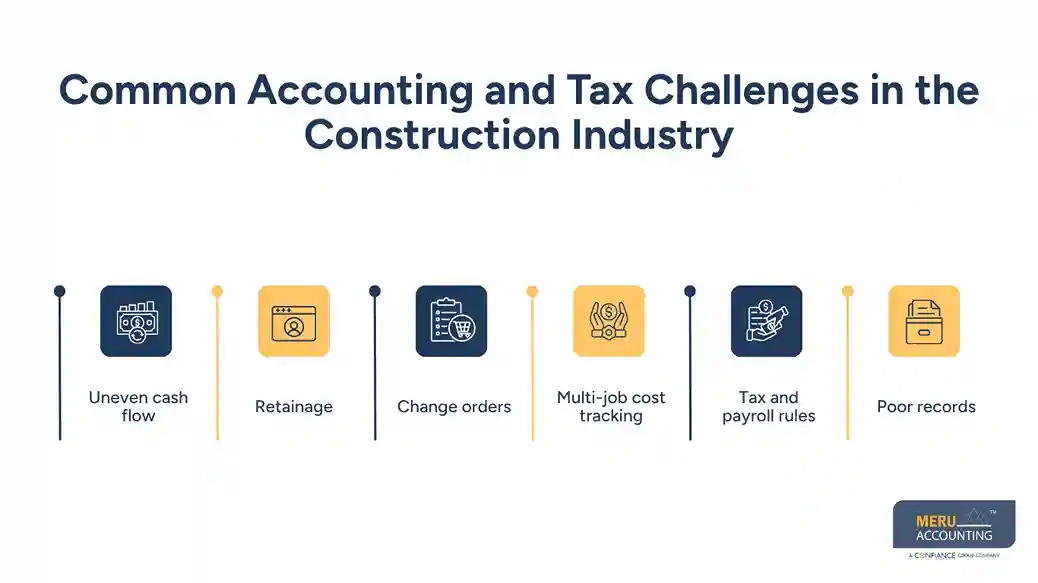
- Uneven cash flow: Costs may fall due before a client pays.
- Retainage: A client may hold back part of a payment until set terms are met.
- Change orders: Extra work can raise costs and change the job’s value.
- Multi-job cost tracking: Shared labor, tools, and supplies must be split across jobs with care.
- Tax and payroll rules: Firms may need to meet state tax, wage, and worker reporting duties in more than one place.
- Poor records: Missing bills, late entries, or weak job data can lead to errors in reports and tax returns.
A steady monthly review can help catch these issues early. Owners should keep signed contracts, approved change orders, vendor bills, payroll records, and proof of client payments in one clear system. A CPA can help build a process that keeps these records up to date.
Construction Accounting and CPA Support by Meru Accounting
At Meru Accounting, we help businesses manage their books, tax needs, and day-to-day financial tasks with care. Our team can support construction firms that need clear records, timely reports, and better insight into job costs and cash flow.
Our services include:
- Bookkeeping and bank account reconciliation
- Accounts payable and receivable support
- Financial reports and month-end close
- Job cost tracking and cost review
- Payroll accounting support
- Tax preparation and tax planning support
- Bookkeeping cleanup and tax-ready records
We work with tools such as QuickBooks, Xero, and Zoho Books, based on the client’s needs and current setup. Our team can work with your existing process instead of forcing you to change systems without a clear reason.
Whether you run a small contracting firm or manage several active projects, we can help keep your financial records in order.
Our Expert Insight
A common mistake in construction accounting is to confuse cash on hand with profit. A client payment may cover past work, while current projects still need money for labor, materials, and subcontractors.
We recommend reviewing job costs, unpaid invoices, and upcoming cash needs each month. For long-term projects, check work-in-progress (WIP) reports to spot cost overruns and billing gaps early.
Keep contracts, receipts, payroll records, equipment costs, and approved change orders organized. These records help your CPA prepare accurate reports and tax returns.
Key Takeaways
- A CPA for construction companies understands job costs, long-term contracts, and contractor tax needs.
- Job costing helps owners track labor, supplies, and profit by project.
- Cash, accrual, and long-term contract methods can affect reports and tax results.
- WIP reports, cash forecasts, and monthly reviews can help flag risks early.
- Clear records make tax filing easier and support better business choices.
- Outsourced accounting support can help firms keep their books up to date without hiring a full in-house team.
FAQs
Hire a CPA when you manage multiple projects, face complex tax needs, or need better control over job costs and cash flow. Early support can also help you build sound accounting practices as your business grows.
Review your profit and loss statement, balance sheet, cash flow report, job cost reports, and work-in-progress (WIP) schedule to track financial health and project performance.
A WIP schedule tracks contract values, costs, billings, and estimated costs to complete. It helps contractors spot budget overruns, underbilling, and potential project losses.
Eligible expenses may include materials, wages, subcontractor fees, insurance, and equipment costs. Tax treatment varies, so keep clear records and ask your CPA which deductions apply.
Fees depend on project volume, tax needs, and the level of support required. Ask for a quote that clearly outlines the services included and any extra charges.
optional anymore
on running the business