A CPA for real estate investors can play a key role when you plan a 1031 exchange. The tax rules can be hard to track, and one missed step may cause part or all of the gain to become taxable. A CPA for real estate investors can review the tax side of the deal, track your basis, work with your qualified intermediary (QI), and make sure the exchange is reported in the right way.
A 1031 exchange, also called a like-kind exchange, lets an investor defer tax on a gain when qualifying real property held for business or investment is exchanged for other qualifying real property. The IRS states that Section 1031 now applies to real property, not personal or intangible property.
A Real estate CPA can also look at the deal before you sell. That early review matters because the tax plan should be set before closing, not after the sale has been done.
What You Will Learn From This Blog
- Understand how a 1031 exchange works for real estate investors.
- Learn which types of property may qualify under Section 1031.
- See why the 45-day and 180-day deadlines matter.
- Explore how a CPA for real estate investors can review your tax basis.
- Understand how cash and non-like-kind property may affect taxable gain.
- Review the role of a qualified intermediary in deferred exchanges.
- Learn how Form 8824 is used to report a qualifying exchange.
- Identify when related-party rules may affect a 1031 exchange.
- Explore how Meru Accounting can assist with tax and bookkeeping work.
How A CPA For Real Estate Investors Reviews A 1031 Exchange
Checks The Property Type
A CPA for real estate investors can first determine whether the property appears to meet the basic Section 1031 requirements. The property generally needs to be real property held for trade, business, or investment purposes. Property primarily held for sale doesn’t qualify.
Review the Tax Basis
Your tax basis affects the amount of gain associated with the property. A Real estate CPA can review the original purchase records, capital improvements, depreciation, and prior basis adjustments before the exchange is planned.
Checks The Holding Purpose
Personal-use property is treated differently from property held for investment or business purposes. We can review how you’ve used the property and whether your records support its intended tax treatment.
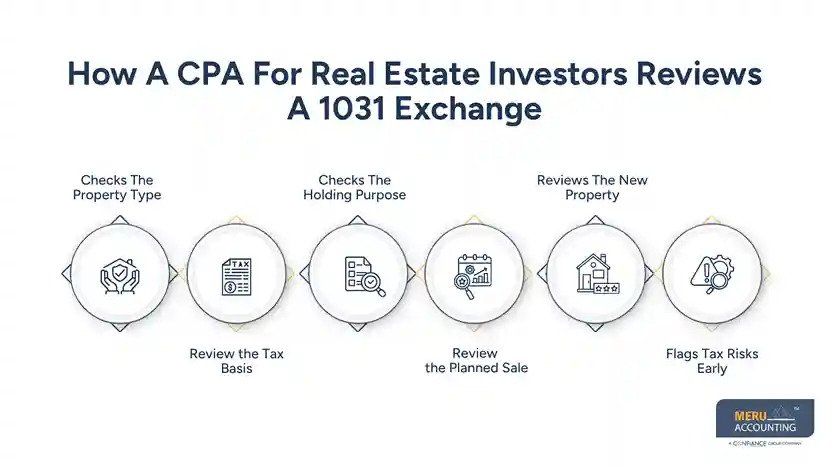
Review the Planned Sale
Selling the relinquished property starts the exchange timeline. A Real estate CPA can review the expected sale price, adjusted basis, debt, transaction costs, and estimated gain before closing.
Reviews The New Property
Like-kind treatment generally depends on the nature or character of the real property rather than whether two properties look similar. U.S. real property can generally be exchanged for other U.S. real property, subject to the applicable rules.
Flags Tax Risks Early
A CPA for real estate investors can identify potential tax issues before funds move. Cash received, non-like-kind property, related-party transactions, or missed deadlines can all affect the tax result.
optional anymore
on running the business
How The 45-Day And 180-Day Rules Work
The 45-Day Rule
After transferring the property you’re giving up, you generally have 45 days to identify potential replacement property in writing. The identification must meet the applicable IRS requirements and clearly describe the property.
The 180-Day Rule
You generally must receive the replacement property by the earlier of 180 days after transferring the relinquished property or the due date of your tax return for that year, including extensions.
Why Date Control Matters
We can build a date plan around the closing date and track when the 45-day and 180-day periods end. Having those dates documented helps you manage the exchange while you’re searching for replacement property.
Written Identification
Your identification needs to follow the applicable IRS requirements. A Real estate CPA can review the tax file and help confirm that the replacement property information is consistent with the exchange records.
Replacement Property Search
The exchange clock keeps running while you search for a replacement property. A CPA for real estate investors can coordinate tax information with your broker, lender, attorney, and QI so everyone is working from the same transaction dates and figures.
Deadline Review
Missing an exchange deadline can put the intended tax treatment at risk. We can add the relevant dates to the tax work plan and review the exchange status before each deadline.
How A CPA For Real Estate Investors Handles Basis And Gain
Finds The Adjusted Basis
The relinquished property’s adjusted basis is an important part of the tax calculation. A CPA for real estate investors can review purchase records, capital improvements, depreciation, and other adjustments that may affect basis.
Estimates The Gain
The sale price doesn’t tell you the entire tax story. Adjusted basis and qualifying transaction costs also affect the calculation. A Real estate CPA can estimate the gain before closing so you have a clearer picture of the transaction.
Reviews Depreciation
Rental and business properties may have several years of depreciation records. We can review those records and determine how depreciation affects adjusted basis and the exchange calculation.
Tracks Exchange Costs
Some transaction costs may affect the exchange calculation differently from other expenses. We can review closing statements and supporting records to distinguish exchange-related costs from other amounts.
Carries Basis Forward
The replacement property’s basis is generally connected to the basis of the property given up, with adjustments required under Section 1031. Keeping those calculations documented makes future tax reporting easier.
Plans For Future Sales
Tax that gets deferred doesn’t necessarily disappear. Maintaining accurate records of the replacement property’s tax basis gives you better information when planning a future sale.
How Cash And Debt Can Change The Tax Result
Cash Received
A 1031 exchange doesn’t automatically make every dollar received tax-free. Gain can be recognized to the extent you receive money or other property that isn’t like-kind property, subject to the applicable rules.
Lower-Value Property
Purchasing replacement property at a lower value can affect the amount of gain recognized. A CPA for real estate investors can model the transaction before you commit to the replacement property.
Debt Changes
Debt associated with the relinquished and replacement properties can affect the overall exchange calculation. A Real estate CPA can review the loan figures alongside the other transaction data.
Non-Like-Kind Assets
Not every asset included in a real estate transaction receives the same Section 1031 treatment. Current rules limit Section 1031 treatment to qualifying real property.
Cash Planning
A CPA for real estate investors can help you understand the cash position after considering debt, transaction costs, and the planned exchange. That information can help you evaluate the purchase before committing.
Pre-Closing Review
A Real estate CPA can review draft settlement figures before closing. That gives you time to raise questions with your QI, lender, attorney, or broker if an item could affect the exchange.
How A CPA For Real Estate Investors Works With A Qualified Intermediary
Understands The QI Role
A qualified intermediary is commonly used in deferred exchanges to help prevent the taxpayer from receiving the sale proceeds directly. IRS guidance provides specific requirements for QIs and the exchange agreements they administer.
Keeps Funds Separate
Exchange proceeds generally need to remain within the exchange structure. A CPA for real estate investors can review the transaction flow and related tax records while the QI manages the exchange funds.
Shares Tax Data
The QI may need transaction information to prepare the exchange documents. A Real estate CPA can help keep the sale price, basis, costs, and replacement property information consistent across the tax and exchange records.
Reviews Exchange Documents
The exchange file should be complete and organized. We can review the records needed for tax reporting and maintain the relevant documents with the tax work papers.
Tracks The Closing
We can track the sale and purchase dates from the tax side while the QI handles the exchange administration. Clear responsibilities make it easier to monitor each required step.
Plans Before The Sale
The best time to involve a CPA for real estate investors is before the sale closes. Setting up the exchange after you’ve received the sale proceeds can create significant tax concerns.
How Meru Accounting Can Assist Real Estate Investors
Reviews Your Tax Records
At Meru Accounting, we can review your property records, tax basis, depreciation history, and prior tax work before a planned exchange. Our focus is to give you a clear tax view before the transaction moves forward.
Helps With Exchange Planning
We can work with the figures from your planned sale and replacement purchase. Our team can review the numbers and identify items that may need attention before closing.
Works With Your Advisors
A 1031 exchange may involve a QI, attorney, lender, broker, and tax professional. We can work alongside those professionals so the tax records and transaction figures remain consistent.
Keeps Records Clear
Accurate records matter after the exchange is complete. We can organize your tax basis, closing costs, depreciation information, and replacement property records for future tax work.
Handles Tax Reporting
A qualifying 1031 exchange is generally reported using IRS Form 8824. Our team can prepare or review the tax information needed for the return and exchange reporting.
Gives Practical Tax Review
A Real estate CPA should consider more than the immediate transaction. At Meru Accounting, we can review how the exchange fits into your broader property and tax position while leaving legal advice and exchange administration to the appropriate professionals.
Our Expert Perspective
A 1031 exchange shouldn’t start at the closing table. Start with the numbers.
At Meru Accounting, we recommend reviewing the tax basis, estimated gain, debt, transaction costs, and replacement property plan before the sale closes. A CPA for real estate investors can identify missing information or potential tax concerns while there’s still time to address them.
The core IRS deadlines are straightforward, but individual transactions can become more complicated. Related-party transactions, mixed-use property, debt, cash received, and complex ownership structures may require additional review.
Tax advice should reflect the complete facts of your transaction. A Real estate CPA can review those facts and coordinate with your QI and legal team when the exchange involves issues outside routine tax preparation.
Key Takeaways
- A 1031 exchange may defer gain on qualifying real property.
- Property generally must be held for business or investment use.
- Replacement property generally must be identified within 45 days.
- Replacement property generally must be received within 180 days or by the earlier tax-return due date.
- A qualified intermediary is commonly used in deferred exchanges.
- Cash or non-like-kind property received may result in taxable gain.
- Replacement property basis records should be maintained after the exchange.
- Form 8824 is generally used to report a qualifying like-kind exchange.
- A CPA for real estate investors should review the transaction before closing.
- Transaction-specific advice should come from qualified tax, legal, and exchange professionals.
FAQs
A CPA for real estate investors reviews basis, gain, deadlines, costs, and tax reporting for the exchange.
Yes, a Real estate CPA can review your tax position and transaction figures before the property is sold.
A CPA for real estate investors reviews potential gain, exchange costs, basis, and reporting requirements.
You generally have 45 days to identify replacement property and 180 days to complete the exchange, subject to IRS rules.
Yes, a Real estate CPA can review purchase figures and tax details before you complete the replacement property transaction.
optional anymore
on running the business