
In the tax and bookkeeping field, trust is one of the top reasons clients stay with a firm for years. Clients share key data, seek tax help, ask for cash flow tips, and rely on their accountant to guide business choices. Because of this, firms must do more than reports and file tax forms. They must build strong and long-lasting ties with each client. Customer relationship management becomes essential for every business to maintain these ties.
A clear plan helps firms track client needs, make service better, stay in touch, and give a better client experience. It also helps firms maintain current clients while gaining new ones through referrals and reviews. As client needs grow and firms face more rivals, using customer relationship management is no longer just a good choice. It has become a key part of long-term success.
What You Will Learn From This Blog
In this blog, you will learn:
- What does customer relationship management mean in accounting firms
- Why client ties are key for firm growth
- The main parts of a strong client care plan
- How CRM in small business accounting firms helps give better service
- Features to look for in a CRM system
- Ways to build strong and long-lasting client ties
- Expert tips for stronger client loyalty and growth
Understanding Customer Relationship Management in Accounting Firms
Customer relationship management is the process of handling all contact between a firm and its clients. It includes tracking client contact, saving client data, handling tasks, and making the client experience better.
In accounting firms, customer relationship management helps teams keep client details in order, set follow-ups, track due dates, and give help on time. Instead of using notes, emails, or sheets, firms can keep all client data in one place.
A strong system gives staff fast access to client records and helps make sure that no request, due date, or issue is missed. This leads to better service and stronger client trust.
Accounting firms often work with clients for many years. A good client care plan helps firms keep those ties strong and keep clients happy over time.
Why Customer Relationship Management Matters for Accounting Success
Tax and bookkeeping rely a lot on trust and clear contact. Clients want fast answers, correct work, and a clear view of their funds.
Customer relationship management helps firms meet these needs in many ways.
- It helps firms stay in touch with clients. Staff can quickly view past talks, work history, and client requests. This helps give a more personal touch.
- It helps maintain clients. Clients are more likely to stay with firms that know their needs and respond fast.
- It helps in firm growth. Happy clients often refer accounting firms to friends, family, and other business owners.
- It helps firms spot new service needs. By knowing what clients need, firms can offer payroll, bookkeeping, tax planning, business help, and other services that add value.
Strong customer relationship management builds stronger client loyalty, which helps support firm growth and profit.
Core Components of an Effective Customer Relationship Management Strategy
A strong customer relationship management plan includes a few key parts.
Client Data Management
Good client records help firms give better service. This includes contact details, tax records, work history, notes, and call logs.
Consistent Contact
Regular contact keeps clients informed and involved. Firms should set check-ins, reminders, updates, and follow-up notes.
Task and Workflow Tracking
Keeping up with due dates is key in accounting. Workflow tracking helps make sure that tax filings, reports, and client requests are done on time.
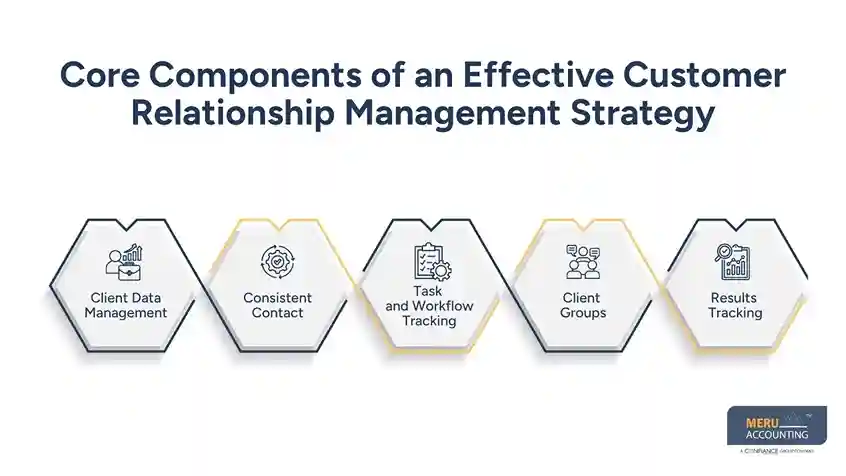
Client Groups
Not all clients have the same needs. Grouping clients by service type, field, or business size helps firms give more focused help.
Results Tracking
Tracking reply times, client feedback, and client stay rates helps firms gauge success and make service better.
Together, these parts form the base of an effective customer relationship management plan.
The Role of CRM in Small Business Accounting Firms
Many accounting firms run with small teams and few resources. This makes CRM in small business settings very useful. Small firms often handle many clients at the same time. Without a clear plan, gaps in contact and incompletion of tasks may occur.
CRM in small business accounting firms helps keep client data in order, send auto-reminders, and make daily work easier. Staff can spend less time on manual work and more time helping clients.
Another benefit of CRM in small businesses is that the client base grows, and firms can keep service quality high without adding too much office work.
Small firms can also gain a better view of client needs, helping them offer more useful services and build long-term ties.
For growing firms, CRM in small business settings creates a clear and smooth way to handle client contact.
Key Features to Look for in a CRM System for Accounting Firms
Choosing the right CRM tool can help make client care better.
One Client List
A CRM system should store all client data in one safe place. This makes records easy to find and update.
Contact Tracking
The system should track emails, calls, meetings, and messages so staff can review client contact at any time.
Auto Reminders
Auto alerts help firms stay on top of tax due dates, file requests, and client follow-ups.
Workflow Tracking
Task management tools help teams track work and make sure tasks are done on time.
File Storage
Safe file storage lets firms save and find files with ease.
Reports
Reports give a view of client activity, service results, and team output.
These features help accounting firms work well while building stronger client ties.
Building Strong Client Relationships in Small Business Through Customer Relationship Management
Strong client ties are built through trust, steady service, and value. Customer relationship management supports all three.
One of the best ways to strengthen ties is through ahead-of-time contact. Instead of waiting for clients to ask questions, firms should give updates and useful tips all year long.
Personal service also matters. Clients value firms that understand their goals, issues, and business needs.
Customer relationship management helps firms keep detailed records that make personal service easier to give.
Fast replies are another key factor. Clients want answers when they need them. A CRM system helps staff track requests and reply fast.
Sharing useful tips can also strengthen client ties. Firms that give helpful money tips often become trusted guides rather than basic service providers.
For firms using CRM in small business settings, these steps help create lasting ties that support growth and client loyalty.
Meru Accounting's Customer Relationship Management Services
At Meru Accounting, we know that strong client ties are key to business success. Our customer relationship management services help accounting firms stay in touch with clients, make workflows with ease, and give better client care.
We help firms keep client data in order, handle client contact, track key due dates, and give steady service.
Our team helps set up CRM plans that reduce manual work and boost output.
By mixing accounting skills with proven client care methods, Meru Accounting helps firms strengthen client trust and keep more clients.
Whether your firm is growing its client base or seeks to make its service better, our services can help create a more client-focused way of working.
Our Expert Insight
Many accounting firms place a strong focus on core work while giving less time to client care. Yet clients often judge a firm not only by its work but also by communication, reply speed, and overall service quality. The firms that gain long-term success are often those that mix strong accounting skills with strong client ties.
Customer relationship management should be seen as a growth plan rather than only a software tool. When firms understand client needs, stay in touch well, and give steady value, they create ties that last for years.
For firms using CRM in small business work, the goal should be to build a client experience that promotes trust, loyalty, and long-term ties.
Key Takeaways
- Customer relationship management helps accounting firms strengthen client ties and improve service.
- Strong client ties support client stay rates, referrals, and business growth.
- Effective plans include client tracking, workflow tracking, client groups, and results tracking.
- CRM in small business accounting firms helps make day-to-day work easier.
- CRM systems give useful tools such as auto-reminders, file storage, contact tracking, and reports.
- Personal service and ahead-of-time contact help build client trust.
FAQs
Customer relationship management is the process of handling client contact, talks, service work, and trust-building steps to help keep clients happy and loyal.
It helps firms stay in touch with clients, build loyalty, handle work with ease, and find new ways to grow
CRM in small business firms helps keep client data in order, automate tasks, track due dates, and provide steady service.
Key features include client data handling, contact tracking, workflow tools, auto-reminders, file storage, and reports.
Firms can strengthen client ties through regular contact, personal service, fast replies, client support, and effective customer relationship management practices.
optional anymore
on running the business