
The accounting world has seen big changes in recent years. Many firms have replaced slow, manual work with smart tools. These tools help with tasks like billing, reports, and tracking costs. The shift started with digital transformation strategies, which brought faster ways to do the job. Accountants now use cloud apps, not paper files. They can find and share numbers in seconds.
These tools help spot errors, save time, and keep records clean. As a result, teams work faster and help clients better. This change also means accountants give more useful advice, not just record numbers. They now help plan, track growth, and avoid risks. Every task gets easier with better tools in place. This transformation has turned accounting from a back-office task into a key part of business success. The shift is real, and it’s helping firms grow stronger and smarter each day.
What You Will Learn From This Blog
By reading this blog, you will learn:
- How digital transformation strategies are changing modern accounting firms.
- The key technologies driving the digital evolution include cloud accounting, AI, RPA, and blockchain.
- How automation improves accuracy, reporting speed, and client service.
- The common challenges firms face during digital transformation and how to overcome them.
- Outsourced accounting can help businesses adopt digital tools faster while improving efficiency, compliance, and long-term growth.
Introduction: The Rise of Digital Evolution in Accounting
Firms across the world have changed how they handle numbers. The change began with the rise of digital transformation strategies. It started with tools that replaced paper files and long forms. Now, most firms use cloud apps to check data, send reports, and track money. The digital evolution made work faster, smoother, and clearer. Teams no longer wait for end-of-month updates. They now get live data that shows the full picture. This helps make smart plans and quick choices. Clients also like the speed and trust these tools bring. Firms that use smart tools grow faster and serve better. They also keep up with rules and tax steps with ease.
What are Digital Transformation Strategies in the Accounting World?
In the accounting space, digital transformation strategies are not only about using software or switching from paper to computers. It means changing how firms work at every level. From handling day-to-day tasks to managing client data and delivering insights, everything moves through smarter tools and processes. The digital evolution involves new thinking and new habits. Accountants now get data instantly, work remotely, and manage tasks across systems without delays. The main goal is not just to improve speed but to improve accuracy and decision-making. It allows firms to serve clients better while keeping track of all compliance and reporting needs.
Key Technologies Driving Digital Transformation Strategies in Accounting
Tech drives this change. Some tools stand out as the main power behind the digital transformation strategies:
Cloud Accounting Systems
These tools let users access their data from any spot. No need to be in the office. Work now happens from home, a café, or even on the go.
AI and Machine Learning
Smart tools can now do tasks that took hours. They sort bills, spot risks, and even suggest tips to grow. These tools keep learning and getting better each day.
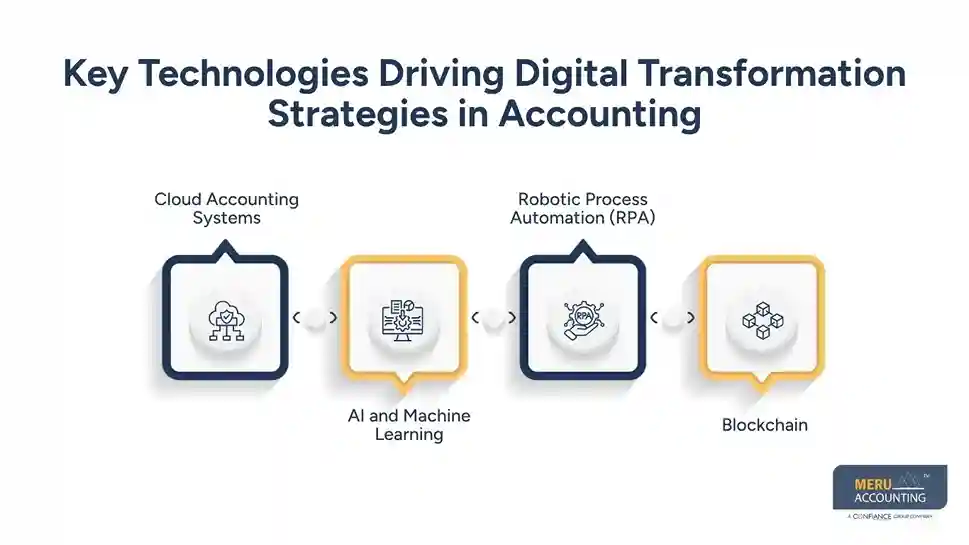
Robotic Process Automation (RPA)
RPA helps firms cut errors. It takes care of boring jobs like form fill-ins or rule checks. This means people can now focus on real thinking.
Blockchain
This tech keeps data safe and clear. Every record stays fixed and real. It builds trust and saves time in tasks like audits.
Impact of Automation and AI on Traditional Accounting Practices
In the past, firms spent hours on small tasks. Now, with AI and bots, they can do more in less time. Digital transformation strategies bring more than speed and also boost trust, too.
- Faster Data Entry: Smart tools now read and type in data on their own. This cuts down on mix-ups and saves time.
- Better Risk Checks: AI can look through big piles of data and find red flags. It spots risks and helps firms fix them fast.
- Client Insights Made Easy: Tools now give charts and trends in real time. Firms can use this to guide clients with clear advice.
- Focus on Strategy: With bots doing the small jobs, firms can now focus on big plans. They can help clients with growth, tax tips, or cash flows.
Challenges Faced by Firms While Implementing Digital Transformation Strategies
Change is not easy. Many firms face hurdles as they move to this new way. Still, digital transformation strategies are worth in the end.
Staff Pushback
Some workers fear the new tech. They think bots will take their jobs. The truth is, tech helps them do more.
High Costs at First
New tools need money. Some small firms may find this hard. But the gains in time and output soon make up for it.
Training Gaps
New tools mean staff need to learn again. Without training, even the best tools go to waste.
Data Safety Risks
Digital tools store data online. This means firms must guard their files from hacks and leaks.
Upskilling Accountants for the Digital Evolution
To grow along with the digital evolution, accountants must learn new things. Soft and tech skills both now matter more than ever.
Learn to Use New Tools
Accountants must know how to work with cloud apps, RPA, and smart tools. These are now part of daily work.
Build Data Skills
It’s key to learn how to read and use data. This helps in making plans, not just in crunching numbers.
Grow in Soft Skills
Tech does the hard math, but people still talk with clients. Skills like talking, writing, and thinking matter even more now.
Stay Updated
The tech world keeps moving. To stay ahead, firms must keep learning. Online courses, webinars, and blogs can help.
optional anymore
on running the business
How Digital Transformation Strategies are Reshaping Financial Reporting
One area that sees the most change is reports. With digital transformation strategies, firms can now build smart reports, fast and with fewer errors.
Live Dashboards
No need to wait for month-end. Live dashboards now show updates as they happen. Firms and clients can act on facts, not guesswork. This helps business owners respond quickly to changes in cash flow or expenses.
Auto Reports
Tools can now build full reports on their own. This means less time spent and more time to use the data. Teams can also spend more time planning instead of creating reports manually.
Real-Time Access
Clients can check their reports at any time. They don’t need to wait or ask. This builds trust and helps them act fast. Easy access also improves communication between businesses and their accounting teams.
Smarter Reports
Reports now have trends, charts, and key points. This helps firms give not just facts, but insight. Clear visuals make financial information easier to understand and use for better business decisions.
Digital transformation strategies need the right support. At Meru Accounting, we lead this shift with care and skill. We blend smart tools with expert minds to help your firm grow. Our team knows tech and numbers. We help you pick and use the right tools for your needs. We take care of your data. Our tools guard your files and keep your work safe and smooth.
Our Expert Insight
Successful digital transformation strategies are not just about adopting new software—they are about creating better financial processes that improve decision-making and business performance. Businesses that combine modern technology with experienced outsourced accounting professionals can automate routine work, access real-time financial insights, strengthen data security, and stay compliant with changing regulations. The ongoing digital evolution allows accounting teams to spend less time on manual tasks and more time delivering strategic financial guidance that supports sustainable growth.
Key Takeaways
- Digital transformation strategies replace manual accounting with faster, cloud-based workflows.
- AI, automation, RPA, and blockchain improve accuracy, efficiency, and financial visibility.
- Real-time reporting helps businesses make quicker and better-informed decisions.
- Staff training and secure technology are essential for a successful digital evolution.
- Outsourced accounting partners help businesses implement digital solutions, reduce operational workload, and accelerate long-term digital growth.
FAQs
It means switching from old tools and manual work to smart systems that save time, reduce errors, and give live financial data.
It helps firms work faster, serve clients better, cut costs, and make strong, data-based plans. It also improves trust and reduces risk.
It uses tools that auto-check data, reduce manual steps, and help find errors early. This keeps records clean and more reliable.
Yes. Even small firms can use simple apps for billing, tax, and reports. These tools help save time and provide better service.
Yes. Most tools come with backup, access control, and strong data safety. They also help meet tax rules and privacy laws.